
This study utilizes an In-situ Swelling Analyzer (SWE) to investigate the thickness evolution of an NCM cell under varying constant pressure conditions (50N, 500N, 1000N). The analysis focuses on correlating swelling behavior with applied pressure and electrochemical characteristics.1
Lithium-ion cells experience dimensional changes during charge and discharge cycles due to the intercalation and deintercalation of lithium ions. As the structural changes in cathode and anode materials are not entirely reversible, the cell accumulates irreversible thickness expansion over successive cycles 1-3. Applying external pressure during cycling can mitigate this swelling and potentially enhance rate capability. This article presents a detailed swelling analysis of an NCM523/Graphite pouch cell under different constant pressures to quantify these effects. This article presents a detailed swelling analysis of an NCM523/Graphite pouch cell under different constant pressures to quantify these effects.
The In-situ Swelling Analyzer, model SWE2100 (IEST), was employed. This instrument applies a controllable pressure range of 50–10,000 N and operates within a temperature range of -20°C to 80°C.
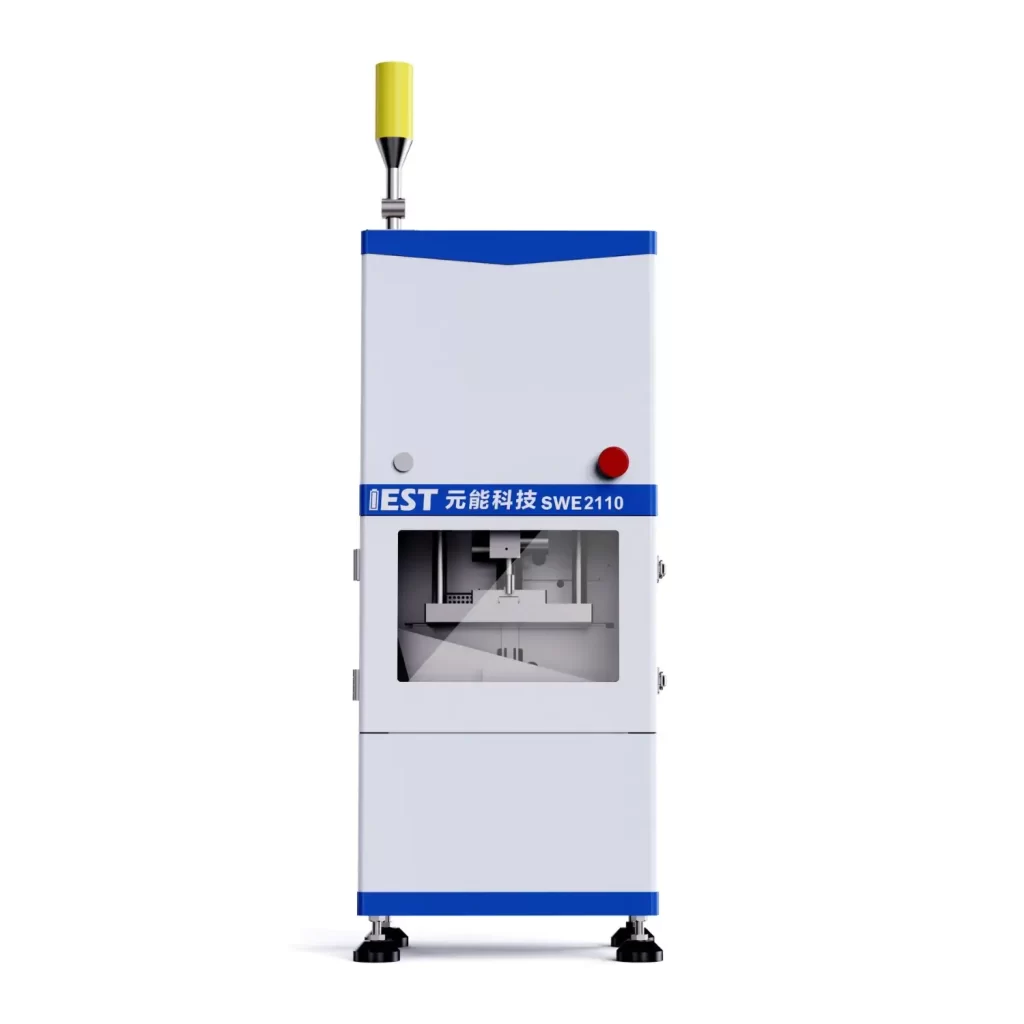
Figure 1. Appearance of SWE2110 Equipment
Cell: NCM523/Graphite (Dimensions: 34mm x 46mm x 106mm, Theoretical Capacity: 2400 mAh)
Charge-Discharge Protocol: 25°C; Rest 5 min; 0.5C Constant Current (CC) charge to 4.35V, Constant Voltage (CV) charge until current drops to 0.025C; Rest 5 min; 0.5C Constant Current (DC) discharge to 2.8V.
Swelling Measurement: The cell was placed in the analyzer, and parameters were set via the MISS software, which automatically recorded thickness, thickness variation, temperature, current, voltage, and capacity.
The NCM cell is subjected to 0.5C charge and discharge tests under three constant pressure conditions, and the swelling curve is shown in Figure 2. The pressures corresponding to the three pressures are about 0.01MPa, 0.1MPa, and 0.2MPa respectively. Taking into account the slight difference between different batteries, the maximum swelling thickness of the battery under the three pressures is about 1.7%, and the overall trend is that the thickness increases during constant current charging, and the thickness is basically unchanged during constant voltage charging. The thickness is reduced during constant voltage discharging.
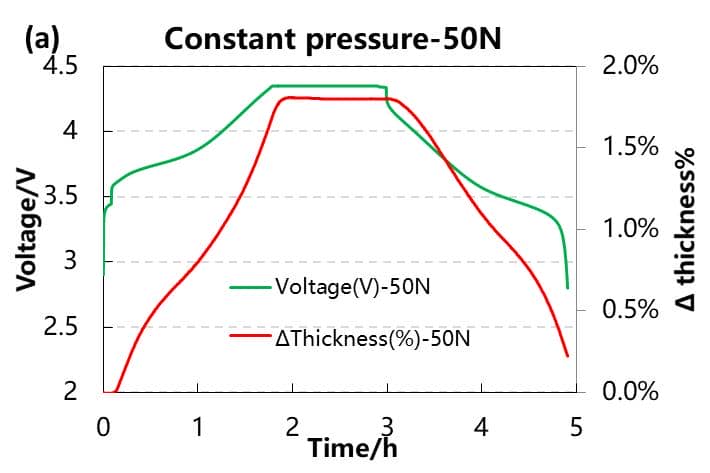
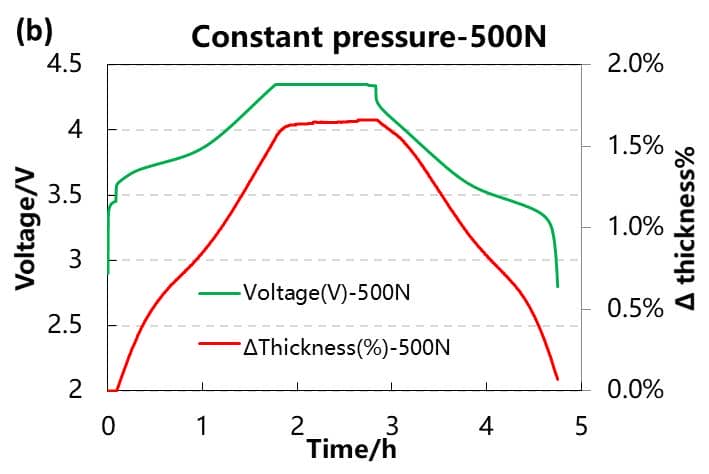
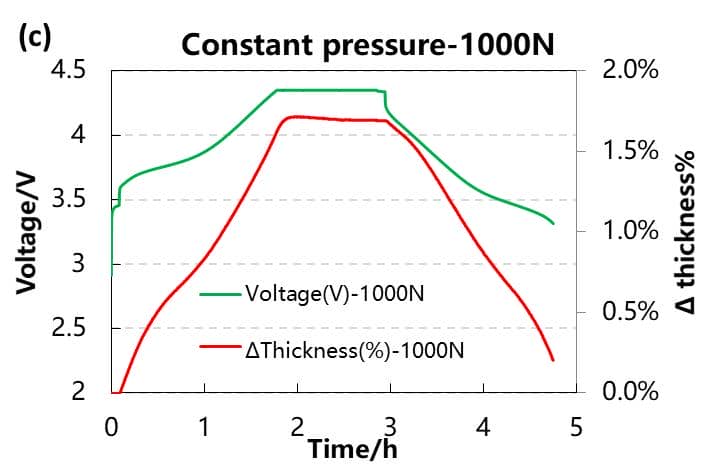
Figure 2. Charge-discharge curves and swelling curves under three constant pressure conditions
Figure 3 compares the swelling curves with the differential capacity (dQ/dV) curves. The inflection points in the swelling curve during charging align with the peaks in the dQ/dV curve, confirming that dimensional changes are directly linked to phase transitions associated with lithium (de)intercalation. While the swelling curves during charging were similar across the three pressures, more significant differences were observed during discharge. This suggests that the degree of irreversible expansion occurring at higher voltages may be pressure-dependent.
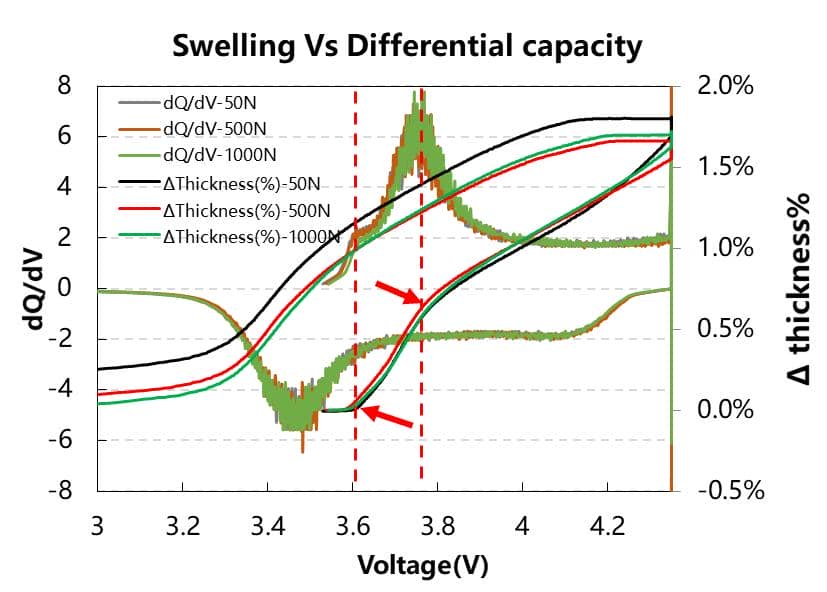
Figure 3. Swelling curve and differential capacity curve of NCM cell under three kinds of constant pressure conditions
The swelling versus State of Charge (SOC) curves for the three pressure conditions are plotted in Figure 4. The hysteresis between the charge and discharge curves represents the irreversible swelling per cycle. Our results demonstrate a clear trend: as the applied pressure increased, the irreversible swelling at the fully discharged state decreased significantly. Quantitatively, the irreversible expansion was 0.22%, 0.07%, and 0.01% for the 50 N, 500 N, and 1000 N conditions, respectively. This indicates that applying an appropriate external pressure effectively reduces irreversible dimensional changes in the NCM cell.
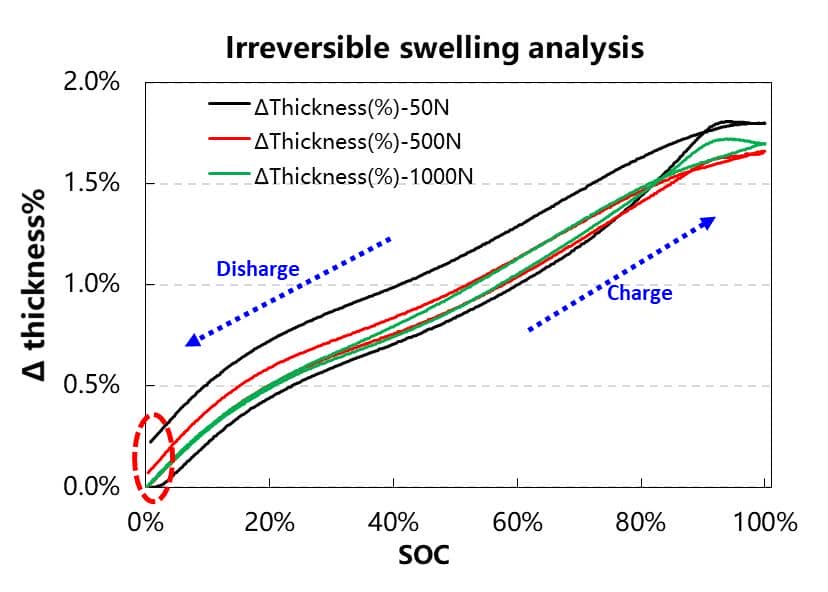
Figure 4. Swelling curves at different SOC levels under three constant pressure conditions
This swelling analysis of an NCM cell using the In-situ Swelling Analyzer (SWE) under different constant pressures reveals a significant finding. Within the tested range of up to 1000 N, increasing the applied pressure systematically reduces the cell’s irreversible thickness expansion. This work provides a quantitative basis for optimizing stack pressure in battery module design to enhance dimensional stability and longevity. Further investigation is warranted to explore the long-term impact of applied pressure on cycle life and other performance metrics.
[1] Yongkun Li, Chuang Wei, Yumao Sheng, Feipeng Jiao, and Kai Wu. Swelling Force in Lithium-Ion Power Batteries. Ind. Eng. Chem. Res, 2020, 59, 27, 12313–12318.
[2] Ximing Cheng and Michael Pecht. In Situ Stress Measurement Techniques on Li-ion Battery Electrodes: A Review. Energies, 2017, 10, 591.
[3] Amartya Mukhopadhyaya, Anton Tokranova, Xingcheng Xiaoc, Brian W. Sheldona. Stress development due to surface processes in graphite electrodes for Li-ion batteries: A first report. Electrochimica Acta, 2012,66, 28–37.