
Understanding lithium battery cell swelling behavior during charge and discharge cycles is critical for materials development and system design. The measured swelling data — whether thickness change or force generation — is highly dependent on the applied boundary conditions during testing. This application note explains how to select test parameters for the two principal in-situ expansion measurement modes — constant pressure and constant gap — and provides practical guidelines, including commonly used values, for obtaining repeatable, industry-relevant cell swelling and swelling force data.
The in-situ swelling test system SWE series from IEST Instrument (Figure 1) enables precise characterization of these behaviors. Proper configuration of its measurement modes is essential for data accuracy. The recommendations below are based on the SWE series in-situ expansion test system and industry practice.
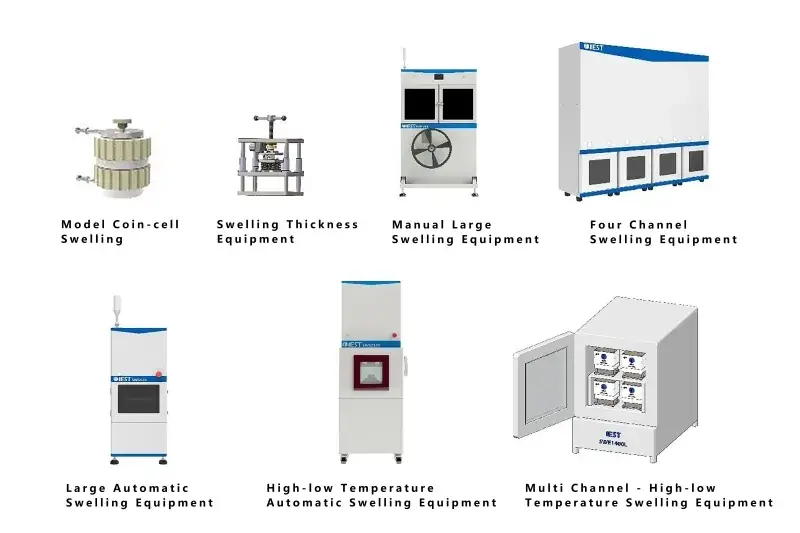
Figure 1. IEST in-situ swelling test system SWE series — configurable for constant pressure or constant gap cell swelling test modes
In this mode, the system maintains a constant pressure on the cell surface throughout the electrochemical cycle while recording the resulting thickness variation (Figure 2). This approach is ideal for comparing the intrinsic swelling characteristics of different materials, such as the expansion of various silicon-carbon composites.
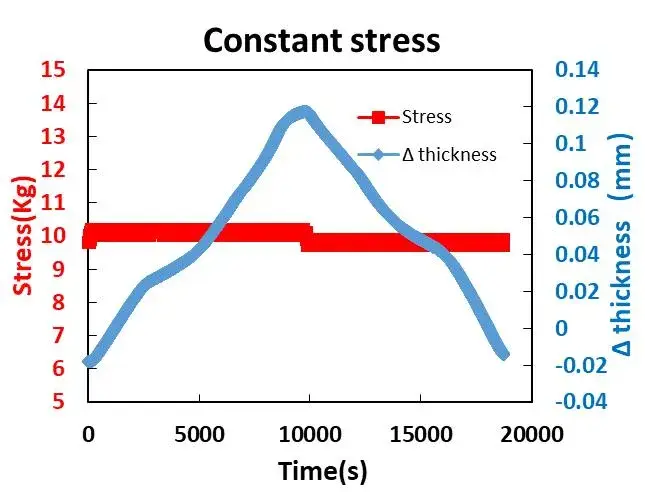
Figure 2. Cell swelling diagram — constant pressure mode schematic and thickness variation measurement principle
The choice of applied pressure significantly influences the results. Pressure is set based on the cell’s surface area (applied as MPa). Generally, higher pressures constrain the cell more, leading to smaller measured thickness changes during cycling, as shown in Figure 3. However, excessive pressure can increase cell polarization, adversely affecting performance and cycling data. Therefore, selecting a reasonable pressure is crucial. A common industry practice is to use 0.2 MPa for in-situ swelling thickness characterization.
This mode does not require a specific initial State of Charge (SOC). Data analysis typically focuses on comparing the thickness difference between fully charged and fully discharged states.
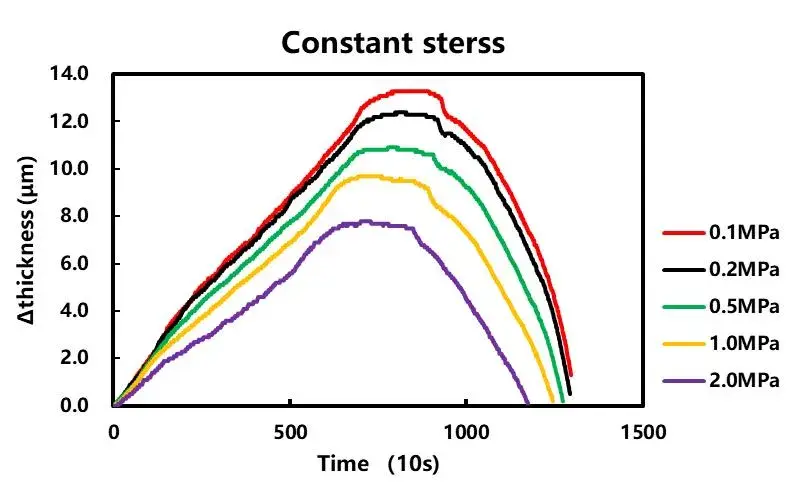
Figure 3. In-situ swelling thickness curves at different applied pressures — 0.2 MPa industry-standard condition compared with higher constraint pressures
Constant gap mode simulates a fixed mechanical boundary. The system first applies an initial preload force to the cell, then maintains the corresponding gap (distance between plates) constant. It continuously measures the swelling force generated by the cell during cycling (Figure 4). This mode is particularly valuable for cell, module, and pack design or simulation — for example, when evaluating cushioning pads for cell swelling or the stiffness of module housings used to restrain cell expansion, the constant gap mode reproduces the fixed-boundary condition these components create in an actual pack, so that the recorded swelling force reflects the real mechanical load the restraint structure must withstand under different initial preloads.
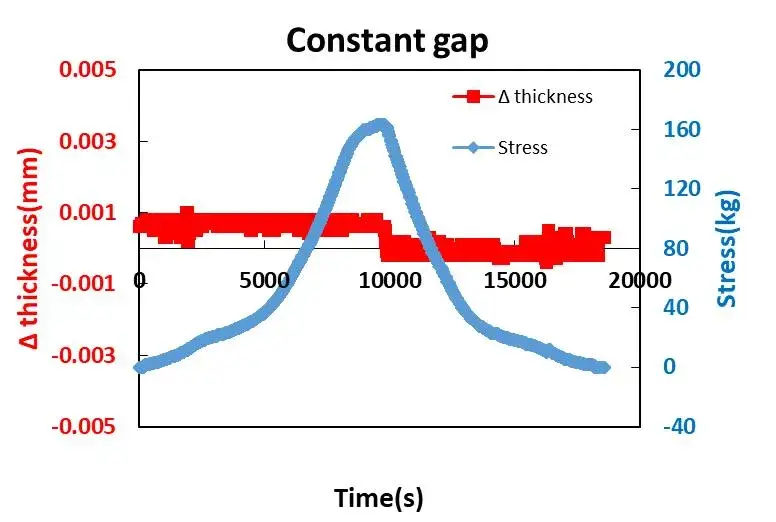
Figure 4. Cell swelling diagram — constant gap mode schematic and swelling force generation mechanism
The preload force setting determines the initial gap. A higher preload results in a smaller gap, leading to a higher measured swelling force during subsequent cycles (Figure 5). Beyond a certain point, the swelling force change stabilizes. Further increasing the preload to minimize the gap can increase polarization and impact cell performance. A preload of 0.2 MPa is a standard industry choice for in-situ swelling force tests.
Notably, the cell’s initial SOC significantly affects this measurement. Under the same preload, a cell at 0% SOC will have a smaller gap than one at 100% SOC. The resulting swelling force difference over a full cycle will also differ. For consistent results, it is recommended to test cells at a uniform initial SOC, typically the fully discharged state.
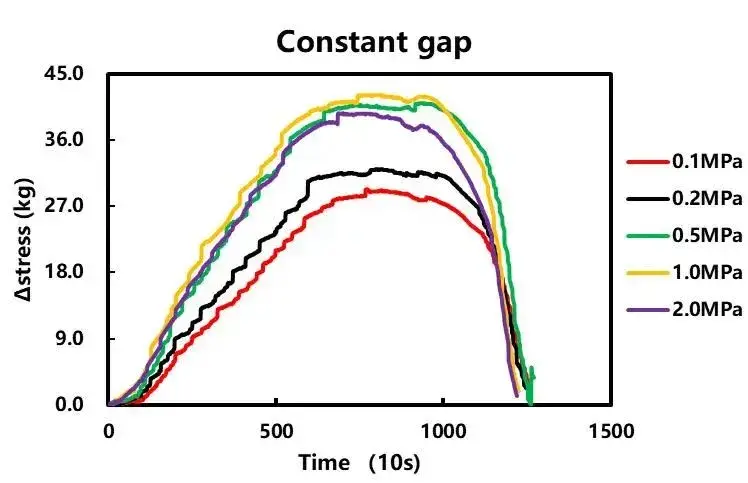
Figure 5. Swelling force changes in constant gap mode at different preload forces — 0.2 MPa industry-standard preload condition
| Parameter | Constant Pressure Mode | Constant Gap Mode | Implication for Test Design |
|---|---|---|---|
| Primary measured output | Thickness change (mm) | Swelling force (N or kgf) | Select mode based on whether the design question is “how much does it grow” or “how hard does it push” |
| Typical applied condition | 0.2 MPa constant applied pressure | 0.2 MPa initial preload, then fixed gap | 0.2 MPa is common industry practice for both, balancing constraint against added polarization |
| Initial SOC requirement | Not required | Required — typically fully discharged (0% SOC) | Constant gap results are not comparable across cells tested at different SOC |
| Typical use case | Comparing intrinsic material swelling (e.g., silicon-carbon composites) | Cell/module/pack design — evaluating cushioning pads for cell swelling and module housing stiffness | Constant pressure suits material screening; constant gap suits mechanical restraint design |
| Effect of increasing constraint | Higher pressure → smaller measured thickness change | Higher preload → smaller gap → higher measured swelling force | Excessive constraint in either mode raises polarization risk and can distort cycling data |
Selecting a Battery Cell Swelling Solution for Your Test Program
Whether the objective is material-level screening or pack-level restraint design, the underlying question determines the correct swelling test mode: constant pressure mode isolates the material’s intrinsic thickness expansion, while constant gap mode reproduces the fixed-boundary condition created by cushioning pads or module housings and reports the resulting swelling force. A single in-situ system that supports both modes — with synchronized pressure, gap, and force measurement — removes the need to switch instruments between material development and cell/pack design stages.
The IEST SWE series in-situ swelling test system supports both constant pressure (thickness change) and constant gap (swelling force) measurement modes in a single platform, with configurable pressure, preload, and SOC conditions.
When characterizing cell swelling performance, the constant pressure and constant gap modes have different application scenarios and test parameters. Usually, when evaluating materials, the constant pressure mode is preferred to characterize cell swelling thickness; in this case, there is no special requirement on the initial SOC of the cell. In cell and pack design, the constant gap mode is preferred to characterize cell swelling force; in this case, the initial SOC of the cell will greatly affect the subsequent test results, and cells in the fully discharged state should be selected for testing. For the setting of the initial pre-tightening force, a pressure of 0.2 MPa applied to the cell surface is common industry practice as the initial condition for either constant pressure or constant gap testing.
[1] Li Linyang, He Fan, Lv Xixiang. Analysis method of lithium cell module swelling displacement [J]. Power Technology, 2023, 47(5): 632-634.
[2] Liang Haobin, Du Jianhua, Hao Xin, et al. A review of current research on the formation mechanism of lithium batteries [J]. Energy Storage Science and Technology, 2021, 10(2): 647-657.
[3] MARTIN W, JORG K, DIRK U S. Investigation of the influence of different bracing of automotive pouch cells on cyclic lifetime and impedance spectra[J]. Journal of Energy Storage, 2019, 21:149-155.
Cell swelling refers to the thickness expansion of a lithium battery cell during charge-discharge cycling, caused by electrode structural changes and gas generation. Swelling force refers specifically to the mechanical force the cell exerts against a fixed boundary when its expansion is physically restrained, as measured in constant gap mode.
Constant pressure mode holds applied pressure fixed and measures the resulting thickness change, making it suited to comparing material-level swelling behavior. Constant gap mode holds the plate-to-plate gap fixed after an initial preload and measures the resulting swelling force, making it suited to cell, module, and pack restraint design.
A pressure or preload of 0.2 MPa applied to the cell surface is common industry practice for both constant pressure and constant gap swelling tests. Higher pressure reduces the measured thickness change or increases the measured swelling force, but excessive pressure can increase cell polarization and distort cycling performance.
SOC has no special requirement in constant pressure mode, since the analysis compares thickness at fully charged versus fully discharged states. In constant gap mode, SOC significantly affects the initial gap and the resulting swelling force, so cells should be tested at a uniform initial SOC — typically the fully discharged state — for comparable results.
Selecting the correct mode depends on the test objective: constant pressure mode is preferred for material-level screening of swelling thickness, while constant gap mode is preferred for cell, module, or pack design work characterizing swelling force. The IEST SWE series in-situ swelling test system supports both modes on a single platform.
Cushioning pads and module housings restrain cell expansion at a fixed mechanical boundary, which is the same condition constant gap mode reproduces. By testing at different initial preloads in constant gap mode, the resulting swelling force data indicate how much load a cushioning pad or housing design must withstand under real pack-level constraint.
Repeatable cell swelling data depend primarily on consistent test parameters — fixed applied pressure or preload, and a controlled initial SOC — rather than on a single proprietary fix. The IEST SWE series in-situ swelling test system standardizes these parameters within one instrument, supporting both constant pressure and constant gap measurement for consistent, comparable results across samples.