
Lithium-ion batteries (LIBs) have emerged as the cornerstone of electrochemical energy storage, prized for their high energy density, long cycle life, low self-discharge, and absence of memory effect. Their applications have rapidly expanded from portable electronics to electric vehicles (EVs), residential, and grid-scale storage, permeating modern society. This expansion places unprecedented demands on battery safety and energy density.
Conventional LIBs rely on flammable, volatile organic liquid electrolytes, posing significant safety risks — including thermal runaway, fire, and explosion — under conditions like overheating, short-circuiting, overcharging, or mechanical damage. While innovations in battery pack design have somewhat mitigated these risks, the fundamental solution lies in evolving from structural to material-level innovation.
Energy density remains a critical performance metric. Strategic national plans, such as “Made in China 2025” and the “New Energy Vehicle Industry Development Plan (2021–2035),” target cell-level energy densities of 400–500 Wh/kg by 2025 and 2030, respectively. Conventional liquid LIBs, constrained by their chemistry, are projected to hit a ceiling around 300 Wh/kg, falling short of future needs.
Replacing liquid electrolytes with solid counterparts to create all-solid-state batteries presents the most promising path forward. As illustrated in Figure 1, the all-solid-state battery structure shares a similar operating principle with liquid LIBs. However, solid electrolytes offer superior thermal and chemical stability, eliminating leakage, combustion, or explosion risks and enhancing intrinsic safety. Their high Young’s modulus can effectively suppress lithium dendrite growth, potentially enabling the use of lithium metal anodes for a dramatic boost in energy density. Simplified packaging, bipolar stacking to reduce inert components, and the potential elimination of complex cooling systems can further improve volumetric and gravimetric energy density at the system level.
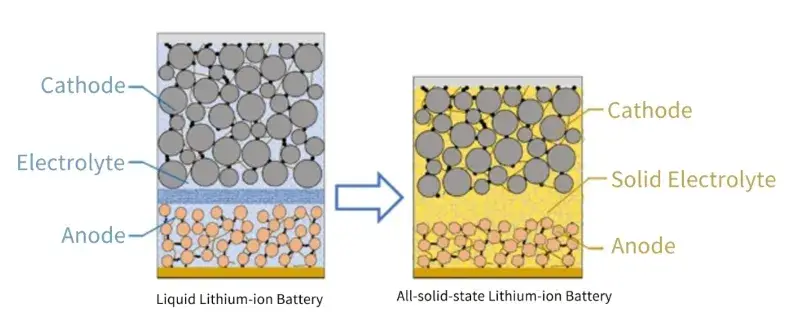
Figure 1. All-solid-state battery structure compared with conventional liquid lithium-ion battery structure, demonstrating how the solid electrolyte functionally replaces both the liquid electrolyte and separator.
Solid electrolytes, or fast ion conductors, are the heart of ASSBs. These materials are solid within the operational temperature range, exhibit excellent electronic insulation, and provide high ionic conductivity. They functionally replace both the liquid electrolyte and separator in conventional batteries, serving as the medium for lithium-ion transport.
Research has yielded diverse solid electrolytes, broadly classified into polymer-based, inorganic, and organic/inorganic composite types, with inorganic electrolytes further divided into oxides and sulfides.
Typically formed by homogeneously blending a polymer matrix with lithium salts, polymer solid electrolytes (SPEs) offer advantages like good flexibility, high adhesion, low cost, and ease of processing. Polar groups within the polymer (e.g., C=O, C=N, -O-, -S-) coordinate with lithium ions, facilitating salt dissociation and ion mobility. Ion transport predominantly occurs in the amorphous regions above the glass transition temperature (Tg), relying on local segmental motion of polymer chains to create free volume for Li+ hopping.
A major limitation is their low room-temperature ionic conductivity (roughly 10-7 to 10-5 S/cm for PEO), insufficient for practical ASSBs. Common strategies to enhance conductivity include adding plasticizers to increase free volume between segments or incorporating organic solvents to further promote lithium salt dissociation.
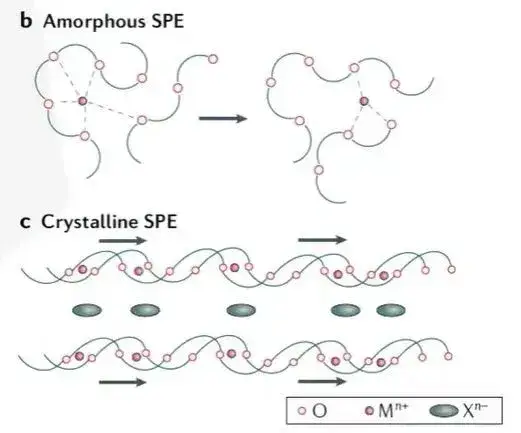
Figure 2. Ion transport mechanism of a polymer solid electrolyte, demonstrating Li+ hopping through amorphous-region segmental motion above the glass transition temperature.
Polymer solid electrolytes usually have low room temperature ionic conductivity. For example, the ionic conductivity of PEO is in the range of 10-7~10-5 S/cm, which is difficult to meet the actual use needs of all-solid-state batteries. To improve the ionic conductivity of polymer electrolytes, common methods include adding plasticizers to increase the free volume between segments or adding organic solvents to further promote the dissolution of lithium salts.
Ion migration in crystalline materials generally follows the Arrhenius law, depending on defect concentration and distribution within the crystal lattice. Mechanisms include vacancy diffusion, interstitial mechanisms, and coupled exchange processes, as illustrated in Figure 3.
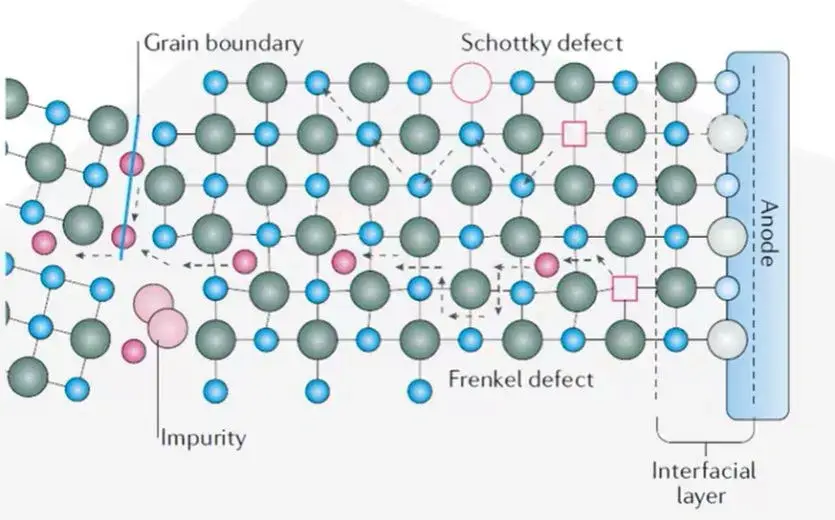
Figure 3. Ion transport mechanisms in crystalline solid electrolytes, demonstrating vacancy diffusion, interstitial, and coupled exchange pathways.
Major types include perovskite-type (e.g., Li3La3Ti2O12, LLTO), garnet-type (e.g., Li7La3Zr2O12, LLZO), LISICON-type, and NASICON-type (e.g., Li1.5Al0.5Ge1.5(PO4)3, LAGP; Li1.3Al0.3Ti1.7(PO4)3, LATP) electrolytes. Their room-temperature conductivity typically ranges from 10-4 to 10-3 S/cm, improvable via elemental doping or optimized synthesis. For instance, Ta, Al, or Ca doping in LLZO can increase Li vacancy sites, boosting conductivity to roughly 10-3 S/cm.
Challenges persist: LATP and LAGP can be reduced by Li metal anodes due to their Ti4+ and Ge4+ content, forming mixed ionic/electronic conductive interphases. LLZO, while theoretically stable, reacts with atmospheric H2O and CO2, forming a detrimental Li2CO3 surface layer that harms conductivity and interfacial wettability. Their high Young’s modulus, while dendrite-suppressing, leads to poor physical contact with electrodes and an inability to accommodate volume changes during cycling, causing contact loss and mechanical failure. Brittleness and the need for high-temperature sintering pose significant processing challenges. Strategies such as introducing polymer interlayers or developing composite electrolytes are being pursued to overcome these issues.
Compared with oxide solid electrolytes, sulfide ions have a larger radius and lower electronegativity than the cations they bind, so sulfide solid electrolytes have a lower binding force to lithium ions. This makes the ion transport channel formed in the sulfide wider than in oxide electrolytes and transports lithium ions more easily, resulting in higher ionic conductivity. Sulfide solid electrolytes also offer excellent thermal stability and good mechanical properties.
| Subtype | Example Composition | Room-Temperature Ionic Conductivity |
|---|---|---|
| Glassy | Li2S-GeS2, Li2S-SiS2, Li2S-P2S5-LiI | ~10-4 S/cm |
| Thio-LISICON | Li3.25Ge0.25P0.7S4 | 2.2×10⁻³ S/cm |
| Glass-ceramic | Li7P3S11 | 2.2×10⁻³ S/cm |
| Lithium argyrodite | Li6PS5Cl (solid-phase synthesized) | 4.96×10⁻³ S/cm |
| LGPS superionic conductor | Li10GeP2S12 (LGPS) | 1.2×10⁻² S/cm |
| Halogen-doped superionic conductor | Li9.54Si1.74P1.44S11.7Cl0.3 | 2.5×10⁻² S/cm — exceeds typical liquid electrolytes |
In addition to high ionic conductivity, the unique mechanical properties of sulfide electrolytes are one reason for their popularity. Their modulus sits between that of oxides and polymers: sulfide electrolytes can inhibit lithium dendrite growth while remaining soft enough to be densified through simple cold pressing, avoiding the high-temperature sintering required for oxide ceramics. However, sulfide electrolytes have low fracture toughness and are prone to brittle fracture during battery preparation and cycling, causing mechanical failure.
Most sulfide solid electrolytes are unstable in air. A small amount of atmospheric moisture can hydrolyze the electrolyte, causing irreversible structural changes, reduced ionic conductivity, and the production of toxic H2S gas. Synthesis, storage, and processing therefore require strict anhydrous conditions, increasing production complexity and cost and limiting large-scale application. Based on soft and hard acid-base theory, researchers are developing air-stable sulfide electrolytes through oxide blending or element doping.
Currently, single inorganic solid electrolytes and polymer solid electrolytes have various problems such as low ionic conductivity, dendrite generation, and unstable interfaces, respectively, and cannot meet the performance requirements of all-solid-state lithium metal batteries. To overcome the shortcomings of inorganic solid electrolytes and polymer electrolytes, inorganic fillers are added to the polymer matrix to form organic/inorganic composite solid electrolytes, it can not only improve the ionic conductivity of polymer solid electrolytes, but also inhibit dendrite generation, improve mechanical strength, improve interface stability and compatibility, etc.
Composite solid electrolytes combine the advantages of inorganic solid electrolytes and organic solid electrolytes. The solid electrolyte obtained by adding inorganic fillers to the polymer solid electrolyte has excellent comprehensive properties, inorganic fillers can play three roles:
Organic-inorganic composite electrolytes can improve lithium-ion conductivity. There are three main lithium ion conduction mechanisms:
The feasibility of ASSBs first hinges on the solid electrolyte’s ionic conductivity.
| Electrolyte Type | Room-Temperature Ionic Conductivity | Practical Note |
|---|---|---|
| Liquid electrolyte | ~10-2 S/cm | Reference benchmark for ASSB electrolyte candidates |
| Oxide ceramic (sintered) | ~10-4 S/cm | Cold-pressed powder form drops to ~10-8 S/cm |
| Polymer SPE | ~10-6 to 10-5 S/cm at room temperature | Often requires ~60°C operation to approach a molten state |
| Sulfide electrolyte | Up to 2.5×10⁻² S/cm (best doped compositions) | Conductivity rivals or exceeds liquid electrolytes; primary practical candidate |
Sulfide solid electrolytes, with conductivities rivaling liquids, and composite electrolytes are therefore the primary candidates for practical ASSBs from a conductivity standpoint.
| Type | Oxide | Sulfide | Polymer | Electrolyte |
|---|---|---|---|---|
| Typical Types | LLZO, LLTO, LACP, LATP | Li6PS5Cl, LGPS | PEO + LiFSI | 1M LiPF6, EC/DEC, 1:1 vol |
| Ceramic Conductivity | 10-4–10-3 S/cm | ~10-2 S/cm | ~10-4 S/cm | ~10-2 S/cm |
| Unsintered Conductivity | 10-9–10-7 S/cm | ~10-3 S/cm | ||
| Film Thickness | ~80 μm | ~30 μm | ~10 μm | with diaphragm (5 μm) |
In liquid LIBs, the fluid electrolyte fully infiltrates electrode pores, forming an excellent liquid-solid interface for efficient ion transport (Figure 4). In ASSBs, the immobile solid electrolyte results in poor solid-solid contact with electrode particles, leading to high interfacial resistance and limited active contact area.
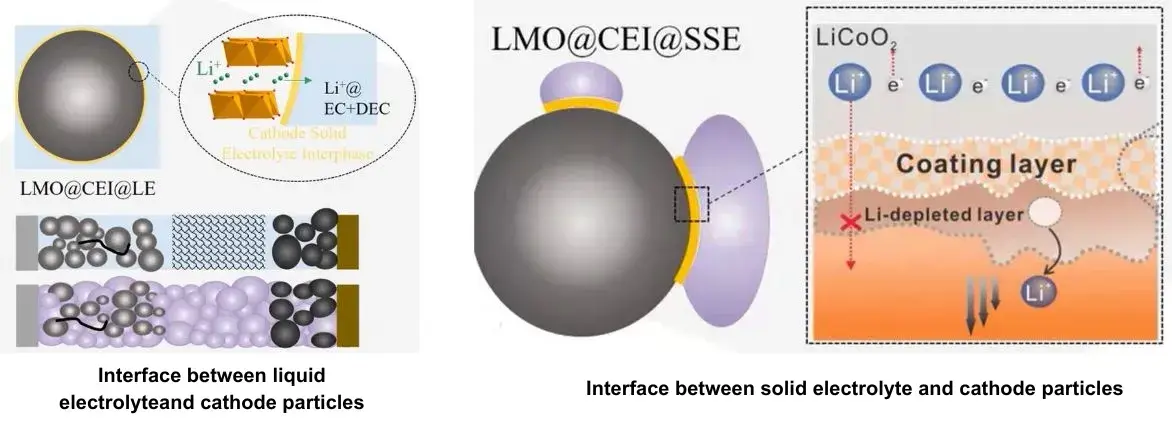
Figure 4. Interface comparison between liquid electrolyte and solid electrolyte contact with cathode particles, demonstrating the reduced contact area characteristic of solid-solid interfaces.
Mitigation strategies include in-situ growth of solid electrolytes on electrode materials to coat particles, and using hot/cold pressing to reduce porosity. However, compensating for poor contact often requires incorporating a high volume fraction (~25% or more) of solid electrolyte into the electrodes, which dilutes active material content and reduces both gravimetric and volumetric energy density. Because the solid electrolyte’s own electronic conductivity is very low, increasing its volume percentage without adding an electronic conductive agent also decreases electrode electronic conductivity, affecting rate performance.
| Parameter | Commercial Liquid Li-Ion Batteries | Current Sulfide ASSBs |
|---|---|---|
| Electrolyte volume fraction in electrode | Liquid fully infiltrates porous electrode | Often >25% solid electrolyte required for adequate ionic pathways |
| Interfacial contact | Continuous liquid-solid contact | Discrete solid-solid contact; requires pressing/coating to reduce resistance |
| Energy density impact | Minimal electrolyte dilution of active material | Reduced gravimetric and volumetric energy density from high electrolyte loading |
| Manufacturing readiness | Mature, high-volume production | Requires anhydrous processing and specialized pressing equipment |
Source: consolidated from the original article’s Table 2 discussion of commercial lithium-ion batteries versus current sulfide all-solid-state batteries.
| Category | Commercial Power Lithium Batteries | Current Sulfide All-solid-state Batteries | ||
|---|---|---|---|---|
| Components | Percentage | Components | Percentage | |
| Cathode | Layered Oxide Cathode | > 96% | Layered Oxide Cathode | < 70% |
| Conductive Carbon | < 2% | Conductive Carbon | < 3% | |
| Adhesive | < 2% | Adhesive | < 2% | |
| Solid Electrolyte | > 25% | |||
| Anode | Graphite (Silicon Carbon) | > 96% | Graphite (Silicon Carbon) | < 70% |
| Conductive Carbon | < 2% | Conductive Carbon | < 2% | |
| Adhesive | < 2% | Adhesive | < 3% | |
| Solid Electrolyte | > 25% | |||
| Diaphragm | Polymer film | Thickness 5~20 μm | Solid electrolyte membrane | Thickness > 30 μm |
| Mass Energy Density | 200~300 Wh/kg | ~180 Wh/kg | ||
| Volume Energy Density | 500~700 Wh/L | ~450 Wh/L | ||
Ion conduction at the contact interface between solid electrolyte and electrode is mainly affected by the chemical/electrochemical compatibility of the interface — reflected in interface element diffusion, interfacial electrochemical side reactions, and space charge layer formation. (Electro)chemical incompatibility between sulfide electrolytes and electrode materials causes irreversible parasitic reactions at the interface, forming a complex interphase with high electronic conductivity and low ion conductivity that further hinders rapid ion transport. Differences in lithium chemical potential between the sulfide electrolyte and the layered cathode material may also lead to an interfacial space charge layer, further hindering lithium-ion migration.
The most used and effective method to improve interface compatibility is coating the cathode material surface to build an interfacial protective layer. These coating materials require high electrochemical stability, high ionic conductivity, and electronic insulation, suppressing side reactions without hindering lithium-ion transport across the interface. LiNbO3 is favored for its relatively high ionic conductivity (~10-6 S/cm) and high electrochemical stability with sulfide and cathode materials, making it the most widely used coating material today.
Uneven Li plating/stripping at the Li metal/electrolyte interface leads to dendrite nucleation and growth, risking short circuits. This problem is coupled with interfacial contact and stability issues. Applying appropriate stack pressure during cycling can improve contact and promote Li creep. Since grain boundaries often have lower shear modulus, enhancing the density of the solid electrolyte layer and ensuring uniform interfacial contact are crucial for dendrite suppression.
The SEMS1100 solid electrolyte testing system, jointly developed by IEST Instrument and Xiamen University, is a multi-functional testing system dedicated to solid electrolyte samples. It is a fully automatic measurement instrument for the electrochemical properties of solid electrolytes that integrates tableting, testing, and calculation. The system uses an integrated structural design, including a pressurization module, an electrochemical test module, a density measurement module, and a ceramic sheet pressing and clamping module. It is suitable for testing oxide, sulfide, polymer, and other solid electrolyte types.
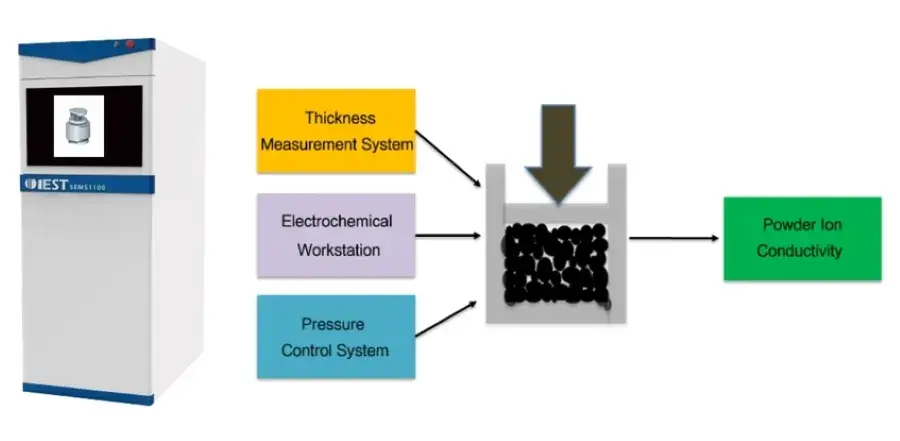
Figure 5. IEST SEMS1100 solid electrolyte testing equipment, demonstrating the integrated pressurization, electrochemical test, and density measurement modules.
When evaluating the electrochemical performance of solid electrolyte powder, it is usually necessary to press the powder into tablets; samples with poor interface contact also need conductive metal sprayed on the surface as an ion-blocking electrode. The size and uniformity of the applied force greatly affects the integrity of the prepared ceramic tablets. Figure 6 shows macro photos of ceramic tablets obtained by different tableting equipment. The uniform pressure of SEMS Series equipment used to prepare solid electrolyte ceramic sheets ensures complete and uniform samples across different pressure ranges, reduces the risk of sample damage, and improves yield and testing efficiency.
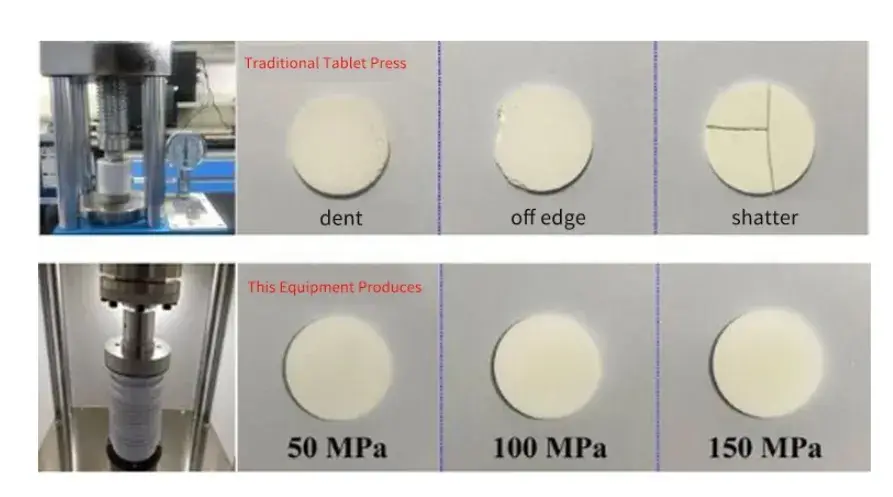
Figure 6. Ceramic tablet production results measured across different tableting equipment, demonstrating improved sample uniformity with SEMS1100 pressing.
SEMS1100 was used to conduct electrochemical impedance spectroscopy and ionic conductivity tests on two different solid electrolyte materials, Li1.3Al0.3Ti1.7(PO4)3 (LATP) and Li6.5La3Zr1.5Ta0.5O12 (LLZO). As shown in Figure 7, by applying different quantitative pressures to the sandwich ceramic piece and measuring its electrochemical impedance spectrum, it was found that the test pressure will affect its ionic conductivity to varying degrees, this shows that it is necessary to test the electrochemical performance of solid electrolytes by applying stable and quantified pressure.
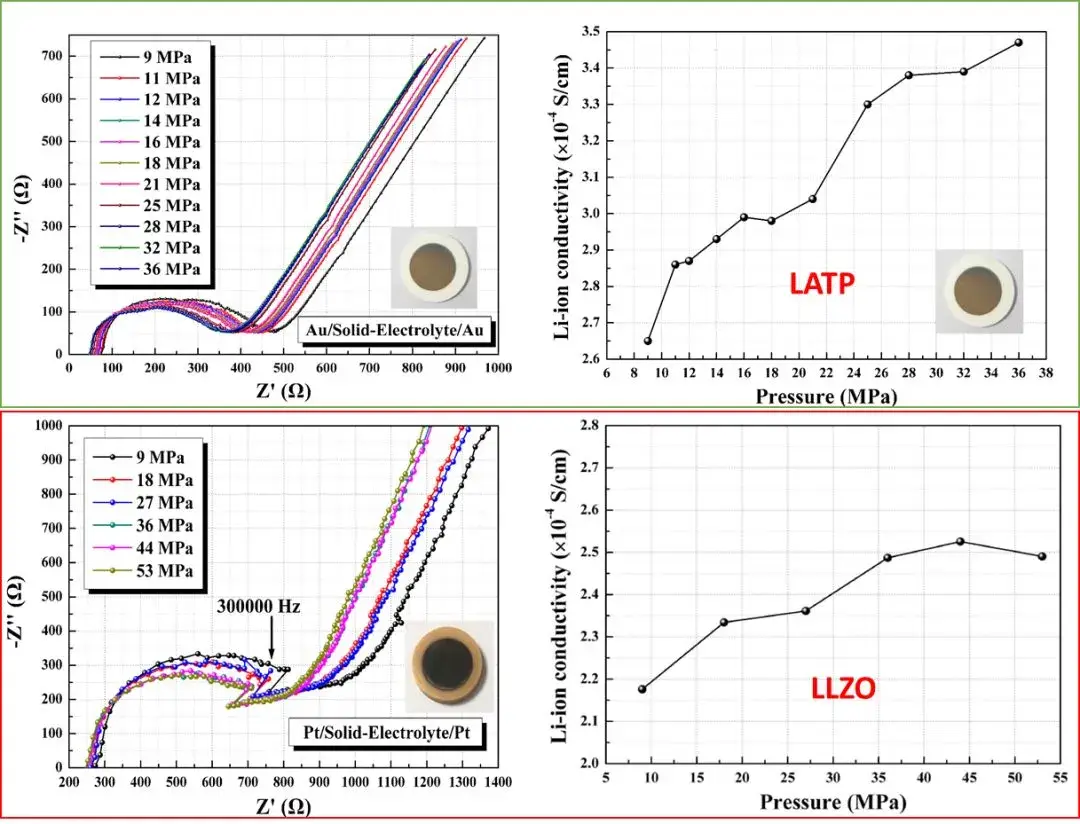
Figure 7. Electrochemical impedance spectra measured for LATP and LLZO solid electrolytes on the SEMS1100, demonstrating ionic conductivity changes with applied pressure.
Through the SEMS1100 equipment, electronic conductivity and compaction density of LATP powder can be tested simultaneously during the tableting process. As applied pressure increases, compacted density increases from an initial 1.7 g/cm3 to 2.1 g/cm3, while electronic conductivity reaches stability around 50 MPa (Figure 8) — meaning density and electronic conductivity trends are not completely consistent. This shows that different characteristic indicators of solid electrolytes need to be tested simultaneously under varying pressure conditions to obtain comprehensive and accurate results.
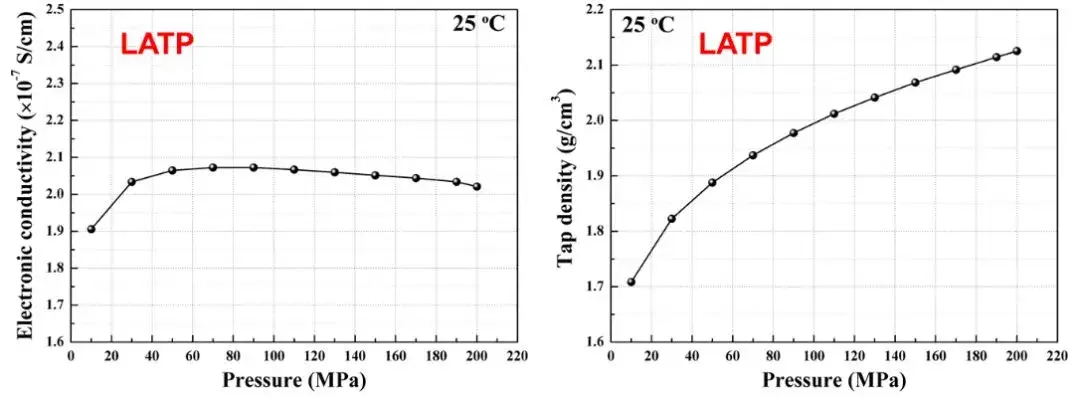
Figure 8. Electronic conductivity and compacted density of LATP solid electrolyte measured against pressure, demonstrating density increasing from 1.7 to 2.1 g/cm³ while conductivity stabilizes near 50 MPa.
A Li-SE-Li symmetrical battery was assembled in the sealed fixture provided by SEMS1100, different pressures were applied to the battery, and cyclic deposition tests of lithium metal were conducted while measuring potential changes of the symmetrical cell. As shown in Figure 9, when the applied pressure was reduced from 120 MPa to 110 MPa, the overpotential of the battery increased significantly — showing that lithium metal deposition behavior is relatively sensitive to pressure changes, and that varying applied pressure is significant for evaluating solid electrolyte interfacial stability.
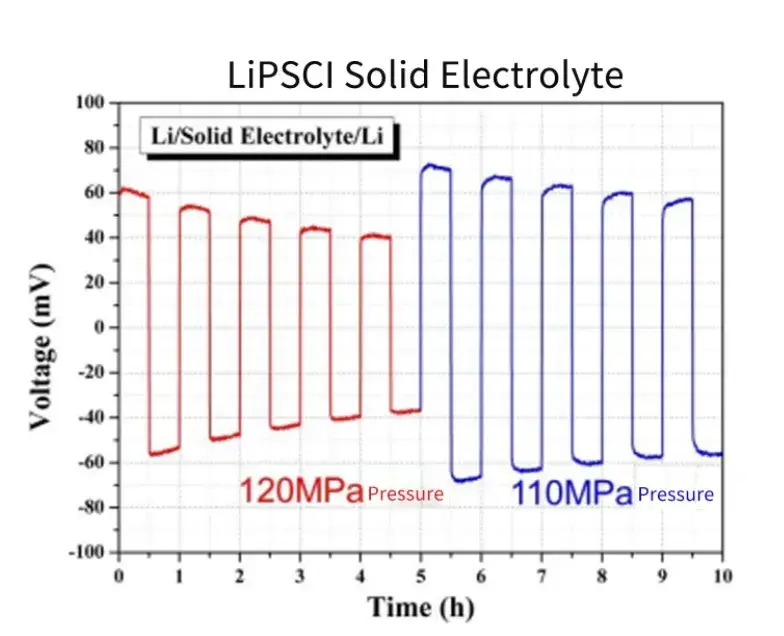
Figure 9. Cyclic charge-discharge test of a Li-SE-Li symmetrical battery on the SEMS1100, demonstrating increased overpotential when applied pressure drops from 120 MPa to 110 MPa.
A Li-SE-stainless steel battery was assembled in the sealed fixture provided by SEMS1100, and cyclic voltammetry was conducted to test its redox potential. As shown in Figure 10, when the overpotential increases to 3V, the oxidation current density of the battery is only about 1.2 μA/cm2, showing that the solid electrolyte is relatively stable within the 0–3V voltage window — demonstrating that the SEMS1100 equipment can realize pressurized, sealed electrochemical testing of different solid electrolyte materials and their lithium metal batteries.
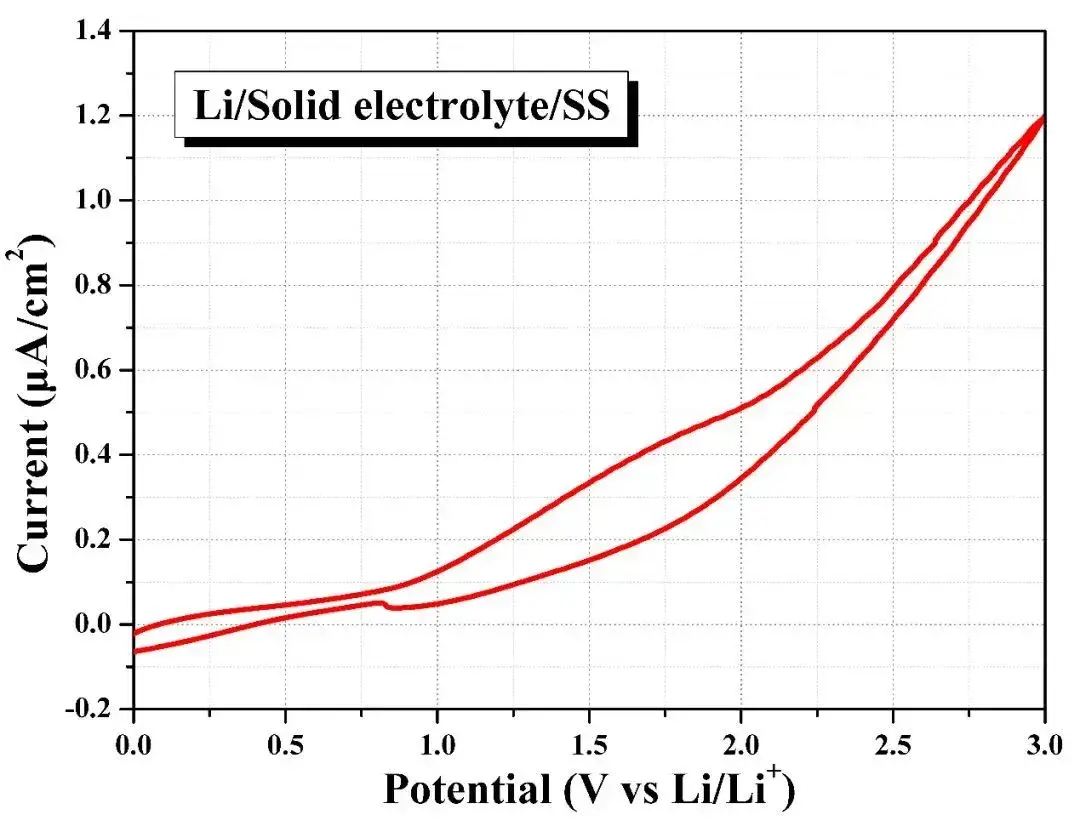
Figure 10. Electrochemical stability window measured for a solid electrolyte on the SEMS1100, demonstrating stable behavior within the 0–3V range with oxidation current density near 1.2 μA/cm² at 3V.
The low ionic conductivity of oxide and polymer solid electrolytes limits their use in practical ASSBs, directing focus toward sulfide-based and composite electrolytes.
For sulfide electrolytes to achieve commercialization, their air instability and associated high processing costs must be resolved.
Replacing liquid electrolytes introduces challenges like inferior ionic percolation networks in electrodes, poor solid-solid contact, and reduced energy density, which require innovative electrode design.
Despite the high research complexity, the profound potential safety and energy density advantages of ASSBs warrant continued and intensive investigation.
The methods demonstrated above — pressure-resolved ionic conductivity, synchronous compaction density and electronic conductivity, symmetric Li cycling, and electrochemical window determination — are part of IEST’s broader all-solid-state battery testing capability, built around the SEMS1100 solid electrolyte test system.
[1] Liang Yuhao. Research on interface regulation of sulfide-based all-solid-state batteries [D]. Beijing: University of Science and Technology Beijing, 2023.
[2] FanL-Z, He H, Nan C-W. Tailoring inorganic-polymer composites for the mass production of solid-state batteries[J]. Nature Review Materials, 2021, 6(11):1003-1019.
[3] Meyer W H. Polymer electrolytes for lithium-ion batteries[J]. Advanced Materials,1998,10(6): 439-448.
[4] Allen J L, Wolfenstine J,Rangasamy E,et al . Effect of substitution (Ta, Al, Ga) on the conductivity of Li7La3Zr2O12[J]. Journal of Power Sources,2012,206(15): 315-319.
[5] Zhu Y, Mo Y. Material design principles for air-stable lithium/sodium solid electrolytes[J]. Angewandte Chemie International Edition,2020,59(40): 17472-17476.
An all-solid-state battery (ASSB) is a lithium battery that replaces the flammable liquid electrolyte used in conventional lithium-ion batteries with a solid ionic conductor. This all-solid-state battery structure eliminates leakage, combustion, and explosion risks associated with liquid electrolytes and can enable higher energy density through compatibility with lithium metal anodes.
The three main solid electrolyte classes are polymer-based, oxide, and sulfide, with organic/inorganic composite electrolytes forming a fourth hybrid category. They differ significantly in room-temperature ionic conductivity, mechanical properties, and processing requirements, from roughly 10-7 S/cm for polymer electrolytes to over 10-2 S/cm for the best sulfide superionic conductors.
Sulfide solid electrolytes generally offer higher room-temperature ionic conductivity (up to 2.5×10⁻² S/cm) and can be densified by simple cold pressing, avoiding oxide ceramics’ high-temperature sintering step. However, sulfides are air-unstable and require anhydrous processing, raising production cost and complexity. Oxide electrolytes are more air-stable but typically have lower conductivity, brittleness, and poor electrode contact, requiring high-temperature sintering. Neither class is a universal winner; the choice depends on the target application’s conductivity, safety, and manufacturing cost requirements.
The best-performing sulfide solid electrolytes, such as halogen-doped Li9.54Si1.74P1.44S11.7Cl0.3, reach room-temperature ionic conductivity of 2.5×10⁻² S/cm, which exceeds the roughly 10-2 S/cm typical of liquid electrolytes. This makes sulfide electrolytes the primary practical candidate for all-solid-state batteries from a conductivity standpoint, though air instability remains an unresolved processing challenge.
Solid electrolyte performance — including ionic conductivity, electronic conductivity, and compaction density — changes measurably with applied pressure because pressure affects particle contact and porosity within the pressed ceramic or powder sample. Testing under uncontrolled or inconsistent pressure produces results that are not comparable across samples or measurement sessions, so equipment must apply stable, quantified pressure during electrochemical measurement.
Testing solid electrolyte and all-solid-state cell performance typically requires a system that integrates powder tableting, pressure control, and electrochemical measurement in one sealed setup. The IEST SEMS1100, combines a pressurization module, electrochemical test module, and density measurement module to support ionic conductivity, compaction density, symmetric Li cycling, and electrochemical stability window testing across oxide, sulfide, and polymer solid electrolytes.