-
iestinstrument
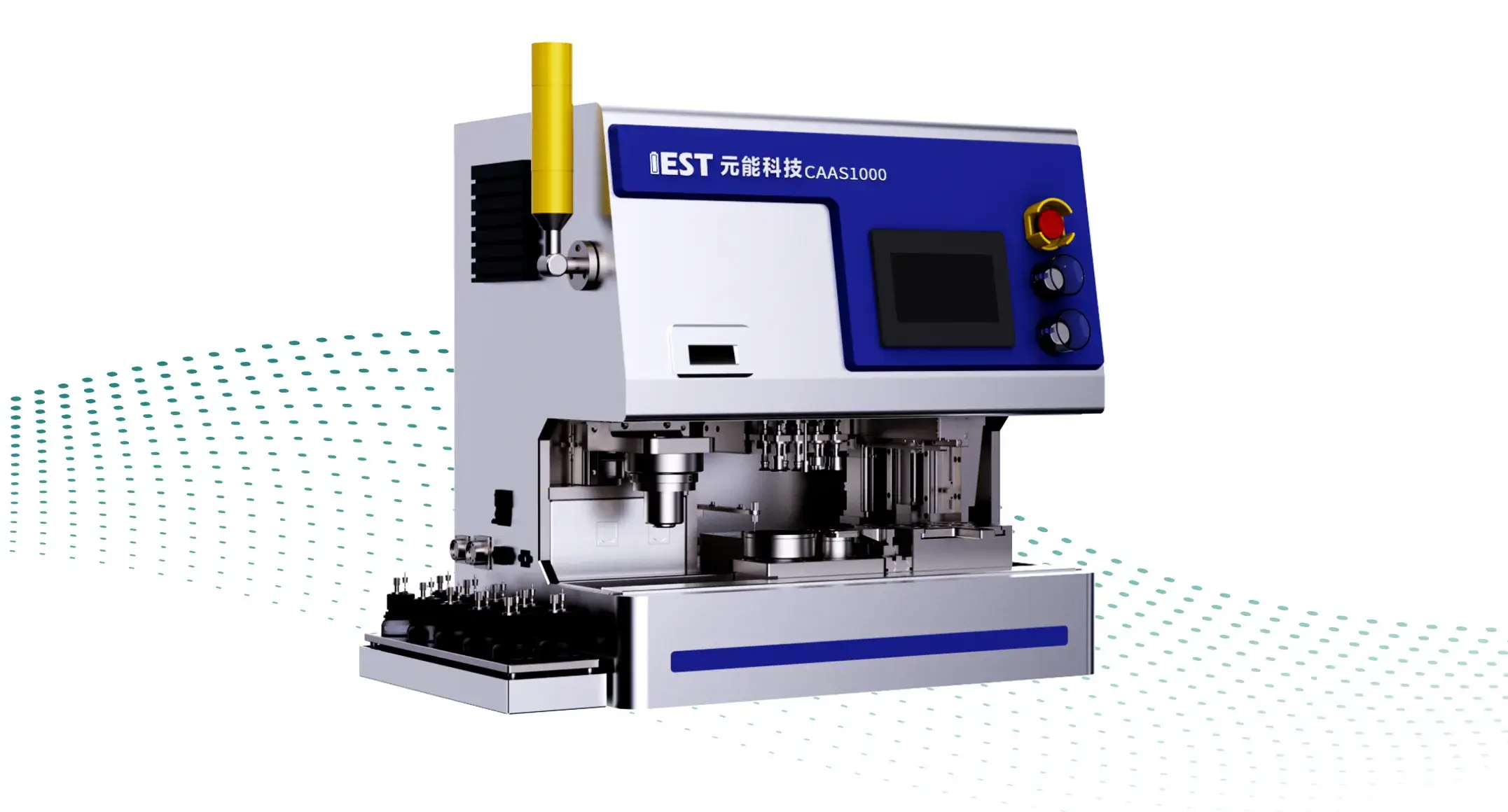
IEST Lab-scale Automatic Coin Cell Assembly Machine(CAAS)
Next-Gen Coin Cell Assembly Machine For Lab-scale
The Lab-scale Automated Coin Cell Assembly Machine (Compact Version) is compatible with standard single-station, single-sided gloveboxes. It integrates automatic electrolyte injection, automatic sealing, a CCD positioning system, and multi-station suction cups — enabling quick switching between coin cell assembly specifications. Suitable for universities and research institutes requiring small-batch assembly of lithium/sodium-ion coin cells.
1-10 ea
Customizable Throughput
±0.4 mm
Assembly Concentricity
60 min/ea
Assembly Speed
3-in-1
Inject · Seal · Inspect
Planning to scale up your pilot production or looking for high-throughput, full-process automation?
The Significance of Coin Cell Assembly
In the preliminary stages of lithium battery R&D for novel materials and fabrication processes, coin cells serve as essential platforms for fundamental electrochemical validation. The precision in cell assembly directly impacts the reliability of performance metrics (e.g., capacity retention, cycle stability) and determines the bench-scale feasibility of materials for commercial applications.
System Features
-
Compact Design Integrates modules such as automatic electrolyte injection, automatic sealing, and a CCD vision system, etc.
-
Comprehensive Functionality Dimensions are engineered to perfectly fit single-workstation standard glovebox specifications.
-
High-speed Assembly Approximately 2 mins/cell
-
High-Throughput Assembly Up to 10 coin cells per batch, flexibly adapting to different needs.
-
Flexible Configuration Supports various common coin cell models such as CR2032, CR2025, CR2016, etc.
-
Wide range of cell types Capable of rapidly assembling half-cells, full-cells, and symmetric cells.
Rapid Assembly
Approx 2 mins/ cell
High-Precision Assembly
Concentricity ±0.4mm
Multi Material Suction Cups
Prevent contamination
Process Traceability
(Optional) Material surface detection
High-throughput Assembly
Up to 10 cells/ batch
Automatic Sealing Module
Precise auto sealing
Automatic Liquid Injection
Max 24 electrolytes
Data Processing Software
Process recording
Equipment Expansion
High-Throughput Automatic Electrolyte Switching System
- Equipment Features: Can interface with an automatic electrolyte formulation platform. Enables automatic switching between 100 different electrolyte recipes, supports continuous assembly of 400 battery cells.
- Application Scenario: Suitable for coin cell assembly for electrolyte formulation verification and high-throughput battery assembly.
Liquid Injection Module
- High-precision liquid injection with accuracy of ±1 μL. Injection volume continuously adjustable from 0 to 200 μL.
- Injection tips automatically switched to prevent cross-contamination of electrolytes.
- Automatic electrolyte transfer & short-term storage. Single transfer: 25 bottles (60 mL/bottle). Max capacity: 200 bottles.
1. Case 1: Manual Assembly VS Auto Assembly
For NCM materials:
- The range of charge/discharge specific capacity for NCM with automatic assembly is 0.6~0.9 mAh/g (σ ≈ 0.25), while with manual assembly it is 1~2 mAh/g (σ ≈ 0.4).
For Silicon-based anode materials:
- The range of charge/discharge specific capacity for Si-based materials with automatic assembly is 15~20 mAh/g (σ ≈ 4~6), while with manual assembly it is 20~40 mAh/g (σ ≈ 5~10).
Conclusion: While the average specific capacity values obtained from automated and manual assembly methods were comparable for both material types, automated assembly demonstrated superior stability compared to manual assembly.
2. Case 2: Automatic Coin Cell Assembly of LFP Cathodes
Conclusion:
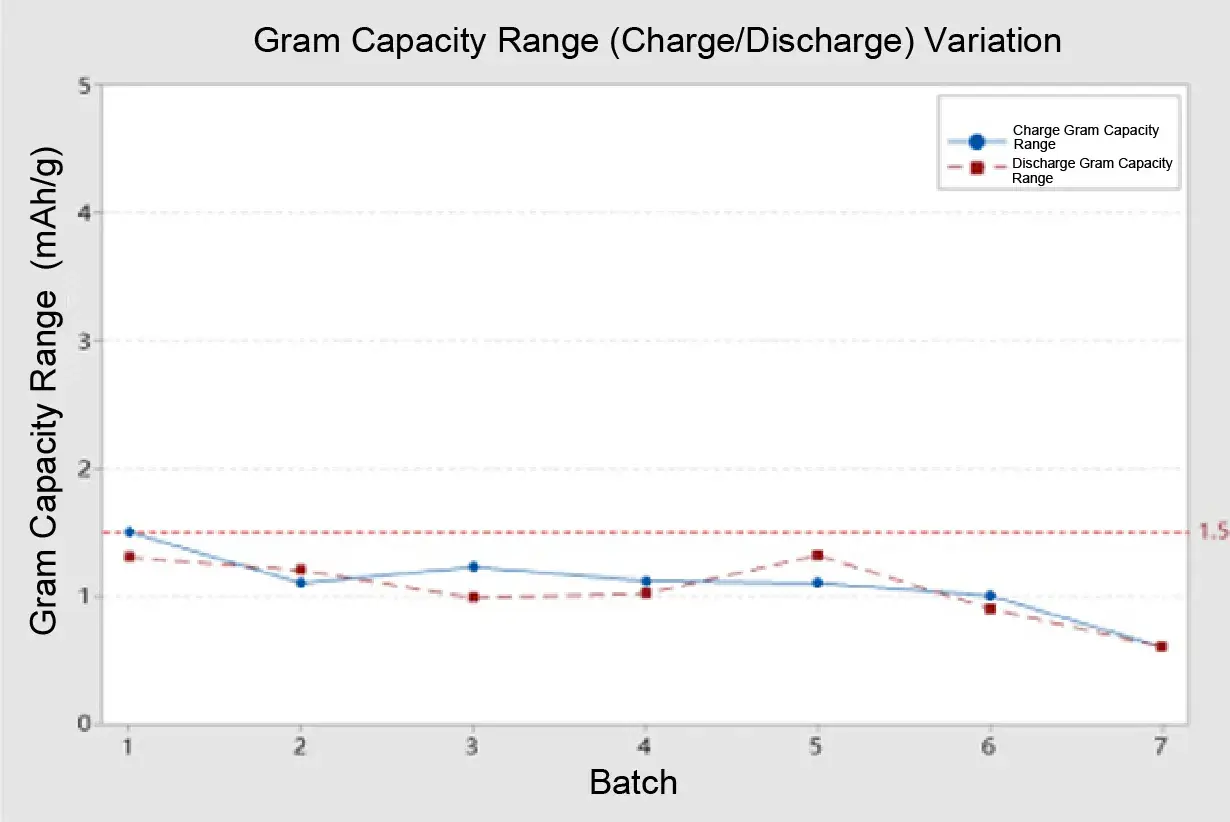
- The standard deviation (σ) for the charge/discharge specific capacity of each group is less than 0.4.
- The range for the charge/discharge specific capacity of each group is less than 1.5 mAh/g.
- The coefficient of variation (COV) for the charge/discharge specific capacity of each group is less than 0.3%.
3. Case 3: Automatic Coin Cell Assembly of Graphite Anodes
Conclusion:
- The standard deviation (σ) for the discharge specific capacity in each group is less than 0.8, and for the chargespecific capacity, it is less than 0.5.
- The range for the discharge specific capacity in each group is less than 2.1 mAh/g, and for the charge specificcapacity, it is less than 1.5mAh/g.
- The coefficient of variation (COV) for both charge and discharge specific capacity in each group is less than 0.2%.
4. Case 4: Curling Issue of Single-Sided Electrodes after Calendering and Punching
Conclusion:
- Our specially designed suction cup can ensure that the curled electrodes are sucked evenly and flatly.
- Our visual positioning system can avoid the placement position deviation caused by the curling of the electrodes.
- The positive electrode shell is pressed down horizontally to flatten the curled electrode that contacts the electrolyte.
| Model | CAAS1000 |
|---|---|
| Assembly Concentricity | ±0.4mm |
| Assembly Accuracy | 2 min/ea |
| Suction Cup Positioning Accuracy | ±0.1mm |
| Electrolyte Injection Accuracy | ±2% |
| CCD Positioning Accuracy | ±0.05mm |
| Sealing Stroke Accuracy | ±0.02mm |
| Sealing Pressure Monitoring Accuracy | ±0.05% (Max Range: 2T) |
| Function |
|
IEST Lab-scale Automatic Coin Cell Assembly Machine(CAAS)
Next-Gen Coin Cell Assembly Solutions For Lab-scale
Contact Us
Can’t find what you’re looking for? We provide customized solutions to meet your needs.