
Battery Electrode Testing Solutions


BER Series — Electrode Resistance Analyzer

Dual-planar pressure-controlled disc electrode resistance method to directly measure the overall resistivity of real battery electrodes.
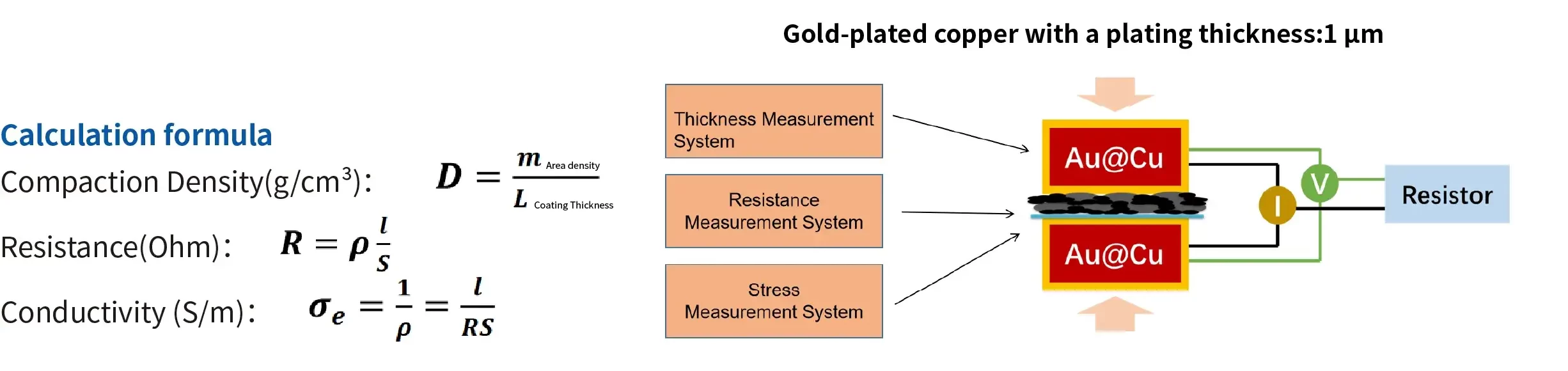
Application Scenario
Evaluation of the uniformity of the electronic conductive network inside electrodes.
Key Features
- Pressure Range: 5 ~ 60 MPa (50 ~ 1000 kg) with continuous precision load control.
- Test Range: 0 ~ 5 mm accommodating diverse electrode coatings and current collectors.
- Test Accuracy: Sub-micron thickness accuracy of ±1 μm and resolution of 0.1 μm.
Typical Data
Cathode and anode electrode resistivity variations as a function of conductive carbon / CNT content.

Core Specifications
| Parameter | Specification |
|---|---|
| Model | BER 2500 |
| Resistance Range & Accuracy | 1 μΩ ~ 3.1 kΩ (±0.5% F.S) |
| Pressure Range & Accuracy | 50 ~ 1000 kg / 5 ~ 60 MPa (±0.3% F.S) |
| Thickness Range | 0 ~ 5 mm |
| Thickness Resolution & Accuracy | 0.1 μm / ±1 μm |
| Instrument Dimension | 355 × 320 × 800 mm |
EIC Series — Electrode Ionic Conductivity Tester
Application Scenario
Evaluation of the electrolyte percolation and ion transport efficiency inside electrodes and separators.
Key Features
- Inert Testing Environment: Operates under Ar atmosphere to prevent side reactions in active materials.
- High-Throughput Analysis: 4-channel synchronous testing for enhanced screening efficiency.
- Broad Sample Compatibility: Directly applicable to cathode, anode electrodes, and separators.
- Direct Kinetic Metrics: Precise McMullin Number and Tortuosity measurement.
Typical Data
Electrochemical impedance spectroscopy (EIS) Nyquist plots across electrodes with varying compaction densities.

Core Specifications
| Parameter | Specification |
|---|---|
| Model | EIC 2400M |
| Channel Number | 4 Channels |
| EIS Test Range | 100k ~ 0.01 Hz |
| Pressure Range | 10 ~ 50 kg |
| Sample Diameter | Electrodes: 16 ~ 22 mm Separators: 20 ~ 24 mm |
| Instrument Dimension | 630 × 560 × 1120 mm |
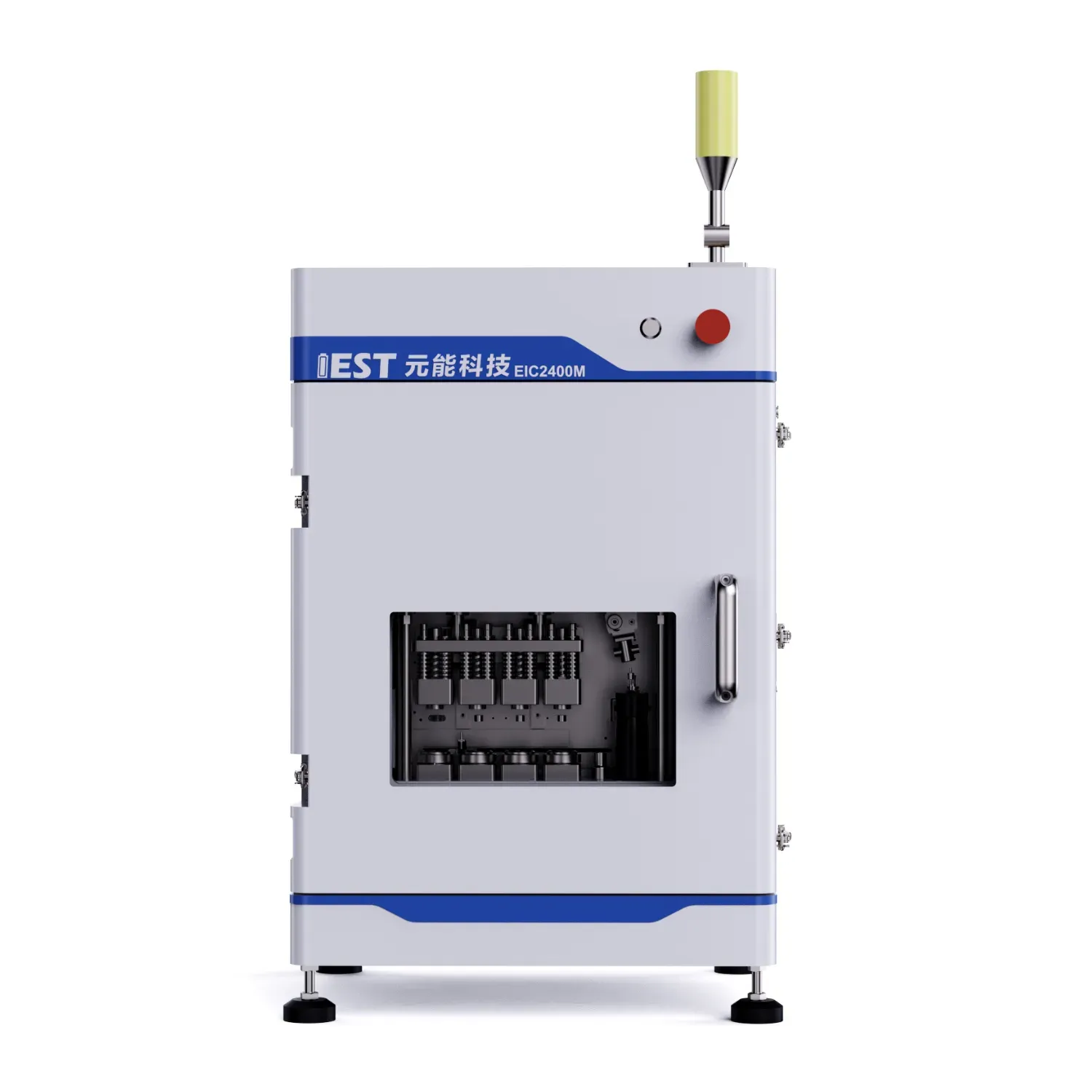
Symmetrical sandwich cell configuration with confinement separator to measure ionic resistance and calculate tortuosity and McMullin number.

EWS Series — Electrode Wettability Tester (Capillary Method)
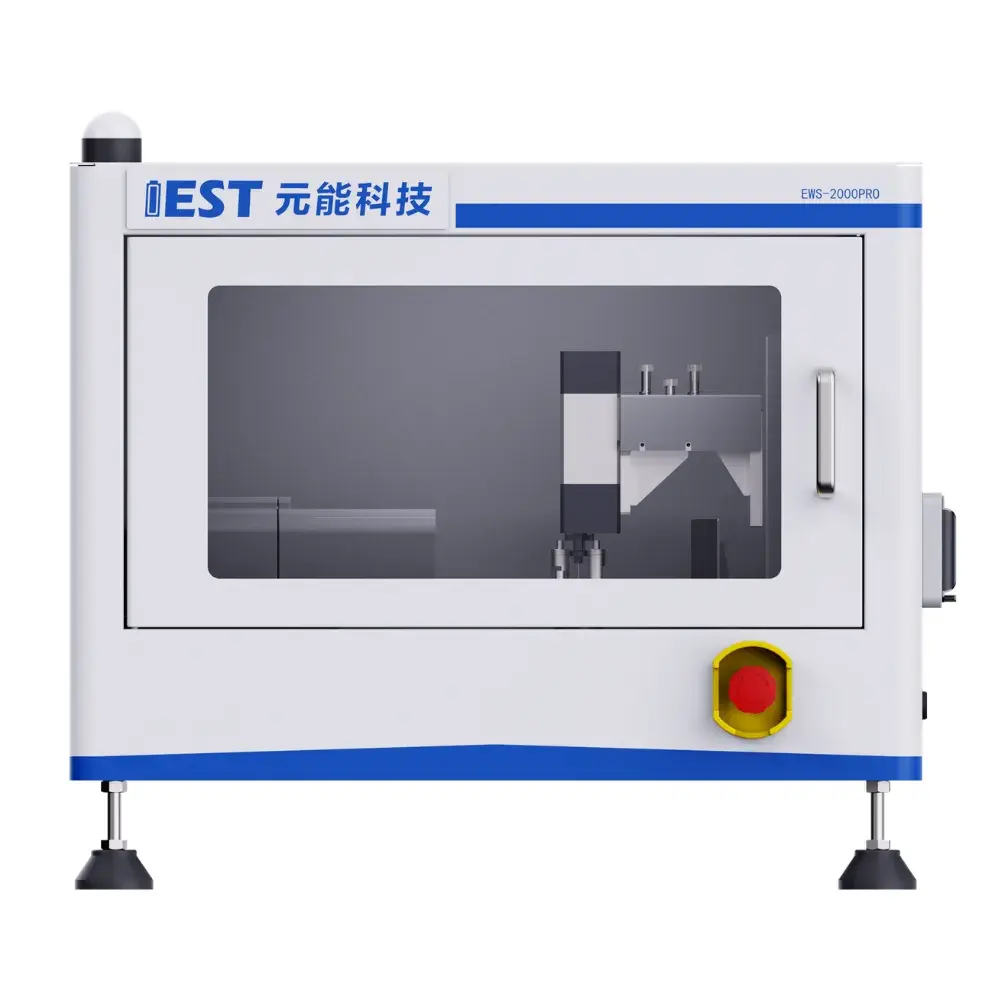
Capillary glass tube contacting the electrode under precise force control with a high-resolution visual system capturing dynamic absorption height versus time.
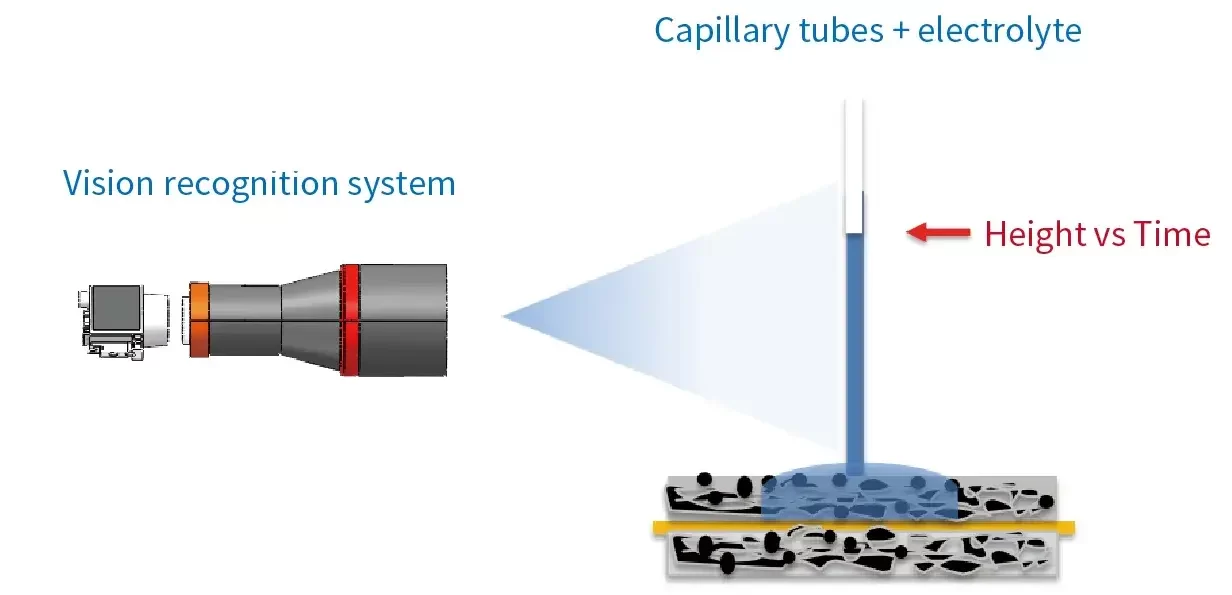
Application Scenario
Evaluation of the wettability performance of electrodes.
Key Features
- Automated Operation: Auto calibration, electrolyte filling, testing, and draining.
- Precise Force Control: Precise contact force loading ensuring consistent electrode contact without pore damage.
- In-Situ Real-Time Detection: Real-time optical recording of dynamic electrolyte percolation kinetics.
- Applicable samples: Include cathode and anode electrodes.
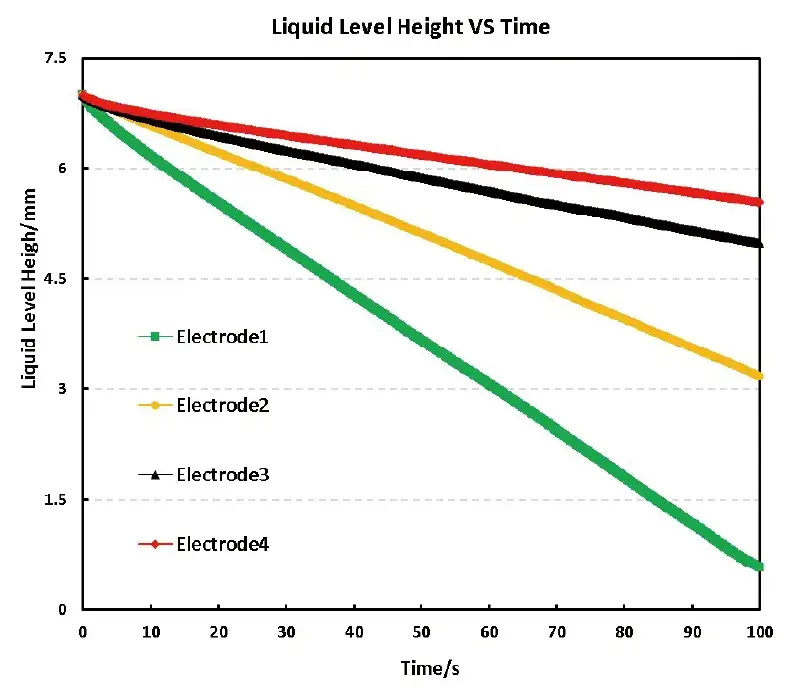
Typical Data
Electrolyte absorption liquid level height vs. time across electrodes under different compaction densities (1.35 ~ 1.65 g/cm³).
Core Specifications
| Parameter | Specification |
|---|---|
| Model | EWS 2200 Pro |
| Pressure Control Range | 0 ~ 200 g |
| Force Resolution / Accuracy | ±0.5 g / ±0.3% F.S |
| Pixel Accuracy | ≤ 10 μm |
| Suction Capacity | 10 μL |
| Sample Size | 90 × 90 mm (9 points) |
| Instrument Dimension | 650 × 420 × 530 mm |
ETS Series — Electrode Wettability Tester (Weight Method)
Application Scenario
Evaluation of the wettability performance of electrodes.
Key Features
- High-precision Testing.
- Automated electrolyte level control module.
- Inert Electrolyte-seal module.
- Applicable Samples: cathode & anode electrodes
Typical Data
Electrolyte dynamic absorption weight versus time curves across electrodes with different pore structures and surface properties.

Core Specifications
| Parameter | Specification |
|---|---|
| Model | ETS 1500 |
| Balance Measurement Range | 0 ~ 120 g |
| Weighing Resolution | 0.1 mg |
| Lifting Speed Range | 0.1 ~ 10 mm/min |
| Sample Dimensions | Width: 10 ~ 30 mm / Length: 20 ~ 100 mm |
| Instrument Dimension | 480 × 380 × 650 mm |
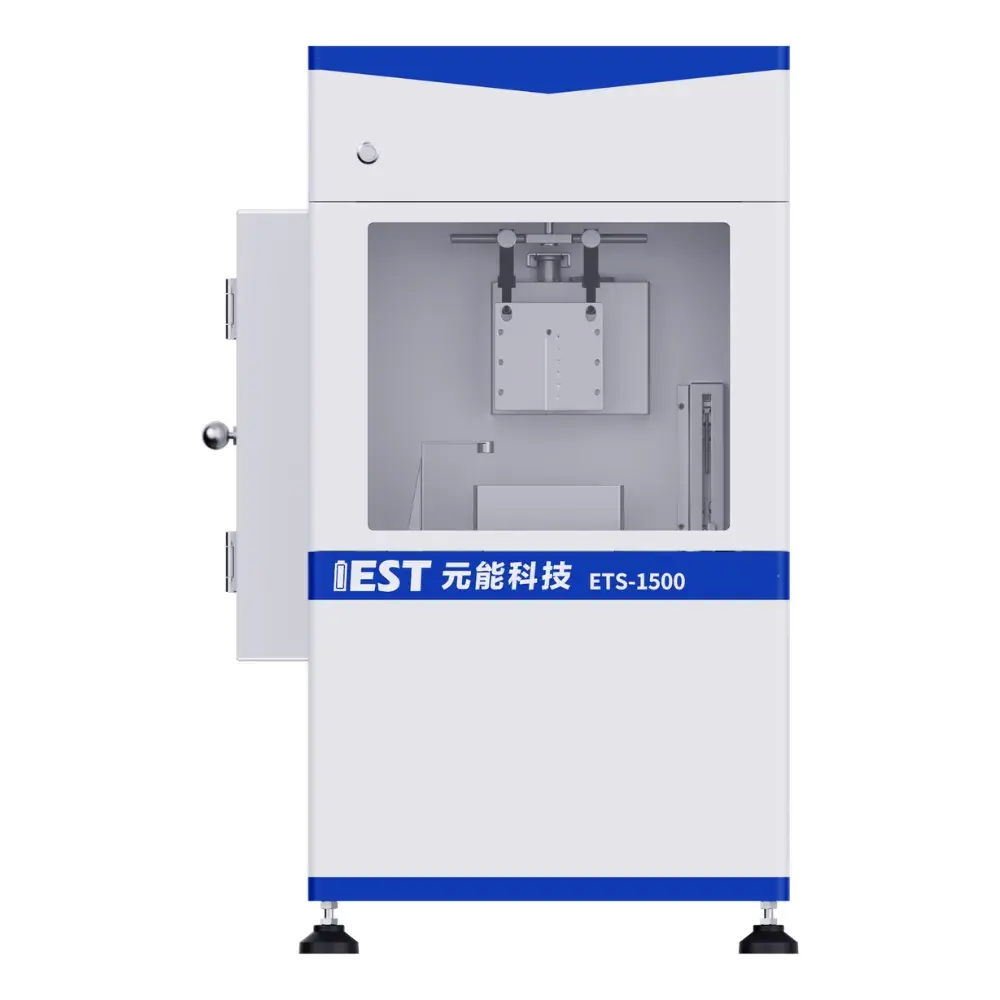
Gravimetric capillary absorption method based on the Washburn equation to continuously record electrolyte infiltration mass uptake over time.

CHT Series — Electrode Wettability Tester (Height Method)

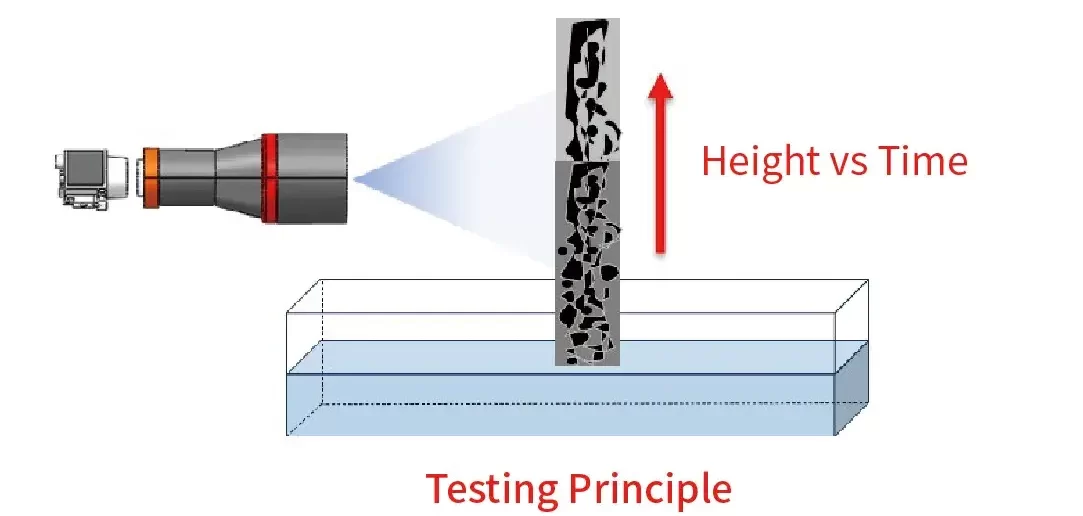
Vertical capillary rise method utilizing high-resolution optical imaging to track dynamic liquid climbing height along the electrode surface over time.
Application Scenario
Evaluation of the wettability performance of electrodes.
Key Features
- High-resolution vision system.
- Real-time, in-situ measurement.
- Multi-point wetting-height measurement.
- Applicable samples: cathode & anode electrodes, and separators.
Typical Data
Applications of CHT-2000 on Anode Electrodes.

Core Specifications
| Parameter | Specification |
|---|---|
| Model | CHT 2000 |
| Test Method | Capillary Rise (Optical Height Method) |
| Channel Number | 4 Channels |
| Height Measurement Range | 0 ~ 60 mm |
| Optical Resolution | ≤ 10 μm / Accuracy: ±0.1 mm |
| Sample Dimensions | Width: 10 ~ 25 mm / Length: 50 ~ 100 mm |
| Instrument Dimension | 620 × 450 × 560 mm |
GDT Series — Jelly Roll Wettability Tester (Weight Method)
Application Scenario
Evaluation of the wettability performance of jelly rolls.
Key Features
- Auto electrolyte level control module.
- Applicable samples: Jelly rolls and Cylindrical cells.
Typical Data
Dynamic electrolyte absorption mass curves m(g) vs. t(s) and square root of time √t(s½) for battery jelly rolls.

Core Specifications
| Parameter | Specification |
|---|---|
| Model | GDT-2000 |
| Balance Capacity | 0 ~ 10200 g |
| Weighing Accuracy | ±10 mg |
| Refill Rate | 0 ~ 10 mL/s |
| Electrolyte-Level Fluctuation | < 0.1 mm |
| Max Sample Size | 530 × 30 × 400 mm |
| Instrument Dimension | 770 × 700 × 1150 mm |
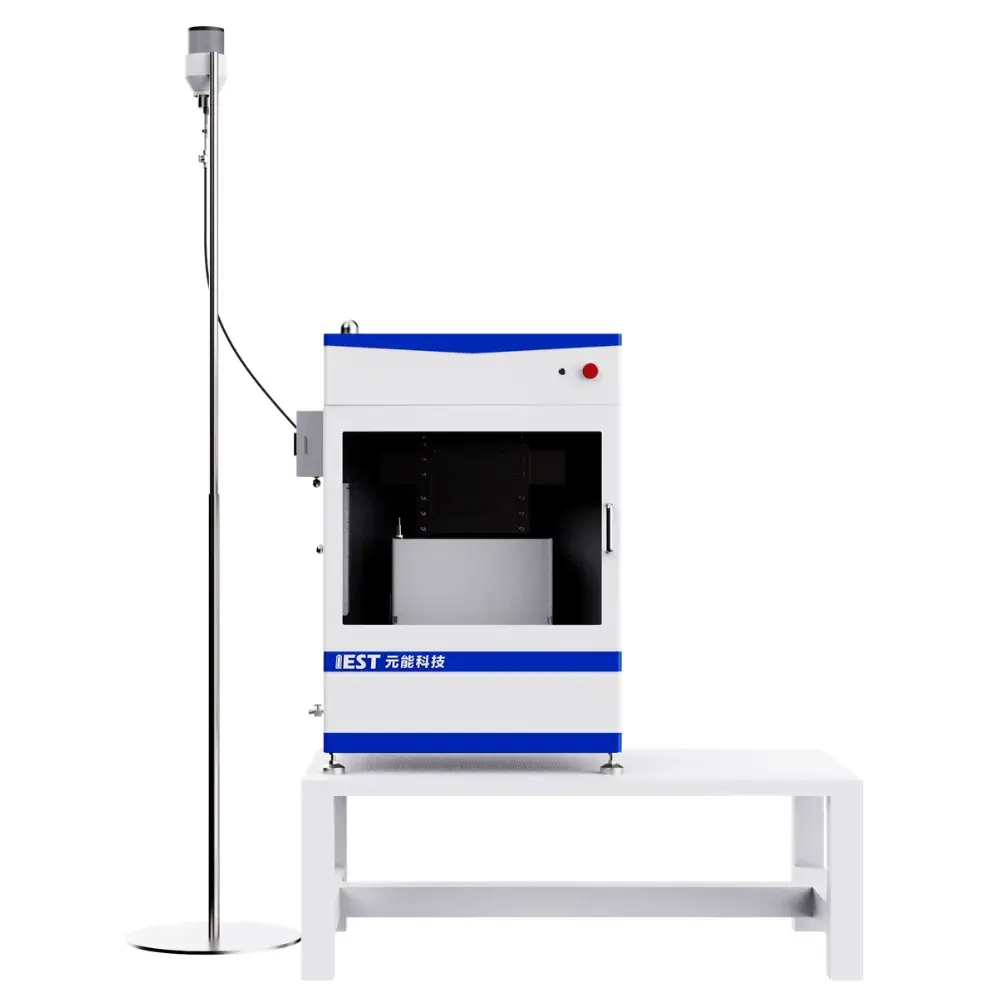
Automated electrolyte level control module coupled with dynamic weighing system to measure real-time absorption mass across jelly rolls and cylindrical cells.

BEF Series — Electrode Flexibility Tester
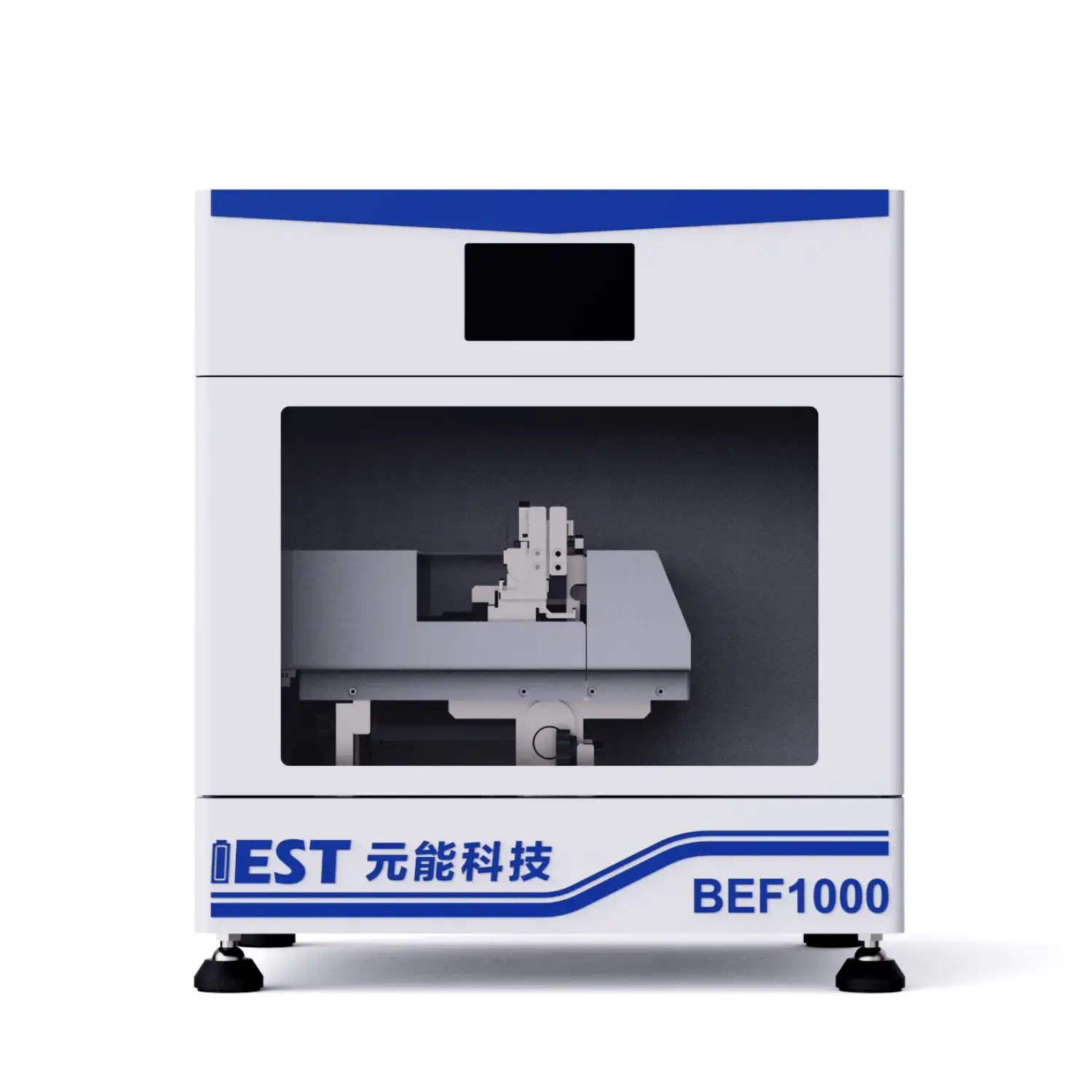
Horizontal U-shape compression bending test driven by a high-precision load cell to measure folding force and deformation limits.

Application Scenario
Evaluation of Stress-Strain curves during electrode folding.
Key Features
- Multiple folding and reciprocating modes.
- High-precision load cell capturing subtle bending force variations down to 0.01 mN.
- Clear inflection point detection for evaluating electrode cracking and brittle limits.
- Applicable samples: anode & cathode electrodes.
Typical Data
Force-displacement bending curves and inflection point characteristics (F1, D1) across electrodes with different compaction densities.

Core Specifications
| Parameter | Specification |
|---|---|
| Model | BEF 1000 |
| Pressure Range | 0 ~ 10000 mN |
| Pressure Resolution | ±0.01 mN |
| Pressure Accuracy | ±10 mN |
| Displacement Range | 0 ~ 18 mm |
| Displacement Resolution & Accuracy | 0.1 μm / ±10 μm |
| Instrument Dimension | 404 × 400 × 465 mm |
FZT Series — Electrode Flexibility Auto Tester
Application Scenario
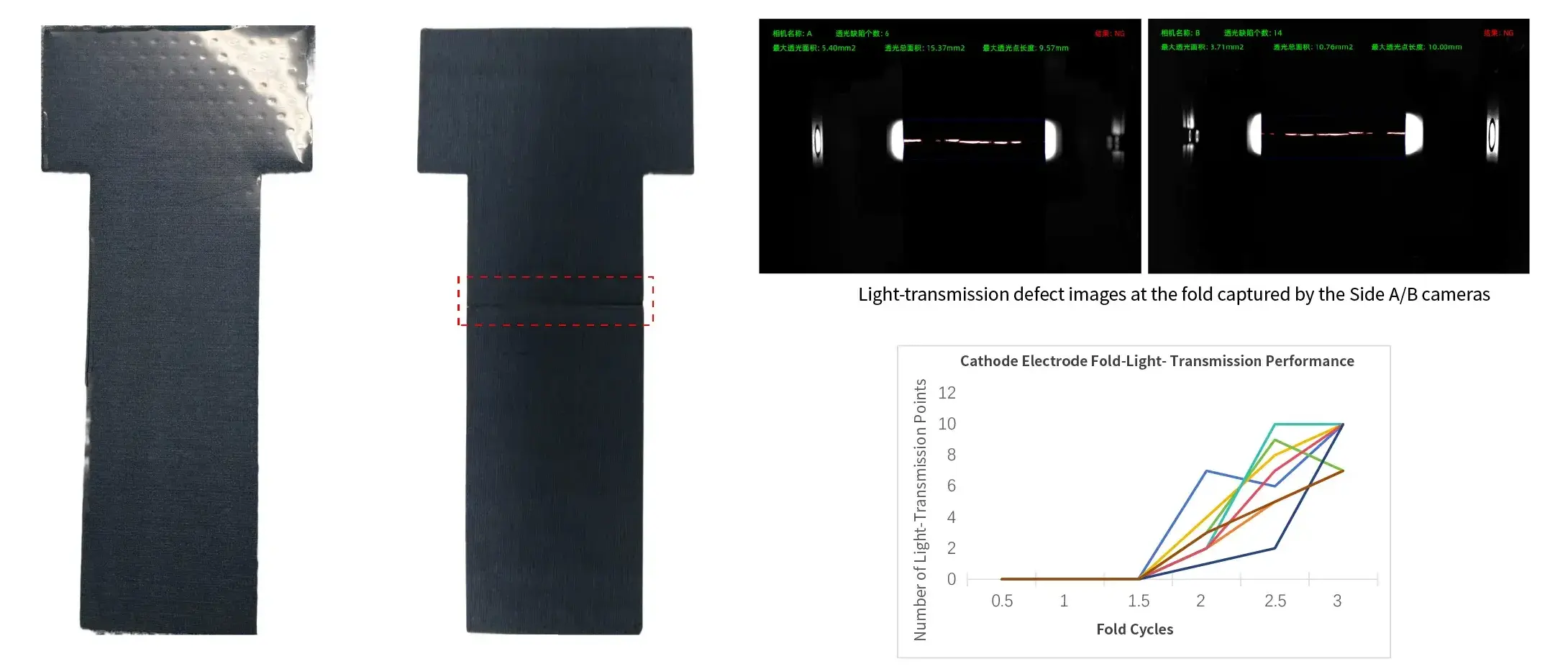
Evaluation of fatigue characteristics of anode and cathode electrodes after repeated folding and rolling.
Key Features
- Folding Angle: Wide angular range from 0 to 270°.
- Rolling Pressure: 2 ± 0.1 kg (customizable) for authentic calendering simulation.
- CCD Inspection Accuracy: 7 μm high-resolution defect detection.
- Gravity Roller: Rolling width of 15 ~ 80 mm ensuring uniform mechanical loading.
Typical Data
Cathode brittleness inspection consistency and defect count evaluation across repeated fold-and-roll fatigue cycles.
Core Specifications
| Parameter | Specification |
|---|---|
| Model | FZT 1000 |
| Sample Max Folding Angle | 270° |
| Folding Accuracy | 0.1° |
| Maximum Rolling Speed | 40 mm/s |
| Rolling Pressure Range / Accuracy | 0 ~ 20 N / 0.1 N |
| Defect Detection Count | 0 ~ 99 defects / sample |
| Sample Size | 10 ~ 80 mm (width) |
| Instrument Dimension | 760 × 630 × 1300 mm |
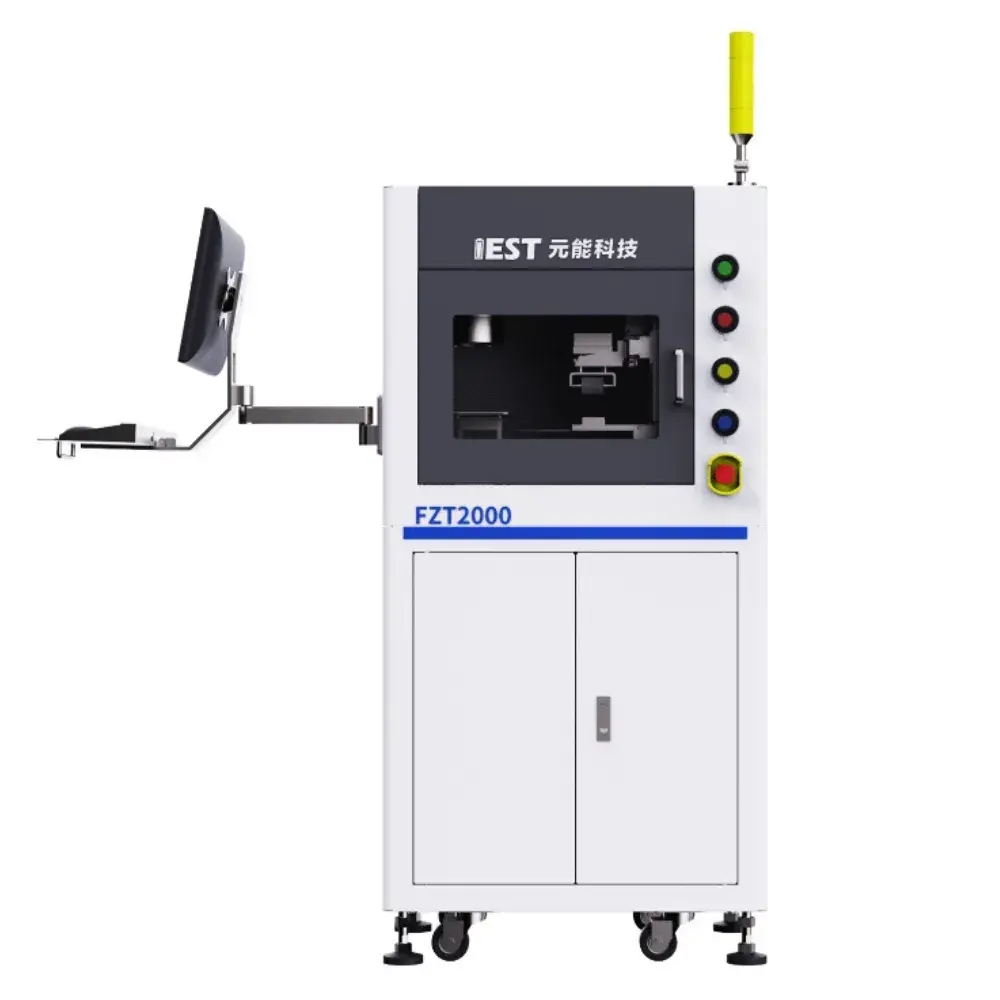
Automated 0–270° folding structure coupled with gravity roller pressing and high-precision CCD optical inspection to quantify micro-cracking and defect propagation.

LECF Series — Electrode Coating Peel Strength Tester
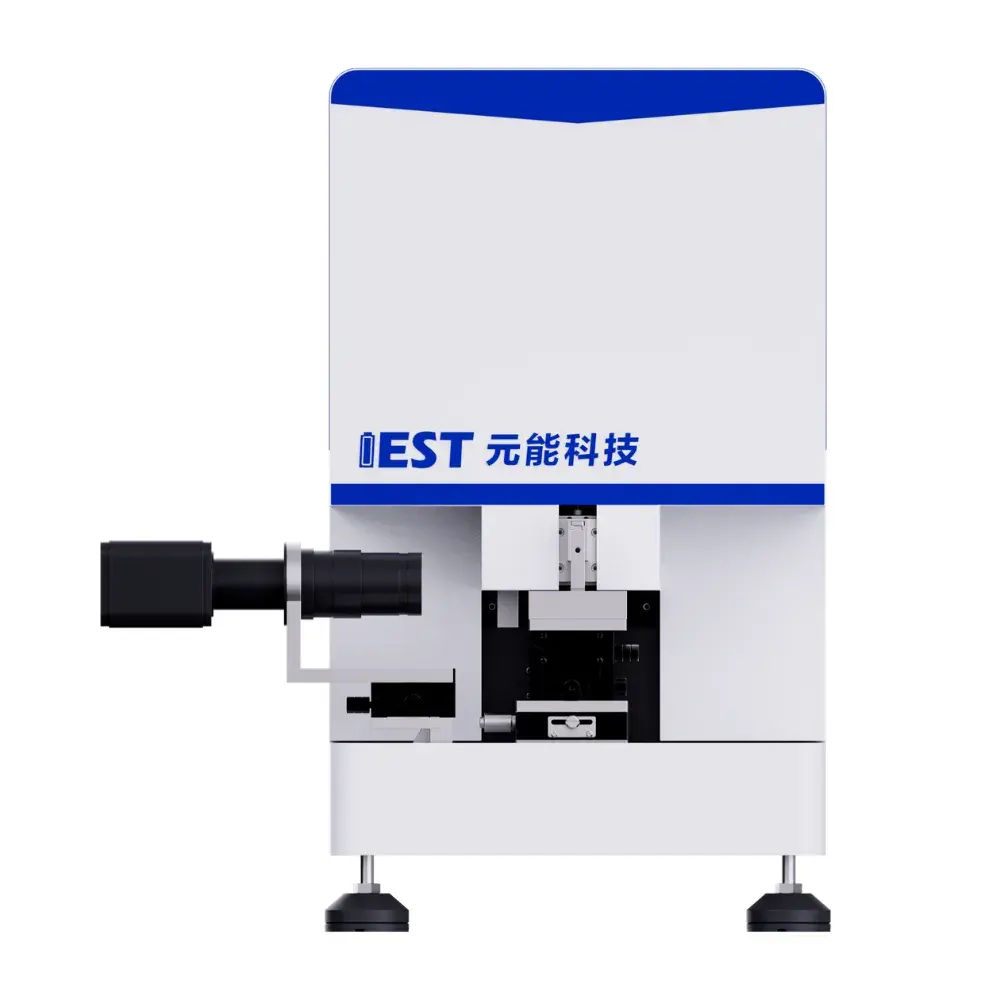
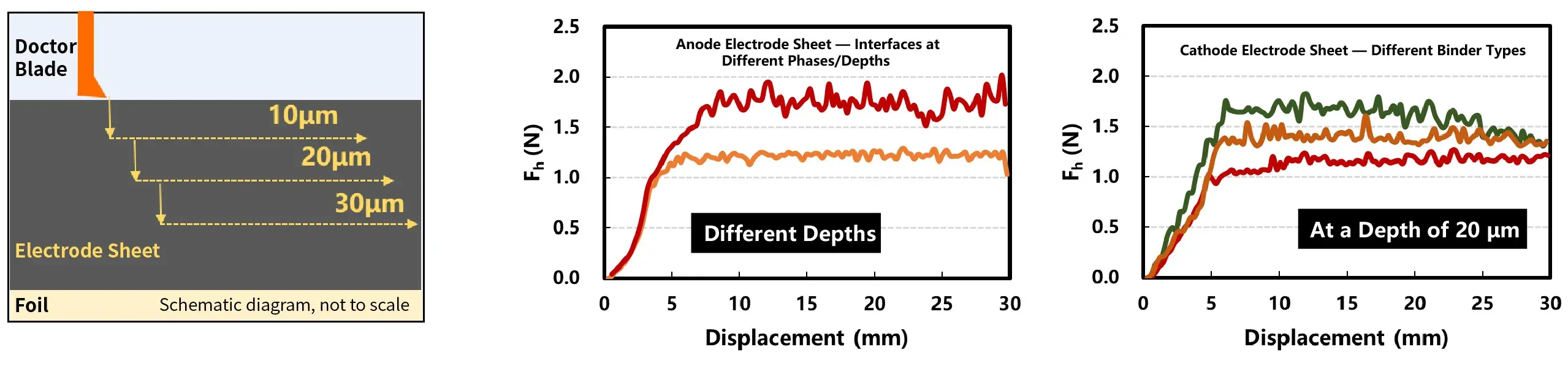
Based on micron-level layered scraping technology Precisely peels electrode coatings at different depths/Obtains peel-force and cohesive-strength data.

Application Scenario
Quantitative Evaluation of inter-layer adhesion and shear force of electrodes.
Key Features
- Depth-Resolved Profiling: Continuously measures peel force gradients from coating surface to the current collector interface.
- Dual-Component Metrology: Synchronously captures horizontal peel force and vertical normal load with high precision.
- Sub-Micron Control: Precision motorized stage allows stable micro-cutting speeds without sample buckling.
- Applicable Samples: Cathode & anode electrodes, coated separators, and solid-state battery composite films.
Typical Data
Depth-resolved electrode coating peel strength and interfacial adhesion analysis across cutting distance.
Core Specifications
| Parameter | Specification |
|---|---|
| Model | LECF 1000 |
| Peel Force Range | 0 ~ 50 N |
| Force Resolution / Accuracy | 0.1 mN / ±0.1% F.S |
| Cutting Speed Range | 0.1 ~ 50 μm/s |
| Z-Axis Travel & Resolution | 0 ~ 2 mm / 0.01 μm |
| Sample Dimensions | Max. 20 × 80 mm |
| Instrument Dimension | 480 × 420 × 580 mm |
RSS Series — In-Situ Silicon-Based Anode Swelling Rapid Screening System
Application Scenario
Evaluation of swelling thickness or swelling force change of electrodes during cycling
Key Features
- Rapid screening for swelling of silicon-based anodes.
- Accurately measure irreversible swelling thickness and swelling rate.
- High-throughput multi-channel in-situ parallel testing capability.
- Applicable samples: Silicon-based anodes, coin cells, stacking cells, pouch cells.
Typical Data
Applications of in-situ swelling rapid screening system RSS1400 on silicon-based anode materials across continuous charge-discharge cycles.

Core Specifications
| Parameter | Specification |
|---|---|
| Model | RSS 1400 |
| Channel Number | 4 Channels |
| Thickness Measurement Range | 0 ~ 5 mm |
| Displacement Resolution & Accuracy | 0.1 μm / ±1 μm |
| Constant Preload Range | 10 ~ 1000 g |
| Testing Cell Type | Dedicated Swelling Test Cell / Pouch Cell |
| Instrument Dimension | 620 × 480 × 650 mm |
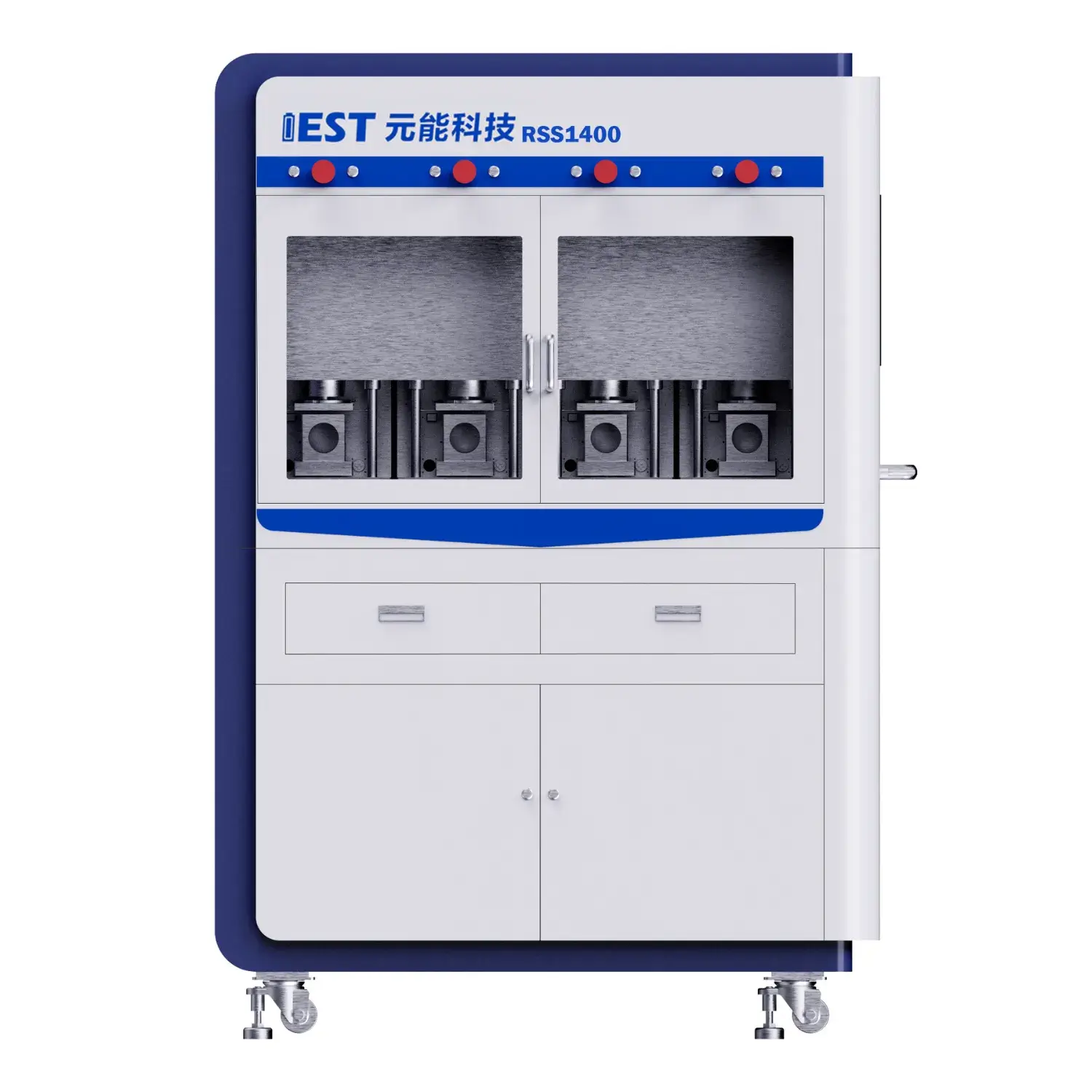
In-situ high-precision displacement sensing module synchronized with multi-channel electrochemical cycling to dynamically track electrode swelling thickness under controlled preload.