-
iestinstrument

Abstract
1. Introduction
The power of the microcosm determines the pinnacle of macroscopic performance. When we talk about lithium-ion batteries, terms like energy density, cycle life, and fast-charging capability often come up — these grand performance metrics might seem distant. But have you considered that all these properties originate from the most fundamental level: the “physical fitness” of each individual particle within the electrode material?
Today, we focus on one of the “hearts” of the lithium-ion battery — the graphite anode — and, through a revealing Single Particle Crushing Test, uncover the remarkable differences in strength between artificial (synthetic) graphite and natural graphite, and how this subtly shapes battery performance and cost-effective battery graphite selection.
2. The Two Contenders: The Main Types of Graphite Anodes
In the field of lithium-ion battery anodes, graphite materials dominate due to their excellent conductivity and stable layered structure. They can be broadly classified into two types:
2.1 Natural Graphite: A Gift from Nature
-
Source: As the name suggests, it is derived from natural graphite mines, which undergo processes like purification, grinding, and spheronization.
-
Structural Characteristics: Being a product of nature, its structure is closer to a “perfect crystal.” The degree of graphitization is high, with a regular layered structure, facilitating lithium-ion intercalation and de-intercalation, thus resulting in higher capacity.
- Advantages and Disadvantages: The advantage is higher specific capacity and lower cost. However, its natural source means the particle surfaces often have many defects and edges, leading to poorer compatibility with the electrolyte and batch-to-batch instability.
2.2 Artificial Graphite: A Technological Masterpiece
-
Source: Artificially produced through high-temperature heat treatment (graphitization) using easily graphitizable carbon precursors like petroleum coke or needle coke.
-
Structural Characteristics: This is the product of meticulous processing. During manufacturing, the tiny crystals in the precursor material re-arrange, grow, and fuse to form a complex polycrystalline structure. One can imagine natural graphite as a complete “marble block,” whereas artificial graphite is a “concrete” made of countless “pebbles” and “cement.”
- Advantages and Disadvantages: The advantages include a more stable structure, fewer side reactions with the electrolyte, and longer cycle life. However, the complex manufacturing process increases cost, and its capacity is slightly lower than natural graphite.
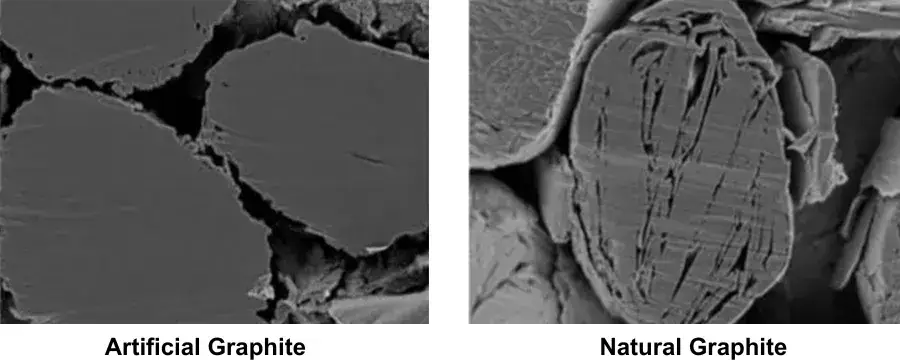
Figure 1. Artificial graphite vs. natural graphite — structural comparison
3. Microscopic Battle: Single Particle Compression Test
Using the IEST Single Particle Force Properties Test System, we can directly compare the “physical fitness” of the two material types. This test can be thought of as a “weightlifting competition” in the microcosm. Under a microscope, a complete, well-shaped particle of both natural and artificial (synthetic) graphite is selected and subjected to vertical pressure with a fine probe until the particle fractures. The “crushing force” value reflects the compressive strength of the individual particle. (For more detailed testing, refer to the Lithium-ion New Solutions | Single Particle Mechanical Testing System.)
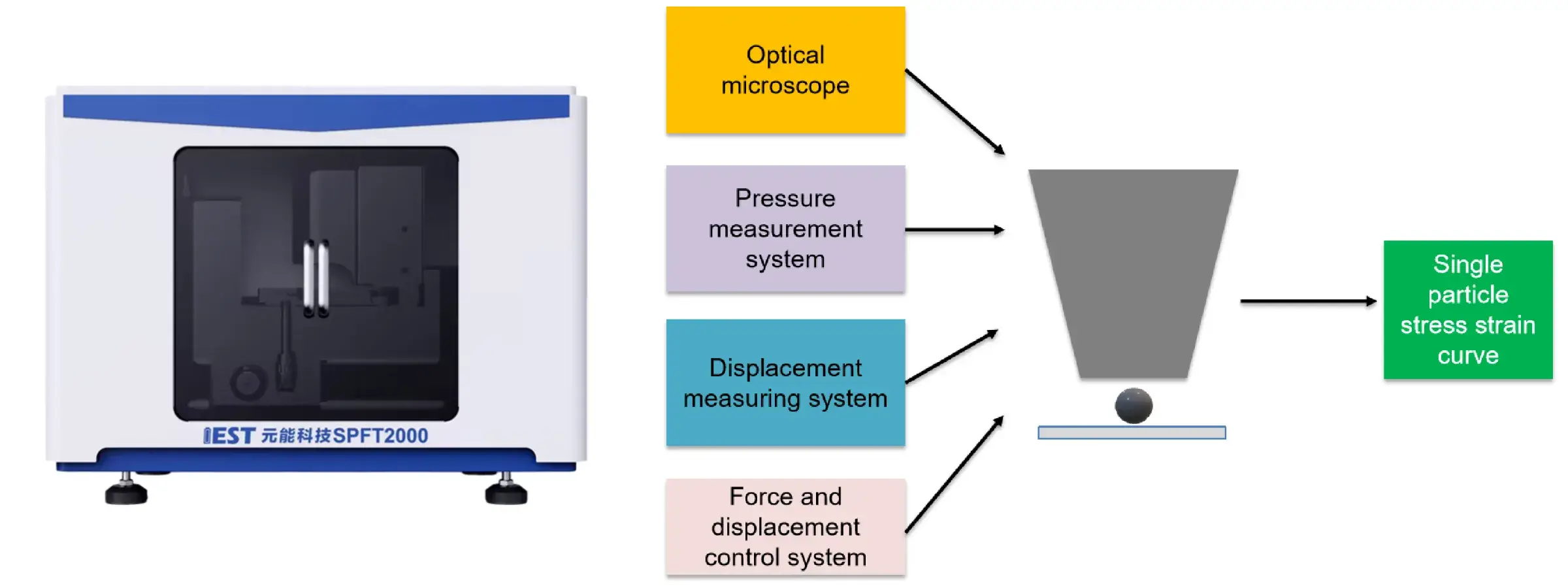
Figure 2. Single Particle Force Properties Test System and test schematic
For this study, different types of artificial graphite (~10 μm) and natural graphite (~20 μm) were selected for single-particle crushing tests, following strict standardized procedures. First, samples were prepared by dispersing particles in ethanol to ensure uniform distribution. Next, optical microscopy was used to locate individual dispersed particles. After setting up experimental parameters, compression tests were performed, and the shape changes of the particles before and after compression were observed and recorded. Each sample typically underwent testing on more than 10 particles to ensure data reliability and statistical significance.
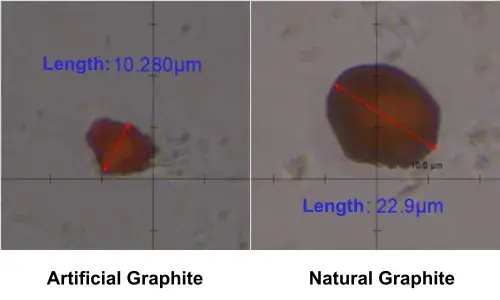
Figure 3. Individual dispersed particles of artificial graphite and natural graphite
4. Results Revealed: Artificial Graphite Demonstrates “Hard” Power
The crushing curves (force-displacement curves) for some particles are shown below. Particles undergo elastic-plastic deformation during the initial compression stage. When compressed to the point of fracture, this is termed the particle’s crushing point, and the corresponding force value is called the Crushing Force, indicating the pressure at which the particle fails. The crushing forces for each sample are aggregated, producing a comparative chart.
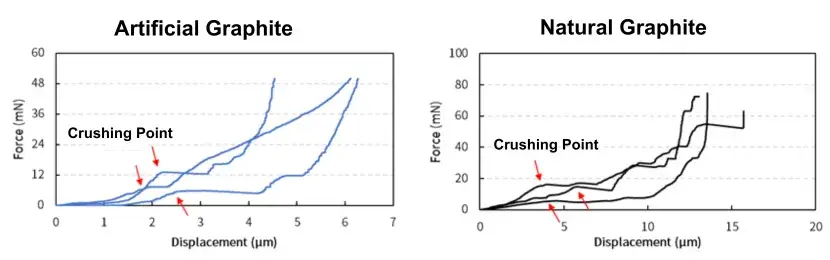
Figure 4. Crushing curves of artificial and natural graphite particles
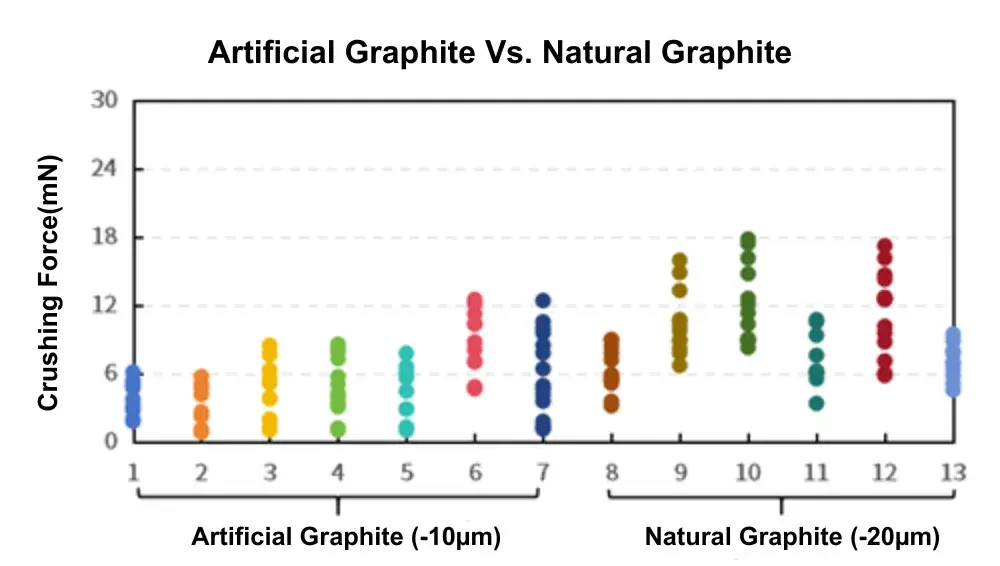
Figure 5. Comparative chart of crushing force for artificial vs. natural graphite
Based on the Chinese National Standard GB/T 43091-2023 method for testing powder compressive strength, the particle’s compressive strength is calculated from its crushing force. The test results clearly show that the average crushing strength of artificial (synthetic) graphite particles is significantly higher than that of natural graphite particles.
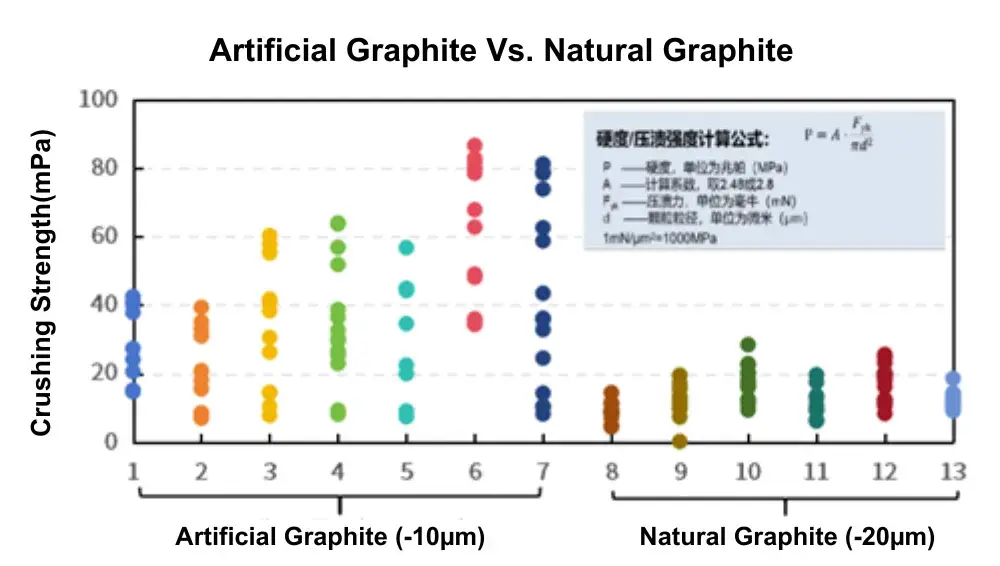
Figure 6. Comparative chart of crushing strength for artificial vs. natural graphite (GB/T 43091-2023)
Natural graphite is like a well-structured book with weak adhesion, where its layers (bonded by van der Waals forces) are prone to slipping and cleavage under external force, leading to particle breakage from the weakest points.
On the other hand, artificial graphite resembles a book made up of numerous tightly bonded small pieces of paper — an “artificial hard material” in the structural sense. Its polycrystalline structure and grain boundaries effectively hinder crack propagation under external force, dispersing concentrated stress in all directions. Each time a crack expands, it encounters a new grain boundary, requiring more energy to break the particle. This makes artificial graphite more resilient.
5. How Does “Hardness” Enhance Battery Performance?
What does a harder anode particle mean for a lithium-ion battery? This is not just a display of “muscle” but translates into tangible performance improvements.
-
Higher Resistance to Pulverization Ensures Longer Cycle Life: During the charging and discharging process of the battery, graphite particles expand and contract repeatedly. Weak natural graphite particles are prone to breaking and pulverizing after hundreds or thousands of cycles due to mechanical fatigue.
-
More Stable Electrode Structure Supports High Energy Density: Stronger particles are less likely to break during electrode calendering, enabling manufacturers to create electrodes with higher packing densities. A higher packing density means more active material can be packed into the same volume, directly enhancing the battery’s volumetric energy density.
-
Potential for Fast-Charging Enhancement: In fast charging, the rapid influx of lithium ions generates significant internal stress. Particles with higher strength are better able to withstand the structural damage caused by this stress, providing a material foundation for the development of safer, more durable fast-charging batteries.
5.1 How Crushing Strength Data Informs Cost-Effective Graphite Selection
For buyers comparing battery graphite suppliers primarily on price, crushing strength data provides a mechanical performance dimension that price and specific capacity alone do not capture. The table below summarizes the trade-offs relevant to a cost-effective battery graphite decision:
| Comparison Factor | Natural Graphite | Artificial (Synthetic) Graphite |
|---|---|---|
| Typical unit cost | Lower | Higher |
| Specific capacity | Higher | Slightly lower |
| Single-particle crushing strength | Lower | Higher |
| Resistance to pulverization / cycle life | Lower — more prone to particle breakage over cycling | Higher — grain boundaries resist crack propagation |
| Electrolyte compatibility | More surface defects, batch-to-batch variability | More stable, fewer side reactions |
| Suitability for high packing density electrodes | Lower — particles more prone to breaking during calendering | Higher — supports higher volumetric energy density |
In practice, this means a lower-cost natural graphite grade is not automatically less suitable — it depends on the application’s cycle-life requirements and electrode manufacturing process. But suppliers offering “budget” battery graphite without published crushing strength or particle integrity data leave buyers unable to evaluate this trade-off, which is precisely the gap that single-particle crushing testing on the IEST Single Particle Force Properties Test System is designed to close.
Evaluating Battery Graphite for Cost-Effective Selection?
The IEST Single Particle Force Properties Test System measures individual-particle crushing force and crushing strength for artificial, synthetic, and natural graphite — giving buyers mechanical performance data alongside price and specific capacity.
6. Future Trends: Integration and Innovation
Currently, the clear boundaries between purely natural or artificial graphite are blurring, with a shift towards hybridization:
-
Composite Graphite: Blending natural and artificial graphite in specific ratios, or incorporating natural graphite into artificial graphite particles, combines their strengths to find the optimal balance between cost, capacity, rate capability, and cycle life. This is a very mainstream technical direction currently.
-
Silicon-Carbon Anodes: Both natural and artificial graphite are approaching their theoretical capacity limits. The future direction involves incorporating silicon into graphite, forming silicon-carbon composite anodes, which can significantly boost energy density. In this context, artificial graphite, due to its more stable structure, is generally considered a better “host” material for silicon.
7. Conclusion: The Competitive Edge of Artificial Graphite
Through the microscopic window of the single-particle crushing test, we clearly see that artificial (synthetic) graphite, with its “concrete-like” dense structure, possesses superior mechanical strength compared to the structurally regular yet “brittle” natural graphite. This “hard” core strength ultimately translates into longer lifespan, higher energy density, and better reliability for lithium-ion batteries — and provides buyers evaluating cost-effective battery graphite options with a mechanical performance metric that complements, rather than replaces, price and specific capacity comparisons.
8. FAQs
What is the main difference between artificial (synthetic) graphite and natural graphite?
Natural graphite is mined and processed through purification, grinding, and spheronization, resulting in a highly graphitized, layered crystal structure with higher specific capacity but lower mechanical strength. Artificial (synthetic) graphite is manufactured through high-temperature graphitization of carbon precursors, producing a polycrystalline structure with grain boundaries that give it higher crushing strength, longer cycle life, and better electrolyte compatibility, at a higher cost.
How is graphite crushing strength measured?
Crushing strength is measured through single-particle compression testing: a well-shaped individual particle is placed under a microscope and subjected to vertical pressure via a fine probe until it fractures. The resulting crushing force is converted to crushing strength using a method such as Chinese National Standard GB/T 43091-2023 for powder compressive strength. The IEST Single Particle Force Properties Test System performs this measurement with more than 10 particles tested per sample for statistical reliability.
Why does artificial graphite have higher crushing strength than natural graphite?
Artificial graphite’s polycrystalline structure contains numerous internal grain boundaries that impede crack propagation and disperse stress in multiple directions, requiring more energy to fracture the particle. Natural graphite’s regular layered structure, bonded by weaker van der Waals forces between layers, allows cracks to propagate more easily along cleavage planes, resulting in lower crushing strength.
What performance factors should be compared when choosing a cost-effective battery graphite?
A cost-effective battery graphite comparison should include unit cost, specific capacity, single-particle crushing strength, resistance to pulverization over cycling, electrolyte compatibility, and suitability for high-density electrode calendering — not price alone. Crushing strength data, obtained via single-particle compression testing, indicates how well a graphite grade will hold up mechanically over the battery’s operating life, which directly affects long-term cost of ownership.
Does higher crushing strength always mean better battery performance?
Higher crushing strength improves resistance to pulverization, supports higher electrode packing density, and can aid fast-charging durability, but it is one factor among several. A material with high crushing strength but lower specific capacity, such as artificial graphite compared with natural graphite, involves a trade-off that depends on the target application’s cycle-life and energy-density requirements.