-
iestinstrument

Abstract
Silicon-based anodes—including silicon-carbon (Si/C) composites and carbon-coated silicon monoxide (SiO)—offer theoretical specific capacities far exceeding graphite (372 mAh/g), but massive volume expansion (~300% for Si, ~160% for SiO during full lithiation), poor electrical conductivity, and continuous SEI growth create significant engineering challenges. This study using SEM imaging, powder resistivity measurement, compaction density testing, and uniaxial compression analysis via the IEST PRCD3100—applying 10–200 MPa in 10 MPa steps—to characterize three Si/C composites (SiC-1: 3%, SiC-2: 6%, SiC-3: 10% Si) and four carbon-coated silicon monoxide variants (SiO-1 to SiO-4, increasing sintering temperature) for electrical resistivity, compaction density, and compression behavior.
Key findings include: increasing silicon content in Si/C progressively reduces both conductivity and compacted density; for SiO, higher sintering temperature improves carbon coating quality and conductivity (resistivity ranks as SiO‑1 > SiO‑2 > SiO‑3 > SiO‑4), with SiO‑4 exhibiting the smallest irreversible plastic deformation and less than 0.05 g/cm³ variation in density across the four variants. These results demonstrate that higher Si fraction degrades electrical conductivity and compacted density, while optimized sintering enhances SiO conductivity and mechanical robustness. The observed trends point to clear electrode‑design levers—conductive additive strategy, targeted compaction density, and carbon coating quality—that can help reconcile the competing demands of capacity, cycle life, and mechanical tolerance in silicon‑based anode formulations.1. Introduction: The Promise and Challenge of Silicon-Based Anodes
Lithium-ion batteries dominate portable electronics and electric vehicles, but graphite anodes (theoretical capacity 372 mAh/g) are approaching their practical limits for next-generation energy density requirements. Silicon-based anode materials—with theoretical specific capacities of 4,200 mAh/g for pure Si and approximately 1,600 mAh/g for silicon monoxide (SiO)—are the most promising candidates for next-generation lithium-ion batteries due to their high capacity and natural abundance.
However, silicon faces three fundamental challenges that impede commercial adoption:
- Massive volume expansion: Pure Si expands approximately 300% during full lithiation. Silicon monoxide (SiO) anode volume expansion is lower— approximately 160%—due to the in-situ formation of electrochemically inert Li₂O and Li₄SiO₄ buffer phases during the first lithiation cycle. This volumetric change generates severe mechanical stress, causing particle pulverization and loss of electrical contact.
- Continuous SEI growth: Repeated expansion and contraction fractures the passivation layer, exposing fresh silicon surfaces to electrolyte and consuming lithium irreversibly in new SEI formation.
- Low electrical conductivity: Intrinsically poor electronic conductivity in silicon limits rate capability and requires careful conductive network design in the electrode formulation.
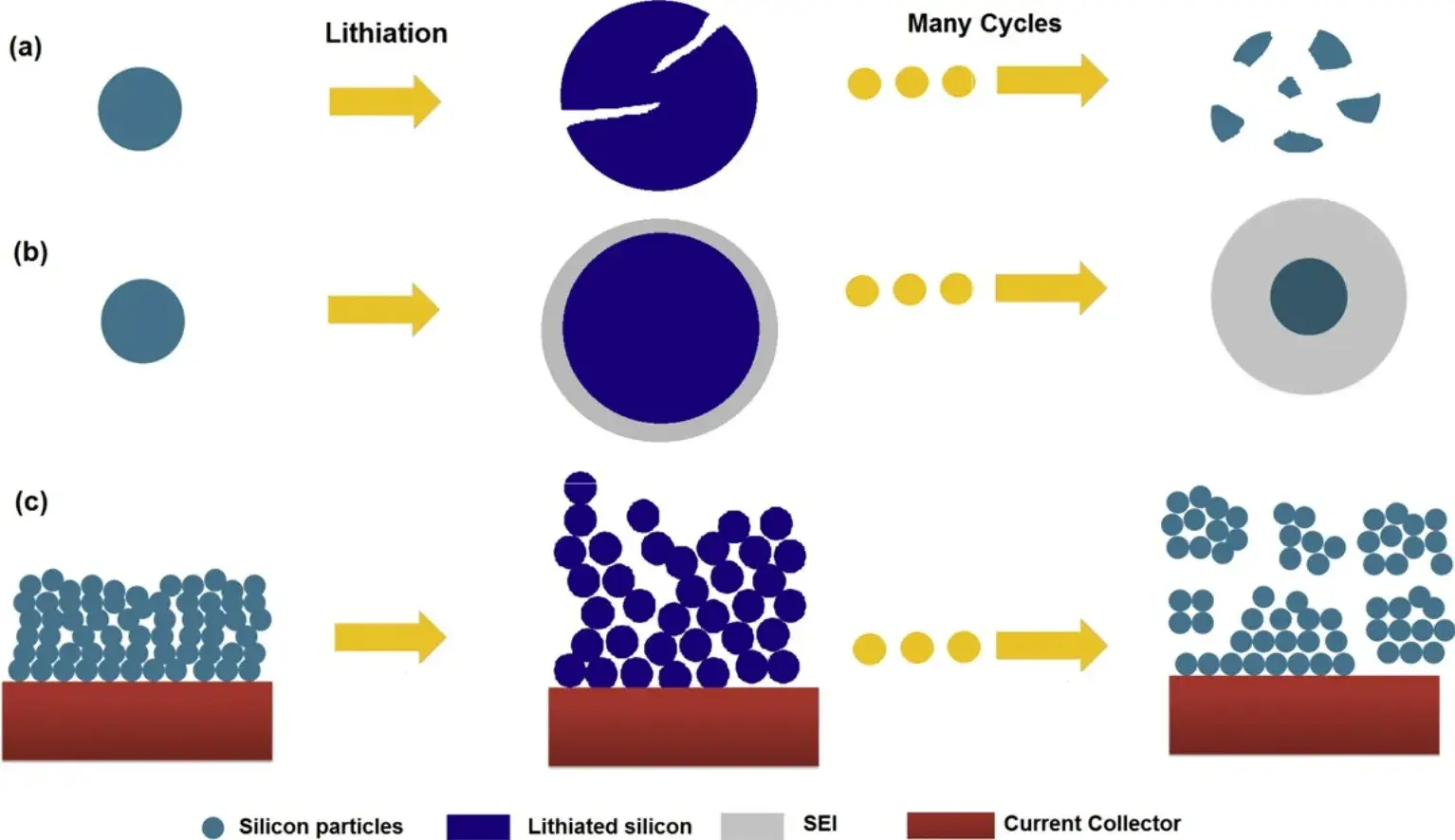
Figure 1. Silicon electrode failure mechanisms: (a) particle pulverization from volume expansion; (b) ~300% volume change during cycling; (c) continuous SEI growth leading to irreversible capacity loss1
Practical approaches to these challenges include compositing Si with carbon (Si/C composites) to buffer expansion and improve conductivity, and using silicon monoxide (SiO) as a modified silicon structure that self-generates inert buffer phases in situ. This study provides systematic anode powder testing of both material families across key metrics relevant to electrode manufacturing.
3. Anode Powder Testing Methodology
Anode powder testing for silicon-based materials requires simultaneous measurement of electrical resistance, volumetric compaction, and mechanical compression behavior—properties that collectively determine electrode manufacturing processability and in-cell performance. Standard single-parameter techniques miss critical inter-dependencies; for example, a powder that compacts well at low pressure may fracture at electrode calendering pressures, or a high-conductivity powder may achieve poor compacted density. Integrated testing at a range of pressures resolves these trade-offs and provides the full pressure-property profile needed for electrode design.
3.1 Test Equipment
Our evaluation combined multiple characterization techniques:
-
SEM Morphology: Imaging of Silicon Monoxide(SiO) and Si/C materials.
- IEST PRCD3100 Powder Resistivity & Compaction Density Tester (Figure 2), which integrates:
- Powder resistivity measurement (two-probe and four-probe modes)
- Compaction density measurement under simultaneous pressure
- Uniaxial compression stress-strain characterization
- Pressure range: 10–200 MPa in 10 MPa steps, 10 s hold at each step
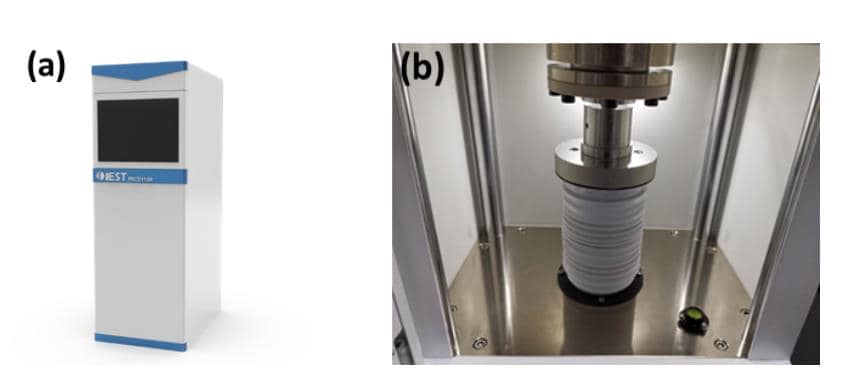
Figure 2. (a) Appearance of PRCD3100; (b) Structure of PRCD3100
3.2 Test Protocol
- Si/C composites: SiC-1 (3% Si), SiC-2 (6% Si), SiC-3 (10% Si)
- Carbon-coated SiO: SiO-1 to SiO-4 (0.1% carbon coating; increasing sintering temperature: SiO-1 < SiO-2 < SiO-3 < SiO-4)
- All samples characterized by SEM morphology, resistivity vs pressure, compaction density vs pressure, and stress-strain compression behavior
4. Results: Silicon-Carbon (Si/C) Composite Anode Analysis
4.1 SEM Morphology of Si/C Anode Material
The three Si/C composites (SiC-1, SiC-2, SiC-3) cannot be distinguished morphologically at the concentrations tested: the small silicon fraction is too low to produce clearly different SEM contrast at comparable magnification. Figure 3 shows SiC-2 (6% Si) representative SEM images at multiple magnifications. Silicon particles appear mostly spherical with a diameter of 5–10 µm distributed within the graphite carbon matrix.
Particle size is directly relevant to the silicon monoxide SiO anode volume expansion mechanism and to Si/C failure modes: micrometer-scale Si particles crack more severely than sub-critical nano-scale particles during cycling. Compositing µm-scale Si with graphite is therefore the practical strategy for commercial Si/C anode materials, where graphite acts as both a mechanical buffer and a conductive network.
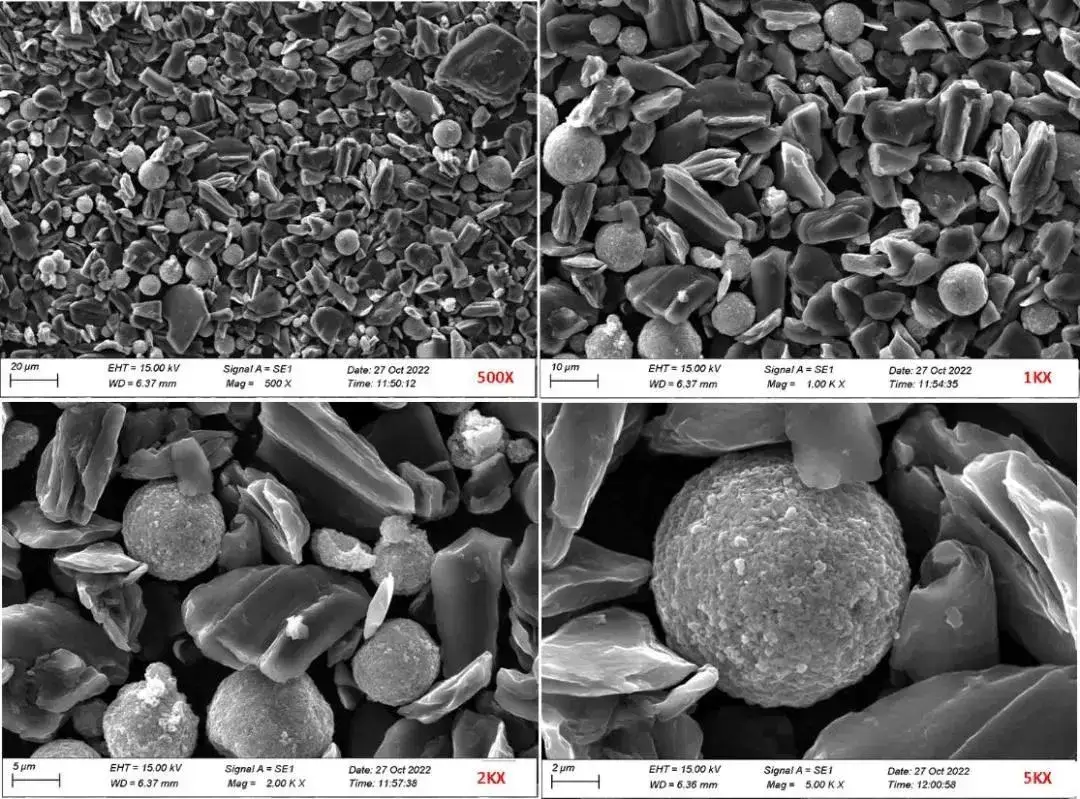
Figure 3. SEM morphology of Si/C composite (SiC-2, 6% Si) at multiple magnifications — spherical Si particles (5–10 µm) distributed in graphite matrix
4.2 Compression Behavior of Si/C Composite Anodes
Figure 4 and Table 1 present stress-strain curves and deformation summaries for SiC-1, SiC-2, and SiC-3. Across all three compositions, elastic and plastic deformation ratios are similar, indicating that small Si additions (3–10%) have minimal effect on the overall mechanical compressibility of the carbon-dominated composite. The graphite matrix dominates the compression response at these Si fractions.
| Name | Reversible Deformation | Irreversible Deformation | Max Deformation |
|---|---|---|---|
| SiC-1 | 4.61% | 33.38% | 37.99% |
| SiC-2 | 4.38% | 33.65% | 38.03% |
| SiC-3 | 4.33% | 33.39% | 37.72% |
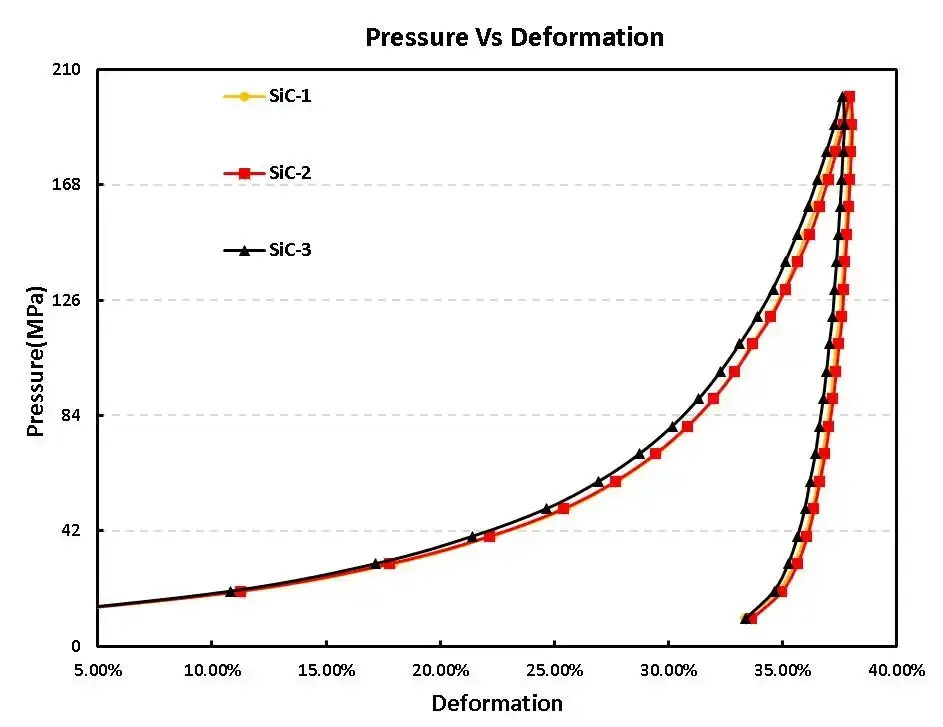
Figure 4. Stress-strain curves for SiC-1, SiC-2, SiC-3 at 10–200 MPa — similar deformation behavior indicates small Si fractions have minimal effect on compression response
4.3 Resistivity and Compaction Density of Si/C Composite Anodes
Figure 5 shows resistivity vs pressure and Figure 6 shows compaction density vs pressure for all three Si/C composites. Two clear trends emerge from the anode powder testing data:
Conductivity effect: As silicon content increases from 3% to 10%, the resistivity of the Si/C composite increases progressively (i.e., conductivity deteriorates). This is a direct consequence of silicon’s poor intrinsic electrical conductivity: as the Si fraction rises, it increasingly disrupts the continuous graphite electron-conduction network. For electrode design, this finding reinforces the importance of conductive additive strategy—combining zero-dimensional additives (e.g., carbon black coating individual active particles) with one-dimensional additives (e.g., CNTs providing long-range conduction from current collector through the full electrode thickness) to compensate for the Si conductivity deficit.
Compaction density effect: Compacted density decreases as Si content increases. Silicon’s true density (~2.3 g/cm³) is lower than graphite (~2.26 g/cm³ for highly ordered graphite, but the packing difference between spherical Si and platelet graphite creates the measured difference). More practically, the spherical Si particles pack differently than the irregular graphite flakes, reducing the achievable compaction density at electrode calendering pressures. For silicon-carbon anode electrode design, this means target compaction density must be adjusted downward relative to graphite-only anodes, with additional porosity to buffer the volume expansion of Si particles during cycling.
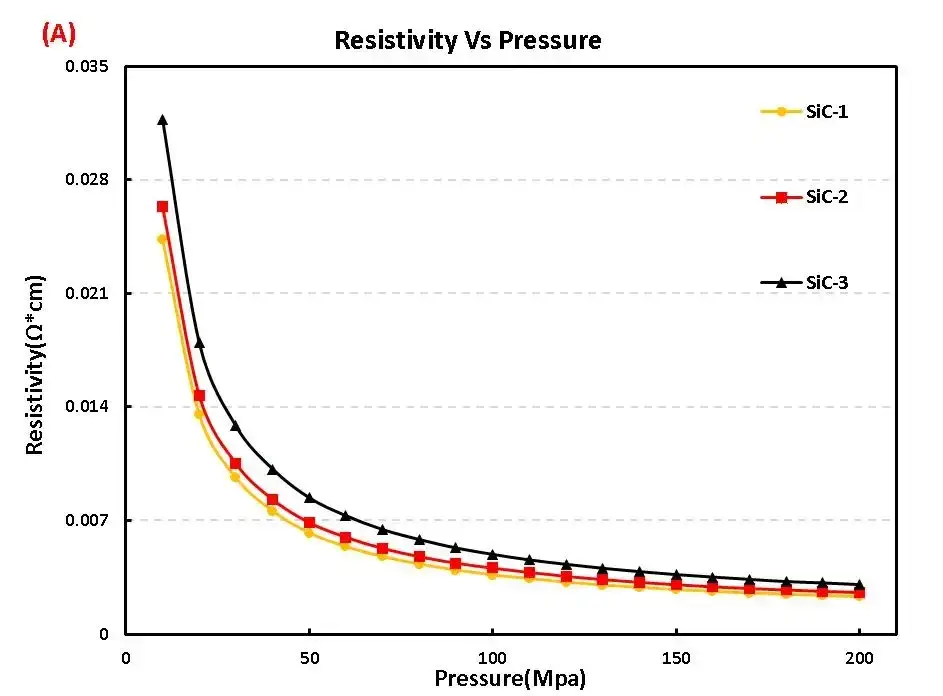
Figure 5(A). Resistivity vs pressure for SiC-1, SiC-2, SiC-3 — resistivity increases with Si content as silicon’s poor conductivity progressively disrupts the graphite conduction network
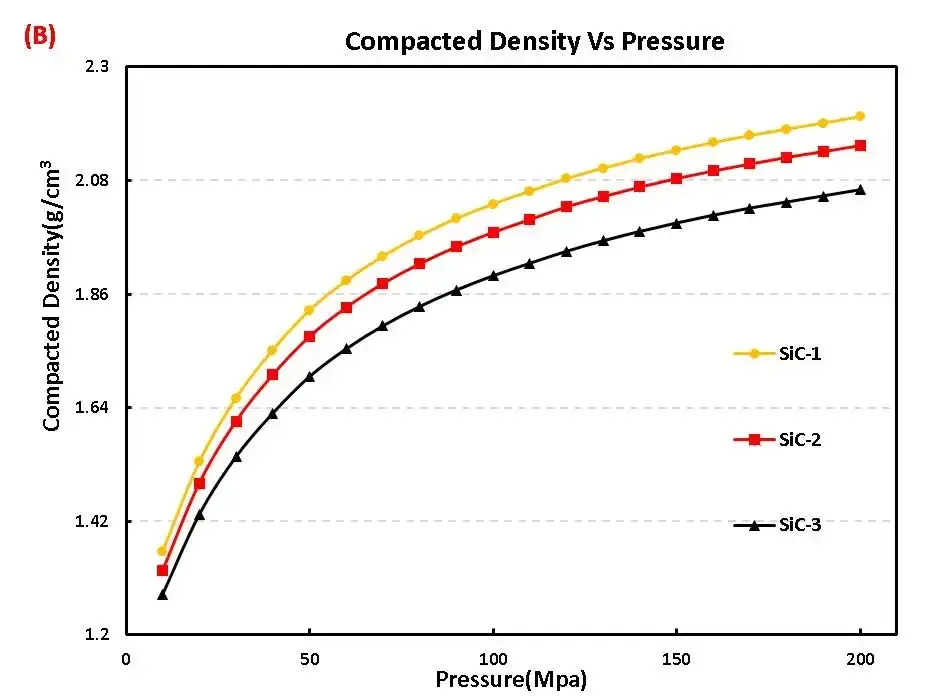
Figure 6(B). Compaction density vs pressure for SiC-1, SiC-2, SiC-3 — compacted density decreases with increasing Si content; spherical Si particles pack less efficiently than graphite flakes
5. Results: Carbon-Coated Silicon Monoxide (SiO) Material Analysis
5.1 Why Silicon Monoxide Outperforms Pure Si as an Anode
Silicon monoxide (SiO) is defined here as a mixed-phase material containing Si and SiO₂ domains. During the first lithiation, SiO reacts to form Li₂O, Li₄SiO₄, and active Si in situ. The Li₂O and Li₄SiO₄ phases are electrochemically inert and mechanically stable, forming a self-generated buffer matrix that constrains subsequent Si volume expansion—reducing effective anode volume expansion to approximately 160% versus ~300% for pure Si. This built-in buffering significantly improves cycling stability while still offering far higher capacity than graphite.
However, SiO-based anodes still suffer from poor electrical conductivity and volume changes during delithiation, which leads to capacity degradation and poor electrical conductivity. And, their applications are mainly modified by means of carbon coating, nanosizing, porous structure design, and composite with highly conductive phases, etc. Carbon coating is the primary modification strategy: a conformal carbon layer provides an elastic shell to accommodate volume change, reduces parasitic side reactions between the active material and electrolyte, and establishes efficient electron and ion transport pathways. The surface-coated 0.5 mm Si oxide-based materials were selected in this part.
5.2 SEM Morphology of Carbon-Coated SiO Materials
Figure 7 shows SEM morphology for SiO-1 through SiO-4. Unlike the spherical Si particles in Si/C composites, carbon-coated SiO particles exhibit irregular, loose surface morphology. The four sintering-temperature variants show no significant morphological differences under SEM, indicating that sintering temperature primarily affects internal carbon coating quality and particle-level microstructure rather than observable surface morphology.
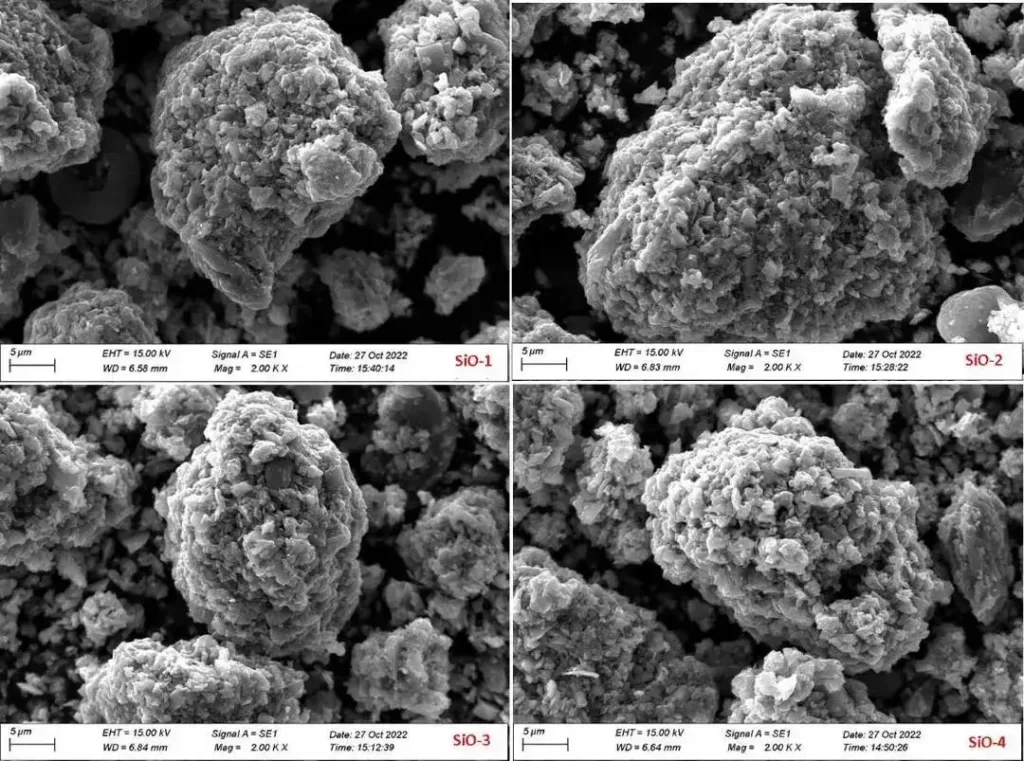
Figure 7. SEM morphology of SiO-1, SiO-2, SiO-3, SiO-4 (increasing sintering temperature) — irregular surface morphology typical of SiO anodes; no significant morphological differences visible between sintering variants
5.3 Compression Behavior of Carbon-Coated SiO Anodes
Table 2 and Figure 8 present the compression data for the four SiO variants. Key observations from the anode powder testing:
- SiO-2 and SiO-3 show similar overall compressibility.
- SiO-1 (lowest sintering temperature) and SiO-4 (highest) show significant differences in maximum deformation—SiO-4 resists compression more effectively, suggesting that higher sintering temperature produces denser, more cohesive particle microstructure with greater compressive strength.
- SiO-4 also shows the smallest irreversible (plastic) deformation, confirming better structural integrity under compaction pressure.
| Name | Reversible Deformation | Irreversible Deformation | Max Deformation |
|---|---|---|---|
| SiO-1 | 3.72% | 28.25% | 31.97% |
| SiO-2 | 3.64% | 28.03% | 31.66% |
| SiO-3 | 3.66% | 28.05% | 31.71% |
| SiO-4 | 3.73% | 27.22% | 30.95% |
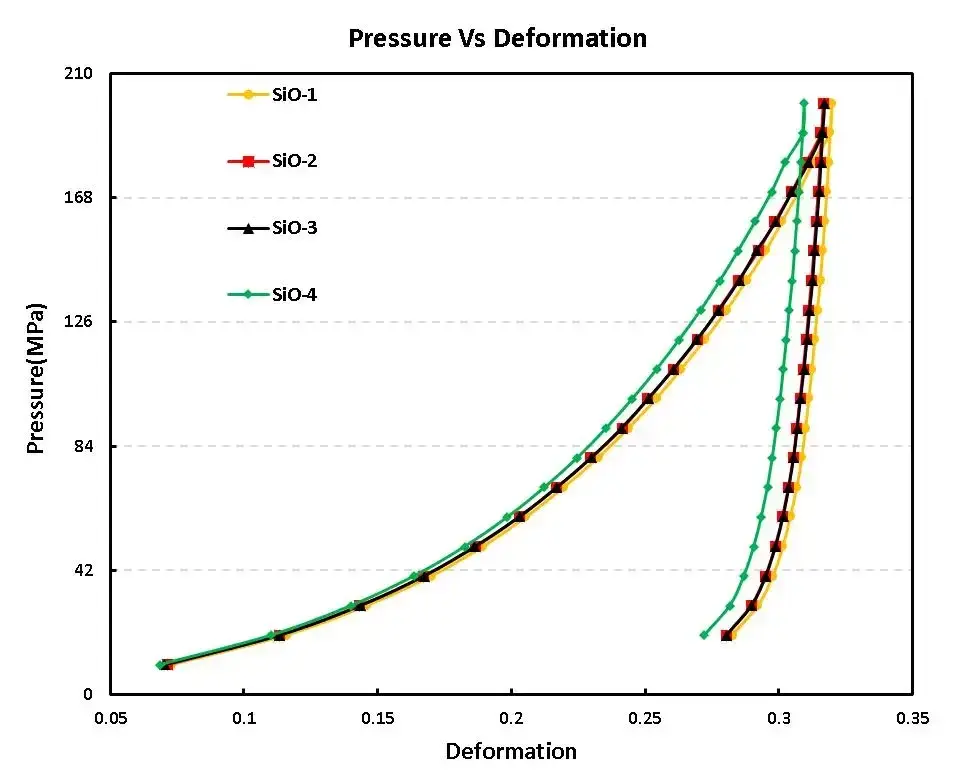
Figure 8. Stress-strain curves for SiO-1 to SiO-4 at 10–200 MPa — SiO-4 (highest sintering temperature) shows lowest maximum deformation, indicating improved compressive strength with higher sintering
5.4 Resistivity and Compaction Density of Carbon-Coated SiO Anodes
Figure 9 presents the PRCD3100 anode powder testing results for resistivity and compaction density vs pressure for all four SiO variants. Two key findings:
Conductivity improvement with sintering temperature: Resistivity rank is SiO-1 > SiO-2 > SiO-3 > SiO-4 (i.e., conductivity improves as sintering temperature increases). Higher sintering temperatures promote better graphitization and uniformity of the carbon coating, creating more efficient electron transport pathways through the carbon shell. This directly reduces the SiO anode’s inherent conductivity limitation.
Compaction density: The overall difference in compacted density among the four SiO variants is small—less than 0.05 g/cm³ at any given pressure. Density distinctions only become apparent at higher pressures, suggesting that sintering temperature primarily affects material strength and carbon coating quality rather than fundamental packing geometry. From an electrode design perspective, all four SiO variants can be calendered to similar target electrode densities.
In conclusion, the surface-coated carbon materials enhance the electrochemical performance due to the following reasons:
-
The carbon layer provides an elastic shell and reduces the volume change during alloying/dealloying.
-
Reducing parasitic side reactions between the active material and electrolyte
- Establishing efficient pathways for both lithium-ion and electron transport.
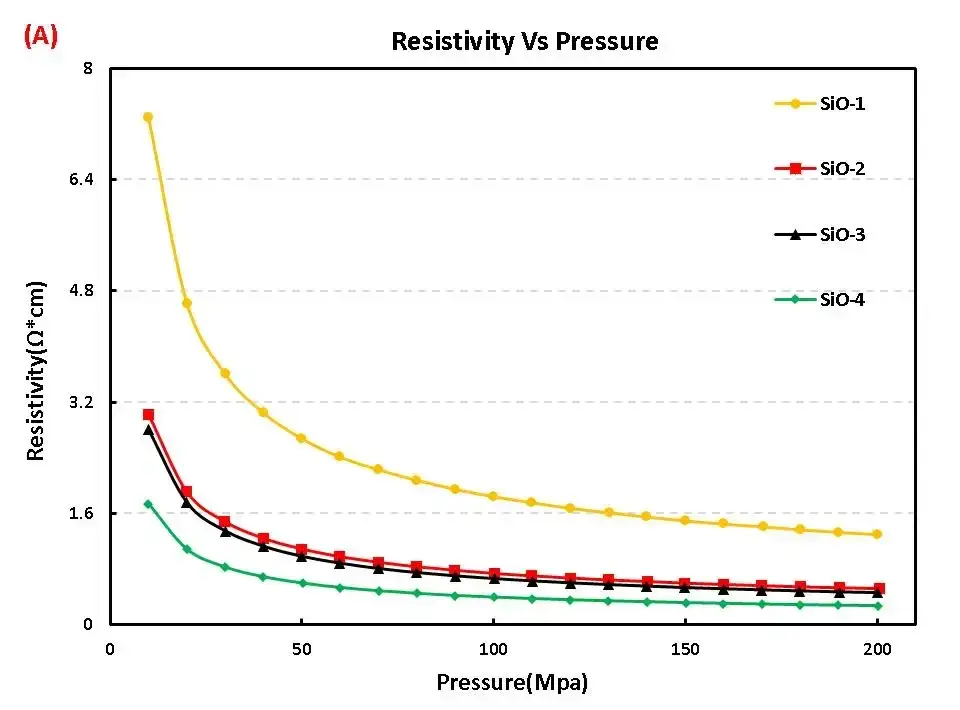
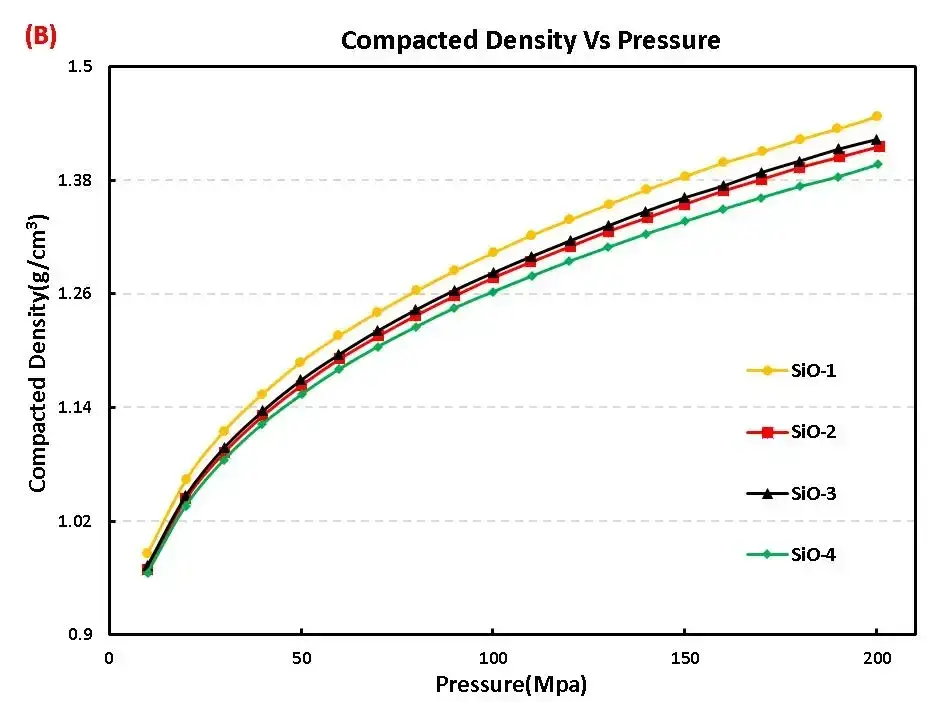
Figure 9. (A) Resistivity and (B) compaction density vs pressure for SiO-1 to SiO-4 — conductivity improves with sintering temperature; density difference <0.05 g/cm³ between all four variants
In summary, the carbon coating on SiO-based anode materials improves electrochemical performance through three synergistic mechanisms:
-
The carbon layer provides an elastic shell that absorbs volume change during alloying and dealloying, reducing particle-level stress
-
Coating reduces parasitic side reactions between the SiO active material and the electrolyte, improving Coulombic efficiency
- The carbon network establishes efficient pathways for both electron and lithium-ion transport through the electrode thickness
6. Summary and Electrode Design Guidance
Integrated anode powder testing with the PRCD3100—covering powder resistivity, compaction density, and compression behavior from 10 to 200 MPa—provides a multi-parameter profile of silicon-based anode materials that single-point measurements cannot replicate. Key design conclusions:
-
Si/C composites: Each percentage point of added silicon reduces bulk conductivity and compacted density. Electrode formulations should compensate with hybrid conductive networks—zero-dimensional (carbon black) for particle-level coverage and one-dimensional (CNT) for long-range conduction—and should reduce target compaction density relative to graphite-only anodes to maintain porosity for Si volume expansion buffering.
-
Silicon monoxide (SiO) anodes: Higher sintering temperature in the carbon coating process directly improves both conductivity and compressive strength without significantly altering compaction density. SiO-4 (highest sintering temperature) delivers the best combination of conductivity and mechanical robustness among the four variants tested.
- Anode powder testing protocol: Testing at multiple pressures (10–200 MPa) is essential—property differences between variants often only emerge at higher pressures. Single-point measurements at a fixed pressure may miss material-dependent behavior that becomes critical at electrode calendering conditions.
6. References
[1] Wu H, Cui, Y. Designing nanostructured Si anodes for high energy lithium ion batteries. Nano Today, 7, 414-429, (2012).
[2] Guerfi A , Hovington P , Charest P , et al. Nanostructured Carbon Coated Si and SiOx Anodes for High Energy Lithium-ion Batteries. 2011 ECS – The Electrochemical Society
[3] Lin N. Preparation of silicon-based anode materials for lithium-ion batteries and their electrochemical properties [D]. University of Science and Technology of China, 2016.
7. FAQs
7.1 What is the volume expansion of silicon monoxide (SiO) anode during lithiation, compared to pure Si?
Pure silicon expands approximately 300% during full lithiation (Li₁₅Si₄ alloying), while silicon monoxide (SiO) anode volume expansion is significantly lower—approximately 160%. The reduced expansion in SiO occurs because the first lithiation cycle converts SiO into Li₂O, Li₄SiO₄ (electrochemically inert buffer phases), and active nano-Si domains. The inert phases are uniformly distributed within the particle and mechanically constrain the volumetric changes of the active Si component during subsequent cycling. This self-generated buffer matrix is the primary reason SiO-based anodes show better cycling stability than pure Si while retaining much higher capacity than graphite (theoretical ~1,600 mAh/g for SiO vs 372 mAh/g for graphite).
7.2 What is the density of silicon monoxide (SiO) in g/cm³?
The true density of silicon monoxide (SiO) is approximately 2.13–2.18 g/cm³, reflecting the mixed Si and SiO₂ phase composition. This is lower than pure crystalline silicon (2.33 g/cm³) and lower than graphite (typically 2.09–2.26 g/cm³). Compacted powder density—the relevant metric for electrode design—is lower than true density and depends on particle morphology, size distribution, and applied calendering pressure. In this study, the four carbon-coated SiO variants (SiO-1 to SiO-4) showed compacted densities that differ by less than 0.05 g/cm³ between variants at equivalent pressure, indicating that sintering temperature affects conductivity more strongly than it affects packing geometry.
7.3 What is the difference between a silicon-carbon anode and a silicon monoxide anode?
A silicon-carbon (Si/C) anode physically mixes Si particles with graphite (and sometimes other carbons) to create a composite where graphite provides structural buffering, electrical conductivity, and most of the capacity, while Si contributes additional high-capacity storage. Typical commercial Si/C anodes contain 3–10% Si by weight. A silicon monoxide (SiO) anode uses SiO as the primary active material, where the first-cycle reaction self-generates inert Li₂O and Li₄SiO₄ buffer phases within the particle. SiO anodes generally offer better capacity than Si/C composites at low Si loadings, better cycling stability than pure Si anodes, and are frequently carbon-coated to improve conductivity. The main trade-off is the first-cycle irreversible capacity loss from forming the inert phases—and still-significant volume expansion (~160%)—which requires careful electrode design.
7.4 How does silicon content affect silicon-carbon anode conductivity and compaction density?
In Si/C composite anodes, each additional percentage of silicon content progressively reduces both electrical conductivity and compacted density. Conductivity decreases because silicon has poor intrinsic electronic conductivity, and as its fraction increases, it interrupts the continuous graphite electron- transport network—raising overall composite resistivity. Compacted density decreases because spherical Si particles (true density ~2.33 g/cm³) pack less efficiently than graphite flakes within the composite. For electrode design, silicon-carbon anodes with higher Si loading require more aggressive conductive additive strategies (CNT, carbon black hybrid networks) and lower target compaction densities—to preserve porosity for Si volume expansion and maintain electrolyte access. PRCD3100 anode powder testing at 10–200 MPa provides the resistivity and density data needed to calibrate these design parameters for each specific Si/C blend.