
📄 Source Paper
Wei Shu, Zhou-Shuang Fan, An-Qiang Pan, Yun Liu, Wen-Xing Zhang, et al.
DOI: 10.1016/j.apmate.2026.100412
| Journal: Advanced Powder Materials
| Institutions: Nanoyang Group, Tianjin University of Advanced Carbon and Energy Materials Laboratory, Tsinghua University,
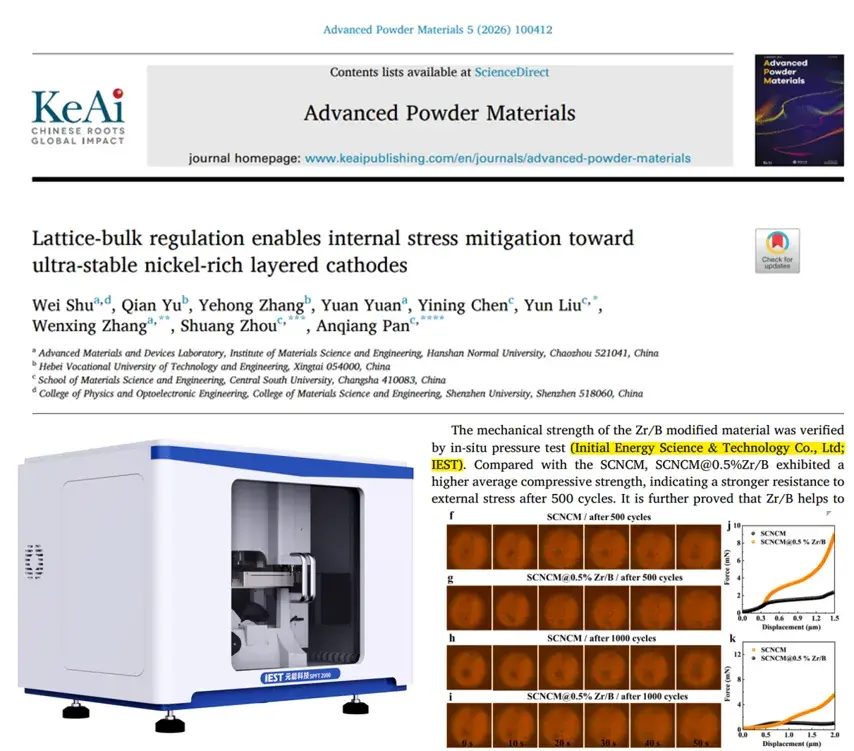
✓ IEST SPFT2000 Single Particle Mechanical Properties Test System used in this research
Ultra-high-nickel NCM cathodes offer high specific capacity and reduced cobalt dependence, but their structural stability becomes increasingly difficult to maintain as the nickel content and upper cutoff voltage increase. During charge and discharge, unstable Ni4+ can promote irreversible phase transitions and interfacial side reactions. The nickel-rich composition also undergoes anisotropic lattice and volume changes that generate internal stress during deep cycling.
The source study identifies a coupled degradation sequence rather than a single isolated failure mode:
Single-crystal architecture reduces grain-boundary-driven fracture compared with conventional polycrystalline particles, but it does not eliminate intragranular cracking. The remaining problem is therefore a coupled lattice–interface–mechanics problem.
Lattice regulation refers to deliberate modification of a cathode crystal structure to control lattice distortion, phase evolution, ion transport, and mechanical stability during electrochemical cycling.
B/Zr co-doping refers to coordinated modification using boron and zirconium so that bulk lattice stability and near-surface structural stability are regulated within the same cathode particle.
The study proposes a lattice-bulk regulation strategy instead of treating doping as a uniform bulk substitution problem. The two dopants are assigned complementary structural functions:
This complementary distribution allows the two dopants to address different but interconnected stages of cathode degradation.
SCNCM@0.5%Zr/B was synthesized through a co-precipitation route. TOF-SIMS depth profiling showed that the B signal remained relatively stable with increasing sputtering depth, indicating distribution through the particle interior. By contrast, Zr showed a stronger signal near the surface, indicating preferential surface enrichment.
HRTEM and HAADF-STEM further revealed that the layered structure remained intact within approximately 10 nm of the particle surface along the [100] zone axis. The observed (101) lattice spacing changed from 0.242 nm to 0.482 nm (this figure should be verified against the published paper — see note below), while the (003) lattice spacing increased slightly from 0.472 to 0.477 nm after B/Zr modification, indicating a change in the local interlayer environment.
These results support the complementary roles of bulk B incorporation and near-surface Zr enrichment in stabilizing different regions of the cathode particle.
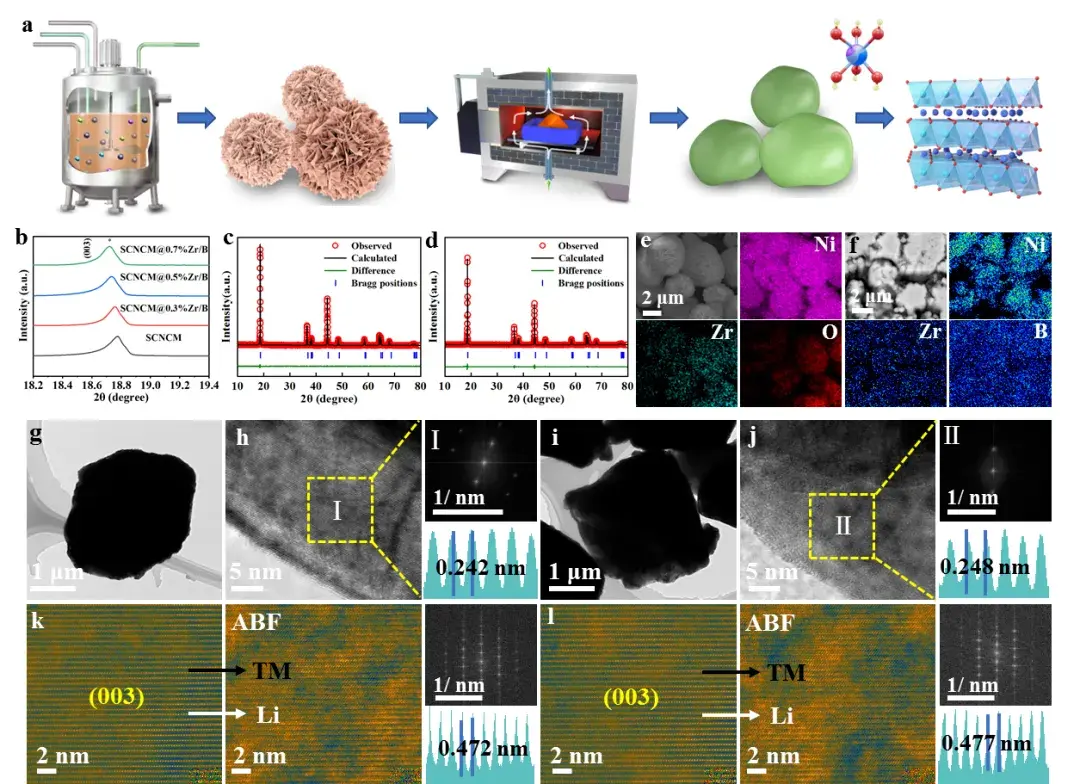
Figure 1. TEM, HRTEM, TOF-SIMS, and HAADF-STEM characterization of SCNCM and SCNCM@0.5%Zr/B before cycling.
The lattice modification is not only mechanical. By changing the local crystal environment, B/Zr co-doping also affects lithium-ion transport. The study reports that the calculated Li+ migration barrier decreases from 0.60 eV in the original SCNCM to 0.40 eV after B/Zr co-doping.
The source attributes the improved transport behavior to the combined structural effects of the two dopants. The altered lattice environment provides more favorable conditions for Li+ migration, while the preserved layered structure near the particle surface helps maintain a continuous diffusion pathway.
For high-nickel single-crystal cathodes, this relationship is important because mechanical stabilization and transport kinetics can interact. A structural modification that suppresses cracking but significantly impedes lithium transport would introduce a different bottleneck. The study instead targets both properties through coordinated lattice regulation.
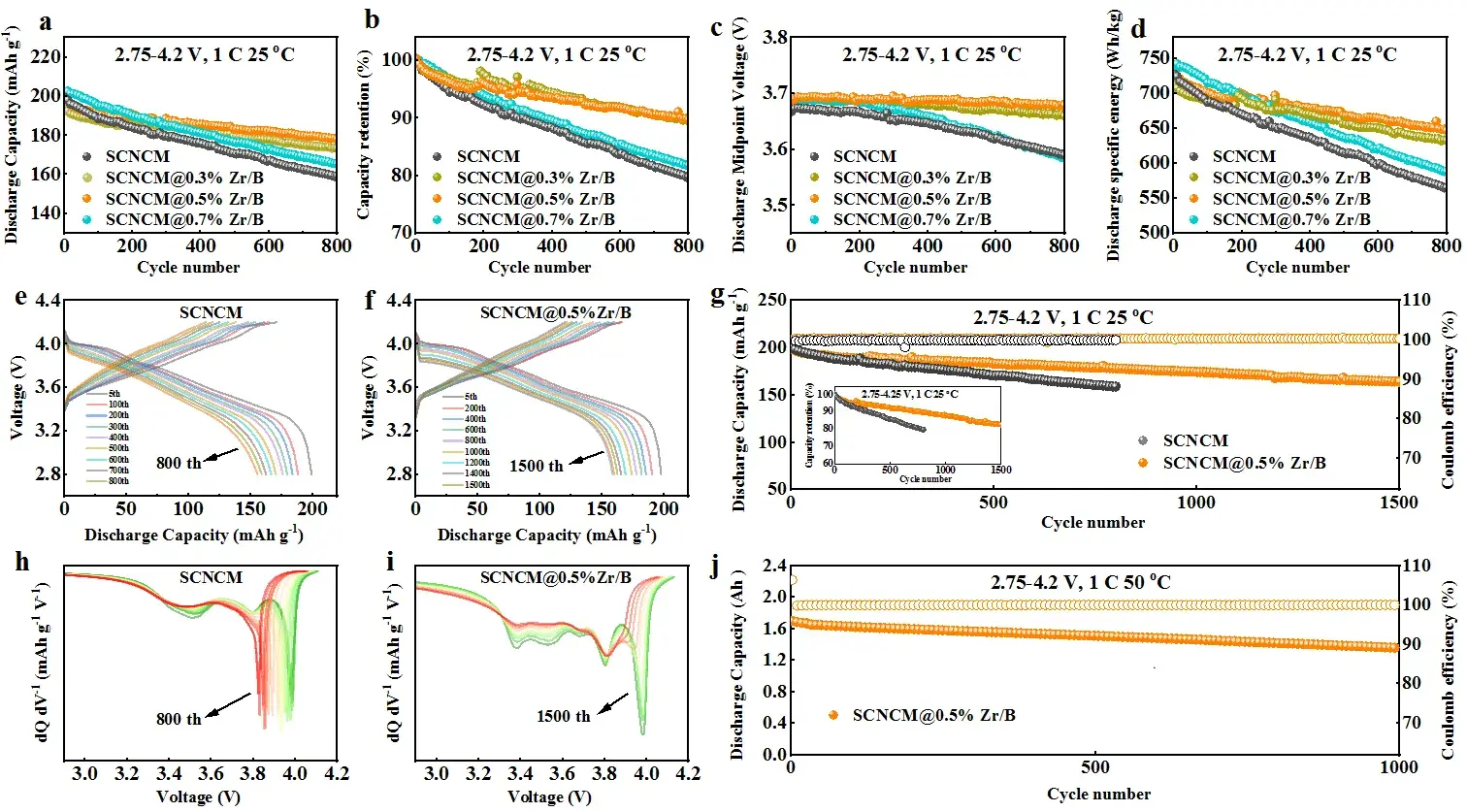
Figure 2. Comparison of electrochemical properties in pristine and B/Zr-modified SCNCM pouch-type full cells at 25°C/50°C.
DFT calculations indicated that B/Zr co-doping produced controlled local lattice distortion and a lower formation energy than Zr-only doping, resulting in a more energetically favorable modified structure.
The source describes four interconnected effects: B occupies tetrahedral interstitial sites within the oxygen framework and helps mitigate internal lattice strain, whereas Zr preferentially accumulates near the surface and suppresses Li/Ni cation mixing. Charge-density and density-of-states analyses further indicate stronger local bonding interactions and modified electronic states near the Fermi level.
B/Zr co-doping also produced a more favorable Li⁺ migration network and reduced the calculated migration barrier from 0.60 eV in pristine SCNCM to 0.40 eV in the co-doped structure. These calculations explain how the complementary distributions of B and Zr improve lattice stability and lithium-ion transport.
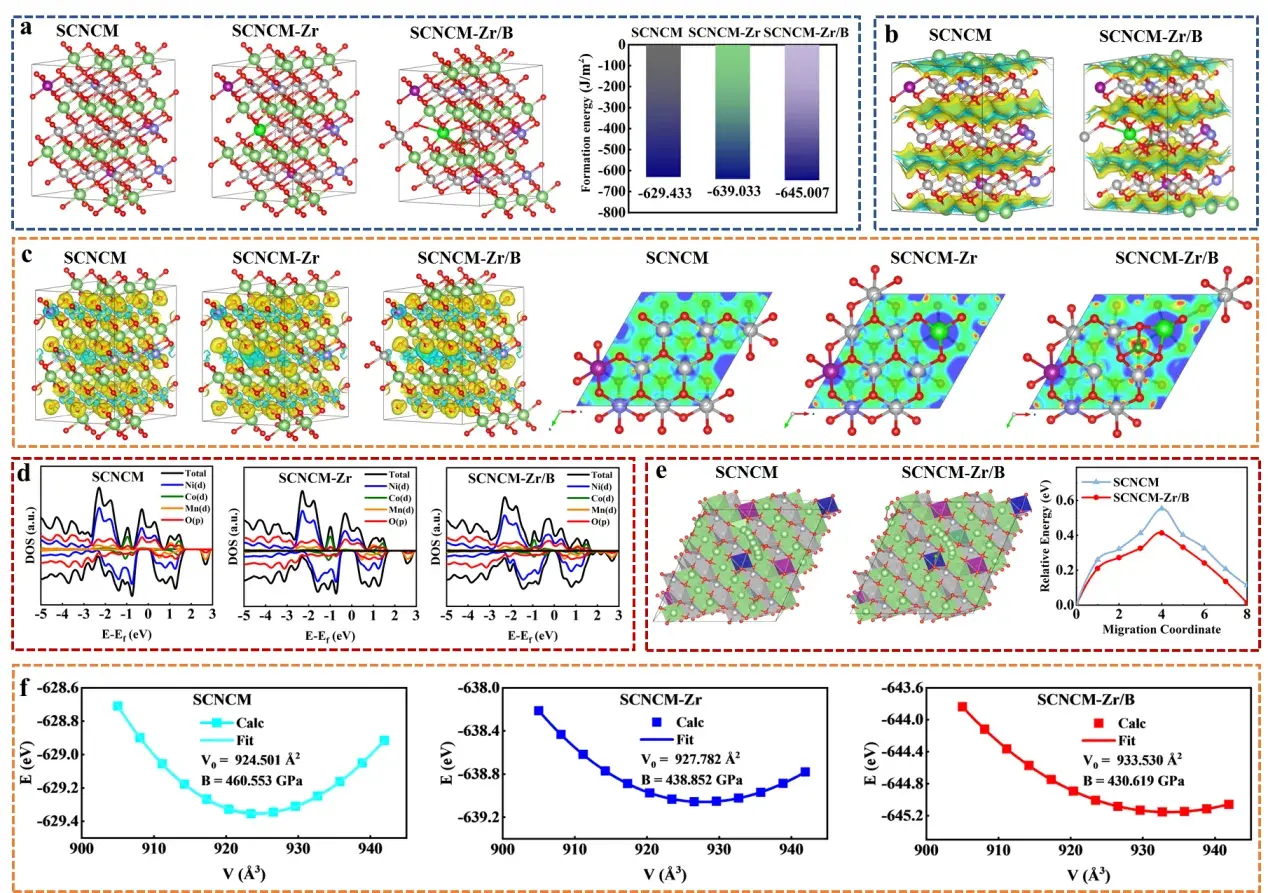
Figure 3. DFT analysis of lattice distortion, formation energy, charge redistribution, electronic structure, and Li⁺ migration in pristine and B/Zr-modified SCNCM.
Internal strain refers to mechanical strain generated inside a cathode particle when lithium extraction/insertion produces non-uniform lattice distortion or volume change.
During deep delithiation, spatially non-uniform lattice contraction and distortion can generate localized strain within Ni-rich cathode particles. This stress concentration provides initiation sites for intragranular cracking and promotes phase transformation.
In the modified cathode, bulk-incorporated B reinforces the lattice framework, while surface-enriched Zr stabilizes the near-surface region. Because neither dopant serves as a principal redox-active species under the tested conditions, their primary role is structural stabilization.
In-situ XRD was used to track average lattice evolution during cycling, while post-cycling geometric phase analysis (GPA) mapped localized strain within individual particles. Together, these measurements showed a more controlled lattice response and less severe strain localization in SCNCM@0.5%Zr/B.
| Evidence layer | Measured or calculated variable | Reported result | Mechanistic interpretation | Design implication for single-crystal NCM |
|---|---|---|---|---|
| HRTEM / HAADF-STEM | (003) lattice spacing | 0.472 nm → 0.477 nm | Modified interlayer environment and preserved near-surface layered structure | Maintain a structurally favorable pathway for Li+ transport |
| DFT | Li+ migration barrier | 0.60 eV → 0.40 eV | More favorable calculated Li+ transport in the co-doped lattice | Reduce the transport penalty associated with structural stabilization |
| In-situ electrochemical XRD | Lattice evolution during cycling | Reduced lattice strain and contraction | More controlled structural response during electrochemical operation | Reduce the structural driving force for crack initiation |
| GPA analysis | Local strain concentration | Less severe stress concentration in the modified sample | Reduced localization of deformation associated with phase evolution | Improve particle-level mechanical integrity |
The prepared cathodes were paired with conventional graphite negative electrodes to assemble pouch full cells. The electrochemical evaluation used a 2.75–4.2 V voltage window and included testing at both 25°C and 50°C.
The source reports favorable electrochemical performance for SCNCM@0.5%Zr/B under both temperature conditions. The published paper further reports that a 1.8 Ah pouch cell based on the optimized material delivered 164.2 mAh g−1 after 1,500 cycles, corresponding to 82.3% capacity retention. This long-cycle result is important because the paper does not present lattice modification as a short-term electrochemical optimization; it connects the structural strategy with extended full-cell durability.
At the material level, the electrochemical results need to be interpreted together with structural and mechanical measurements. Capacity retention alone cannot identify whether degradation originates from lattice collapse, interfacial side reactions, lithium transport limitations, or particle fracture.
The IEST SPFT2000 was used in the study to evaluate the mechanical response of cathode particles recovered after 500 and 1,000 cycles. During testing, an individual particle is compressed under controlled displacement while the applied force and particle deformation are recorded. At both cycle counts, the modified SCNCM@0.5%Zr/B particles exhibited higher crushing strength than the pristine SCNCM particles. Unlike microscopy, which primarily reveals the presence and morphology of cracks, single-particle compression directly quantifies the residual load-bearing capability of electrochemically aged particles.
From a battery-engineering perspective, this creates a useful particle-to-cell linkage:
IEST SPFT2000: Particle-Level Mechanical Characterization
IEST SPFT2000 — what the instrument measuresThe published SPFT system measures particle displacement and pressure during controlled single-particle compression and records the stress–displacement response. The published product specifications include a 0–80 μm displacement range, 0–100 mN pressure range, 1 nm displacement resolution, and 0.1 mN pressure resolution. The system supports particle-image observation, automatic displacement/pressure control, and testing of battery-material particles in the approximately 5–50 μm size range. These capabilities make it suitable for linking particle crushing behavior with electrochemical aging and material modification. See IEST SPFT product specifications.
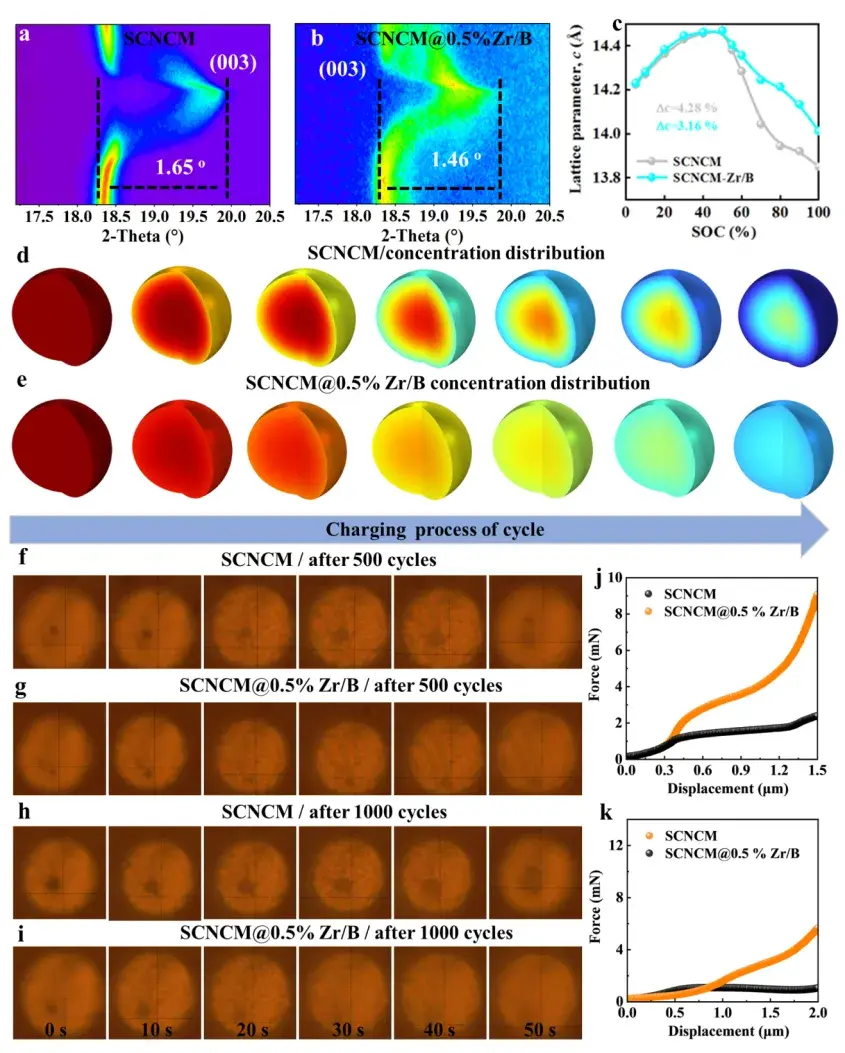
Figure 4. In-situ XRD, COMSOL simulation, and single-particle mechanical testing results for SCNCM and SCNCM@0.5%Zr/B after long-term cycling.
TOF-SIMS and XPS were used to analyze the material composition of the particle surface and the corresponding valence states of the elements. Compared with pristine SCNCM, SCNCM@0.5%Zr/B showed lower levels of electrolyte decomposition products both near the particle surface and within the analyzed depth range. This is consistent with a reduction in interfacial side reactions and supports the proposed role of surface-enriched Zr in stabilizing the cathode–electrolyte interface.
For Ni-rich cathodes, interfacial stabilization is particularly important because particle cracking and surface reactions are coupled. Once cracks expose fresh active material, electrolyte penetration can accelerate transition-metal dissolution, HF-related attack, and further structural damage.
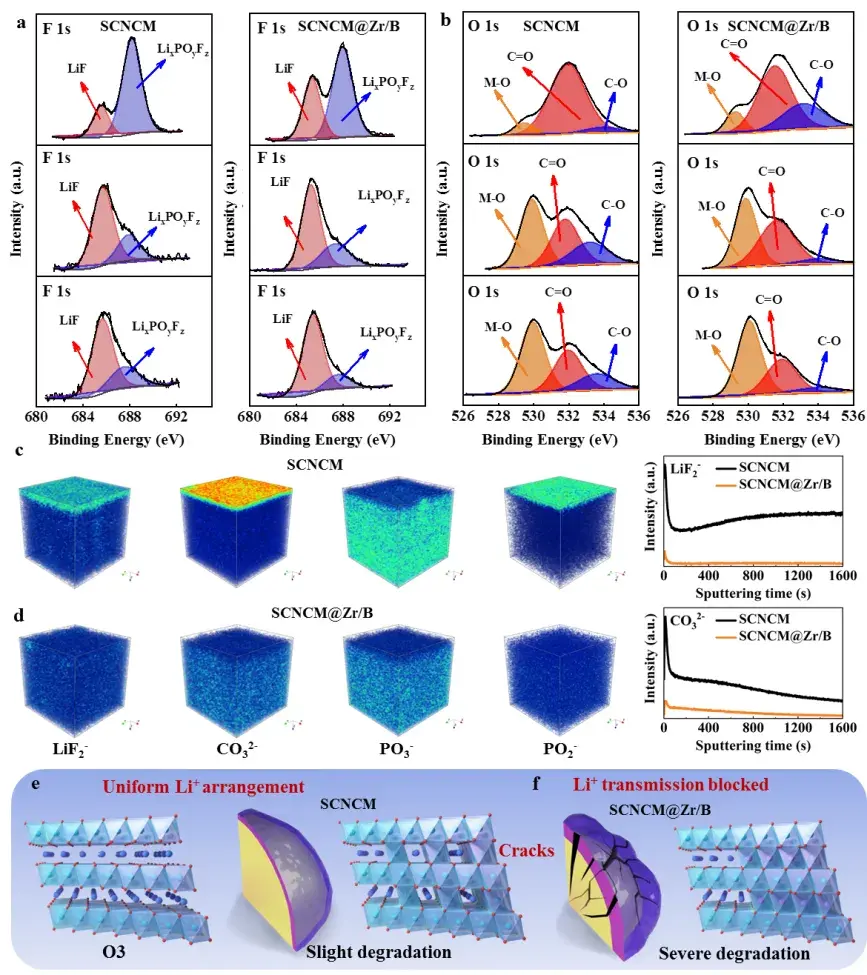
Figure 5. Depth XPS/TOF-SIMS in pouch-type full cells and schematic illustration of the underlying reaction mechanism.
The H2–H3 transition is particularly important in high-nickel layered cathodes because abrupt lattice changes during high-voltage charging can amplify local stress. After 1,000 cycles, the pristine SCNCM developed abundant intragranular nanocracks and particle pulverization. The layered structure also underwent transformation toward spinel and rock-salt phases. GPA strain analysis identified severe local stress concentration associated with these structural changes.
By contrast, SCNCM@0.5%Zr/B retained a more intact particle morphology with fewer visible cracks. The R-3m layered structure was better preserved, cation mixing was suppressed, and the stress concentration associated with phase transformation was substantially reduced.
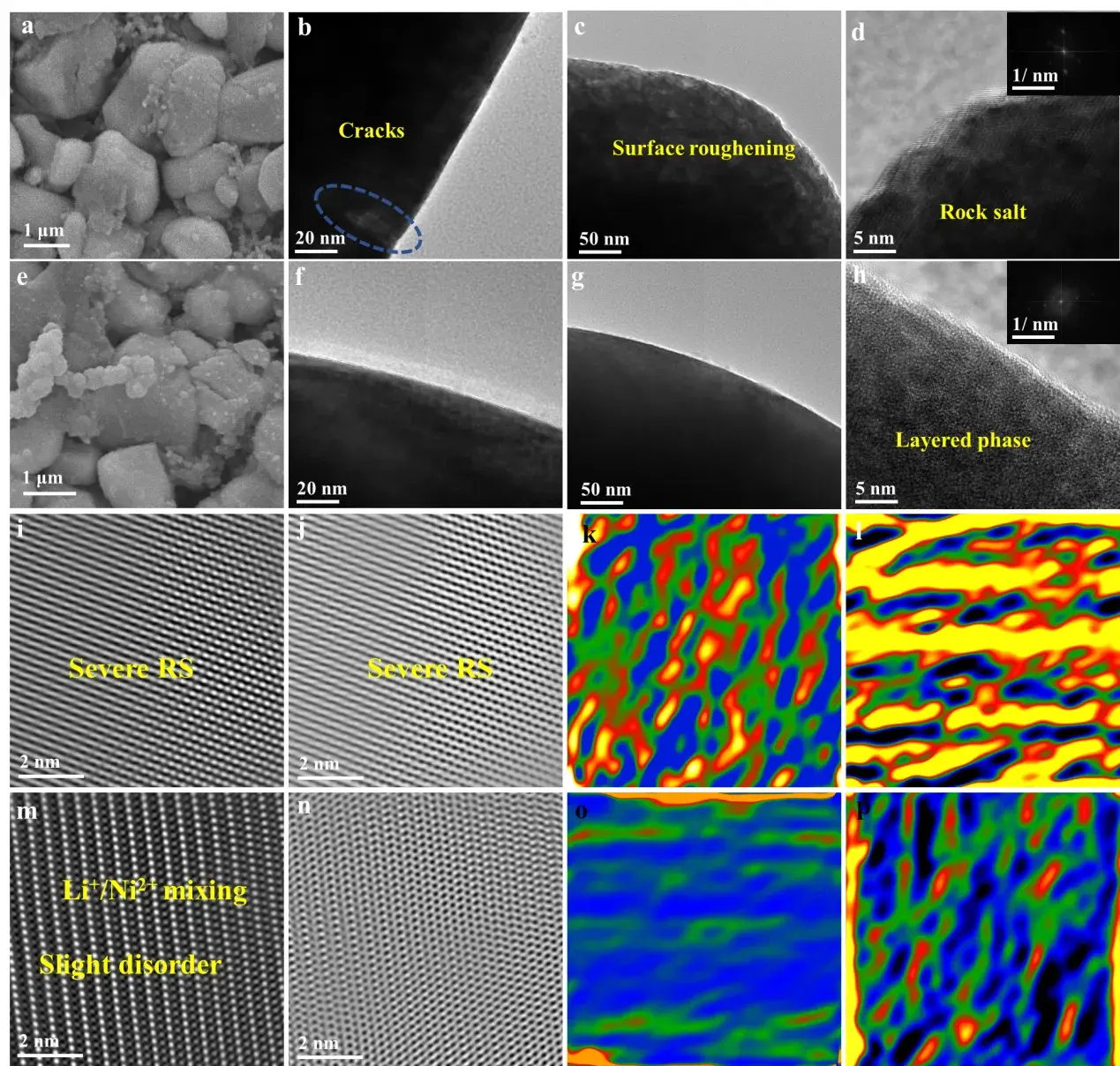
Figure 6. Morphology of the cycled SCNCM and SCNCM@0.5%Zr/B after 1,000 cycles.
When high-nickel cathode development focuses on lattice regulation, long-term cycling, or crack suppression, single-particle mechanics can provide the missing quantitative link between crystal structure and particle failure. The IEST SPFT2000 measures controlled single-particle compression, records force–displacement behavior, and supports particle-image observation for direct evaluation of crushing strength and mechanical integrity.
The study demonstrates that B/Zr co-doping can stabilize an ultra-high-nickel single-crystal NCM cathode through coordinated bulk and surface regulation. B is distributed more uniformly through the crystal and helps reinforce the lattice and relieve internal stress. Zr preferentially enriches the surface and helps suppress cation mixing and interfacial degradation.
The resulting material shows a lower calculated Li+ migration barrier, more stable lattice evolution, higher single-particle compressive strength after 500 and 1,000 cycles, reduced electrolyte-derived degradation products, and substantially less intragranular cracking after long-term cycling. The paper therefore presents lattice regulation as a coupled solution to structural, transport, interfacial, and mechanical failure modes rather than as a single-parameter optimization.
The study also highlighted the value of combining electrochemical and structural characterization with direct single-particle mechanical testing. By recording the force-displacement response and fracture behavior of cycled particles, the IEST SPFT2000 provides quantitative evidence linking lattice regulation to retained particle integrity.
B/Zr co-doping is a lattice-bulk regulation strategy in which B is more uniformly incorporated into the cathode interior while Zr preferentially enriches the particle surface. The study links this spatially differentiated modification with internal-strain relief, suppressed cation mixing, improved Li+ transport, and stronger particle integrity.
Lattice regulation modifies the crystal environment so that structural distortion and phase evolution are better controlled during lithium extraction and insertion. In this study, B reinforces the bulk lattice while Zr stabilizes the surface region, and in-situ XRD shows reduced lattice strain and contraction.
Single-particle crushing strength provides a quantitative measure of how well an individual cathode particle resists controlled compression and fracture after electrochemical aging. The IEST SPFT2000 was used to compare particles after 500 and 1,000 cycles, showing higher compressive strength for SCNCM@0.5%Zr/B.
TOF-SIMS depth profiling maps chemical signals as a function of depth and can distinguish bulk distribution from surface enrichment. In the study, TOF-SIMS showed relatively uniform B distribution and stronger surface Zr enrichment, while combined TOF-SIMS/XPS evidence indicated fewer electrolyte-derived degradation products after B/Zr modification.
The study suggests that single-crystal cathode development should move beyond capacity retention alone and evaluate lattice stability, Li+ transport, interfacial chemistry, and particle mechanics as a connected system. For industry, the key implication is a more complete qualification framework in which single-particle crushing strength complements 4.2 V cycling, structural characterization, and post-cycle failure analysis.