-
iestinstrument

Abstract
Longitudinal binder migration during the drying process creates compositional stratification that directly impacts the electrochemical performance, adhesion strength, and cycle life of lithium-ion batteries. Traditional manual scraping methods lack the spatial resolution and depth accuracy required to accurately map these vertical concentration gradients. The IEST LEPS2000 Automatic Electrode Powder Scraping system resolves this technical limitation by delivering automated, micron-scale layer-by-layer peeling with a depth deviation restricted within $\pm$2 μm and a Coefficient of Variation (COV) under 5%, enabling precise quantitative profiling of binder segregation across multi-layer coatings.
1. Background: From Manual Scraping to Automated Precision
When the author first interviewed at IEST Instrument three years ago, the technical director posed a direct question: “What electrode characterization methods would you use to evaluate longitudinal uniformity and compositional distribution in lithium battery electrodes?”
At the time, industrial quality control for lithium-ion battery electrodes relied primarily on macro-level indicators — total compaction density, areal coating weight, and surface electrical resistivity. The internal vertical microstructure of the electrode, specifically along the coating-to-current-collector direction, remained largely an unquantifiable “black box.”
Having worked extensively with conventional analytical instruments, the immediate response was: “XPS depth profiling and TOF-SIMS — since PVDF contains fluorine, CMC contains sodium, and SBR contains unsaturated C=C double bonds.”
While these techniques offer high compositional resolution, their limited sputtering depths make them impractical for commercial electrodes with thicknesses ranging from tens to hundreds of micrometers. Longitudinal binder migration — the non-uniform distribution and upward transport of polymeric binders such as SBR during the solvent evaporation phase of industrial drying — requires depth penetration well beyond the capability of surface-sensitive spectroscopies.
The director paused, then asked: “What about manual blade scraping? In production, operators manually scrape electrode coatings at different depths and then perform TGA to analyze binder content.”
“Manual scraping at different depths?”
“Exactly,” he nodded. “The depth is inaccurate and the results are coarse.”
Manual doctor-blade peeling combined with thermogravimetric analysis (TGA) had been used on production lines, but manual operations introduced profound depth errors and surface roughness that completely invalidated quantitative accuracy. The absence of traceability and consistency rendered subsequent compositional analysis meaningless.
Two years later, driven by growing market demand and IEST‘s in-house equipment R&D capabilities, the company formalized a 60-page project proposal: a high-precision automatic electrode powder scraping system designed to overcome the limitations of both surface spectroscopies and manual scraping. The result was the LEPS2000 — IEST Instrument’s automatic electrode powder scraping system, capable of delivering micron-level spatial control with closed-loop thickness verification.
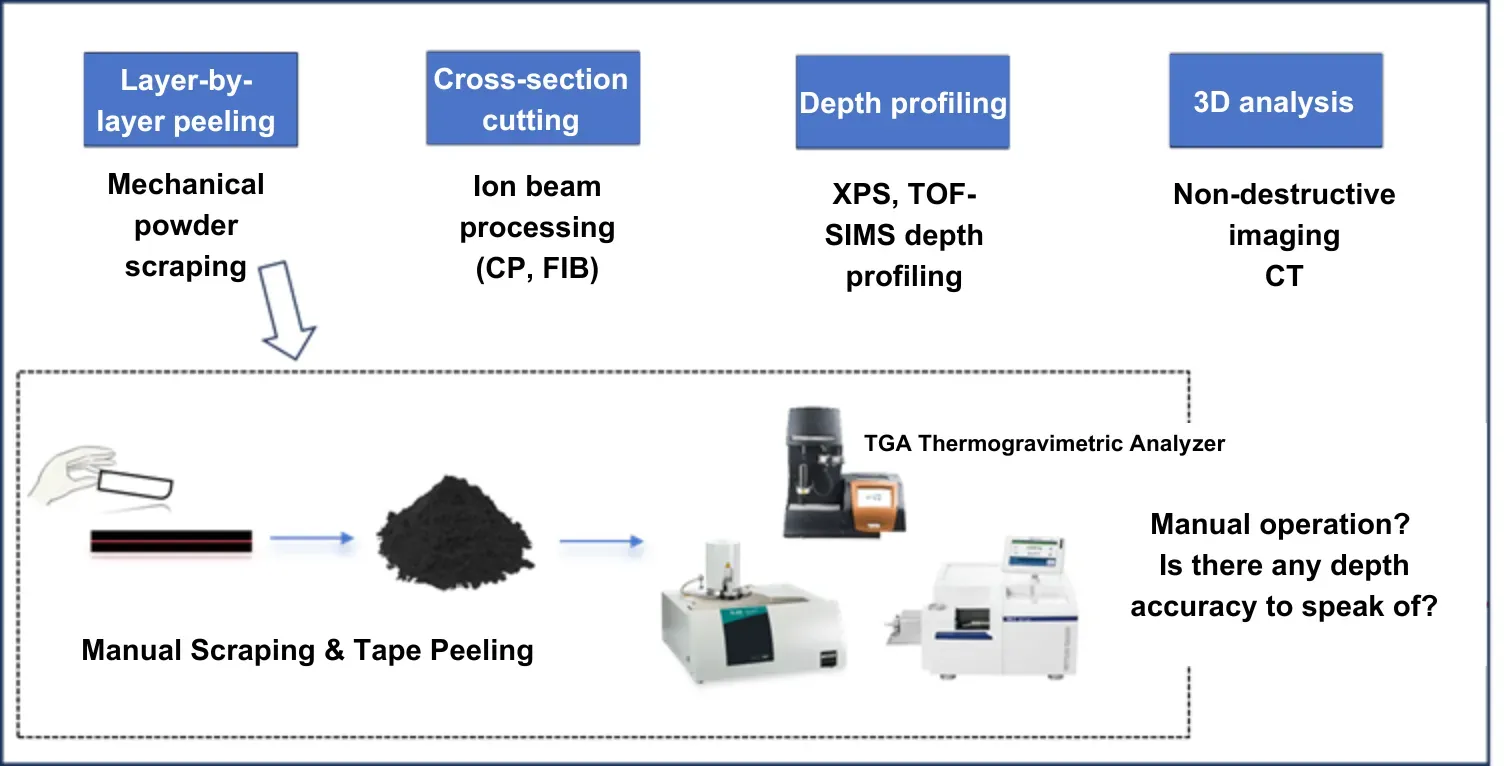
Figure 1. Characterization method for longitudinal binder distribution (coating-to-current collector direction).
2. Rigorous Validation: Quantifying the Scraping Precision of LEPS2000 Across 500+ Samples
To rigorously validate the operational stability of the system under commercial manufacturing tolerances, an extensive validation study was conducted utilizing over 500 negative electrode sheets featuring distinct slurry formulations. Automated scraping tests were executed at variable target depths and spatial positions across the electrode surfaces, with pre- and post-scraping thicknesses verified via high-precision digital micrometers.
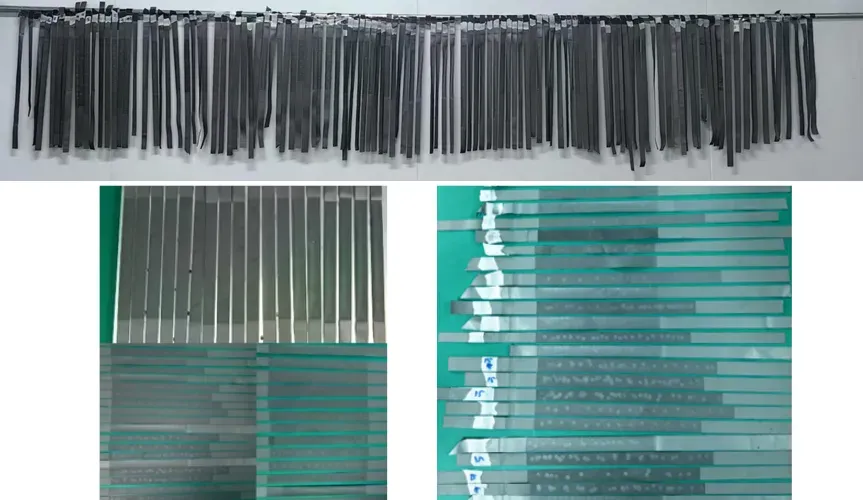
Figure 2. Experimental photographs of electrode sheets with different formulations (light color: before scraping; dark color: after scraping; spots indicate micrometer measurement points).
Figure 3 presents the experimental results for five different anode formulations (Formula 1–5) tested at various target scraping depths. The deviation of the actual scraping depth from the target value remained within the ±2 μm specification limit, and the coefficient of variation (COV) of these deviations was below 5%, confirming that the LEPS2000 achieves consistent, reproducible scraping accuracy across different electrode materials.
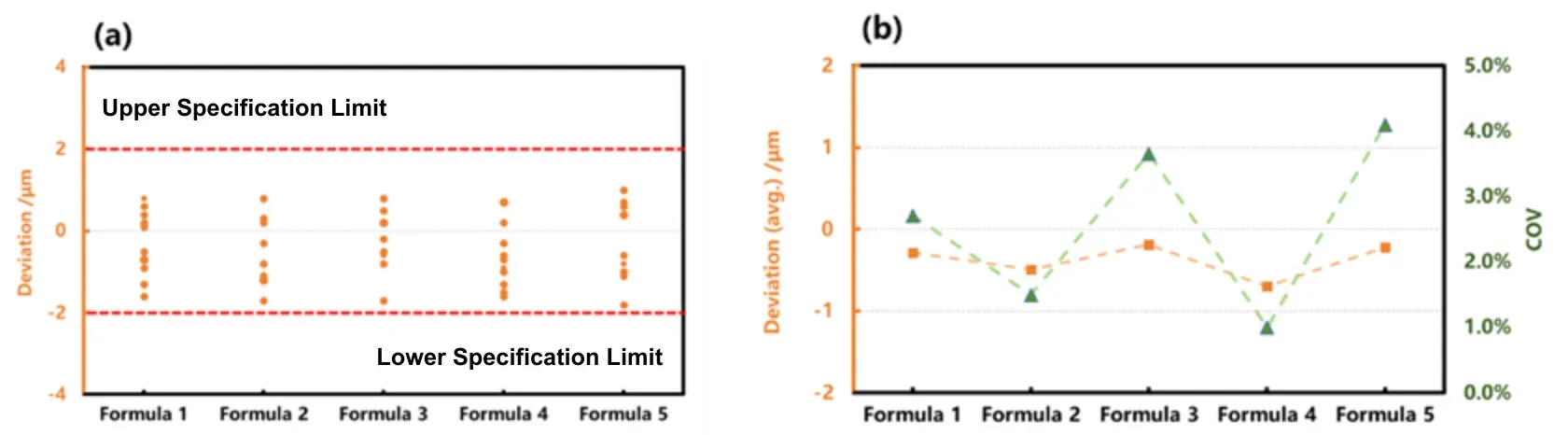
Figure 3. (a) Difference between required scraping depth and actual scraping depth for electrode sheets with different formulations, and (b) mean difference and COV.
Table 1. Summarizes the scraping depth deviation across the five electrode formulations:
| Formulation Identifier | Target Peeling Depth (μm) | Maximum Depth Deviation (μm) | Mean Scraping Error (μm) | Coefficient of Variation (COV) |
|---|---|---|---|---|
| Formula 1 | 10.0 | < ±1.5 | -0.3 | 2.7% |
| Formula 2 | 10.0 | < ±2.0 | -0.5 | 1.3% |
| Formula 3 | 10.0 | < ±1.5 | -0.2 | 3.6% |
| Formula 4 | 10.0 | < ±2.0 | -0.7 | 0.8% |
| Formula 5 | 10.0 | < ±2.0 | -0.2 | 4.1% |
The LEPS2000 incorporates a high-precision in-situ laser thickness measurement system that automatically records electrode thickness before and after scraping, calculating the actual removal depth in real time. Figure 3 presents thickness data for electrodes of varying overall thickness, with a target scraping depth of 10 μm. The pre- and post-scraping thickness profiles demonstrate excellent uniformity, and the calculated scraping depth remains stable across different electrode samples, average net scraping thicknesses of 9.4 μm, 10.4 μm, 9.6 μm, and 9.8 μm respectively.
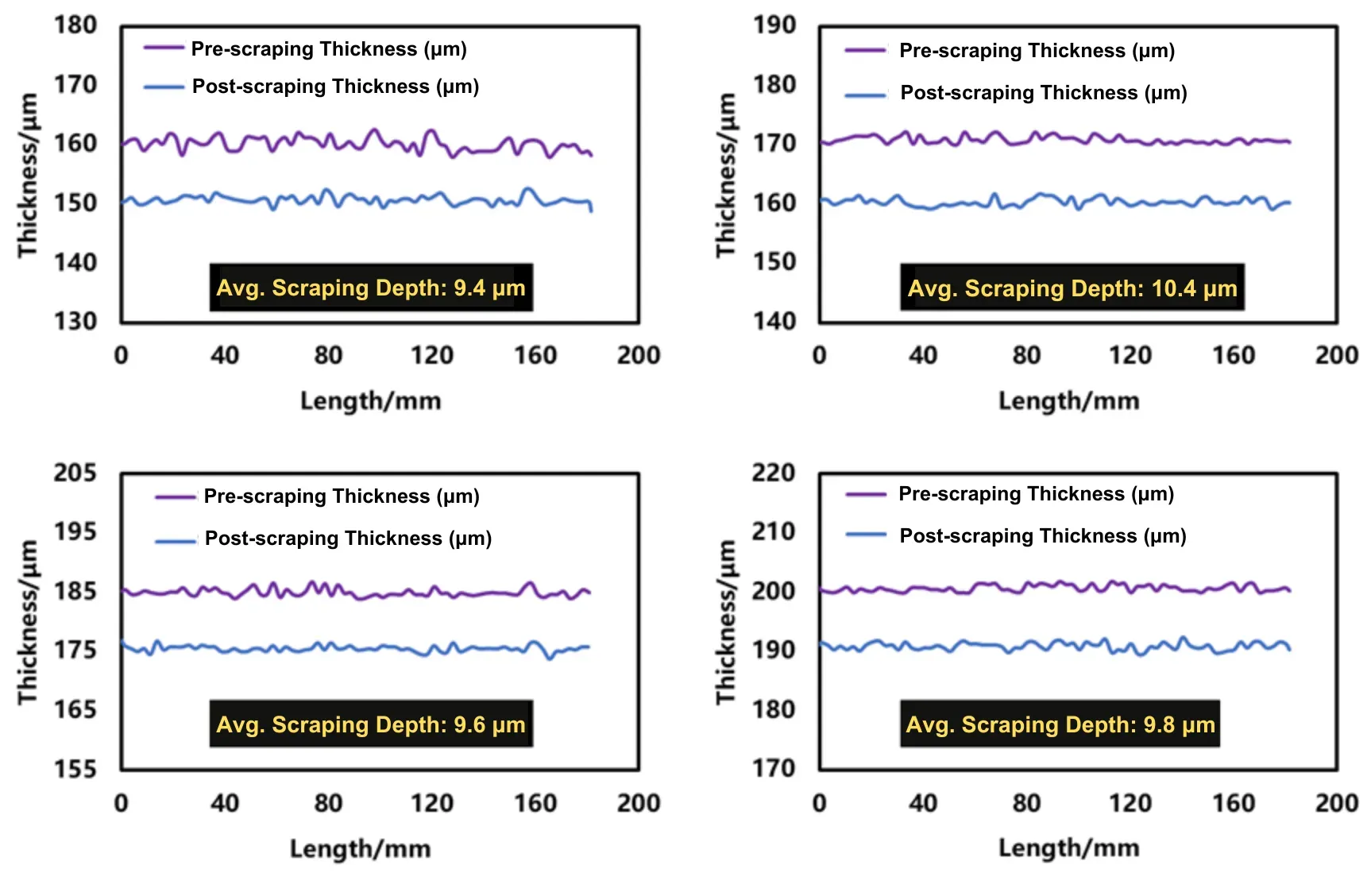
Figure 4. Thickness values of different electrode sheets before and after scraping measured by laser thickness gauge.
3. System Architecture: How the LEPS2000 Achieves Micron-Level Precision
IEST Instrument’s LEPS2000 automatic electrode powder scraping system is built on three core design principles: precision, automation, and closed-loop thickness verification.
Key system features:
| Parameter | Specification |
|---|---|
| Automatic Tool Alignment | Vision-assisted tool calibration eliminates manual setup errors |
| Blade Material | Tungsten carbide (WC) for extended operational life |
| Control Precision | 1 μm step resolution for scraping depth |
| Sampling Width | 10–55 mm (selectable) |
| Electrode Thickness Measurement | Non-contact closed-loop laser measurement |
| Scraping Stroke | 0–200 / 500 / 700 mm (selectable and adjustable) |
| Electrode Clamping | Fixed tension mechanism; compatible with 300/600/800 × 80 × 2 mm electrodes |
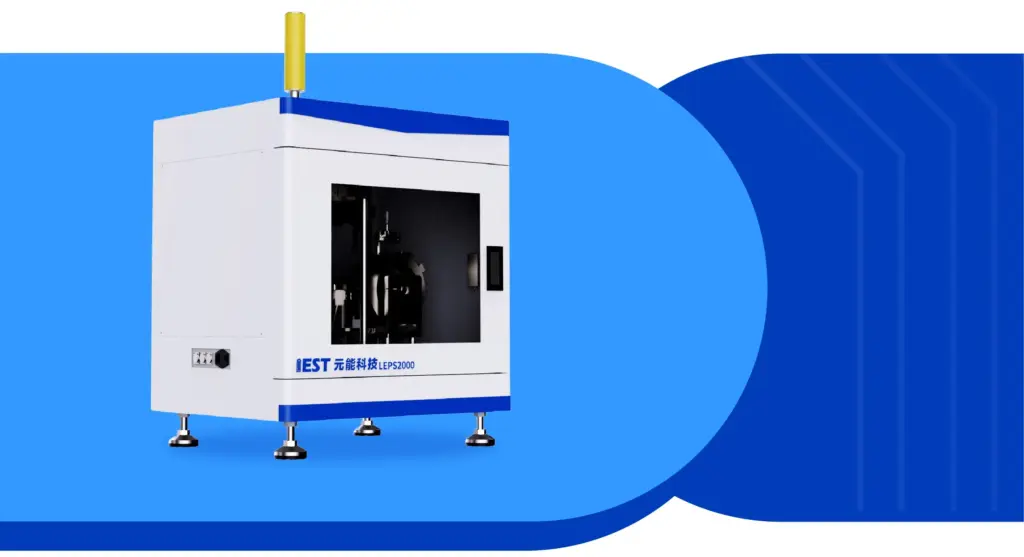
Figure 5. IEST automatic electrode powder scraping system(LEPS 2000).
-
Precision Tool Alignment System: Featuring an automated machine vision module, the platform automatically aligns and calibrates the scraping blade relative to the electrode surface within approximately 3 minutes, neutralizing any manual positioning bias.
-
High-Resolution Feed Mechanism: Driven by digital servo control loops, the feed architecture provides a mechanical resolution of 0.1 μm, allowing the cutting blade to move precisely through dense coatings.
-
Closed-Loop In-Situ Metrology: Dual-channel thickness components (supporting both tactile contact and non-contact laser configurations) log the absolute topography of the electrode coating before and after the peeling stroke, immediately compiling spatial data.
-
Rigid Mechanical Base & Clamping: Built atop a high-mass structural marble foundation, the system completely dampens environmental high-frequency vibrations during execution. Custom tensioning rollers (available in 100/200/270 mm diameters) and specific blade geometries (20/40/55 mm) isolate the traction forces to prevent structural delamination or substrate damage.
4. Application Scenario
Based on micron-level layered scraping technology, the system precisely delaminates electrode coatings at different depths and across different regions, obtaining structured powder samples.
The deployment of micro-level layer-by-layer automated scraping opens new pathways for advanced battery diagnostic workflows:
4.1 Process Validation
Multi-Layer Coating Architecture Validation: As manufacturers adopt co-extrusion multi-layer die coating to optimize energy density, verifying interfacial mixing or compositional integrity becomes vital. The LEPS2000 allows localized compositional analysis to determine whether distinct functional layers maintain their target design boundaries.
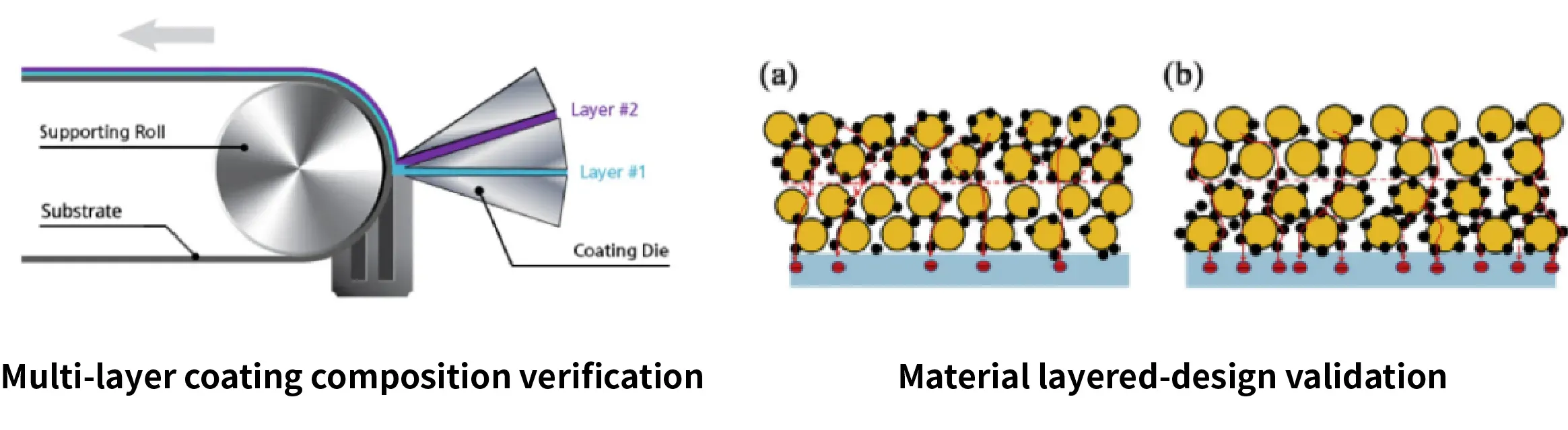
Figure 6. Process validation workflows demonstrating multi-layer simultaneous slot-die coating composition verification and engineered material layered-design validation.
4.2 Uniformity Assessment
Stability monitoring of coating &calendering processes across: Targeted scraping at predefined lateral and longitudinal positions, followed by compositional analysis, reveals the microscopic coating uniformity and consistency across the electrode sheet.
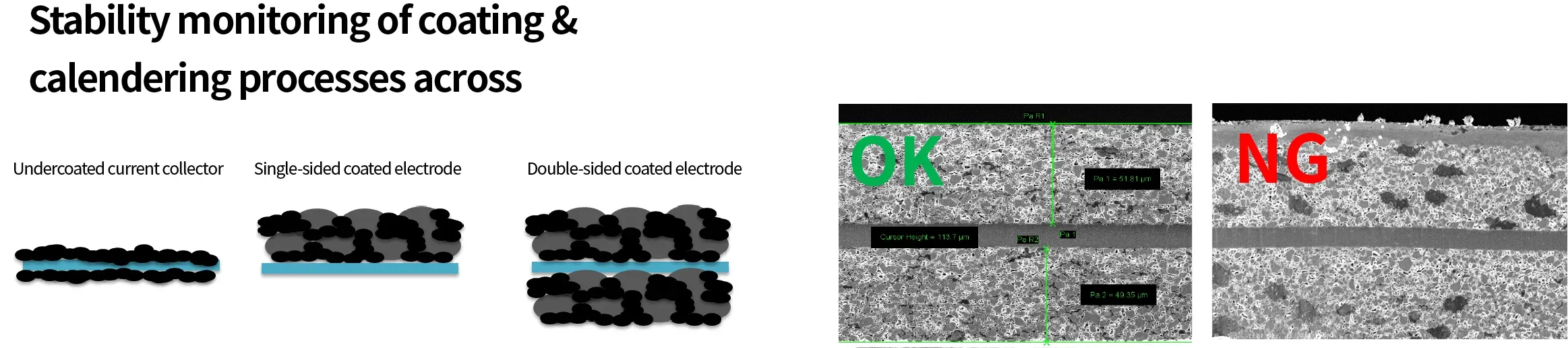
Figure 7. Evaluation of coating and calendering process stability across undercoated, single-sided, and double-sided electrode matrices via micro-level cross-sectional analysis
4.3 SBR Content Quality Control
Quantification of SBR/PVDF Stratification: By executing controlled 5 μm or 10 μm serial peeling steps from the surface down to the current collector, engineers can collect isolated powder fractions from precise spatial coordinates. Subjecting these layers to TGA profiles allows precise mapping of binder floating anomalies induced by aggressive drying temperatures.
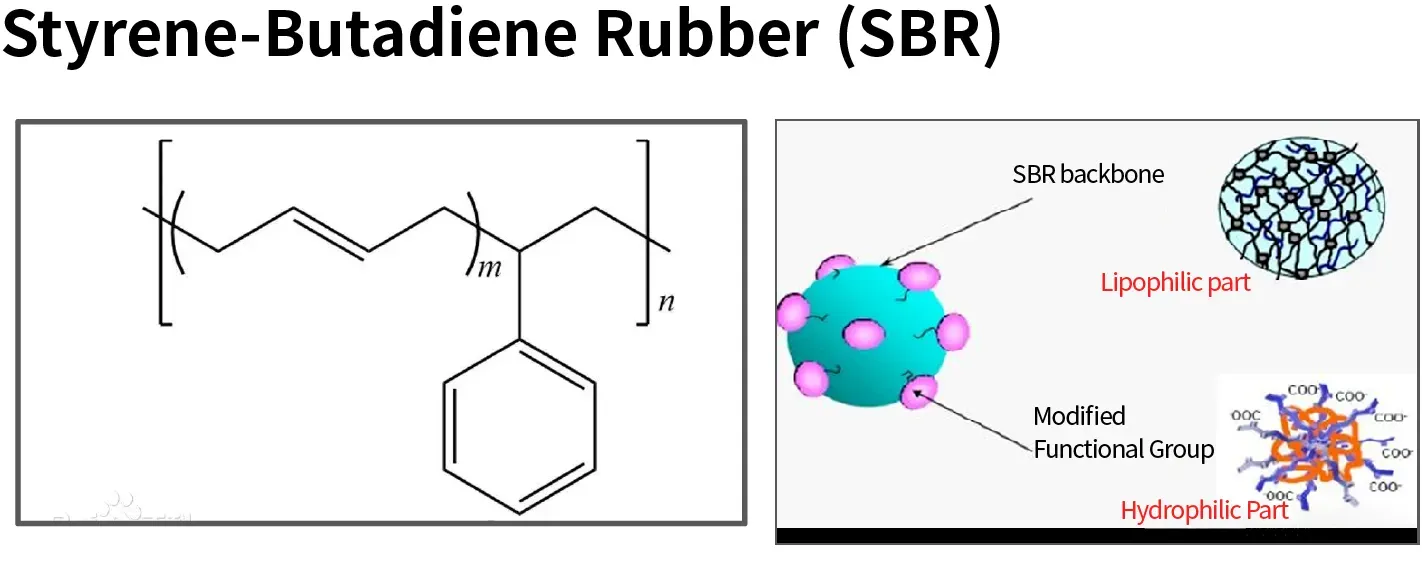
Figure 8. Chemical molecular structure and core-shell colloidal morphology of Styrene-Butadiene Rubber (SBR) binders subject to longitudinal migration during industrial electrode drying.
5. Industry Insights: Micron-Level Precision in the Age of Lithium Battery Refinement
The growing demand for micron-level electrode powder scraping reflects a fundamental shift in the lithium battery industry — from capacity-driven mass production to extreme precision manufacturing and quality differentiation.
In the past, quality control in electrode manufacturing focused on macroscopic indicators such as compaction density and electrical resistivity. The vertical (through-thickness) heterogeneity within the electrode coating remained largely a “black box” — acknowledged but difficult to quantify. A well-known example is SBR migration during anode drying, where the binder concentrates at the electrode surface due to convective transport as the solvent evaporates.
SBR migration is defined as the upward segregation of SBR binder toward the electrode surface during the drying process, creating a binder concentration gradient through the coating thickness. Industry researchers have long recognized that SBR migration affects electrode adhesion, electrochemical performance, and cycle life. However, manual scraping methods introduced errors large enough to mask the true binder gradient, forcing process engineers to rely on empirical trial-and-error rather than data-driven optimization.
The LEPS2000 addresses this gap by providing structurally resolved samples with well-defined spatial coordinates. Each scraping operation yields a coating specimen whose original depth position within the electrode is precisely known. These structured samples can then be subjected to:
- Thermogravimetric analysis (TGA) for quantitative binder content determination
- Scanning electron microscopy (SEM) for morphological characterization
- X-ray diffraction (XRD) for crystallinity and phase analysis
- Energy-dispersive X-ray spectroscopy (EDS) for elemental mapping
The result is a reliable analytical workflow that supports process validation, binder distribution studies, and quality control — all grounded in samples with documented spatial provenance rather than bulk or poorly-localized material.
6. Summary
As the lithium-ion battery sector transitions from raw volume expansion to intense cost and efficiency engineering, competitive advantages will be won at the micron scale. By transforming vertical electrode profiling from an empirical guessing game into a high-precision automated science, the IEST LEPS2000 provides global R&D teams and tier-one manufacturers with the data fidelity required to master slurry drying kinetics, maximize cell quality, and accelerate solid-state battery manufacturing. And by combining automatic tool alignment, 1 μm control precision, and closed-loop laser thickness verification, the LEPS2000 delivers structurally resolved samples suitable for subsequent TGA, SEM, XRD, and EDS analysis. For the lithium battery industry’s ongoing transition toward extreme quality refinement, precision electrode powder scraping provides the sample quality foundation that downstream characterization requires.
7. FAQs
7.1 How does binder migration affect lithium-ion battery performance?
Binders like SBR or PVDF tend to migrate toward the surface along with solvent evaporation during aggressive drying cycles. This leaves the bottom layer adjacent to the foil binder-deficient, drastically lowering peel strength, causing delamination during winding, and increasing interfacial resistance.
7.2 What are the limitations of manual scraping for electrode powder analysis?
Manual scraping introduces severe depth deviations, surface gouging, and inconsistent tool pressures, which easily destroy the sub-layer boundary lines. Because the powder mass collected cannot be paired with a reliable spatial coordinate, subsequent analytical measurements (such as TGA or ICP) lose depth accuracy.
7.3 What is SBR migration in lithium battery electrodes and how is it detected?
SBR migration refers to the upward movement of styrene-butadiene rubber binder during electrode drying, creating a concentration gradient through the coating thickness. It is typically detected by combining electrode powder scraping at multiple depths with thermogravimetric analysis (TGA) to quantify the binder content at each layer.
7.4 How does automatic electrode powder scraping compare with manual scraping methods?
Manual scraping suffers from poor depth control, low consistency, lack of traceability, and operator-dependent variability. Automatic systems such as the LEPS2000 achieve depth accuracy within ±2 μm with COV below 5%, incorporate closed-loop thickness verification, and provide full data logging for traceable quality assurance.
7.5 What accuracy can the LEPS2000 achieve in electrode powder scraping?
The LEPS2000 achieves a scraping depth control precision of 1 μm, with actual deviations consistently within ±2 μm of the target depth and a coefficient of variation below 5% across multiple electrode formulations, as validated on 500+ electrodes.