-
iestinstrument

1. What Is Electrode Characterization and Why Does It Matter?
Electrode characterization in lithium-ion batteries refers to the systematic, quantitative evaluation of an electrode sheet’s electrical conductivity distribution, electrolyte wettability, and mechanical integrity to predict cell-level performance. Inadequate electrode uniformity, insufficient electrolyte absorption, and poor mechanical robustness are among the most common root causes of cell polarization, capacity fade, swelling, and manufacturing yield loss across both R&D and production environments. A comprehensive electrode characterization framework — spanning electronic resistance mapping, wettability kinetics, binder distribution analysis, and in-situ swelling measurement — provides engineers with the traceable data needed to accelerate material selection, stabilize coating processes, and qualify electrode lots before cell assembly.
2. Introduction
Throughout the entire process of lithium-ion battery development — from material R&D to pilot-scale production and mass manufacturing — electrode sheet performance directly determines the cell’s cycle life, fast-charge capability, swelling control, and safety reliability. The industry currently faces common challenges: poor coating uniformity, insufficient wettability leading to high cell polarization, inadequate mechanical strength causing particle shedding or cracking, and excessive electrode swelling resulting in battery failure. How to achieve comprehensive, quantifiable, and traceable characterization of electrode sheets from both R&D and process engineering perspectives is a critical pain point that urgently needs to be addressed. This article introduces how to more thoroughly evaluate lithium-ion battery electrode quality from three dimensions: electrical conductivity, wettability, and mechanical properties.
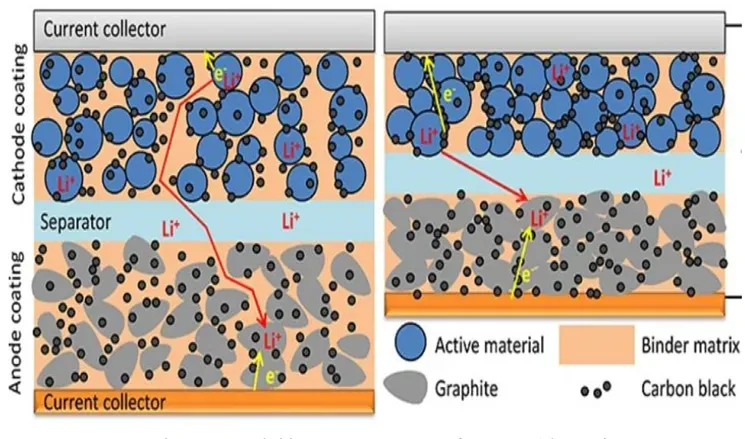
Figure 1. Schematic cross-section of a lithium-ion battery electrode sheet
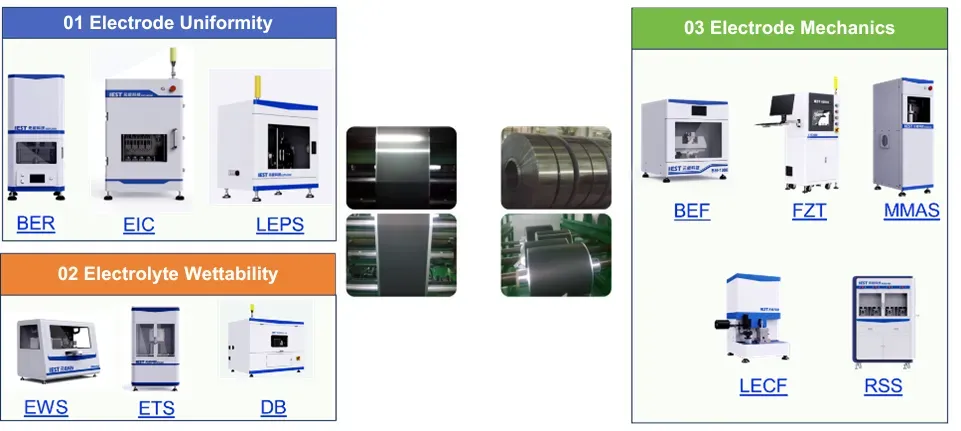
Figure 2. Overview of IEST Instrument‘s 11 electrode characterization solutions spanning uniformity, wettability, and mechanical performance.
3. Electrode Uniformity Characterization
Electrode uniformity is the foundational prerequisite for reproducible cell performance; spatial non-uniformity in conductive agent distribution, binder content, or pore tortuosity translates directly into localized impedance gradients, uneven lithium-ion flux, and premature capacity degradation.
An electrode sheet is a composite structure formed by coating a homogeneous slurry — comprising active material, conductive additive, and binder — onto a metallic current collector foil. Uniformity must be assessed along two independent axes: the lateral dimension (across the electrode width and length) and the longitudinal dimension (through the electrode thickness), as illustrated in Figure 3.
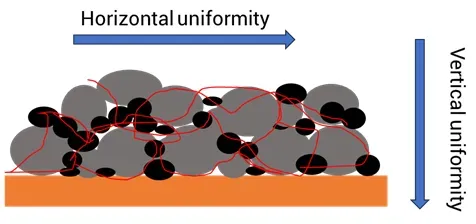
Figure 3. Schematic diagram showing lateral (in-plane) and longitudinal (through-thickness) sampling dimensions for electrode uniformity characterization.
The Chinese electronics industry standard SJT 12007-2025 (formerly registered as 2021-1258T-SJ, Measurement Methods for Coating Uniformity of Lithium-Ion Battery Electrode Sheets) formalizes uniformity assessment around three measurable parameters — areal weight, thickness, and sheet resistance — each quantified by the Coefficient of Variation:
\[
\text{COV} = \frac{\sigma}{\bar{x}} \times 100\%
\]
where \(\sigma\) is the standard deviation and \(\bar{x}\) is the mean of the measured values across all sampling points.
Table 1. Electrode uniformity COV thresholds by parameter and grade, per SJT 12007-2025 and advanced industry practice.
| Parameter | COV Target — Standard Grade | COV Target — Advanced Grade | Governing Standard |
|---|---|---|---|
| Areal Weight | COV < 1% | COV < 1% | SJT 12007-2025 |
| Coating Thickness | COV < 1% | COV < 1% | SJT 12007-2025 |
| Sheet Resistance | COV < 5% | COV < 1% | SJT 12007-2025 / Industry leading |
As manufacturers mature their processes, the sheet resistance uniformity target is tightening from the standardized COV < 5% toward COV < 1%, reflecting the increased demand for electrodes capable of supporting high-rate charging and consistent cell-to-cell performance.
IEST Instrument recommends a three-method approach for comprehensive electrode uniformity characterization, as shown in Figure 4:
- Lateral electronic resistance mapping: Measures the electronic conduction network uniformity at multiple positions across the electrode surface, identifying regions of poor conductive additive dispersion.
- Lateral ionic resistance mapping: Evaluates the ion transport pathway uniformity across the electrode plane, reflecting pore structure and electrolyte accessibility differences at different lateral positions.
- Longitudinal binder distribution analysis via thermogravimetric (TG) testing: Electrode samples are extracted at different depths through the coating thickness, and TG analysis quantifies the binder content at each depth. Binder migration toward the surface — a common artifact of improper drying rates — is directly detected through the resulting binder concentration profile.
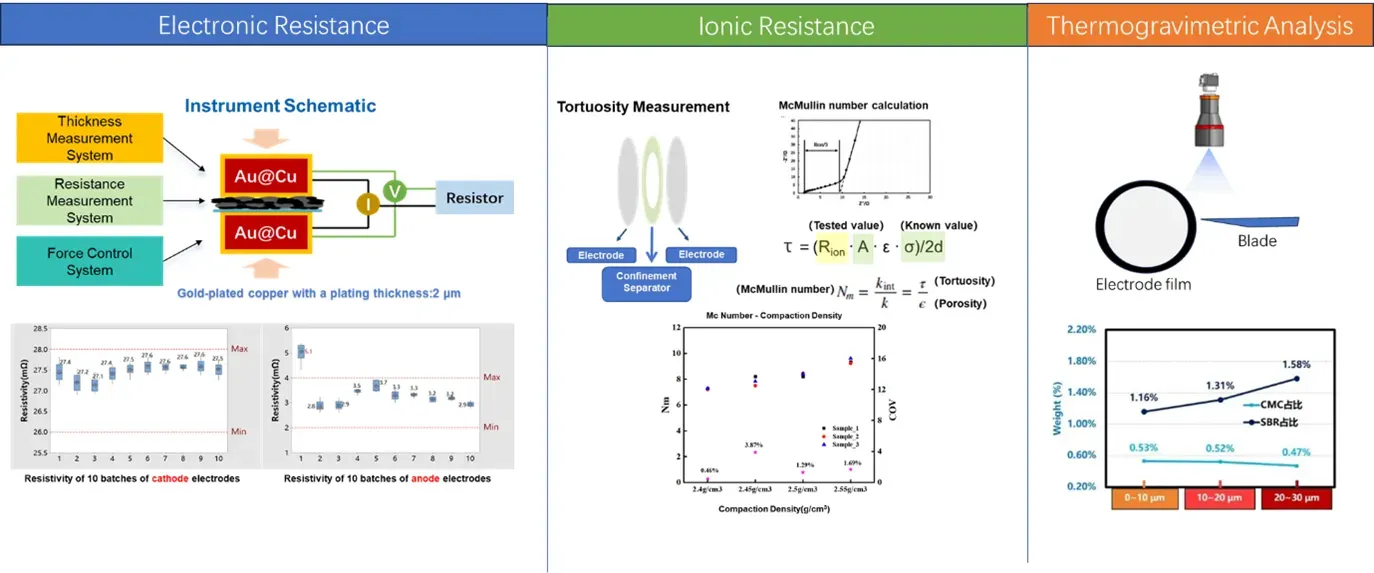
Figure 4. Three complementary test methods for electrode uniformity characterization: lateral electronic resistance, lateral ionic resistance, and longitudinal TG-based binder distribution.
As industry-wide test databases for these three methods continue to accumulate, standardized threshold values for “excellent electrode” classification are expected to converge progressively.
4. How to Measure Electrolyte Wettability in Electrode Sheets
Electrolyte wettability refers to the ability of an electrode sheet (and cell stack) to absorb and uniformly distribute electrolyte under capillary forces; insufficient wettability is a primary driver of cell gassing, pouch swelling, high polarization, and poor cycle life — particularly as fast-charging requirements become more stringent.
Testing requirements vary significantly depending on the development stage:
- Fundamental research: High-precision, reproducible wettability rate data are needed to validate computational wetting models and guide pore structure design.
- Process development: Rapid, comparative measurements across different electrode formulations, separator types, and electrolyte chemistries enable high-throughput material screening.
- Production quality control: Automated, operator-independent testing replaces subjective visual observation and generates quantifiable, traceable wettability records.
To address these distinct needs, IEST Instrument provides three standardized electrode wettability characterization pathways, as shown in Figure 5:
Table 2. Comparison of three electrolyte wettability test methods for lithium-ion battery electrodes.
| Method | Principle | Primary Application |
|---|---|---|
| Capillary Method | Measures electrolyte rise rate through the electrode pore network using capillary-driven flow | Electrode fundamental research; wetting model validation |
| Weight Method | Tracks the mass uptake of electrolyte absorbed by the electrode as a function of time | Process stability assessment; comparative screening across electrode and separator systems |
| Height Method | Measures the vertical electrolyte wetting front height over time in a dry electrode stack | Dry cell wetting time prediction; production-line incoming inspection |
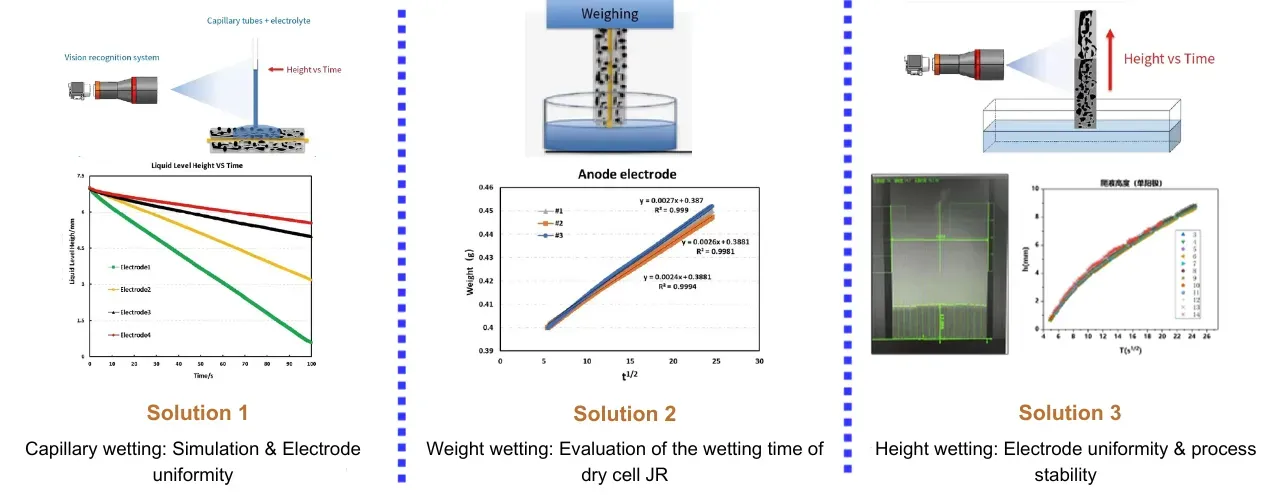
Figure 5. IEST Instrument’s three standardized electrolyte wettability test configurations for electrode sheets.
Together, these three methods cover the full workflow from material discovery through manufacturing quality assurance, providing a consistent wettability data chain that links electrode design parameters to real-world cell filling performance.
5. Five Methods for Evaluating Electrode Mechanical Properties
Electrode mechanical properties directly govern yield and cell safety; deficiencies in flexibility, coating adhesion, or structural stability under compression manifest as powder shedding, wrinkling, cracking, and delamination during die-cutting, winding, and stacking operations.
A rigorous mechanical evaluation framework addresses five engineering questions:
- What is the electrode’s in-plane flexibility, and how does it respond to repeated bending and calendering fatigue?
- Is the coating-to-foil adhesion strength sufficient? Does the internal cohesive strength of the coating match the interfacial peel strength?
- How does the electrode behave under compressive load — specifically its deformation compliance and elastic recovery?
- What is the dimensional rebound trend after calendering, and how can target compaction density be stably controlled?
- How does the electrode swell — in thickness and contact pressure — during electrochemical cycling?
Visual or manual inspection, or informally assembled fixtures, introduce unacceptable measurement error and poor repeatability for these parameters. IEST Instrument offers five quantitative test methods addressing each dimension:
5.1 Electrode Flexibility (Stress-Strain Curve under Folding)
A real-time stress-strain curve is recorded as the electrode undergoes a controlled fold-bend cycle. The resulting curve quantifies the elastic and plastic deformation response of the electrode, enabling direct comparison of how binder type, binder content, or calendering pressure influence electrode flexibility.
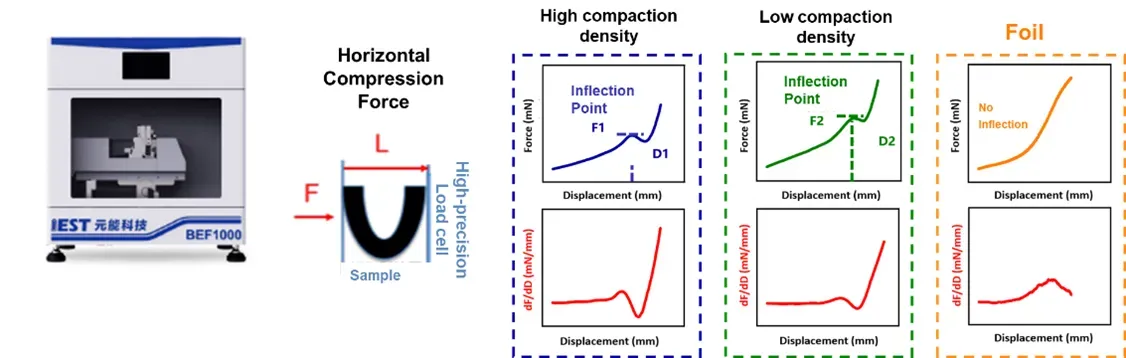
Figure 6. Stress-strain curve acquisition during electrode folding for flexibility characterization.
5.2 Fatigue Resistance (Automated Fold-Roll Cycling)
An automated system repeatedly folds and rolls the electrode sheet, while optical or visual inspection quantifies light transmission (indicating coating cracks) and the degree of active material detachment after each cycle. This method characterizes the fatigue behavior of both anode and cathode sheets under the mechanical stresses representative of high-speed winding operations.
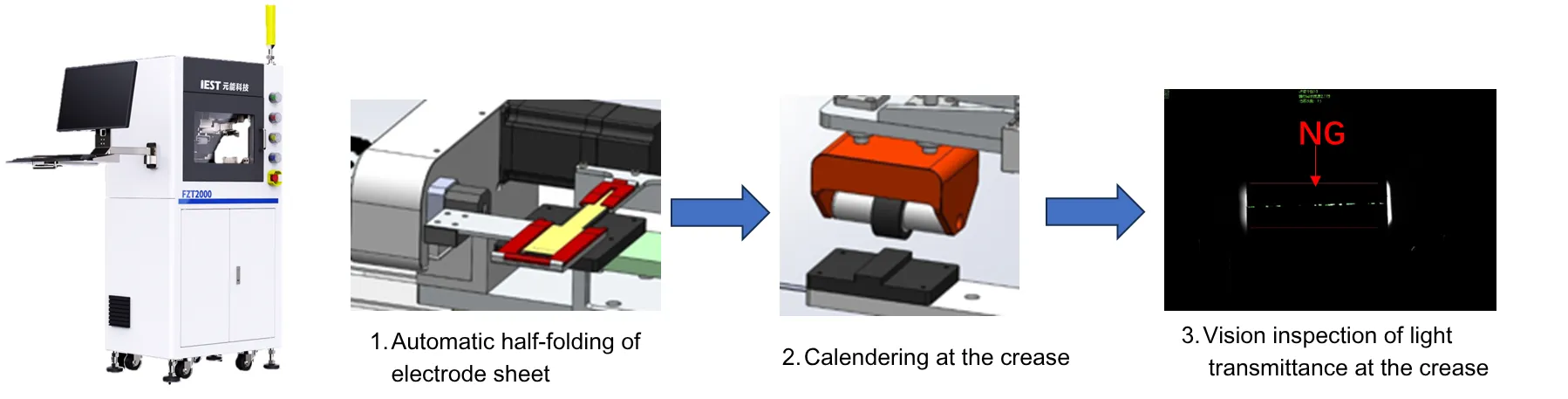
Figure 7. Automated fold-roll fatigue test for evaluating multi-cycle bending durability of electrode sheets.
5.3 Compression Behavior (Cyclic Loading of Single and Multi-layer Stacks)
Servo-controlled compression-decompression cycles are applied to single-layer or multi-layer electrode assemblies. The resulting load-displacement curves reveal the electrode’s deformation compliance, residual set after unloading, and structural stability under the pressures encountered during cell assembly and normal cell operation.
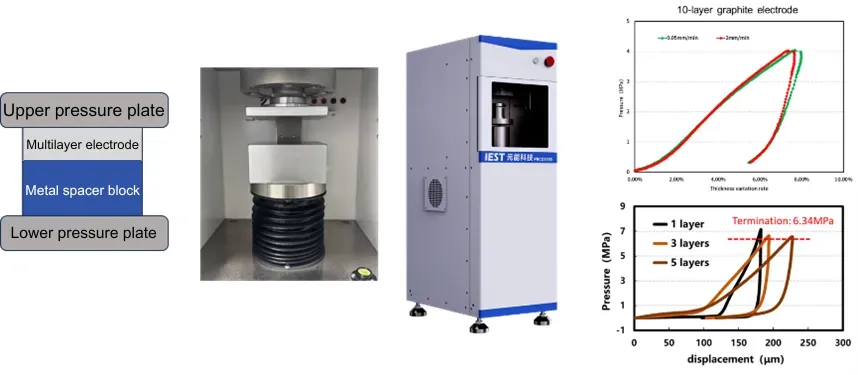
Figure 8. Compression-decompression cycling test for multi-layer electrode sheet stack mechanical characterization.
5.4 Electrode Coating Peel Strength and Cohesion (Micro-depth Lateral Shear)
Precision displacement control advances a cutting tool to a defined micrometer-scale depth within the coating layer, and the real-time horizontal shear force during lateral translation is recorded. This approach independently characterizes the adhesion strength (coating-to-foil interface) and cohesive strength (within the coating bulk), providing direct quantitative feedback on binder selection and electrode formulation.
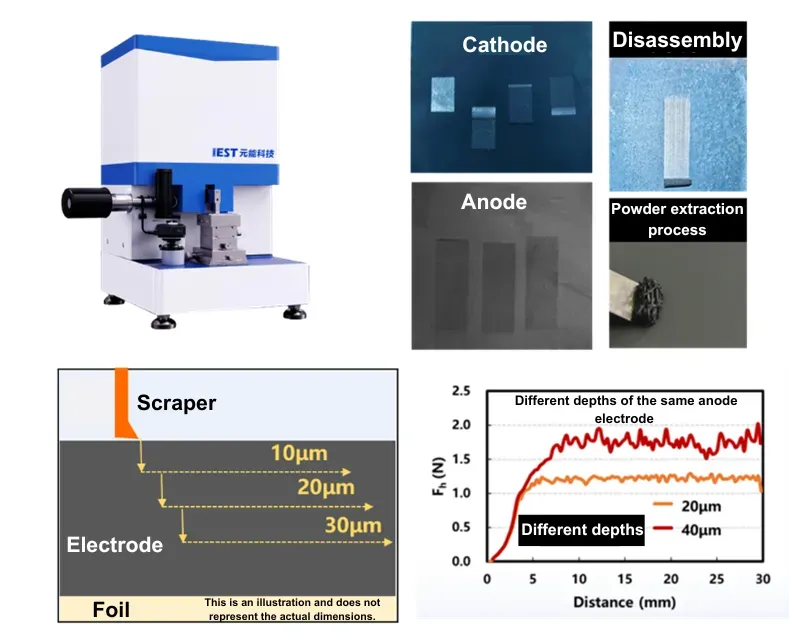
Figure 9. Micro-depth lateral shear test for quantifying electrode coating peel strength and internal cohesion.
5.5 Electrode Swelling (In-situ Expansion During Cycling)
Adaptive force-displacement control tracks the real-time thickness change or swelling force of an electrode as it is assembled into a cell and subjected to charge/discharge cycling. Electrode swelling is defined here as the dynamic dimensional change of an electrode sheet under electrochemical lithiation/delithiation, measured either as incremental thickness expansion or as the evolving contact pressure against a constrained boundary. This measurement directly informs cell design tolerances, stack pressure specifications, and module housing requirements.
Figure 10. In-situ electrode swelling measurement system for tracking real-time thickness change and contact force during charge/discharge cycling.
6. Summary: Building a Systematic Electrode Characterization Framework
Electrode characterization is not a collection of isolated instrument tests — it is a structured diagnostic framework aligned to the specific failure modes and performance requirements at each stage of battery development and manufacturing.
Starting from five core engineering needs — electronic conductivity uniformity, ion transport efficiency, electrolyte wetting kinetics, mechanical strength and fatigue life, and in-situ swelling behavior — a standardized, quantitative, and comparable electrode characterization system enables engineers to: make rational material selections based on measurable performance metrics; stabilize coating and calendering processes against drift; and improve cell-level energy density, cycle life, and safety in a traceable, data-driven manner.
IEST Instrument provides a complete suite of precision electrode characterization instruments and technical services addressing all dimensions described in this article. For application-specific test configuration guidance, contact the IEST Instrument applications team.
7. References
[1] SJT 12007-2025 Measurement Method for Coating Uniformity of Lithium-ion Battery Electrodes – Doc88
8. FAQ
What parameters define electrode uniformity in lithium-ion batteries?
Electrode uniformity is defined by the spatial consistency of three key parameters: areal coating weight, coating thickness, and sheet resistance. Per the Chinese electronics industry standard SJT 12007-2025, excellent electrodes achieve a Coefficient of Variation (COV) below 1% for weight and thickness, and below 5% for sheet resistance. Advanced manufacturers are increasingly targeting COV below 1% for resistance as well, driven by fast-charging and cell consistency requirements.
How is electrolyte wettability measured for lithium battery electrodes?
Three standardized methods exist for quantifying electrolyte wettability in electrode sheets. The capillary method measures capillary-driven electrolyte rise rate through the pore network and is primarily used for fundamental research and wetting model validation. The gravimetric method tracks mass uptake of absorbed electrolyte over time, enabling rapid comparative screening across electrode and electrolyte systems. The height method monitors the wetting front position in a dry electrode stack as a function of time, and is well-suited for predicting dry-cell filling time in production environments.
What causes electrode cracking, delamination, or powder shedding during cell manufacturing?
These defects originate from insufficient electrode mechanical properties — specifically inadequate coating-to-foil adhesion (peel strength), low internal coating cohesion, or insufficient electrode flexibility. During die-cutting, winding, or stacking, mechanical stresses exceed the coating’s structural tolerance, leading to crack propagation, active material detachment, and interlaminar separation. Quantitative characterization of peel strength, cohesion, and stress-strain response under bending allows engineers to identify and correct formulation or process deficiencies before they affect manufacturing yield.
What is the COV standard for electrode uniformity?
According to Chinese standard SJ/T 12007‑2025, excellent electrode uniformity requires COV < 1% for weight and thickness, and COV < 5% for resistance. Advanced manufacturers now achieve resistance COV below 1%.
What mechanical properties of electrode sheets are critical for battery manufacturing?
Key mechanical properties include flexibility (bending stress‑strain), folding fatigue resistance, compressibility & rebound, peel strength & cohesion, and in‑situ expansion force/thickness. These parameters influence process yield and cell safety.
What is electrode characterization in lithium‑ion batteries?
Electrode characterization refers to the quantitative assessment of key properties including coating uniformity, electrolyte wettability, and mechanical behavior. It provides data‐driven insights for material selection, process optimization, and quality control.