-
iestinstrument


Abstract
📄 Source Paper
Haoran Li, Ben Niu, Xinyue Wang, Mai Wang, Jia Gao, Yuyang Lu, Weiyi Liu, Jiao Gao, Xing-hua Xia, Jinding Liang, *Wei Wang*
Visualization of Stochastic Nucleation and Confined Propagation in Graphite Lithiation
| DOI: 10.1021/jacs.6c03598
| Journal: Journal of the American Chemical Society
| Institutions: Nanjing University; CATL 21C Innovation Lab
✓ IEST Instrument acknowledged — Single Particle Electrochemical Performance Testing System(SPEC1000) used in this research
1. Research Background: Why Is Graphite Lithiation a Bottleneck for Fast Charging?
Graphite remains the dominant commercial anode material in lithium-ion batteries, largely because of its high theoretical capacity, low intercalation potential, and established manufacturing base. However, its phase-transition dynamics can limit fast charging and have remained a widely debated topic in battery research.
Graphite staging refers to the ordered intercalation of lithium ions between graphene layers, producing crystallographic phases with distinct lithium stoichiometries and optical responses. The 1L→3L, 3L→2, and 2→1 transitions occur over different electrochemical-potential ranges and involve the nucleation and growth of new phase domains.
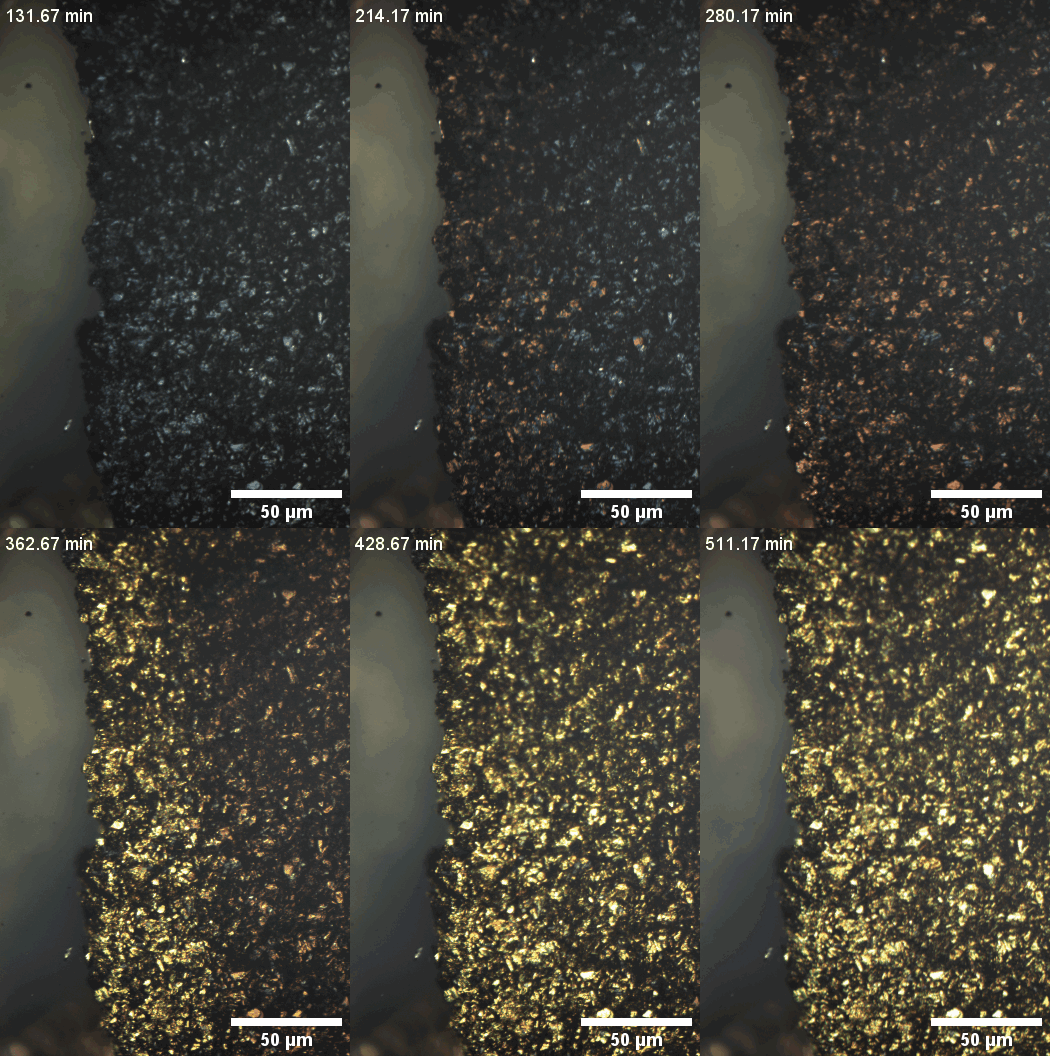
Figure 1. Optical response of a commercial natural graphite particle during electrochemical lithiation, captured by the single-particle optical electrochemical imaging platform.
The rate-limiting process in graphite lithiation has remained uncertain. Earlier studies often emphasized solid-state Li-ion diffusion within graphite, whereas more recent work has highlighted Li-ion transport across the graphite–electrolyte interface. Distinguishing between these competing mechanisms has been challenging because lithiation is inherently heterogeneous and evolves under non-equilibrium conditions at the particle scale.
Conventional techniques provide important but incomplete information about these processes. Galvanostatic Intermittent Titration Technique (GITT) and Potentiostatic Intermittent Titration Technique (PITT) estimate ion transport parameters through voltage relaxation analysis but provide only ensemble-averaged, spatially unresolved information. X-ray diffraction (XRD) probes bulk crystallographic phase fractions but lacks the spatial resolution to observe individual phase domains within a single particle. Synchrotron and electron microscopy techniques offer higher resolution but impose stringent environmental constraints that preclude long-duration, in operando observation under real electrochemical conditions.
The core challenge was to visualize graphite phase transitions in real time at the single-particle level, while preserving the electrochemical environment, thereby determining whether the rate-limiting process changes between staging transitions.
2. Technical Platform: Single-Particle Electrochemical Imaging at Near-Diffraction-Limit Resolution
Single-particle electrochemical imaging is defined here as an operando optical microscopy technique that correlates the spatially resolved optical response of an individual electrode particle with its local electrochemical state during charging or discharging. The technique enables phase nucleation, boundary propagation, and domain evolution to be monitored at sub-micron resolution.
The research team collaborated with IEST Instrument to develop a dedicated single-particle optical electrochemical imaging platform that addresses three technical challenges:
2.1 Active 3D Drift Correction
Long-duration electrochemical cycling experiments—spanning days to weeks—are fundamentally compromised by thermal and mechanical drift in the imaging stage. The platform incorporates a hardware-level, three-dimensional drift correction module that performs real-time active compensation in both the x–y focal plane and the z-axis. This function helps maintain spatial registration and data comparability during extended measurements of individual particles, enabling rigorous analysis of local structural dynamics within individual particles.
2.2 Optically Compatible Half-Cell Design
A custom-designed, optically transparent half-cell was fabricated to maintain full compatibility with high-numerical-aperture optical microscopy while replicating the electrochemical behavior of commercial coin cells. The electrochemical response of the optically compatible half-cell was validated to be essentially identical to that of standard coin-cell assemblies, confirming that observations made in the imaging system accurately represent behavior under practical battery operating conditions.
2.3 High Spatiotemporal Resolution Imaging
The imaging system achieves spatial resolution approaching the optical diffraction limit, enabling clear discrimination of sub-micron-scale phase domains within individual graphite particles. Second-scale temporal resolution allows continuous tracking of phase nucleation and propagation from initiation through successive stage transitions. These capabilities provide the first complete, real-time dynamic record of graphite lithiation at the single-particle level.
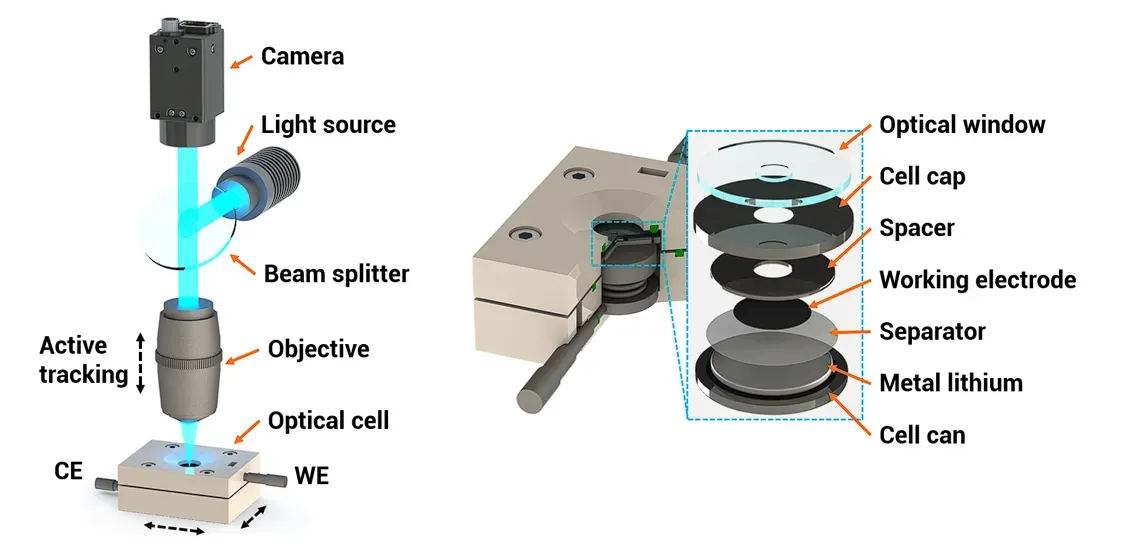
Figure 2. Schematic of the single-particle optical electrochemical imaging platform co-developed by the research team and IEST Instrument, including the optically compatible half-cell design that replicates commercial coin-cell electrochemistry.
3. Discovery: Stochastic Nucleation in Early-Stage Graphite Phase Transitions
Operando imaging of individual commercial natural graphite particles revealed a previously unrecognized phase transition behavior in the early 1L→3L and 3L→2 transitions.
Stochastic nucleation, in the context of graphite lithiation phase transitions, refers to the asynchronous, spatially random initiation of new phase domains at discrete sites within a single particle, rather than the uniform or deterministic nucleation expected from classical phase-transition models. Each nascent domain forms independently, without apparent coordination with neighboring domains.
Confined propagation refers to the subsequent spatial evolution of each stochastically nucleated phase domain, in which the phase boundary advances within a spatially restricted region of the particle rather than sweeping continuously across the entire particle interior. Each domain propagates within its own bounded territory, resulting in a mosaic of coexisting phase domains within a single graphite particle during the transition.
During the 3L→2 transition, multiple domains nucleated asynchronously and subsequently expanded within spatially restricted regions. This confined propagation produced a mosaic of coexisting stage-3L and stage-2 domains during the transition.
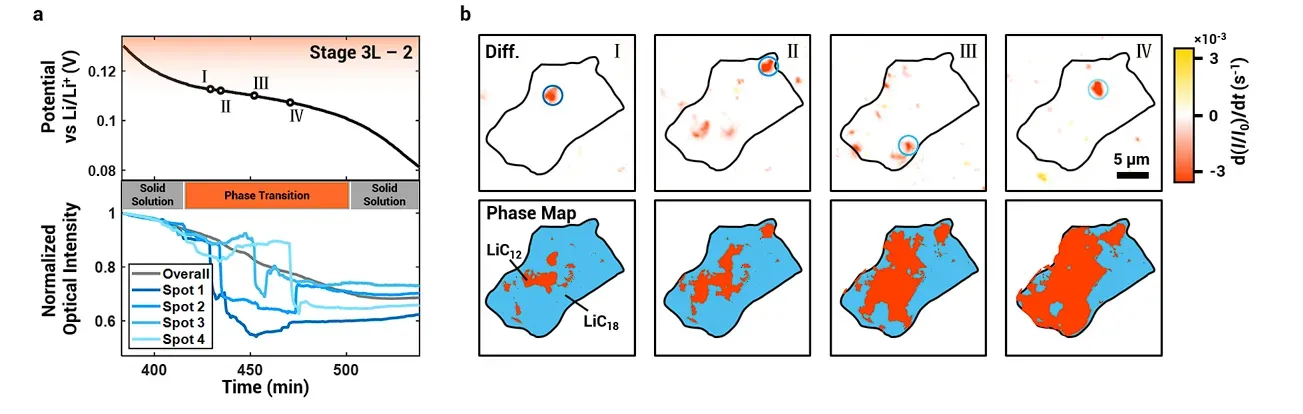
Figure 3. Single commercial natural graphite particle exhibiting stochastic nucleation–confined propagation behavior during the 3L→2 phase transition. Multiple phase domains nucleate asynchronously and propagate within spatially restricted regions. Scale bar: 5 μm.
This stochastic nucleation–confined propagation mode contrasts sharply with the behavior observed in the final 2→1 stage transition.
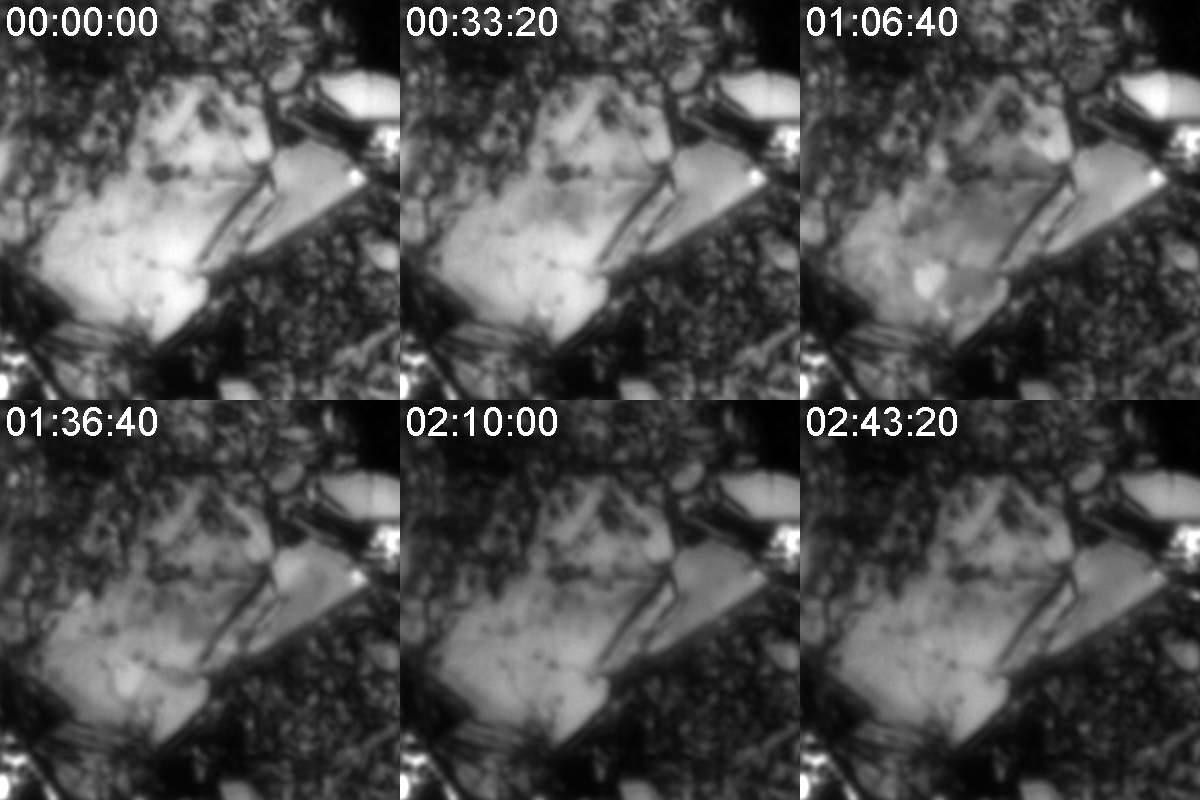
In the 2→1 lithiation stage, the imaging data reveal behavior consistent with the shrinking-core model: a single, coherent phase front advances across the graphite particle in a spatially correlated, continuous manner—the canonical behavior that had been assumed to govern all stages of graphite lithiation in earlier literature. The stark contrast between the two regimes—stochastic in early stages, shrinking-core in the final stage—is made visually explicit by the single-particle imaging platform at a 5 μm scale resolution.
 |
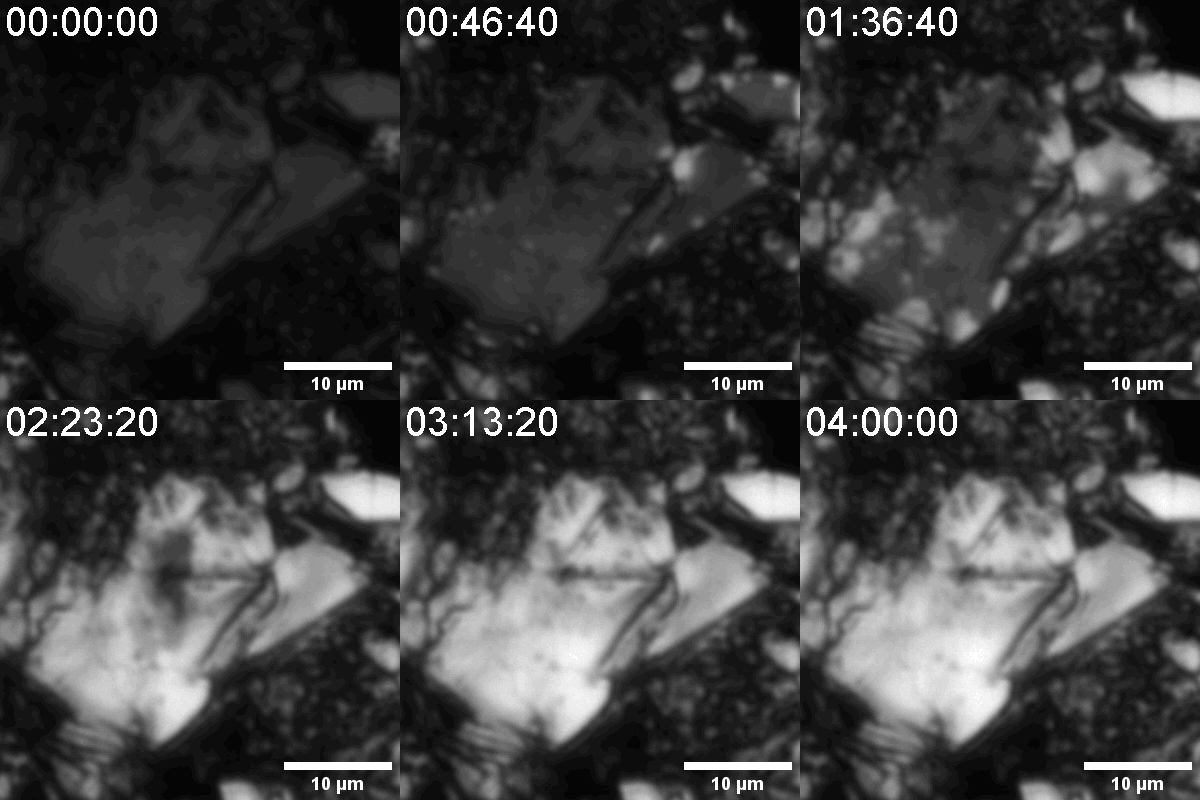 |
Figure 4. Direct comparison of phase transition mechanisms in a single commercial natural graphite particle. Left: 3L→2 stage transition exhibiting stochastic nucleation and spatially confined phase boundary propagation. Right: 2→1 stage transition exhibiting the classic shrinking-core phase front. Scale bar: 5 μm.
4. Stage-Dependent Rate-Limiting Mechanisms: From Interfacial Transport to Solid-State Diffusion
The distinct phase transition behaviors observed during graphite lithiation correspond to different rate-limiting steps. Under a given set of conditions, the rate-limiting process is the slowest step, or the step contributing the greatest kinetic resistance, and therefore constrains the overall transition rate.
A rate-limiting step in an electrochemical reaction refers to the elementary kinetic process whose activation energy or transport coefficient is sufficiently low (relative to competing processes) that it controls the overall reaction rate. In graphite lithiation, identifying the rate-limiting step at each stage is essential for designing targeted interventions to accelerate charging.
To distinguish interfacial transport from solid-state diffusion control, the research team examined the kinetic response at multiple current densities, including changes in nucleation behavior, domain growth, and phase-front motion.
The results establish a clear, stage-dependent kinetic picture:
- In early lithiation stages (1L→3L and 3L→2): The stochastic nucleation frequency and the spatial extent of confined propagation domains are strongly sensitive to current density, in a manner consistent with interfacial Li-ion transport as the dominant rate-limiting step. The slow passage of lithium ions across the graphite–electrolyte interface—governed by interfacial desolvation energy, SEI film conductivity, and local surface site availability—determines how rapidly new phase domains can be initiated and sustained.
- In the final lithiation stage (2→1): The phase front velocity and overall transition kinetics are dominated by the rate at which Li⁺ ions diffuse through the already-lithiated graphite bulk to reach unreacted stage-2 material. Solid-state diffusion through the dense, high-lithium-content graphite lattice becomes the rate-limiting bottleneck—consistent with the shrinking-core phase front geometry, which is the expected spatial signature of bulk-diffusion-controlled reactions.
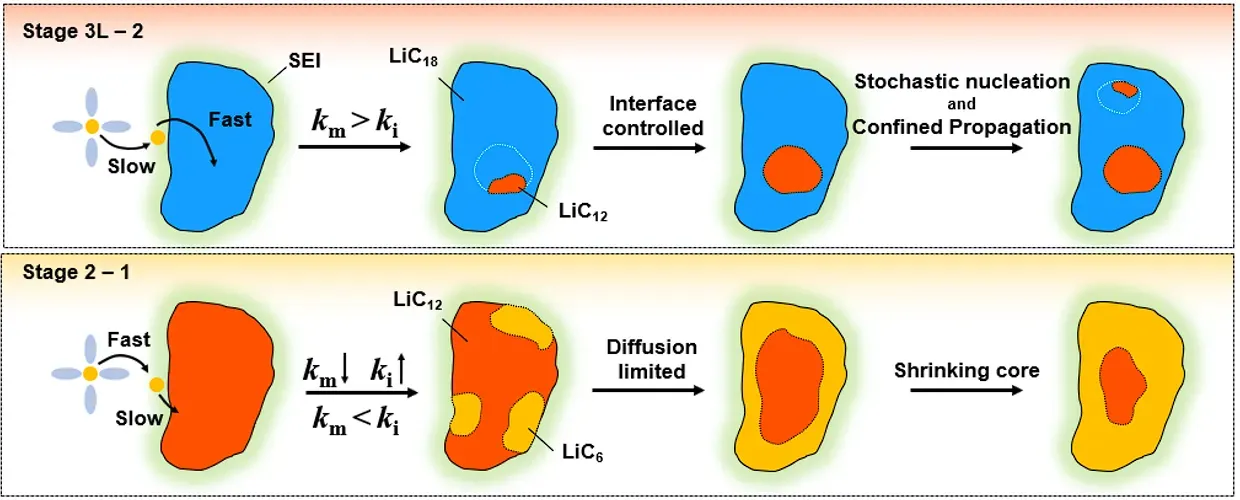
Figure 5. Schematic of the stage-dependent rate-limiting mechanism revealed by single-particle electrochemical imaging.
These findings help reconcile previously competing interpretations of graphite lithiation kinetics. Rather than following one universal rate-limiting mechanism, the controlling process changes as lithiation proceeds through successive staging transitions.
5. Implications for Fast-Charging Graphite Anode Design
The unified kinetic framework established by this study provides concrete, stage-specific guidance for overcoming the graphite anode fast charging bottleneck—a challenge that has constrained fast-charging performance in commercial lithium-ion batteries.
| Bottleneck Stage | Rate-Limiting Step | Targeted Design Strategy | Example Intervention |
|---|---|---|---|
| Early (1L→3L, 3L→2) | Interfacial Li+ transport | Interface engineering | Electrolyte additive optimization, artificial SEI, surface coating |
| Final (2→1) | Solid-state diffusion | Particle morphology engineering | Particle size reduction, grain boundary engineering, heterostructure design |
| Protocol-level | Stage-specific kinetic mismatch | Charging protocol optimization | Multi-step CC-CV protocols tuned to stage-specific time constants |
For early-stage transitions governed by interfacial transport, the most effective interventions target the graphite–electrolyte interface: electrolyte composition, SEI film chemistry, and surface coatings that reduce the desolvation energy barrier for Li⁺. For the final 2→1 transition, strategies that shorten the diffusion path length—such as particle size reduction, introduction of fast-diffusion grain boundaries, or design of heterostructured electrode particles—offer the greatest kinetic benefit. At the cell-engineering level, charging protocols that are dynamically adapted to the time constants of each stage transition can reduce total charging time without triggering lithium plating at the anode surface.
Furthermore, the single-particle optical electrochemical imaging methodology demonstrated in this study offers a generalizable platform for the kinetic characterization of other intercalation-based electrode materials—including layered oxide cathodes, silicon–carbon composite anodes, and sodium-ion electrode materials—wherever multi-stage phase transitions govern rate performance.
6. IEST SPEC1000: Standardizing Single-Particle Electrochemical Characterization
Building on the co-development work underlying this JACS study, IEST Instrument has standardized and productized the single-particle optical electrochemical imaging technology as the SPEC1000 Single-Particle Electrochemical System—a dedicated instrument for high-throughput, multi-parameter electrochemical characterization of battery electrode materials at the single-particle scale.
The SPEC1000 integrates an optical microscopy subsystem, a precision position control stage, an optically compatible electrochemical cell, and unified control software into a single platform. The system is designed to support systematic measurement of multiple electrochemical performance parameters in parallel—including reaction activity, kinetic rate constants, phase transition potentials, C-rate performance, spatial heterogeneity distribution, and volume expansion—under operando conditions that faithfully replicate real battery environments.
Key capabilities include:
- High-fidelity operando optical imaging at near-diffraction-limit spatial resolution, enabling direct observation of real-time internal dynamics within actual battery electrode systems
- Extended continuous measurement stability, maintaining quantitative comparability of imaging data across multi-day charge/discharge test campaigns through active 3D drift correction
- Multi-parameter electrochemical compatibility, supporting simultaneous measurement of reaction kinetics, phase transition characteristics, rate capability, spatial heterogeneity, and volumetric expansion at the single-particle level
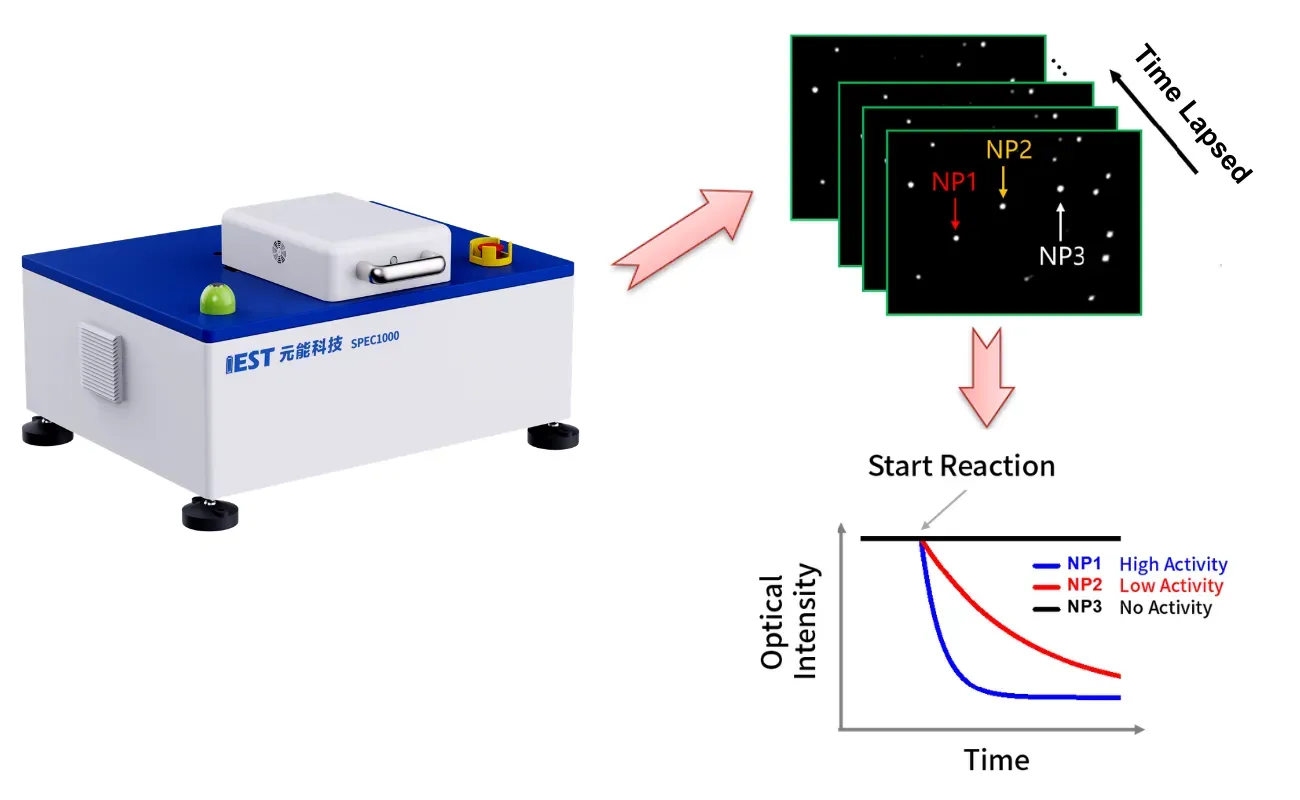
Figure 6. Operational principle and system schematic of the IEST single-particle electrochemical testing system
7. Conclusion
Real-time single-particle electrochemical imaging of commercial natural graphite has revealed that the phase transition mechanism in graphite lithiation is fundamentally stage-dependent rather than uniform. Early lithiation stages (1L→3L and 3L→2) proceed via stochastic nucleation of asynchronous, spatially discrete phase domains whose subsequent confined propagation is controlled by interfacial Li-ion transport. The final 2→1 stage follows the classical shrinking-core model, governed by solid-state Li⁺ diffusion.
By linking these spatial transition patterns to different rate-limiting processes, the study provides a stage-dependent framework for investigating graphite fast-charging strategies. This unified kinetic framework, established through the optically compatible half-cell imaging platform co-developed by Nanjing University, CATL, and IEST Instrument, provides the first mechanistic basis for stage-specific fast-charging optimization of graphite anodes—and opens a new in operando visualization approach to the broader field of intercalation electrode kinetics.
8. Original Article
Visualization of Stochastic Nucleation and Confined Propagation in Graphite Lithiation. Haoran Li, Ben Niu, Xinyue Wang, Mai Wang, Jia Gao, Yuyang Lu, Weiyi Liu, Jiao Gao, Xing-hua Xia, Jinding Liang,* Wei Wang* J.Am. Chem. Soc. 2026, DOI: 10.1021/jacs.6c03598
9. FAQs
9.1 What is stochastic nucleation in graphite lithiation?
Stochastic nucleation in graphite lithiation refers to the asynchronous, spatially random initiation of new lithium-rich phase domains at discrete sites within a single graphite particle during intercalation. Unlike deterministic or uniform nucleation, stochastic nucleation produces multiple independent phase domains that form without coordination, resulting in a heterogeneous mosaic microstructure within a single particle. This mechanism was directly observed for the first time in the 3L→2 and 1L→3L stage transitions of commercial natural graphite using single-particle optical electrochemical imaging (JACS 2026, DOI: 10.1021/jacs.6c03598).
9.2 Why does graphite lithiation bottleneck fast-charging in lithium-ion batteries?
The graphite anode fast charging bottleneck arises from the kinetic limitations inherent in the staged lithium intercalation process. During fast charging, lithium ions must both cross the graphite–electrolyte interface (interfacial transport) and diffuse through the graphite bulk (solid-state diffusion). A 2026 JACS study shows that different stages of graphite lithiation are limited by different processes: early transitions (1L→3L, 3L→2) are limited by interfacial ion transport, while the final 2→1 transition is limited by solid-state diffusion. Exceeding the kinetic capacity of either step leads to lithium plating—a safety and degradation risk that constrains achievable charging rates.
9.3 How do phase transition dynamics differ across graphite lithiation stages?
Phase transition dynamics in graphite lithiation differ fundamentally between early and late intercalation stages. In early stages (1L→3L and 3L→2), phase transitions proceed via stochastic nucleation—asynchronous initiation of multiple discrete phase domains—followed by spatially confined propagation of each domain within a restricted region of the particle. In the final 2→1 stage, a single coherent phase front advances progressively inward in a shrinking-core pattern governed by solid-state diffusion. These contrasting behaviors reflect different underlying rate-limiting mechanisms and were directly visualized at the single-particle level in a commercial natural graphite particle by Nanjing University and CATL researchers (JACS 2026).
9.4 What is confined propagation in graphite phase transition, and why does it matter?
Confined propagation in graphite phase transition describes the spatially restricted advance of a stochastically nucleated phase domain within a limited region of the graphite particle, rather than a continuous sweep across the entire particle cross-section. Confined propagation results in the coexistence of multiple phase domains within a single particle during the transition—a state invisible to ensemble techniques such as XRD or GITT. Understanding confined propagation matters for fast-charging design because it reveals that interfacial kinetics, not bulk diffusion, control early lithiation stages, directing engineers toward interface-targeted electrolyte and SEI engineering rather than particle size reduction as the primary optimization lever for those stages.
9.5 How can single-particle electrochemical characterization advance fast-charging battery design?
Single particle electrochemical characterization—such as the in operando optical imaging technique demonstrated in JACS 2026—enables direct, spatially resolved measurement of phase transition kinetics, nucleation behavior, and rate-limiting steps within individual electrode particles under realistic electrochemical conditions. This capability resolves mechanistic ambiguities that ensemble methods cannot distinguish and provides stage-specific kinetic parameters that can directly inform charging protocol design (e.g., current ramping strategies tailored to each lithiation stage’s time constant), electrolyte formulation (targeting interfacial transport bottlenecks in early stages), and particle architecture design (targeting solid-state diffusion bottlenecks in the final stage). IEST Instrument’s SPECT1000 system translates this methodology into a standardized research platform for electrode material kinetic characterization.