Figure 3. FEM and MPM simulations of stress distribution and electrolyte-surface morphology at different pre-compaction pressures.
-
iestinstrument


Abstract
The assembly and operation of sulfide solid-state batteries (ASSLBs) involve three pressure stages with distinct functions. Yan et al. (JCIS 2026) demonstrated that treating pressure as a single parameter can obscure its stage-specific effects on interfacial structure and electrochemical behavior. Under the conditions evaluated in the study, the selected three-stage protocol was:
- Pre-compaction pressure (electrolyte pellet, 375 MPa): produced moderate surface roughness that facilitated mechanical interlocking at the electrode-electrolyte interface. At 250 MPa, insufficient compaction resulted in microcracks, whereas 625 MPa promoted interfacial delamination.
- Final-compaction pressure (after adding the composite cathode, 625 MPa): produced a dense, crack-free structure and an LPSCl ionic conductivity of 1.54 mS cm⁻¹. By comparison, the conductivity was 1.02 mS cm⁻¹ at 250 MPa, while the pellet fractured at 750 MPa.
- Stack pressure during cycling (125 MPa): maintained interfacial contact while avoiding the transport limitations observed at higher pressure. The corresponding cells delivered an initial discharge capacity of 120 mAh g⁻¹ and retained 97% of their capacity after 50 cycles, compared with approximately 80% retention without external stack pressure.
FEM and MPM simulations indicated that a pre-compaction pressure of 375 MPa produced a continuous interfacial stress band at the interface, consistent with a mechanical interlocking effect. EIS-DRT analysis further distinguished the impedance contributions associated with the different pressure stages.
1. Why Pressure Optimization in Sulfide Solid-State Batteries Is Not Simply “More Is Better”
Pressure is a critical variable in solid-state battery fabrication, testing, and operation. Although increasing pressure can improve contact between sulfide electrolyte particles and electrodes, excessive pressure may deform or fracture the electrolyte pellet, promote electrode-electrolyte delamination, and impose mechanically demanding operating conditions at the cell or pack level.
Yan et al., in their 2026 study entitled Unraveling stepwise pressure effects on interfacial structure and electrochemical dynamics in sulfide-based all-solid-state Lithium batteries, addressed this issue by separating fabrication pressure into two stages: electrolyte pre-compaction and final compaction of the electrode-electrolyte stack. The authors then independently evaluated the stack pressure applied during cycling. By combining electrochemical characterization, in-situ SEM-Raman imaging, EIS-DRT analysis, and FEM/MPM simulations, the paper clarified the different functions of these pressure stages and established a three-stage protocol for LPSCl- and LGPS-based cells.
This study also highlights the importance of accurately controlling and quantifying pressure throughout the testing process. Instruments such as the IEST SEMS3200 Multi-Dimensional Solid Electrolyte Measurement System would contribute to this kind of research, particularly the pressure quantification and in-situ ionic conductivity measurement components. That relevance is explored in Section 5 below.
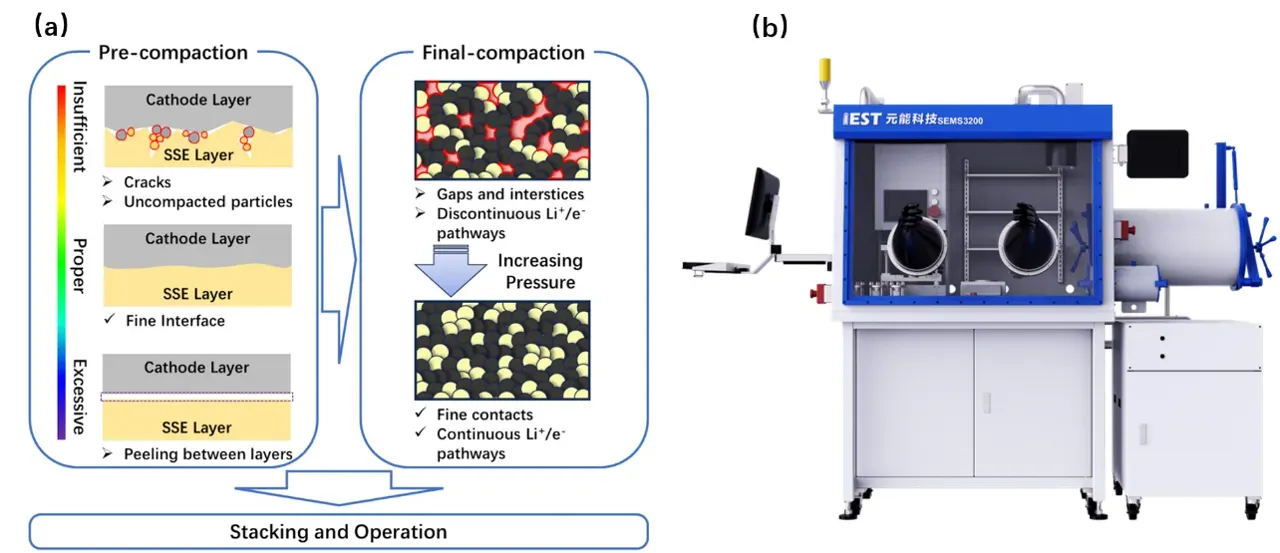
Figure 1. (a) Stepwise pressure regulation in sulfide-based all-solid-state batteries; (b) IEST SEMS3200 multi-dimensional solid-state electrolyte testing system.
2. Experimental Methods
Materials: LPSCl and LGPS sulfide solid electrolytes were synthesized for this study. LiCoO₂ (LCO) particles were coated with LiNbO₃ (LNO) by a sol-gel method. The coated active material was then mixed with sulfide electrolyte at a mass ratio of 7:3 to prepare the composite cathode. A Li-In alloy was used as the anode.
Characterization: Field-emission scanning electron microscopy (FE-SEM) and in-situ SEM-Raman analysis were used to observe interfacial morphology and stress evolution under different pressure conditions. Electrochemical impedance spectroscopy (EIS) combined with Distribution of Relaxation Times (DRT) analysis was used to distinguish the impedance contributions of different interfacial and transport processes. Ionic conductivity was measured by a standard two-electrode EIS method.
Multi-physics simulation: Two complementary simulation approaches were employed. The Finite Element Method (FEM) was used to calculate stress distributions in the electrolyte layer under different pre-compaction pressure conditions. The Material Point Method (MPM) was used to simulate the evolution of interfacial roughness, stress concentration, and densification during large deformation. Together, they provided mechanistic insight into how pre-compaction pressure affected the formation of the electrode-electrolyte interface.
Pressure protocol: Three pressure stages were controlled independently:
-
Pre-compaction pressure: The electrolyte pellet was compressed for 2 min at 250, 375, 500, or 625 MPa
-
Final-compaction pressure: After introducing the composite cathode, the cell stack was compressed for 3 min at 250, 375, 500, 625, or 750 MPa
-
Stack pressure: During galvanostatic cycling, the cells were tested at 0, 125, or 250 MPa
The cells consisted of a composite cathode, a sulfide solid-electrolyte layer, and a Li-In alloy anode. Their electrochemical performance was evaluated under the specified stack-pressure conditions.
3. Key Results and Discussion
3.1 Final Compaction: Identifying the Optimal LPSCl Ionic Conductivity
The first question was which final-compaction pressure could provide high LPSCl ionic conductivity while maintaining pellet integrity.
| Final Compaction Pressure | LPSCl Ionic Conductivity | Pellet Condition |
|---|---|---|
| 250 MPa | 1.02 mS/cm | Numerous pores and cracks; poor interparticle contact |
| 375 MPa | ~1.30 mS/cm | Improved interparticle contact |
| 500 MPa | ~1.43 mS/cm | Good interparticle contact |
| 625 MPa ★ Optimal | 1.54 mS/cm | Dense, intact, and crack-free |
| 750 MPa | — | Pellet fracture; unsuitable for further testing |
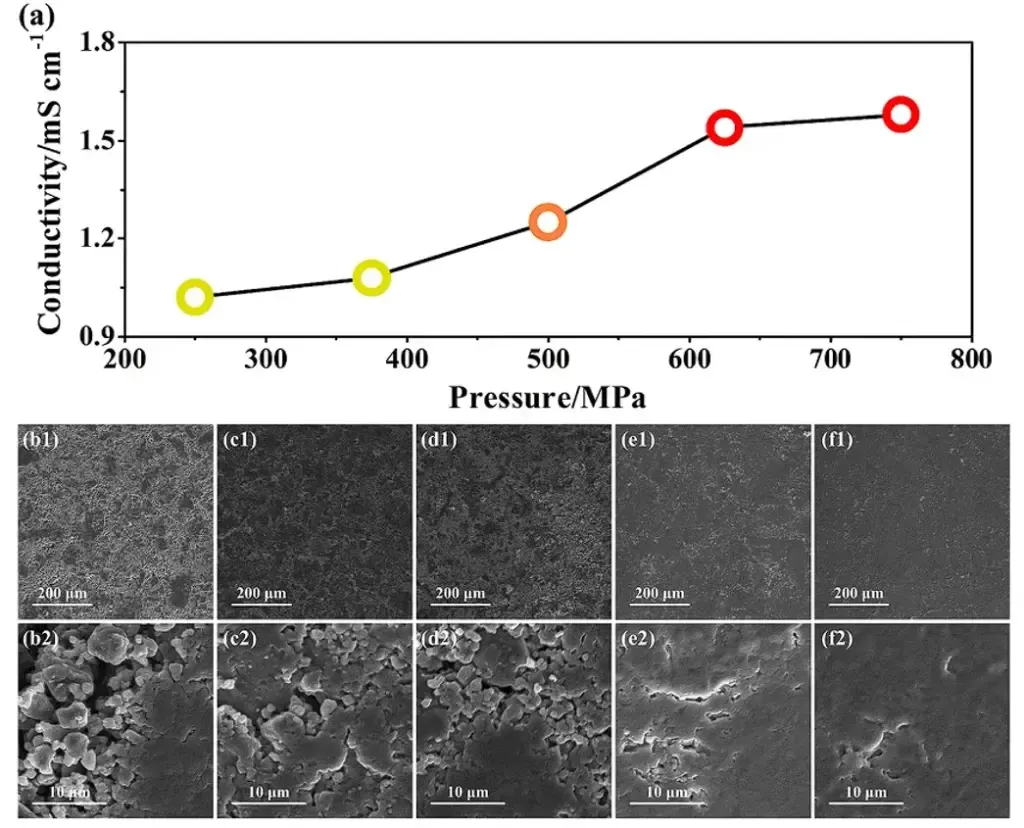
Figure 2. Pressure-dependent ionic conductivity and cross-sectional morphology of LPSCl pellets under different compaction conditions. (b1–b2) 250 MPa; (c1–c2) 375 MPa; (d1–d2) 500 MPa; (e1–e2) 625 MPa; (f1–f2) 750 MPa.
From 250 to 625 MPa, increasing the final-compaction pressure progressively reduced interparticle pores and improved the continuity of ion-transport pathways, increasing the LPSCl ionic conductivity from 1.02 to 1.54 mS cm⁻¹. At 750 MPa, however, the pellet fractured. Therefore, 625 MPa was selected as the optimal final-compaction pressure under the conditions evaluated in this study.
3.2 Multi-Physics Simulation: How Pre-Compaction Pressure Affects Interface Quality
After determining the final-compaction condition, the study examined how the surface morphology produced during electrolyte pre-compaction affected subsequent electrode-electrolyte contact. The simulations indicated that both insufficient and excessive pre-compaction could impair interface formation.
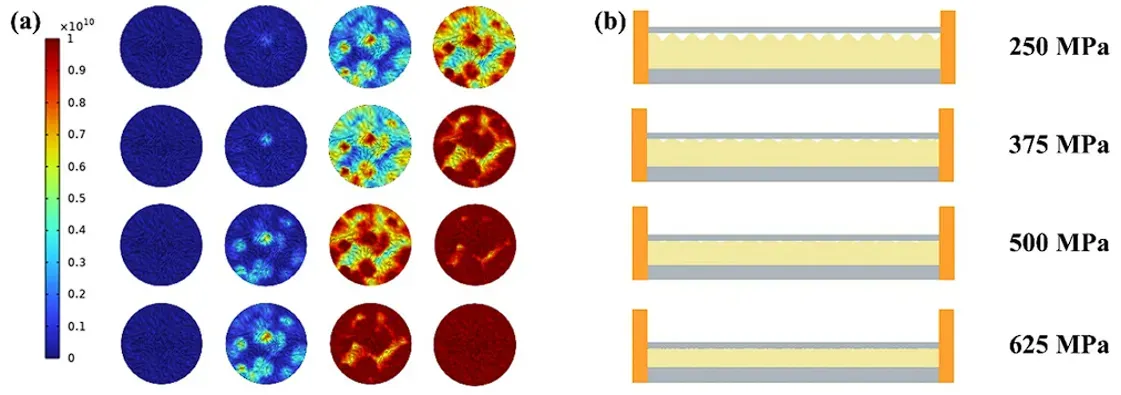
FEM simulation of stress distribution in the electrolyte layer under different pre-pressing conditions reveals three distinct regimes:
-
250 MPa: Insufficient pre-compaction left a rough, uneven surface. During final compaction, stress concentrated around surface asperities, while poorly loaded regions retained interfacial voids.
-
375 MPa: Moderate and relatively uniform surface roughness promoted the formation of a continuous interfacial stress band during final compaction. This distribution was consistent with mechanical interlocking and showed no obvious cracking.
-
625 MPa: Excessive pre-compaction produced an overly smooth electrolyte surface with limited mechanical engagement. Subsequent final compaction generated localized stress concentration and straight interfacial cracks.
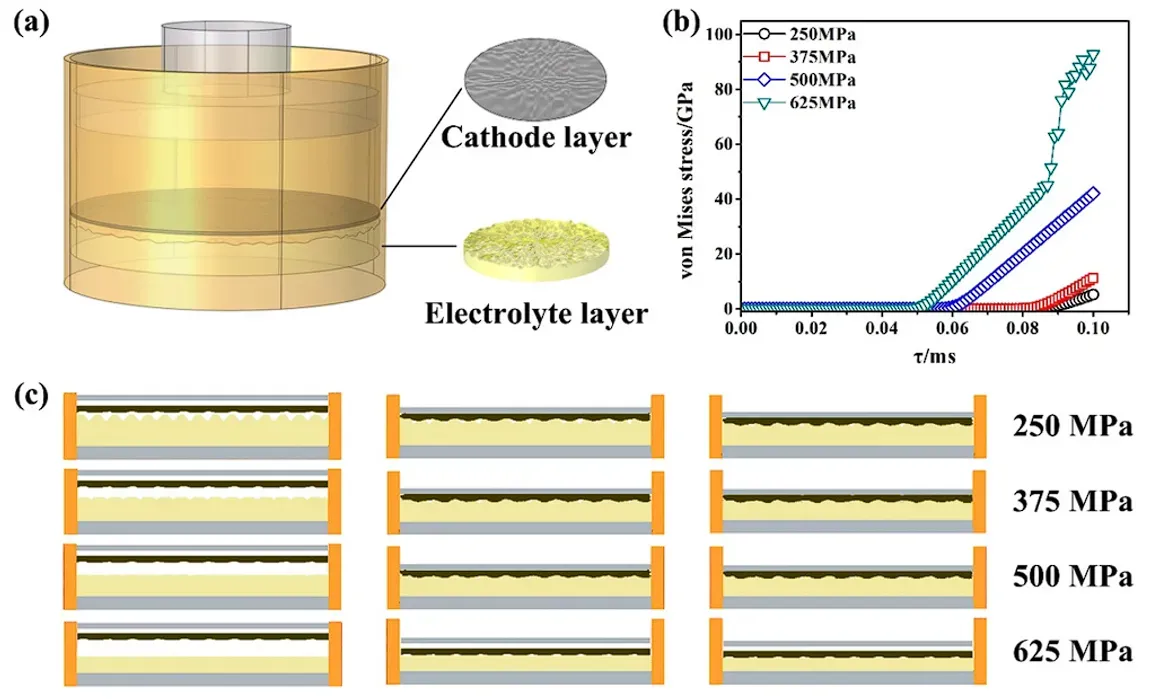
Figure 4. (a) Structural framework modeling the multi-physics simulation of solid-state battery pressure; (b) Interfacial contact stress evolution kinetics across varied loading loops; (c) MPM cross-sectional morphology boundaries demonstrating the validation of solid electrolyte interfacial stability under compaction.
The MPM results supported the FEM analysis. Following final compaction, the interface formed at 375 MPa was continuously connected, whereas the 250 and 625 MPa conditions showed microvoids and straight interfacial cracks, respectively.
These results indicate that pre-compaction and final compaction perform different functions. Pre-compaction regulates electrolyte-surface morphology and thereby influences mechanical coupling when the cathode and electrolyte are subsequently compressed together.
3.3 Experimental Validation by EIS-DRT and In-Situ SEM-Raman Analysis
Symmetric cells (composite cathode / sulfide electrolyte / composite cathode) were prepared using the different pre-compaction pressure conditions. EIS-DRT analysis distinguished relaxation processes associated with grain-boundary transport, cathode-electrolyte interfacial charge transfer, and bulk-electrolyte conduction.
- At 250 and 625 MPa, the cells exhibited higher interfacial impedance, consistent with the interfacial voids and cracks predicted by the simulations.
-
At 375 and 500 MPa, the interfacial impedance was lower, indicating improved electrode–electrolyte contact and more continuous ion-transport pathways.
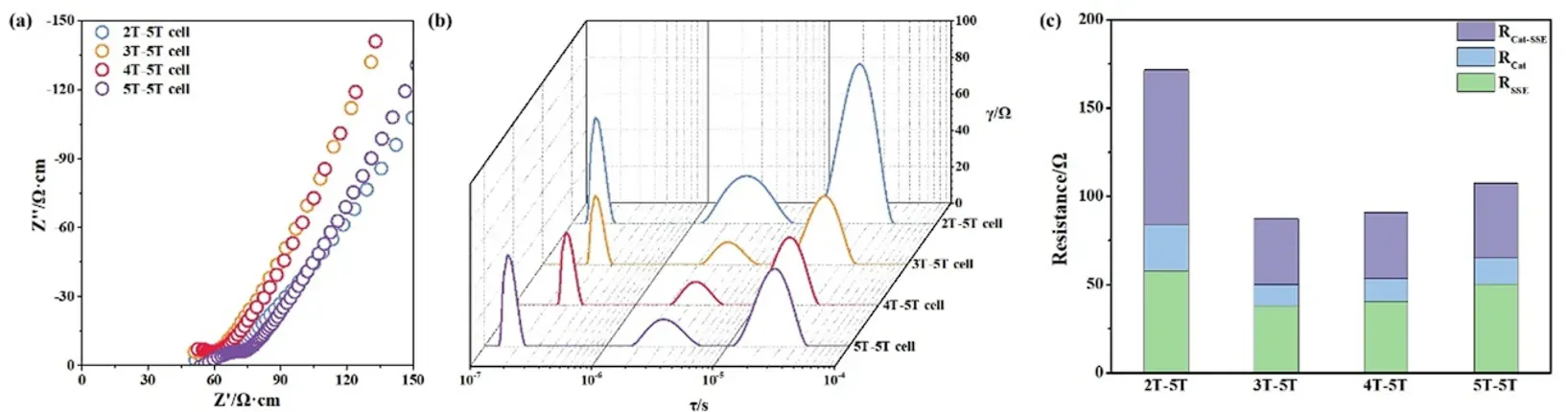
Figure 5. Electrochemical characterization of symmetric cells under diverse pre-compaction pressure conditions: (a) Nyquist plots; (b) Spatially resolved DRT analysis solid-state battery interface kinetics; (c) Quantitative chart of decoupled sub-impedance values proving the enhancement of solid electrolyte interfacial stability via a well-balanced mechanical interlocking interface sulfide electrolyte.
In-situ SEM-Raman confirms the interfacial evolution mechanism: at 250 MPa pre-compaction pressure, the large surface irregularity creates non-uniform stress during final pressing, and Raman spectral peak shifts indicate residual interfacial stress concentration with microcracks visible in the SEM image. At 625 MPa pre-compaction pressure, SEM shows straight interfacial cracks despite the apparently smooth surface, confirming that excessive pre-compaction pressure weakens mechanical interfacial engagement and promotes interfacial delamination. At 375 MPa pre-compaction pressure, the SEM shows a tight, continuous interface, and the Raman peak positions show minimal shift, indicating that stress is uniformly distributed and no stress-concentrating defects are present. These results further confirm that 375 MPa is the optimal pre-compaction pressure condition.
3.4 Stack Pressure During Cycling: Balancing Interfacial Contact and Lithium-Ion Transport
After establishing the electrode-electrolyte interface using pre- and final-compaction pressures of 375 and 625 MPa, respectively, the study evaluated the stack pressure applied during cycling.
Full cells were tested at stack pressures of 0, 125, and 250 MPa. EIS-DRT measurements were collected during the initial charge-discharge cycle and over the 50-cycle test, revealing a trade-off between maintaining interfacial contact and preserving lithium-ion transport.
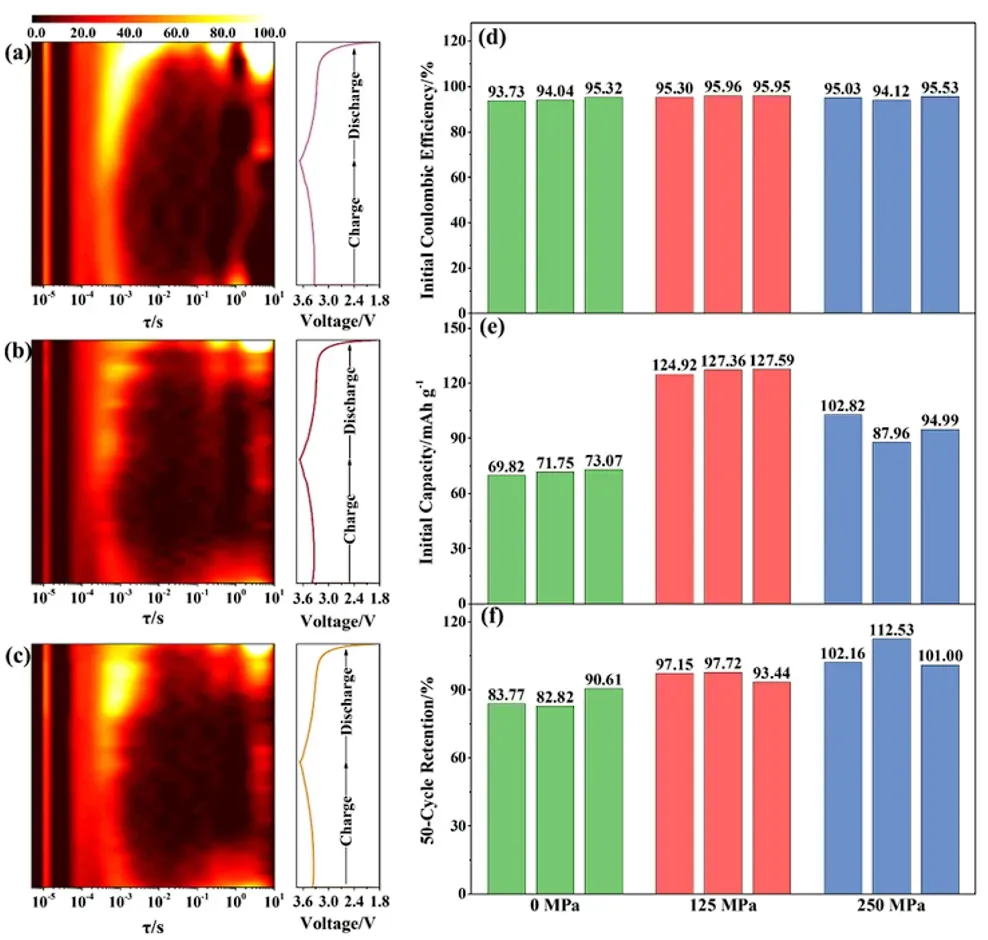
Figure 6. Operando EIS-DRT analysis during charge-discharge cycling under different stack pressures: (a) 0 MPa, (b) 125 MPa, and (c) 250 MPa; cell performance under different stack pressures: (d) initial capacity, (e) initial Coulombic efficiency, and (f) capacity retention after 50 cycles.
DRT deconvolution of the full-cycle EIS data shows that under 0 MPa operating pressure, the interfacial charge-transfer relaxation peak grows progressively during cycling — consistent with interface gap formation. Under 250 MPa, the lithium-ion bulk diffusion peak in the cathode broadens, indicating that over-compression of the composite cathode restricts Li⁺ transport. Under 125 MPa, all DRT peaks remain stable in both position and area throughout 50 cycles.
Additional findings: Adding 2 wt% VGCF (vapor-grown carbon fiber) to the composite cathode significantly improves 0.5C rate performance, compensating for the lower intrinsic electronic conductivity of the composite at higher current densities.
3.5 Transferability Across LPSCl and LGPS Electrolytes
Because LPSCl and LGPS have comparable mechanical properties, including similar elastic moduli, the optimized pressure protocol was further evaluated with both electrolytes. Cells prepared using a pre-compaction pressure of 375 MPa, a final-compaction pressure of 625 MPa, a stack pressure of 125 MPa, and a cathode loading of 6.24 mg cm⁻² showed:
-
greater than 97% consistency in initial discharge capacity,
-
greater than 97% consistency in initial Coulombic efficiency, and
-
greater than 97% consistency in capacity retention after 50 cycles.
This process universality demonstrates that the three-stage pressure protocol is not material-specific to a single sulfide electrolyte composition — it is a robust assembly framework applicable across the LPSCl/LGPS family.
4. Summary of Optimal Parameters
| Stage | Optimal Pressure | Function | Supporting Evidence |
|---|---|---|---|
| Electrolyte pre-compaction | 375 MPa | Regulate surface roughness and facilitate mechanical interlocking | FEM/MPM simulations + EIS-DRT + SEM-Raman analysis |
| Electrode-electrolyte final compaction | 625 MPa | Increase ionic conductivity to 1.54 mS/cm while maintaining pellet integrity | Pressure-dependent ionic-conductivity and morphology measurements |
| Stack pressure during cycling | 125 MPa | Maintain interfacial contact without over-constraining Li⁺ transport | Operando EIS-DRT; 97% retention after 50 cycles |
| Cathode loading | 6.24 mg/cm2 | Cell-performance evaluation condition | Cycling performance validation |
| Conductive additive | 2 wt% VGCF | Improve rate capability at 0.5C | Rate performance comparison |
5. IEST SEMS3200: A Relevant Platform for Pressure-Dependent Solid-Electrolyte Characterization
Pressure-dependent characterization of solid electrolytes commonly involves coordinated control of compaction pressure, sample thickness, atmosphere, and electrochemical measurement. In the Yan et al. study, the three key measurements underlying the reported conclusions — ionic conductivity under controlled pressure, interfacial thickness change, and EIS acquisition — were performed using separate instruments and steps. Integrating these functions into a single platform can reduce sample transfer and help maintain consistent mechanical conditions between preparation and testing.
🔬 IEST SEMS3200 — Multi-Dimensional Solid Electrolyte Measurement System
The SEMS3200 is specifically designed for sulfide solid electrolyte and solid-state battery testing & research. Its integrated architecture combines:
-
Atmosphere-protected testing environment (integrated glovebox): Sulfide electrolytes are moisture-sensitive. Exposure to ambient air during assembly or measurement can lead to material degradation and measurement errors. SEMS3200 performs the entire press-measure-lock sequence inside an inert atmosphere.
-
Servo-motor pressure control: The system employs servo-motor-driven pressure control, providing programmable pressure loading over a range of 0–600 MPa with a pressure stability of ±1%. This eliminates the uncontrolled pressure variability that is a major source of scatter in inter-laboratory ionic conductivity data.
-
In-situ thickness measurement (±10 µm): Thickness changes under compression are measured simultaneously with EIS, directly providing the d parameter needed for the ionic conductivity formula σ = d/(R·S) without additional steps.
-
Integrated Biologic SP-200 electrochemical workstation: EIS measurements up to 5 MHz are performed in hardware-software linkage, with one-key ionic conductivity output calculated automatically from the pressure-dependent EIS data.
-
Automatic locking screw (pressure-lock integration): After reaching the target pressure, the die is automatically locked before the electrochemical testing begins, ensuring that the mechanical state during EIS measurement exactly matches the specified pressure condition.
-
SCM sealed die: The SCM sealed die design maintains environmental isolation throughout the measurement process, helping preserve sample integrity during testing.
For stepwise pressure studies, these functions can support:
-
Continuous measurement of ionic conductivity as a function of applied pressure, rather than relying solely on discrete pressure points.
-
Simultaneous monitoring of electrolyte thickness during compression, enabling more comprehensive analysis of pressure–conductivity relationships.
-
Elimination of atmospheric exposure between different compression and measurement steps through the integrated glovebox environment.
-
Improved pressure reproducibility through ±1% pressure stability, helping reduce experimental variation associated with pressure control.
Together, these capabilities provide a useful platform for investigating the relationship between pressure, densification behavior, ionic conductivity, and interfacial stability in sulfide solid electrolytes and solid-state batteries.
6. Conclusion
Yan et al. showed that pressure in sulfide-based all-solid-state lithium batteries should be treated as a sequence of stage-specific parameters. Under the conditions evaluated, a pre-compaction pressure of 375 MPa promoted mechanical interlocking, a final-compaction pressure of 625 MPa increased LPSCl ionic conductivity while maintaining pellet integrity, and a stack pressure of 125 MPa maintained interfacial contact without substantially restricting lithium-ion transport.
Cells prepared using this protocol delivered an initial discharge capacity of 120 mAh g⁻¹ and 97% capacity retention after 50 cycles. Performance metrics for the tested LPSCl- and LGPS-based cells also showed greater than 97% consistency, supporting the applicability of the protocol to both electrolyte systems.
Future work may establish quantitative relationships between solid-electrolyte mechanical properties and suitable pressure conditions and evaluate the approach with additional electrolyte compositions. Integrated systems such as the IEST SEMS3200 can support such studies through pressure-dependent conductivity and thickness measurements under a controlled atmosphere
7. Original Article
Yan et al. Unraveling stepwise pressure effects on interfacial structure and electrochemical dynamics in sulfide-based all-solid-state lithium batteries. Journal of Colloid and Interface Science, 2026, 723, 140917. DOI: 10.1016/J.JCIS.2026.140917
8. FAQs
8.1 What are stepwise pressure effects on sulfide solid-state batteries interfaces, and why do they matter?
Stepwise pressure effects refer to the different and independent roles that each pressure stage plays in determining the final quality of a sulfide solid-state battery cell. Unlike liquid-electrolyte batteries, sulfide-based all-solid-state batteries require careful mechanical compression at every assembly stage because the solid-solid interfaces between cathode, electrolyte, and anode are not self-healing — they must be physically consolidated by applied pressure. However, each pressure stage produces a fundamentally different physical outcome: pre-pressing the electrolyte pellet alone controls surface texture and the potential for mechanical interlocking; adding the cathode and applying final pressing consolidates the composite and maximizes ionic conductivity; and the operating pressure during cycling determines whether interfacial contact is maintained as the electrodes expand and contract. Treating these as a single “pressure parameter” systematically obscures their individual contributions and prevents finding the true optimum — which is why Yan et al.’s decomposition into three independent stages provides a more actionable framework for sulfide solid-state batteries standardization.
8.2 What is the difference between pre-pressing and final pressing for sulfide solid electrolyte assembly?
Pre-pressing and final pressing serve fundamentally different functions in sulfide solid electrolyte cell assembly. Pre-pressing is applied to the electrolyte pellet alone, before the composite cathode is added. Its purpose is to create the surface texture that will govern how cathode and electrolyte mechanically couple when pressed together in the next stage. Too little pre-pressing (250 MPa) leaves an excessively rough surface that generates uneven stress and microcracks when the cathode is added. Too much (625 MPa) over-smooths the surface, eliminating the texture needed for mechanical interlocking and causing delamination. The optimal (375 MPa) leaves controlled moderate roughness that produces a mechanically interlocked interface. Final pressing is applied after the composite cathode is placed on the pre-pressed electrolyte. Its primary function is densification and ionic conductivity maximization — closing inter-particle pores in the electrolyte and consolidating the composite cathode-electrolyte interface. For LPSCl, the optimal final pressing pressure is 625 MPa, achieving 1.54 mS/cm ionic conductivity with intact pellet structure.
8.3 What is multi-physics simulation of solid-state battery pressure, and what can FEM and MPM reveal?
Multi-physics simulation of solid-state battery pressure uses computational mechanics methods to predict how stress distributes within and between cell components at different assembly pressures — providing mechanistic explanations that experiments alone cannot easily reveal. Two complementary approaches are used in the Yan et al. study. Finite Element Method (FEM) models the electrolyte layer as a continuum and maps how stress distributes across the pellet surface and through the thickness at different pre-pressing conditions. It shows that 375 MPa produces continuous stress bands while 250 MPa produces stress concentration at surface peaks and 625 MPa produces very high sudden stress at the over-smoothed interface. Material Point Method (MPM) is better suited for large interfacial deformations: it tracks how individual material points at the cathode-electrolyte interface move and deform as pressure is applied, directly reproducing interface roughness evolution, void closure, and crack initiation as cross-section morphology snapshots. Together, FEM confirms the stress distribution mechanism while MPM confirms the structural evolution — providing a mutually validated picture of why 375 MPa pre-pressing produces the mechanically superior interface.
8.4 What is Distribution of Relaxation Times(DRT) analysis and how does it help characterize solid-state battery interfaces?
Distribution of Relaxation Times (DRT) analysis is a mathematical transformation of electrochemical impedance spectroscopy (EIS) data that converts the frequency-domain Nyquist or Bode plot into a distribution of relaxation time constants. Each peak in the DRT spectrum corresponds to a distinct physical process with a characteristic time constant — such as grain-boundary transport in the electrolyte (~microseconds), cathode-electrolyte interfacial charge transfer (~milliseconds), or lithium-ion diffusion in the active material (~seconds). In solid-state battery research, DRT is especially valuable because the multiple overlapping impedance arcs in a typical Nyquist plot for a sulfide solid-state cell cannot be reliably separated by standard equivalent circuit fitting — they overlap too heavily. DRT reveals them as distinct peaks. In the Yan et al. study, DRT analysis of symmetric cells at different pre-pressing conditions showed clearly that 375 MPa pre-pressing produced lower-area interfacial peaks than both 250 MPa and 625 MPa — directly quantifying the interfacial resistance improvement from optimal pre-pressing. Tracking DRT peaks across the full 50-cycle test under different operating pressures then showed whether interfaces were stable (stable peak areas) or degrading (growing peaks).
8.5 How can the IEST SEMS3200 support sulfide solid electrolyte pressure and ionic conductivity research?
The IEST SEMS3200 Multi-Dimensional Solid Electrolyte Measurement System addresses the core measurement challenges in sulfide solid electrolyte pressure research. It integrates pressure control (servo motor, 0–600 MPa, ±1% stability), high-precision thickness measurement (±10 µm, recorded in-situ during compression), and EIS acquisition (up to 5 MHz via integrated Biologic SP-200) into a single instrument operating inside a built-in inert-atmosphere glovebox. For research like the Yan et al. study, this means: (1) ionic conductivity can be measured as a continuous function of pressing pressure in one instrument run, without moving the sample between tools; (2) electrolyte thickness compression is recorded simultaneously with EIS, directly providing the d value for σ = d/(R·S) without a separate thickness measurement step; (3) the ±1% pressure stability eliminates a major source of batch-to-batch variability in inter-laboratory ionic conductivity comparisons; and (4) the automatic locking screw function (SEMS3200 only) locks the die at the target pressure before EIS acquisition begins, ensuring the mechanical state during measurement is precisely controlled. The system supports all three pressure stages described in this paper — pre-pressing, final pressing, and the concept of operating pressure during measurement.