-
iestinstrument

Abstract
1. Introduction
The electrochemical performance of lithium-ion and next-generation batteries is fundamentally dictated by the physical and electrical properties of their active materials. Factors such as particle size distribution, inter-particle contact state, and compaction behavior directly influence a cell’s electronic conductivity and energy density. To gain crucial insights before the costly electrode fabrication process begins, forward-thinking battery engineers are increasingly relying on advanced Powder Resistivity and Compaction Density (PRCD) analysis.
This article explores how integrating a high-precision powder resistivity measurement system and advanced powder density testers into your workflow can significantly reduce manufacturing costs, ensure batch consistency, and boost final battery performance.
2. What Is a Powder Resistivity Measurement System?
A powder resistivity measurement system is an instrument designed to quantify the electrical resistance of granular or powder materials under varying compressive loads. It applies a known force to a powder sample confined in a die, measures the voltage drop across the sample, and calculates resistivity using the cross-sectional area and thickness. Compaction density refers to the mass per unit volume of the powder bed under a given pressure, while deformation and rebound thickness describe the material’s elastic and plastic response during compression and decompression cycles.
These parameters are critical for battery performance because the electronic conductivity of active materials is influenced by particle size distribution, inter-particle contact, and the degree of densification. A PRCD system can complete one full measurement cycle in under a minute, making it suitable for both R&D quality assessment and high-volume production quality control.
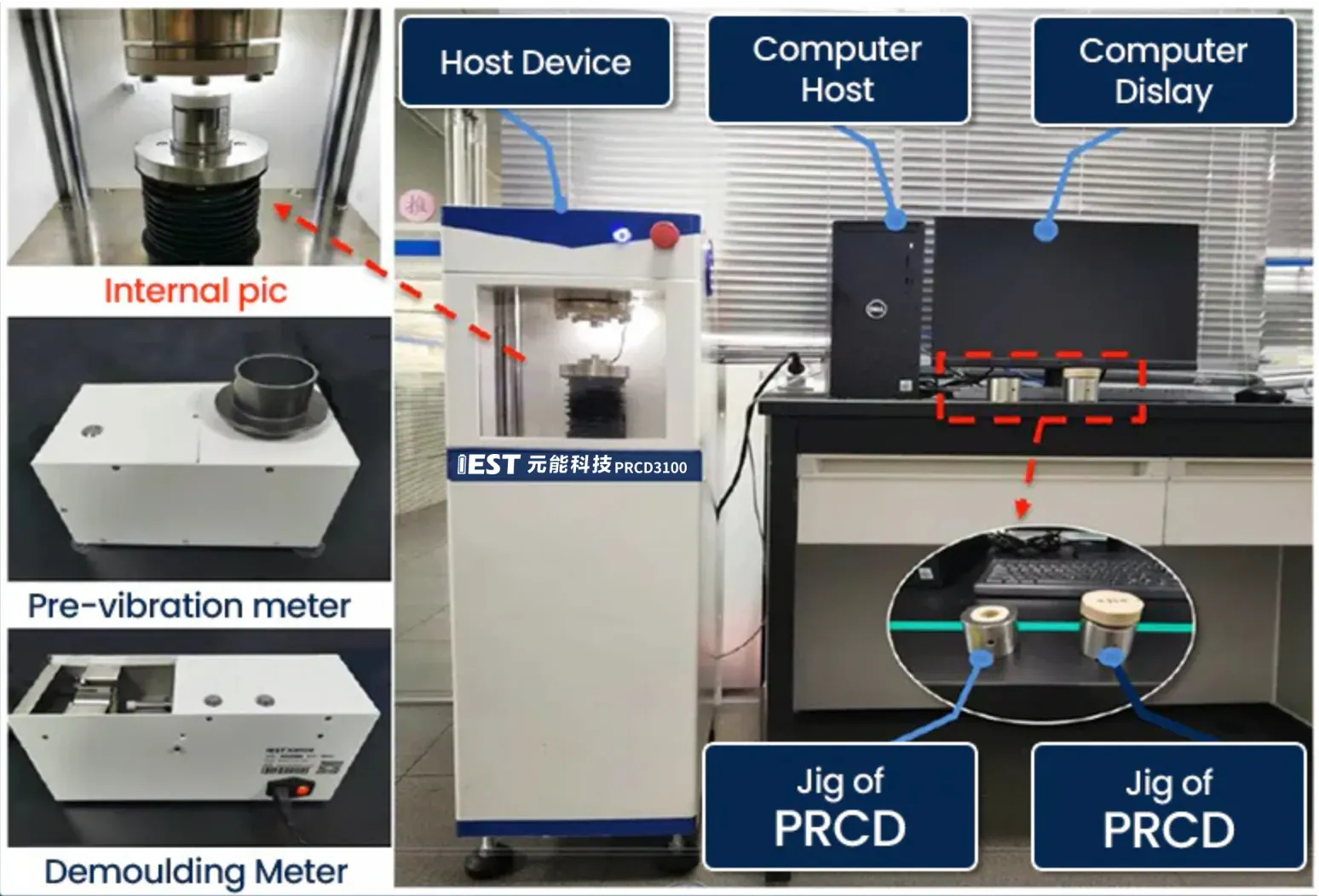
Figure 1. Overview of the IEST PRCD3100 Powder Resistivity and Compaction Density measurement system. The comprehensive setup includes the main testing host, specialized testing jigs, and essential auxiliary equipment (pre-vibration and demoulding meters) designed for highly accurate and repeatable battery powder characterization.
3. Accelerating R&D Through Cathode Blending Optimization
Developing composite cathodes—such as blending Lithium Manganese Iron Phosphate (LMFP) with Nickel Cobalt Manganese (NCM)—is a proven strategy to achieve an optimal balance between high energy capacity, thermal stability, and cost. Traditionally, discovering the perfect mixing ratio required a lengthy trial-and-error process involving slurry mixing, electrode coating, and weeks of full-cell cycling tests.
By utilizing PRCD analysis, researchers can bypass this initial bottleneck. Under applied pressure, the electrical and mechanical properties of different blending ratios reveal immediate, actionable trends:
- Resistivity and Compaction Density Curves: As shown in Figure 2, mapping the resistivity against varying pressures helps identify the exact blending ratio that yields the best conductive network without sacrificing tap density.
- Mechanical Stress-Strain Analysis: Figure 3 illustrates the stress-strain behavior of mixed cathodes. By monitoring the maximum, reversible, and irreversible deformation during pressurization and relief cycles, engineers can accurately predict how the blended powder will withstand the harsh roll-to-roll calendering process during actual electrode manufacturing.
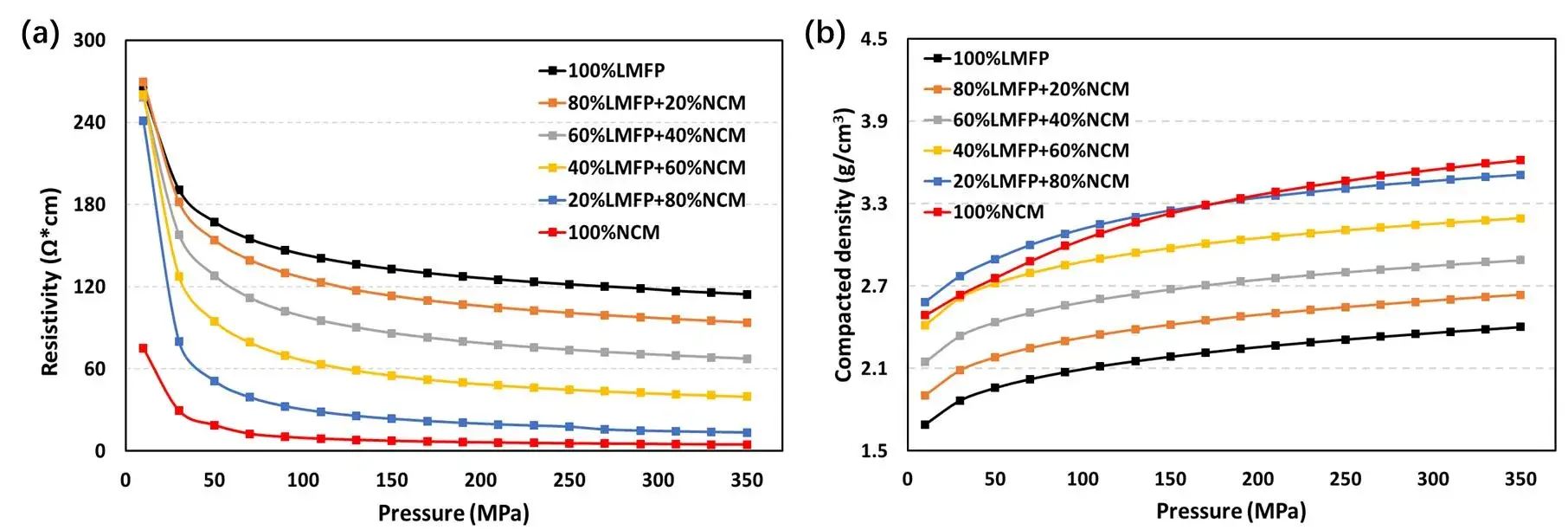
Figure 2. (a) Resistivity change curve and (b) Compaction density change curve of 6 different ratios of LMFP and NCM mixed cathode materials under varying pressure.
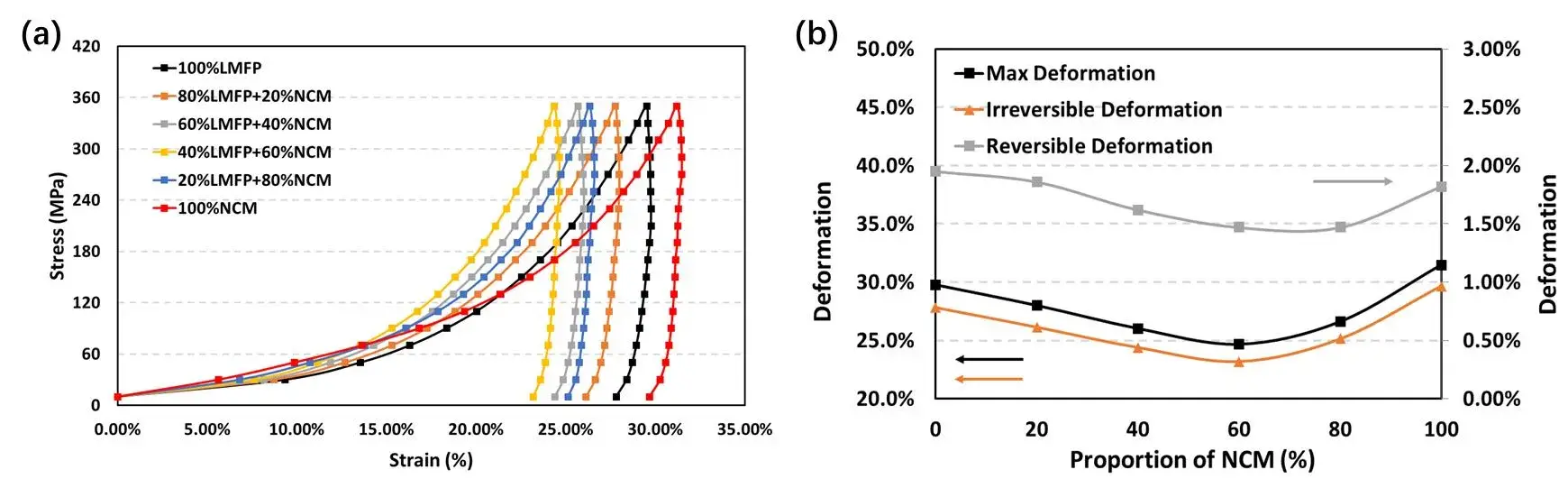
Figure 3. (a) The stress-strain curves of mixed cathodes in different ratios during the pressurization and pressure-relief processes. (b) Maximum deformation, irreversible deformation, and reversible deformation of mixed cathodes in different ratios.
4. Driving Cost Reduction via Proactive Quality Control
Powder density testers are increasingly used in production lines to inspect the batch consistency of active materials and conductive additives. Particle size distribution and compaction density directly influence battery capacity, internal resistance, and cycle life. A PRCD system can detect batch‑to‑batch variations in resistivity and density early — before coating or electrode fabrication — enabling corrective actions and preventing costly downstream failures.
Monitoring Batch Consistency: For critical materials like NCM, continuous monitoring of compaction density and resistivity across different production batches (Figure 5) ensures that any deviation from precursor synthesis or the calcination process is flagged instantly. This proactive fault detection prevents defective powders from ever reaching the slurry mixing stage, saving immense manufacturing costs.
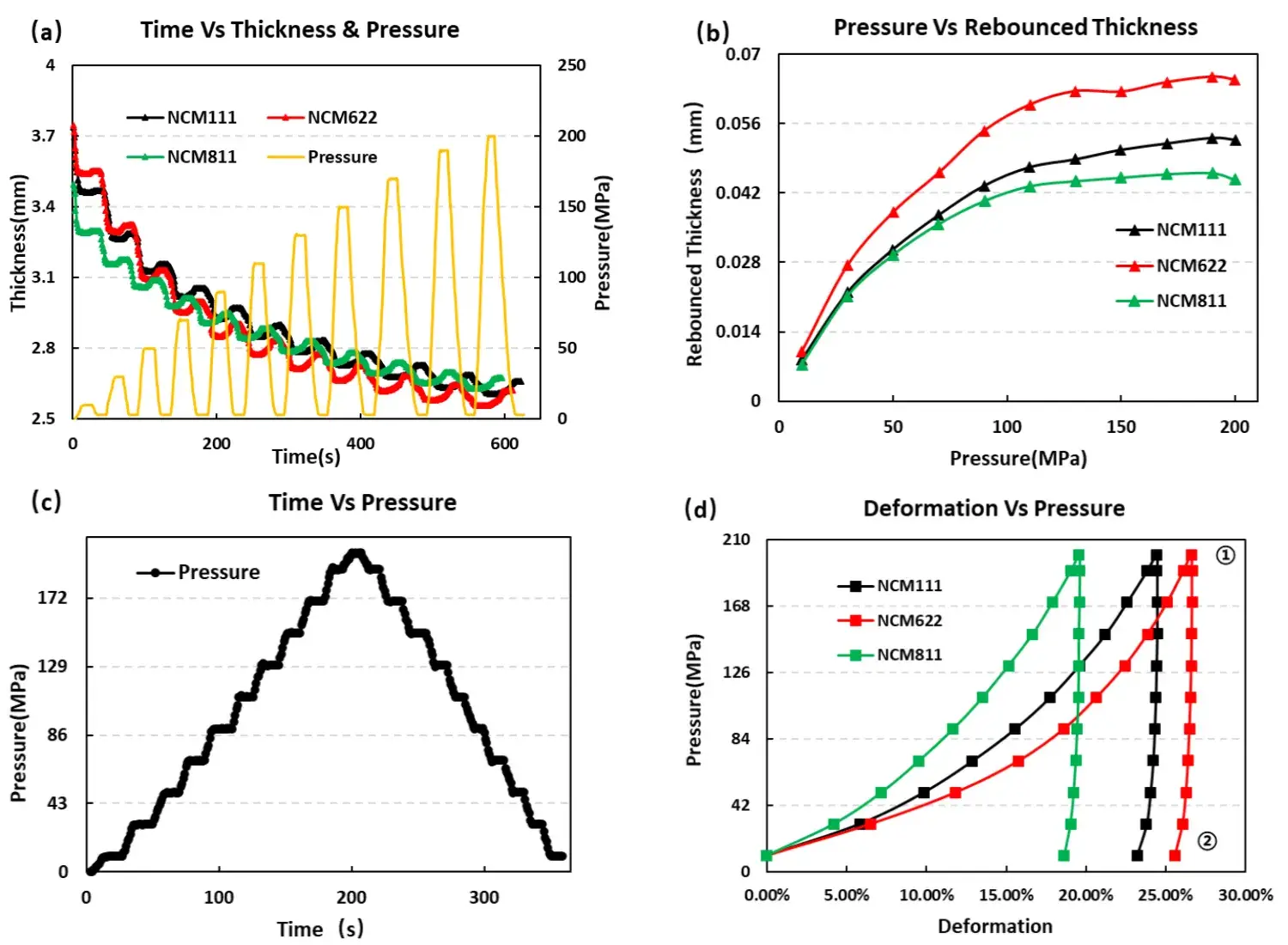
Figure 4. Powder resistivity and compaction density measurements for different NMC powder batches.
5. Process Optimization & Final Performance Prediction
Perhaps the most powerful capability of a powder resistivity measurement system is its proven ability to predict final electrochemical cell performance. A compelling case study involves optimizing the fabrication process for silicon-carbon (Si/C) composite anodes.
In this comprehensive study, two distinct production processes (Process GA and Process GB) were evaluated across multiple batches.

Figure 5. Resistivity at different pressures for different groups of silicon-carbon powders. GA and GB represent two different production processes, each with four batches (GA-1 to GA-4 and GB-1 to GB-4).

Figure 6. Compaction density at different pressures for different groups of silicon carbon powders. GA and GB are two different production processes. Each process has four batches, namely: GA-1, GA-2, GA-3, GA-4 and GB-1, GB-2, GB-3, GB-4.
- Identifying Powder Anomalies (Figures 5 & 6): Under varied pressures, the PRCD system detected that batch GA-4 exhibited abnormally high resistivity compared to the other three batches in the GA group, despite having relatively similar compaction density trends.

Figure 7. Electrode resistivity and resistance evaluation. JA-1 to JA-4 and JB-1 to JB-4 are the electrodes manufactured from the corresponding silicon-carbon powder batches.
| Batch Number | JA-1 | JA-2 | JA-3 | JA-4 | JB-1 | JB-2 | JB-3 | JB-4 |
|---|---|---|---|---|---|---|---|---|
| Charge Capacity mAh/g |
1958.83 | 1989.82 | 1950.70 | 1710.96 | 1925.04 | 1798.10 | 1896.48 | 1870.01 |
| Discharge Capacity mAh/g |
2096.65 | 21334.10 | 2094.98 | 1924.95 | 2061.89 | 1952.51 | 2040.86 | 2003.80 |
| Initial Effect | 93.41% | 93.24% | 93.11% | 88.88% | 93.36% | 92.09% | 92.92% | 93.29% |
- Correlation with Electrode and Full-Cell Data (Figures 7 & Table 1): When these powder batches were coated into electrodes (JA-1 to JA-4), the electrode sheet resistance perfectly mirrored the powder data—JA-4 demonstrated the highest resistance. More importantly, when assembled into full cells, the GA-4 batch exhibited a noticeably lower discharge capacity.
This multi-level correlation explicitly proves that powder-level testing is not merely a theoretical exercise; it is a direct predict final cell performance and flag process anomalies early.
6. Conclusion
In the fiercely competitive battery industry, the ability to foresee material performance and maintain unwavering batch-to-batch quality control is paramount. Powder Resistivity and Compaction Density measurement provides a comprehensive, minute-level diagnostic solution that spans from initial formulation screening to gigawatt-scale production assurance.
By integrating a professional powder resistivity measurement system into your laboratory and production lines, your team can achieve faster R&D iterations, proactive fault detection, and ultimately, a superior battery product. Partner with IEST Instrument to harness cutting-edge testing solutions tailored to elevate your battery technology to the next level.
7. FAQs
7.1 What is the difference between powder resistivity and compaction density?
Powder resistivity measures how strongly a powder opposes electrical current flow under a given pressure, while compaction density describes how densely the powder can be packed. Both are influenced by particle size, shape, and surface properties, and together they provide a complete picture of the powder’s electrical and mechanical behavior.
7.2 How can powder density testers reduce battery manufacturing costs?
By quickly identifying batches with abnormal resistivity or density before electrode coating, manufacturers avoid using defective materials that would otherwise lead to poor‑performing cells, rework, or scrap. This reduces material waste and improves first‑pass yield.
7.3 Which parameters should I look for in a powder resistivity measurement system?
Key specifications include pressure range (e.g., 10 – 200 MPa), resistivity measurement accuracy (e.g., ±1%), capability to measure compaction density at each pressure step, and automatic deformation/rebound calculation. Systems from IEST Instrument provide this functionality with a friendly software interface.
7.4 Can PRCD3100 data be used to predict coin‑cell performance?
Yes. Multiple case studies show a consistent correlation between powder resistivity measured by PRCD and electrode‑level resistivity, as well as discharge capacity. PRCD serves as an effective pre‑screening method to reduce coin‑cell testing workload.