-
iestinstrument

Abstract
📄 Source Paper
First Author: Jianan Hao · Corresponding Authors: Dr. Jinyang Dong, Prof. Yuefeng Su, Assoc. Prof. Lai Chen
| DOI: 10.1016/j.ensm.2026.105121
| Journal: Energy Storage Materials, 2026, 88, 105121
| Affiliations: School of Materials Science and Engineering, Beijing Institute of Technology; BIT Chongqing Innovation Center; China Electric Power Research Institute; Beijing Institute of Technology, Zhuhai Campus
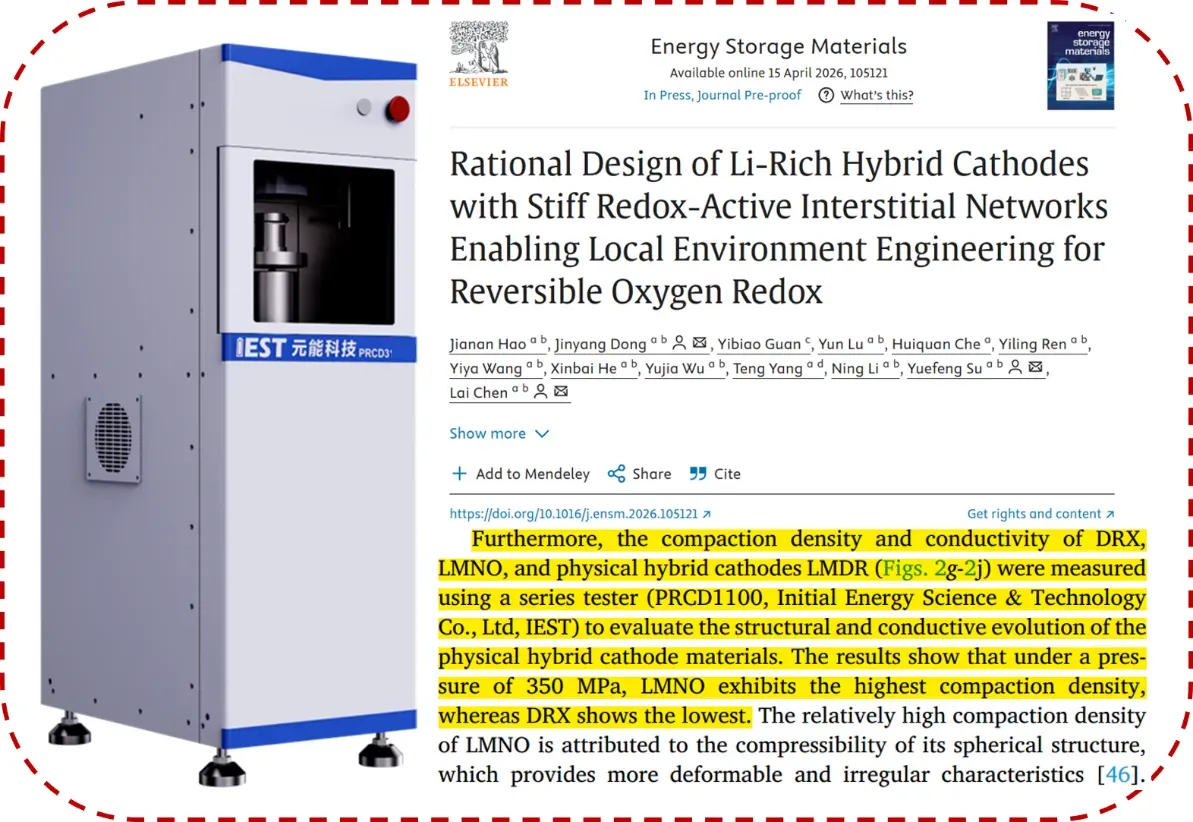
✓ IEST Instrument acknowledged — IEST Powder Resistivity & Compaction Density Tester (PRCD1100) used in this research
1. Research Background
Li-rich manganese-based layered oxide cathodes (LRMs) are promising candidates for next-generation high-energy-density lithium-ion batteries because of their high specific capacity and low cost. However, several coupled degradation mechanisms hinder their practical application. The Li-O-Li configurations that enable anionic redox can also promote irreversible oxygen release, causing initial-cycle capacity loss. During deep delithiation, transition-metal (TM) ions can migrate from octahedral sites in the layered structure into tetrahedral sites within the lithium layer, triggering irreversible layered-to-spinel or layered-to-rock-salt phase transitions. Oxygen loss can further reduce the average TM valence states and contribute to continuous voltage decay. The low ionic conductivity and sluggish oxygen-redox kinetics associated with the Li₂MnO₃ component limit rate capability.
Conventional modification strategies such as doping, surface coating, heterostructure design, and crystal-facet engineering can offer some improvement but often require complex raw materials and synthesis procedures. A single-material modification may also be unable to address structural instability, ion-transport kinetics, interfacial side reactions, and low compaction density simultaneously. Consequently, electrode-level strategies that integrate materials with complementary properties provide a promising approach for achieving coordinated improvements.
2. Article Overview
Prof. Yuefeng Su, Assoc. Prof. Lai Chen, and Dr. Jinyang Dong’s team at Beijing Institute of Technology have proposed an electrode-level physical blending design strategy: physically mixing micron-scale Li-rich layered oxide cathode (LMNO) with nanoscale, rigid Ni-based disordered rock-salt cathode material (DRX), followed by low-temperature heat treatment, successfully constructing a hybrid cathode (LMDR) with a 3D interstitial network for cathode materials.
In this design, LMNO functions as the structural “pillar” that provides the primary capacity contribution and layered diffusion scaffold, while the additionally introduced DRX particles embed uniformly within the inter-particle gaps of LMNO, forming a percolating network that simultaneously enhances ion/electron transport and redistributes mechanical stress. This spatial synergistic coupling effectively regulates the local chemical and mechanical environment, enabling reversible oxygen redox, suppressing oxygen release and transition-metal dissolution, and mitigating stress accumulation during cycling.
LMDR-10 was identified as the optimized composition and was evaluated through the structural, electrochemical, spectroscopic, mechanical, and simulation analyses presented below.
3. Article Highlights
3.1 Structure, Morphology, Compaction Density, and Conductivity
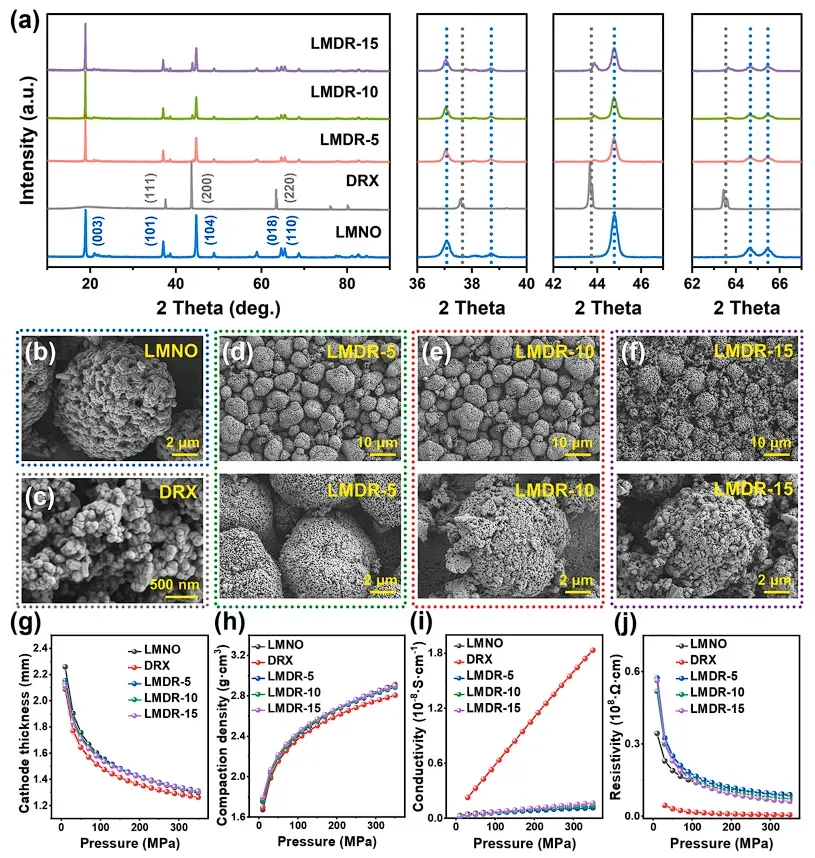
Figure 1. LMDR structure, morphology, and compaction density/conductivity test results.
The formation of the LMDR interstitial network did not substantially alter the phase composition or lattice parameters of the individual components, while LMDR-10 showed a uniform distribution of LMNO and DRX particles. Measurements using the IEST PRCD1100 showed that LMDR-10 had a higher compaction density and lower powder resistivity than pristine LMNO. These properties can support improved volumetric energy density and charge-transport performance in the resulting electrode.
Figure 2. Acknowledgments section from Energy Storage Materials (2026), citing IEST Instrument for support with compaction-density and powder-resistivity characterization.
3.2 Electrochemical Performance
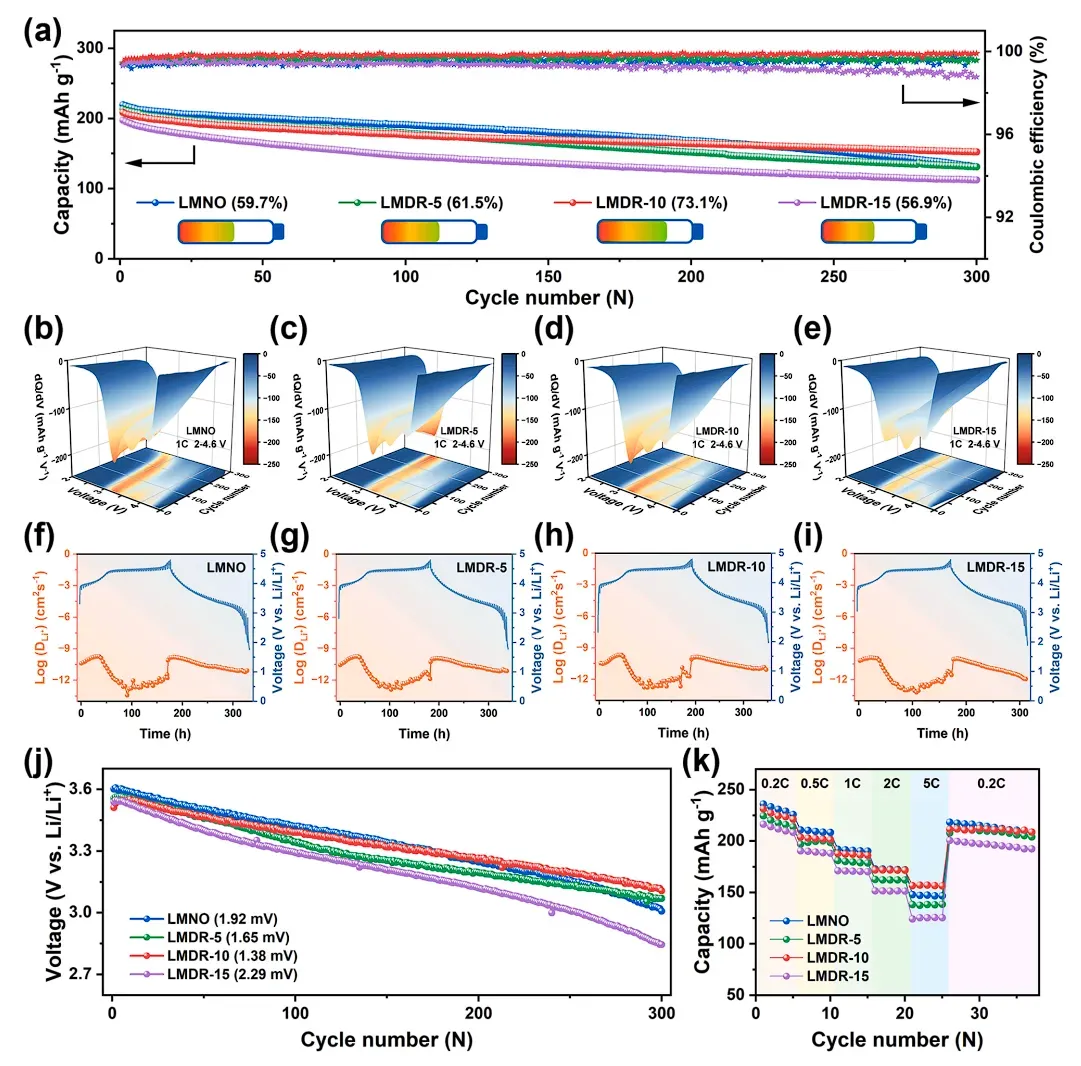
Figure 3. Electrochemical performance of LMNO and LMDR cathodes.
Electrochemical testing results show that after 300 cycles at 1C, LMDR-10 exhibits improved capacity retention and reduced voltage decay relative to pristine LMNO. dQ/dV analysis indicates that LMDR-10 effectively suppresses the irreversible transformation of the layered phase into the spinel phase. GITT testing confirms that LMDR-10 increases the lithium-ion diffusion coefficient. LMDR-10 also shows improved rate capability across increasing current densities.
3.3 Oxygen Redox Behavior: DEMS, In-Situ EIS, and Soft X-Ray Absorption Spectroscopy
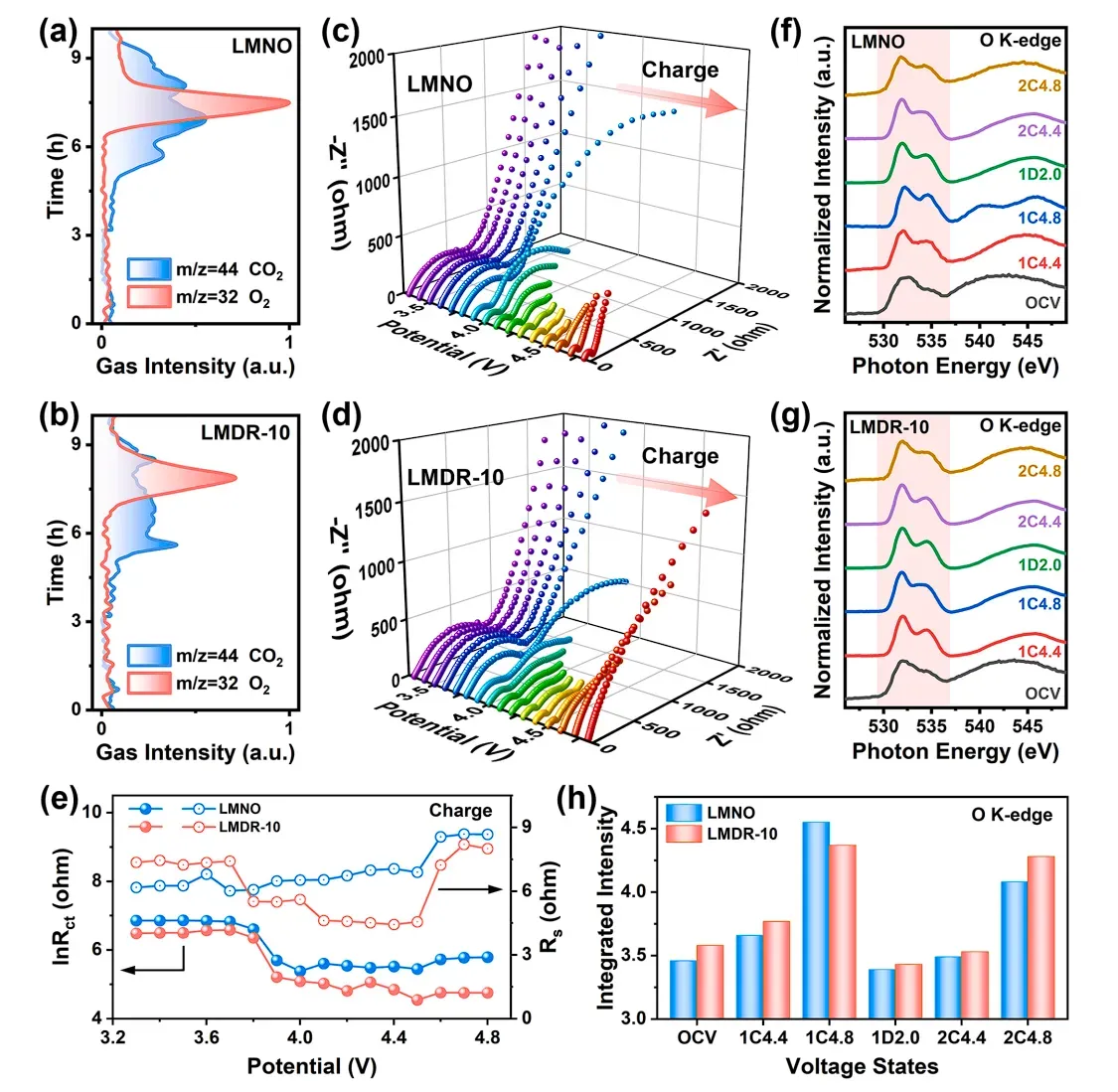
Figure 4. DEMS, in-situ EIS, and soft X-ray absorption spectroscopy analysis of oxygen redox behavior.
Differential Electrochemical Mass Spectrometry (DEMS) indicated more reversible oxygen-redox behavior in LMDR-10. In-situ EIS revealed less pronounced interfacial side reactions in LMDR-10. O K-edge soft X-ray absorption spectroscopy further indicated better preservation of the TM-O framework. Together, these results support the conclusion that the LMDR architecture stabilized the local structural and interfacial environments associated with oxygen redox.
3.4 Multiscale Post-Cycling Characterization
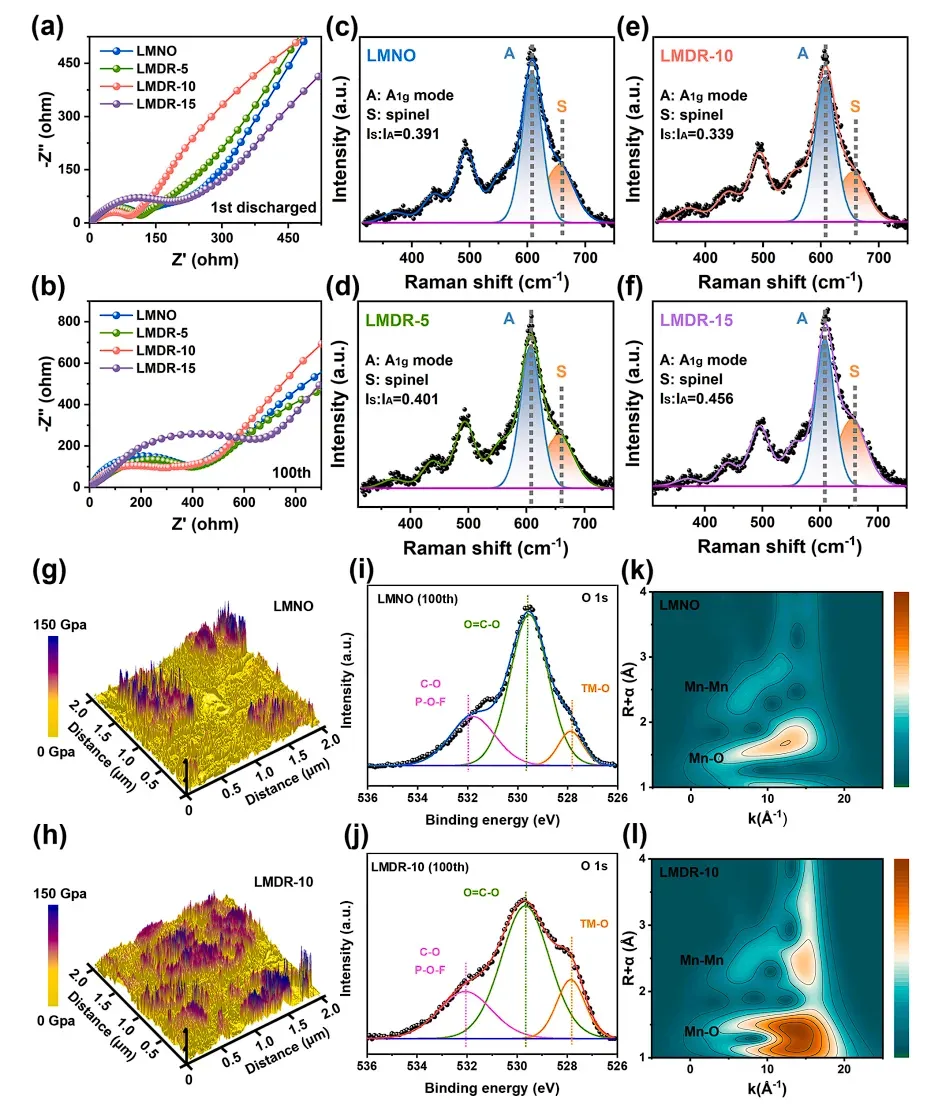
Figure 5. Post-cycling analysis of LMNO and LMDR-10 by EIS, Raman spectroscopy, AFM, XPS, and WT-EXAFS.
Multiscale characterization of cycled electrodes provides further insight into LMDR-10’s advantages: phase transformation in LMDR-10 is significantly suppressed, stress distribution is more uniform, lattice oxygen signal intensity is higher after cycling, and Mn-O and Mn-Mn bond strengths are higher relative to pristine LMNO. Laboratory-scale thick-electrode tests indicated that the electrochemical advantages of LMDR-10 were retained at higher areal loadings, supporting its potential for practical electrode development.
3.5 COMSOL Simulation: Li-Ion Concentration and Stress Distribution
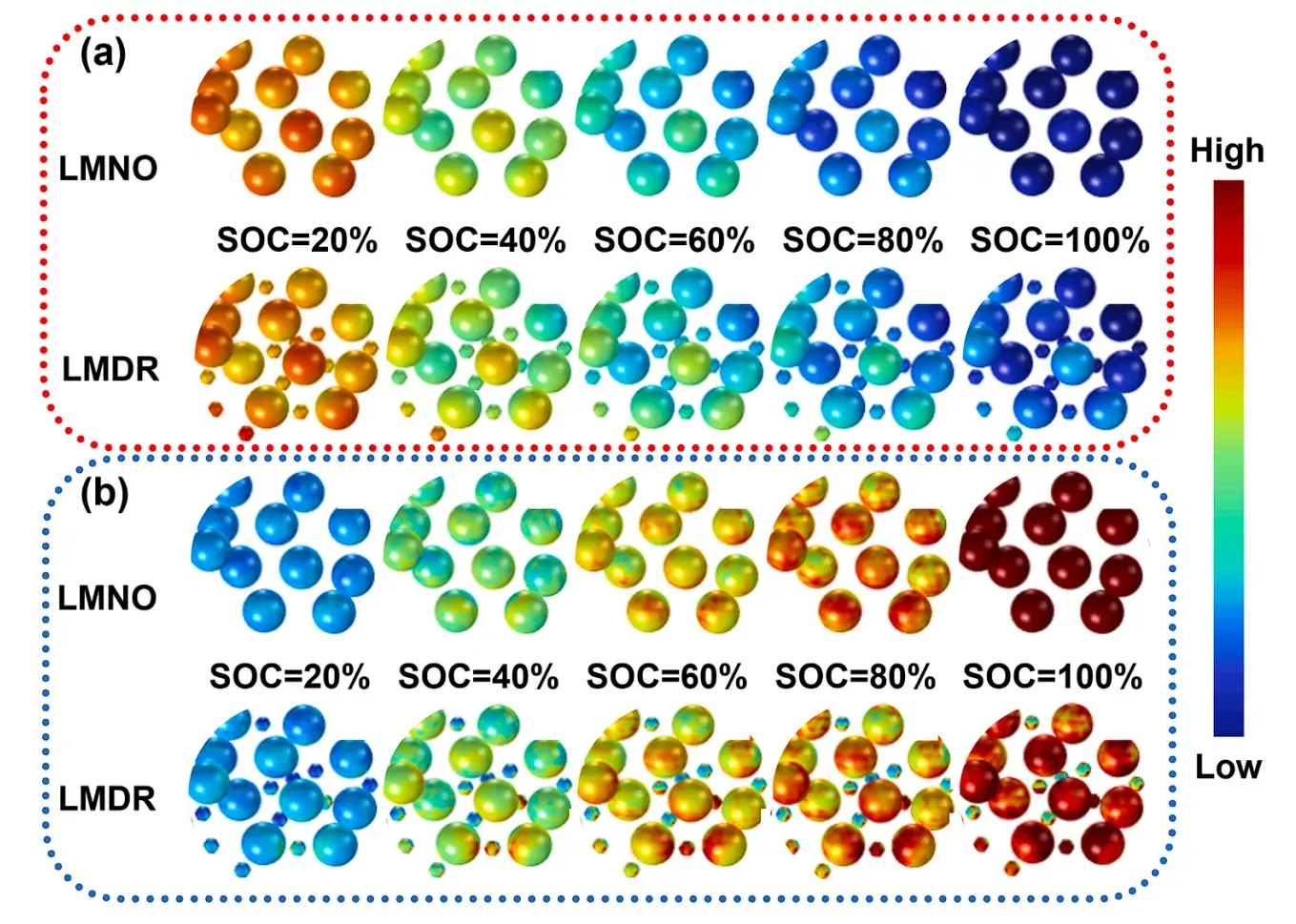
Figure 6. COMSOL-simulated distributions of lithium-ion concentration and stress distribution in LMNO and LMDR cathodes during cycling.
The COMSOL simulations predicted more uniform lithium-ion concentration and mechanical-stress distributions in the LMDR cathode than in pristine LMNO. This behavior is consistent with a lower tendency toward localized stress accumulation and cycling-induced cracking.
4. Conclusion
This study developed an Li-rich hybrid cathode architecture by combining micron-sized layered LMNO particles with nanosized, mechanically stiff, redox-active DRX particles and applying a subsequent low-temperature heat treatment. The resulting three-dimensional interstitial network increased compaction density, reduced powder resistivity, and regulated local transport and mechanical environments. Under the evaluated conditions, LMDR-10 exhibited higher initial Coulombic efficiency, better capacity retention, less voltage decay, and improved rate capability than pristine LMNO.
This study offers mechanistic insight into how inter-particle phase coupling and local environment engineering can stabilize oxygen-redox chemistry in Li-rich cathodes, providing a scalable electrode-design paradigm for developing high-energy-density, long-life Li-rich cathode materials.
⚡ Evaluate Powder Compaction Density & Conductivity with IEST PRCD1100
Want to evaluate the compaction density, electronic resistivity, and in-situ pressure-thickness evolution of your hybrid cathodes or dry-electrode powders? The IEST PRCD1100 provides the precision measurement foundation acknowledged in this Energy Storage Materials study.
5. FAQs
5.1 What is a Li-rich manganese-based layered oxide cathode and why is it difficult to commercialize?
A Li-rich manganese-based layered oxide cathode (LRM/LMNO) is a high-capacity, low-cost cathode material considered a leading candidate for next-generation high-energy-density lithium-ion batteries. Its characteristic Li-O-Li local configuration enables anionic (oxygen) redox activity that boosts specific capacity beyond conventional transition-metal-only redox. However, this same structural feature drives irreversible oxygen release during early cycling, causing first-cycle capacity loss. Deep delithiation also promotes transition-metal migration from layered octahedral sites into tetrahedral sites in the lithium layer, triggering irreversible transformation toward spinel or rock-salt phases — which, combined with oxygen-loss-driven transition-metal valence reduction, causes continuous voltage decay and severely limits rate capability due to the low ionic conductivity of the Li₂MnO₃ component.
5.2 What is a 3D interstitial network for cathode materials and how does it stabilize Li-rich cathodes?
A 3D interstitial network for cathode materials, as demonstrated in the LMDR hybrid cathode design, is formed by physically embedding nanoscale rigid particles — in this case, a Ni-based disordered rock-salt (DRX) cathode material — uniformly within the inter-particle gaps of a micron-scale layered cathode host (LMNO). This creates a percolating three-dimensional network that provides additional ion and electron transport pathways beyond the host material’s own diffusion channels, while also mechanically redistributing stress across the electrode during cycling. By regulating both the local chemical environment (suppressing oxygen release and transition-metal dissolution) and the local mechanical environment (reducing stress concentration and microcrack formation), this interstitial network stabilizes redox chemistry without requiring complex doping or coating chemistry.
5.3 Why is a Ni-based disordered rock-salt cathode used as the rigid interstitial component instead of a coating or dopant?
A Ni-based disordered rock-salt cathode (DRX) was selected as a nanoscale, rigid, redox-active particle rather than an inert coating or a simple dopant because it serves multiple simultaneous functions that single-material modification approaches cannot achieve together. As a physically distinct, mechanically stiff particle, it structurally supports the softer layered LMNO framework and redistributes mechanical stress during lithiation/delithiation. Because it is itself redox-active and disordered rock-salt materials are known for reasonable ionic conductivity despite their disordered cation arrangement, it also contributes meaningfully to ion/electron transport rather than acting as dead weight. This combination — mechanical reinforcement plus functional redox and transport contribution — is difficult to achieve with a conventional surface coating or lattice dopant, which typically address only one failure mode (interfacial stability or bulk doping effects) rather than the coupled mechanical-chemical degradation pathways in Li-rich cathodes.
5.4 How does compaction density testing validate the LMDR hybrid cathode design?
Compaction density testing directly validates whether physically blending nanoscale DRX particles into the LMNO host actually improves electrode-level packing efficiency, rather than simply diluting capacity with an inactive filler. In this study, compaction density and powder resistance were measured using the IEST PRCD1100 Powder Resistivity & Compaction Density Tester, showing that the LMDR hybrid effectively increases electrode density while simultaneously reducing overall powder resistance — a combination that directly benefits volumetric energy density (through higher active material packing per unit electrode volume) and rate capability (through lower electronic resistance) in the finished cell. This measurement is essential because a design that improved cycling stability but reduced compaction density would trade one performance metric for another rather than achieving genuine, scalable improvement.
5.5 Does the LMDR hybrid cathode design work in thick electrodes, or only in thin laboratory coin cells?
This study specifically tested laboratory-scale thick-electrode configurations at higher areal loading — a critical validation step, since many cathode modification strategies that work well in thin, low-loading coin cells fail to translate to the higher loadings required for practical, energy-dense cell formats. The results confirmed that LMDR’s advantages persist even at higher areal loading, suggesting the 3D interstitial network design is not merely a thin-electrode artifact but provides genuine mechanical and transport benefits that scale toward more industrially relevant electrode configurations. This is an important signal for the design’s potential scalability, though further validation at full pouch-cell or cylindrical-cell format would be the next logical step toward commercial application.