
Step-by-step CV analysis case study of a real LiCoO₂/graphite coin cell at scan rates of 0.1, 0.2, and 0.5 mV/s.
How to interpret CV curves and cyclic voltammograms at different scan rates and validate the diffusion-controlled mechanism using the Randles-Ševčík equation.
Instrument benchmarking: the IEST ERT6008 electrochemical analyzer achieves >95% CV curve overlap with leading commercial workstations (BioLogic VSP-300), with peak current deviation <0.5% and peak potential deviation <2 mV.
Best practices and common pitfalls for producing high-quality CV data in battery material research.
Cyclic voltammetry (CV) is a fundamental electrochemical characterization technique, often described as a “health check” for electrode materials. The core cyclic voltammetry principle involves applying a triangular, linearly changing potential waveform — for example, scanning from −0.2 V → 1.0 V → −0.2 V — to the working electrode while simultaneously recording the current response. This generates a closed current-voltage loop known as a CV curve, or more formally a cyclic voltammogram — a complete graphical record of current versus applied potential over the full scan cycle. The cyclic voltammogram effectively mirrors the dynamic charge-discharge behavior of a battery electrode under controlled potential conditions.
A well-interpreted cyclic voltammogram reveals critical material properties:
Redox Characteristics: Peak potentials indicate the reaction voltage of active materials; peak currents reflect reaction kinetics and active material quantity.
Reversibility: A small potential difference (\( \Delta E_p \)) between oxidation and reduction peaks signifies high electrochemical reversibility. For an ideal one-electron process at room temperature, \( \Delta E_p \) approaches 59 mV.
Mass Transport Mechanism: Analyzing how peak current varies with scan rate distinguishes diffusion-controlled from surface-controlled (capacitive) processes via the Randles-Ševčík equation.
Stability: Changes in peak current or integrated CV curve area over multiple cycles quantify material degradation and capacity fade.
In lithium-ion battery research, CV clearly visualizes processes like Li⁺ intercalation/de-intercalation (e.g., ~0.2V vs. Li⁺/Li for graphite) or electrolyte decomposition (>4.5V), functioning much like an “electrochemical EKG.”
To demonstrate practical cyclic voltammetry analysis, a standard 24 mAh coin cell (LiCoO₂ cathode vs. graphite anode) was tested using the IEST ERT6008-5V100mA High-Precision Electrochemical Analyzer (voltage and current accuracy: 0.01% F.S.). CV data was acquired at scan rates of 0.1, 0.2, and 0.5 mV/s within a voltage range of 3.0–4.2 V vs. Li⁺/Li.
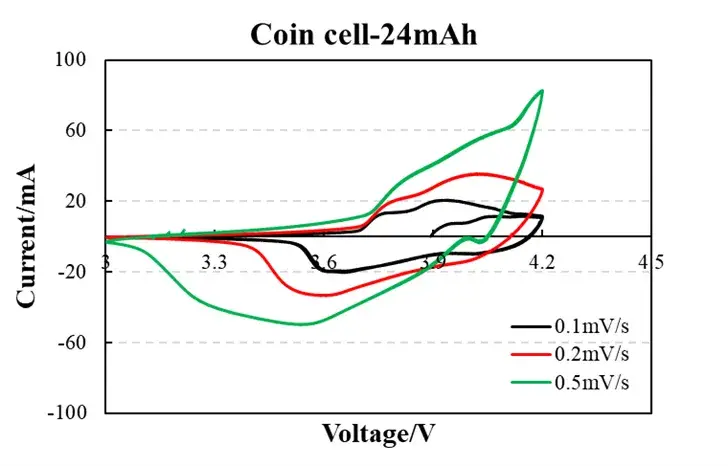
Figure 1. CV Curves (Cyclic Voltammograms) at Three Scan Rates — Experimental CV Data
Scan rate directly controls the time available for Li⁺ diffusion during each CV sweep, making multi-rate cyclic voltammetry analysis the standard method for separating kinetic from thermodynamic contributions to electrode behavior.
At a low scan rate (0.1 mV/s, black curve), peak current is low (~0.5 mA) and the oxidation/reduction peaks show good symmetry, indicating minimal polarization. The peak separation \( \Delta E_p \) ≈ 60 mV closely approaches the theoretical value for a reversible one-electron process (59 mV), confirming highly reversible Li⁺ intercalation/de-intercalation kinetics in this LiCoO₂/graphite system.
At a high scan rate (0.5 mV/s, green curve), peak current increases to ~1.2 mA, but \( \Delta E_p \) widens to 90 mV. Reflecting increased charge-transfer resistance and kinetic polarization. The preserved CV curve shape — no new peaks or shoulders — confirms the absence of parasitic side reactions and good structural stability of the electrode material at higher cycling rates.
A cyclic voltammetry graph (CV graph) encodes multiple material properties in its shape. When reading a CV graph for a lithium-ion electrode, four features carry primary diagnostic significance:
Oxidation peak position (\(E_{\text{pa}}\)) and current (\(I_{\text{pa}}\)): The anodic peak in the CV graph marks the potential at which \(\text{Li}^+\) de-intercalation occurs. Peak position reflects thermodynamics; peak height reflects kinetics and active material loading.
Reduction peak position (\(E_{\text{pc}}\)) and current (\(I_{\text{pc}}\)): The cathodic peak on the return sweep marks \(\text{Li}^+\) intercalation. For a reversible process, \(I_{\text{pa}} / I_{\text{pc}}\) should approach 1.0.
Peak separation \(\Delta E_{\text{p}} = E_{\text{pa}} – E_{\text{pc}}\): In the CV graph, \(\Delta E_{\text{p}}\) near \(59\ \text{mV}\) indicates fast electron transfer. Widening \(\Delta E_{\text{p}}\) at higher scan rates signals kinetic polarization; increasing \(\Delta E_{\text{p}}\) across cycles signals degradation.
Integrated CV curve area: The area enclosed by the cyclic voltammogram is proportional to total charge passed — a decreasing area across CV cycles indicates capacity fade or active material loss.
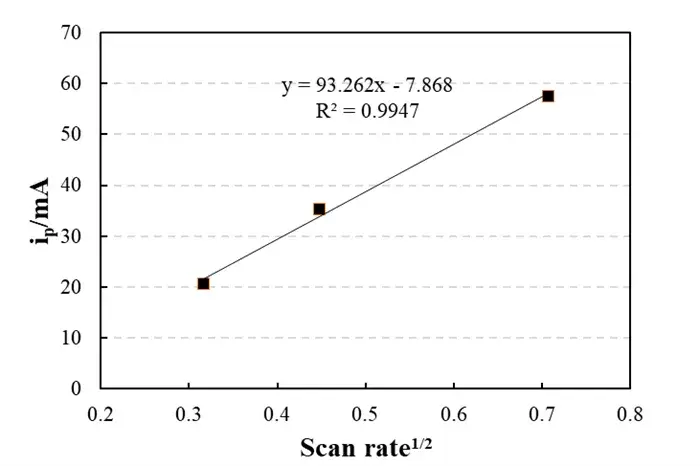
Figure 2. Linear Fitting Plot: Peak Current vs. √(Scan Rate) for Randles-Ševčík Diffusion Analysis
A critical step in cyclic voltammetry analysis is verifying whether the observed process is diffusion-controlled or surface-controlled. Plotting the peak current (\(I_{\text{p}}\)) extracted from the CV data against the square root of scan rate (\(\sqrt{v}\)) yields a linear relationship (\(R^2 = 0.9947\)), described by: \(y = 93.262x – 7.868\). This strong linearity in the CV data is fully consistent with the Randles-Ševčík equation, confirming a lithium-ion diffusion-controlled process.
The slope of 93.262 enables calculation of the Li⁺ diffusion coefficient (D) — the resulting value is on the order of 10⁻¹⁰ cm²/s, characteristic of graphite anode materials. The intercept (−7.868 mA) close to zero confirms negligible non-Faradaic (double-layer charging) contributions to the CV data at these scan rates.
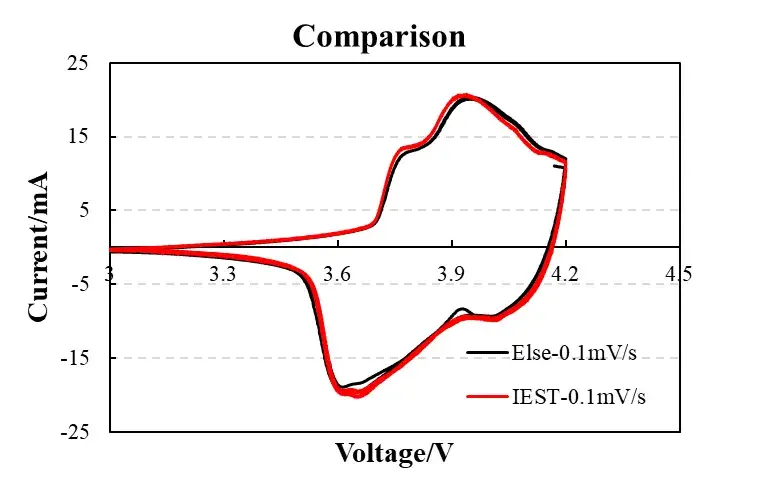
Figure 3. CV Curve Comparison: IEST ERT6008 vs. Commercial Workstation
Reliable cyclic voltammetry analysis begins with reliable instrumentation. A direct benchmark compared the IEST ERT6008-5V100mA High-Precision Electrochemical Analyzer against the BioLogic VSP-300 using identical conditions on the same LiCoO₂/graphite coin cell.
Identical test cell: Same 24 mAh LiCoO₂/graphite coin cell for all measurements.
Identical parameters: Voltage range (3.0–4.2 V), scan rates (0.1, 0.2, 0.5 mV/s), and temperature held constant.
Direct overlay: Cyclic voltammograms from both instruments superimposed for qualitative and quantitative comparison.
As shown in Figure 3, the CV curves from both systems demonstrate >95% visual overlap. More importantly, a detailed analysis of the key oxidation peak near 4.2 V reveals a current deviation of less than 0.5%, and the calculated peak potential (\(E_{\text{p}}\)) differed by less than 2 mV. Overall, the mean absolute deviation across the entire dataset was rigorously controlled within 1.5%.
This level of agreement confirms that the IEST ERT6008 delivers research-grade cyclic voltammetry data suitable for publication and cross-laboratory reproducibility — with peak potential precision sufficient to resolve \( \Delta E_p \) differences of <2 mV and current accuracy enabling reliable Randles-Ševčík regression from multi-rate CV data.
Your experimental results are publishable and defensible, with data quality matching industry-standard equipment.
Methods and findings are reproducible across different labs equipped with precision instruments.
You can make confident material screening and diagnostic decisions based on accurate kinetic and thermodynamic parameters.
The IEST ERT6008 electrochemical analyzer achieves precision cyclic voltammetry analysis comparable to dedicated commercial workstations, with voltage and current accuracy of 0.01% F.S. and a low-noise front-end optimized for small-current coin-cell measurements.
The experimental CV data are governed by the Randles-Ševčík equation, the central equation for quantitative cyclic voltammetry analysis of diffusion-controlled systems:
\[i_p = \frac{0.4463F^{3/2}An^{3/2}D^{1/2}C_0 v^{1/2}}{R^{1/2}T^{1/2}}\]
In this case study, the slope of the \(I_{\text{p}}\) vs. \(\sqrt{v}\) plot (93.262 from CV data at 0.1–0.5 mV/s) was used to calculate \(D \sim 10^{-10}\ \text{cm}^2/\text{s}\) for \(\text{Li}^+\) in graphite — consistent with established literature benchmarks for graphite anode materials.
The study compared CV traces acquired on the IEST ERT6008 with a commercial electrochemical workstation (BioLogic). Agreement between the two systems exceeded 95% overlap in curve shape; deviations were ≤ 1.5% overall, and no anomalous features appeared in the high-potential region (4.0–4.2 V). These comparisons demonstrate that a well-specified benchtop instrument with appropriate calibration can deliver research-grade CV data for diagnostic and materials-screening workflows.
Instrument selection checklist:
Voltage and current accuracy of 0.01% F.S. — essential for resolving \(\Delta E_{\text{p}}\) differences \(<5\ \text{mV}\) in coin-cell CV curves.
High ADC resolution and low-noise front-end — required for reliable cyclic voltammogram shape fidelity at scan rates of 0.1 mV/s and below.
Document and report cell geometry, temperature, and electrolyte conditions — necessary for reproducible CV data across laboratories.
Choose scan-rate range rationally. Very low scan rates approach steady-state but take long to measure; very high rates emphasize kinetics but can conflate capacitive currents with faradaic peaks. Use a set of rates that span at least one order of magnitude for robust regression (as in this study: 0.1–0.5 mV·s⁻¹).
Subtract background (non-faradaic) current where necessary before peak fitting; this improves peak-area and peak-height accuracy.
Fit peaks consistently. Use the same baseline and smoothing method across datasets; report smoothing parameters if used.
Report \( \Delta E_p \) and \( i_p \) vs √v together — they jointly indicate whether a process is kinetically controlled, diffusion-limited, or complicated by pseudocapacitive/surface phenomena.
Correlate CV with complementary tests (GITT, EIS, galvanostatic cycling) to separate diffusion limits from interfacial charge-transfer limitations.
Traditional cyclic voltammetry workflows require manual CV data export, peak identification, curve area integration, and diffusion coefficient calculation — a time-consuming process prone to operator error, particularly when processing large batches of coin cells.
The IEST Intelligent Electrochemical Data Analysis Platform automates key steps of cyclic voltammetry analysis:
Automated Peak Recognition: Advanced algorithms automatically identify oxidation/reduction peak potentials (\(E_{\text{pa}}\), \(E_{\text{pc}}\)) and peak currents (\(I_{\text{pa}}\), \(I_{\text{pc}}\)), eliminating manual cursor placement errors.
Batch Processing: Upload hundreds of cyclic voltammetry curves simultaneously. The system auto-calculates key parameters (like \( \Delta E_p \) and peak area integration) and generates comparative reports in seconds.
Smart Smoothing: Built-in adaptive filtering removes noise from raw data without distorting the true signal of the electrochemical reaction.
Cloud Synchronization: Seamlessly sync data from the lab bench to the cloud, enabling remote team collaboration and real-time project tracking.
Cyclic voltammetry analysis directly informs electrode development decisions across three application areas:
By comparing the CV curves of electrodes with different conductive agent types or loadings, engineers can directly observe changes in kinetics. A reduction in peak separation (\( \Delta E_p \)) indicates improved charge transfer and lower polarization, guiding the optimization of the conductive network for better rate performance.
Tracking changes in CV curves over extended cycling provides early insights into degradation. A progressive decrease in peak current or integrated curve area often correlates with active material loss or increasing impedance, serving as a precursor to capacity fade. The appearance of new, irreversible peaks can pinpoint specific side reactions, such as electrolyte decomposition at high voltage.
Anomalous features on a CV curve are powerful diagnostic signals. For instance, an unexpected redox couple could indicate an impurity phase, while excessive hysteresis might point to poor electrode wettability or contact issues. In production, CV can be used as a sensitive tool for batch-to-battery consistency screening, ensuring only electrodes with identical electrochemical signatures are assembled into packs.
By bridging fundamental electrochemistry with these practical outcomes, cyclic voltammetry analysis transitions from a characterization technique to an indispensable engineering tool for developing higher-performing, longer-lasting, and safer batteries.
This case study demonstrates cyclic voltammetry analysis applied to a LiCoO\(_2\)/graphite coin cell: CV curve interpretation at scan rates of 0.1–0.5 mV/s, diffusion mechanism validation via Randles-Ševčík regression (\(R^2 = 0.9947\)), and instrument accuracy benchmarking. Key findings: \(\Delta E_{\text{p}}\) at \(0.1\ \text{mV/s} \approx 60\ \text{mV}\) (confirming high reversibility); \(I_{\text{p}} \propto \sqrt{v}\) linearity confirmed diffusion control; calculated Li\(^+\) diffusion coefficient \(D \approx 10^{-10}\ \text{cm}^2/\text{s}\) — consistent with graphite literature values.
Quantitative cyclic voltammetry analysis requires: (1) multi-rate CV data acquisition spanning at least one order of magnitude in scan rate; (2) linear \(I_{\text{p}}\) vs. \(\sqrt{v}\) validation confirming diffusion control (\(R^2 > 0.99\)); (3) extraction of \(\Delta E_{\text{p}}\), \(D\), and integrated charge from the cyclic voltammogram; and (4) instrument accuracy of 0.01% F.S. or better to resolve \(<5\ \text{mV}\) peak potential differences. The IEST ERT6008 achieves >95% cyclic voltammogram agreement with commercial workstations, with peak current deviation <0.5% and overall CV data deviation ≤1.5%.
To calculate Li⁺ diffusion coefficient from cyclic voltammetry analysis: (1) Record CV curves at scan rates spanning at least one order of magnitude (e.g., 0.1, 0.2, 0.5 mV/s). (2) Extract peak current ip from each cyclic voltammogram. (3) Plot ip versus √v — linearity (R² > 0.99) confirms diffusion control. (4) Apply the Randles-Ševčík equation: the slope is proportional to D1/2, enabling direct D calculation. For LiCoO₂/graphite at 0.1–0.5 mV/s, D falls on the order of 10⁻¹⁰ cm²/s.
For a highly reversible one-electron process, ideal ΔEp in the CV curve approaches 59 mV at room temperature. In practical LiCoO₂/graphite coin cell measurements, ΔEp of 60–70 mV at 0.1 mV/s indicates good reversibility. Values above 90 mV at the same scan rate suggest increased charge-transfer resistance. Tracking ΔEp evolution in the cyclic voltammogram across cycles directly quantifies electrode degradation.
Start with 0.1 mV/s to observe near-equilibrium behavior with well-resolved peaks in the cyclic voltammogram, then increase to 0.2 and 0.5 mV/s to study kinetics. The scan rate range should span at least one order of magnitude for a reliable Randles-Ševčík regression from the CV data. Very high scan rates (>1 mV/s for most solid-state electrodes) cause ΔEp widening and peak distortion that complicates quantitative analysis.
Instrument accuracy is critical for quantitative CV analysis. Voltage accuracy of 0.01% F.S. is required to resolve peak potential differences <5 mV in the cyclic voltammogram; current accuracy at the same level ensures reliable ip extraction for Randles-Ševčík regression. Benchmarking the IEST ERT6008 against the BioLogic VSP-300 on identical LiCoO₂/graphite coin cells demonstrated >95% CV curve overlap, peak current deviation <0.5%, and peak potential deviation <2 mV — confirming research-grade CV data quality for material screening and publication.
Common pitfalls include: excessively high scan rates that broaden ΔEp and conflate capacitive and faradaic contributions in the CV curve; neglecting non-Faradaic background subtraction before peak fitting; poor electrode contact creating resistance artifacts that artificially increase ΔEp; and failing to validate the diffusion mechanism with a multi-rate ip vs. √v study before reporting diffusion coefficients. Consistent cell assembly is essential for reproducible cyclic voltammetry results across batches.
Cyclic voltammetry (CV) is an electrochemical technique in which the potential applied to a working electrode is swept linearly between two limits and then reversed, while current is recorded continuously. The output — a CV curve or cyclic voltammogram — plots current versus applied potential, forming a closed loop. In lithium-ion battery research, the CV curve shows: oxidation and reduction peaks corresponding to Li⁺ intercalation/de-intercalation reactions; the electrochemical reversibility from ΔEp; the mass transport mechanism from scan rate dependence of peak current; and degradation trends from changes in peak height and integrated area over repeated cycles. CV is non-destructive and provides kinetic, thermodynamic, and stability information in a single measurement.
Reading a CV graph starts with four key features: (1) Anodic peak (Epa, Ipa) — marks Li⁺ de-intercalation potential and kinetics. (2) Cathodic peak (Epc, Ipc) — Ipa/Ipc approaching 1.0 indicates high reversibility. (3) Peak separation ΔEp = Epa − Epc — near 59 mV signals high reversibility; widening ΔEp indicates kinetic limitations or degradation. (4) Integrated CV graph area — proportional to total charge; decreasing area across cycles indicates capacity fade. For diffusion coefficient extraction, the CV graph must be acquired at multiple scan rates and ip values plotted against √v for Randles-Ševčík analysis.