-
iestinstrument

Abstract
1. What Is the BYD Blade Battery 2.0?
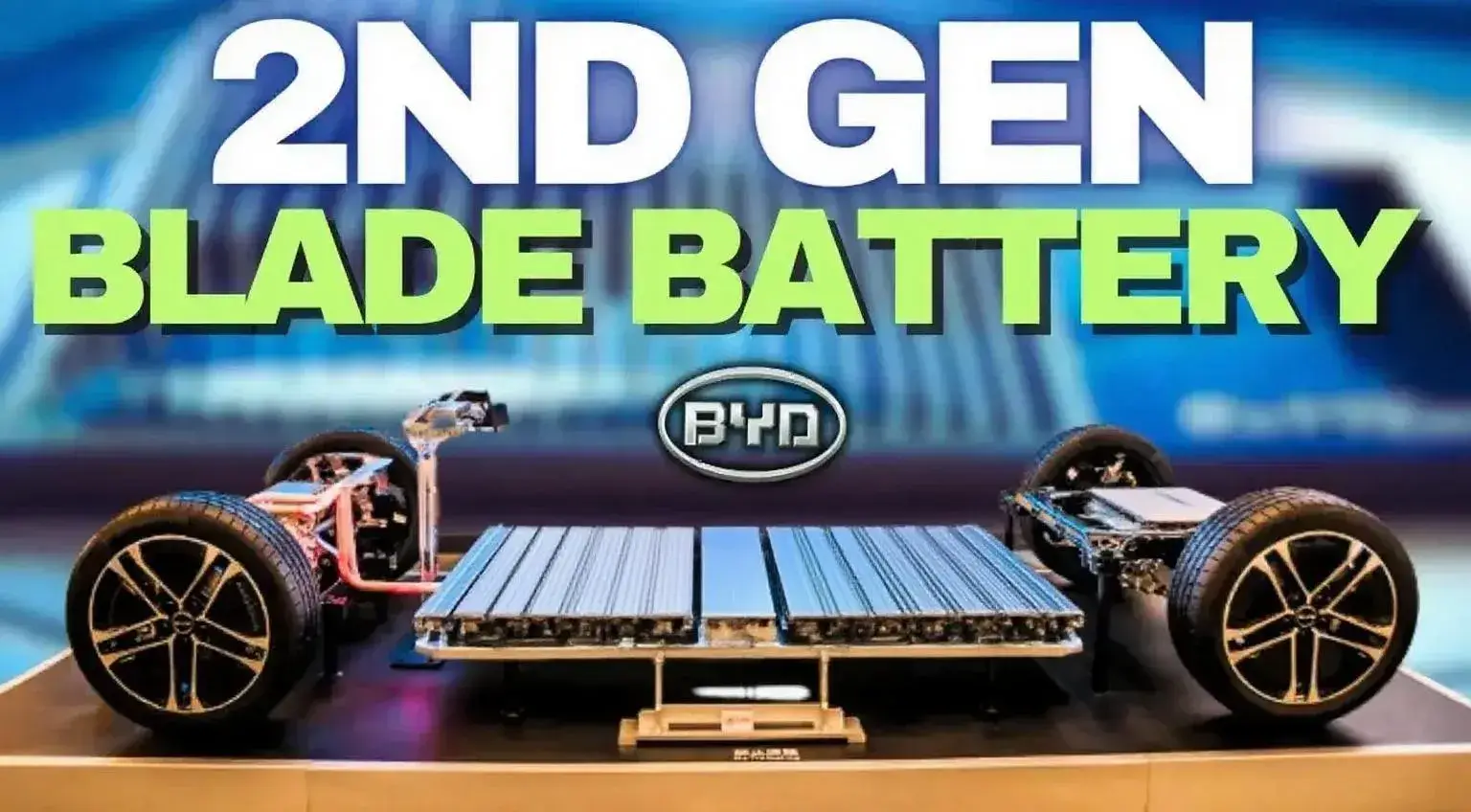
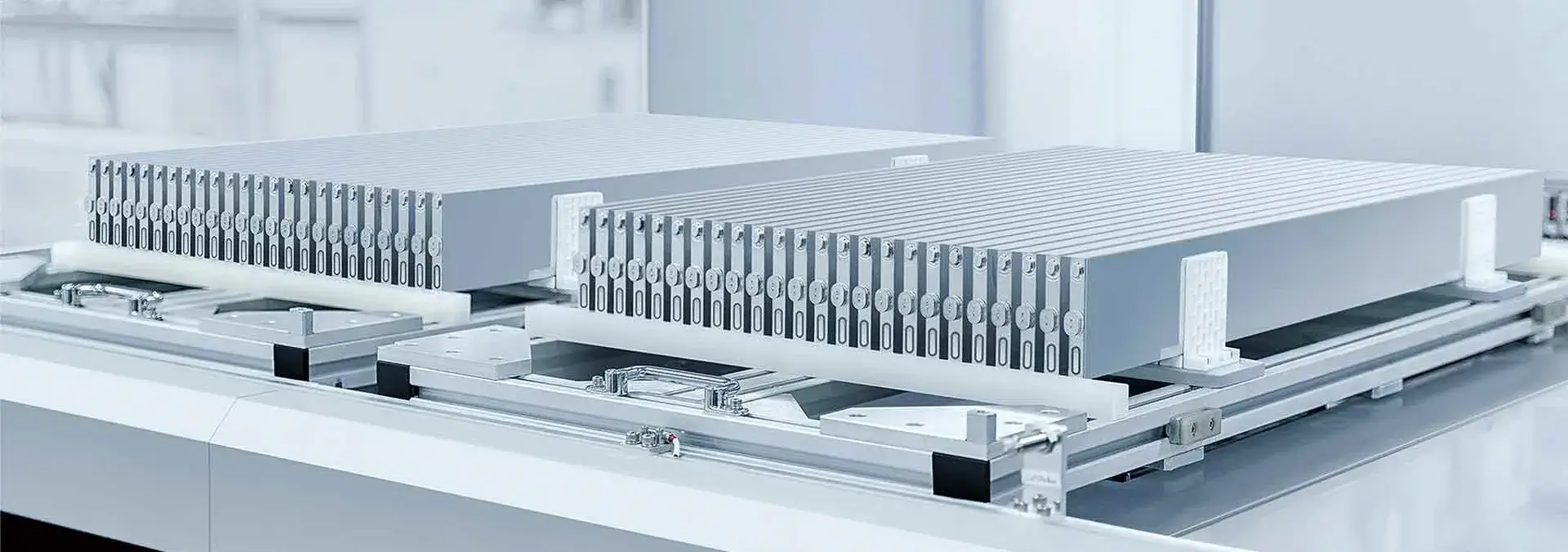
BYD’s original Blade Battery introduced a cell-to-pack (CTP) design in which individual blade-shaped LFP cells also served as structural members of the battery pack, improving space efficiency and safety. The second-generation platform, BYD blade 2, builds on that structural approach while targeting significantly higher charging speed, energy density, and low-temperature performance. BYD has also been building a broader ecosystem around the platform — new EV components, a dedicated high-voltage powertrain platform, and an “Megawatt Flash Charging” network — rather than treating the cell as an isolated component upgrade.
2. Release Date & Global Availability
BYD officially released the Blade Battery 2.0 on March 6, 2026. The platform is being integrated into BYD’s flagship vehicle lineup, with early real-world testing already reported across several models, and BYD has signaled intent for broader rollout across its EV and premium PHEV range.
3. Technological Breakthrough: Three-Dimensional Evolution in Range, Charging & Safety
3.1 Revolutionary Range Enhancement
The BYD Blade Battery 2.0 achieves a disruptive leap through:
-
Nano-scale electrode reengineering
-
Optimized cell stacking technology
-
75% volumetric pack utilization (industry-leading)
-
30% higher energy density vs. previous generation
Coupled with its full-domain thermal management system, the 2026 Denza Z9GT delivers 1,036 km CLTC range – surpassing the Tesla Model S Plaid (~650 km) by over 59%.
Core Upgrades:
-
Energy density surge: 140 Wh/kg → 190-210 Wh/kg (lab prototypes reach 350 Wh/kg)
-
Dual-tab terminal design reducing internal resistance
-
40%+ real-world range increase
3.2 Game-Changing Charging Efficiency
-
1000V high-voltage platform compatibility
-
Peak charging power: 1500 kW
-
9 min 10-97% SOC replenishment
-
Ultra-fast charging: Versions supporting up to 8C. (An 10C charging rate is defined as the ability to fully charge a battery in 1/8 of an hour (7.5 minutes), representing the pinnacle of ultra-fast energy replenishment. )
-
Energy replenishment efficiency rivals ICE refueling
3.3 Safety Reinvention
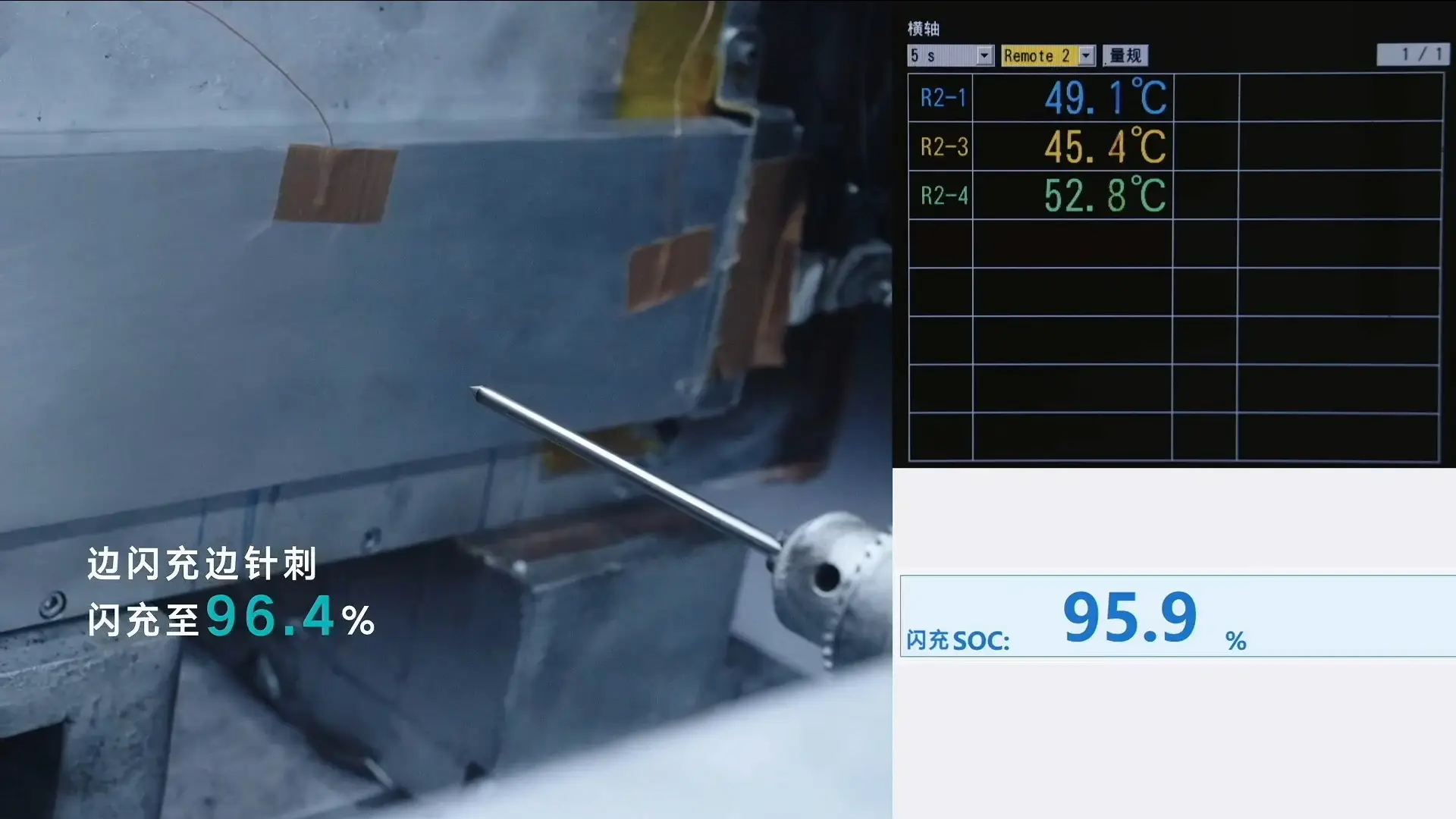
BYD’s published nail penetration test video demonstrates:
-
Zero smoke/open flames post-puncture
-
Temperature control exceeding GB/T standards
-
Honeycomb reinforcement structure withstanding:
-
50-metric-ton mechanical crush
-
Extreme off-road scenarios
-
4. Summary and Comparison: Blade Battery 2.0 vs. 1.0
Compared to the first-generation Blade Battery 1.0 launched in 2020, a significant leap forward has been achieved. While the first-generation product revolutionized battery safety and packaging efficiency, the second-generation version introduces comprehensive material innovations, thereby significantly enhancing charging speed, energy density, and low-temperature performance.
| Property | Blade Battery 2.0 | Blade Battery 1.0 |
|---|---|---|
| Energy density | 190–210 Wh/kg | ~140 Wh/kg |
| Driving range | Over 1,000 km (select flagship models) | Roughly 600 km |
| Low-temperature capacity retention | Retains over 85% capacity at -20°C | Significant capacity drop below freezing |
| Space utilization | ~76% via cell-to-body integration | ~50% via CTP technology |
| Cooling system | Direct refrigerant 3D dual-lane cooling, reported ~90% higher heat-transfer efficiency | Standard cooling loop |
| Cycle life | Over 4,000 cycles | ~3,000 cycles |
5. LMFP Cathode Technology: How Manganese Substitution Raises Energy Density
A cathode is a battery’s positive electrode, gaining electrons through reduction during discharge. The original Blade Battery, like most LFP-based EV cells, used lithium iron phosphate as its cathode material. Detailed technical breakdowns of the Blade Battery 2.0 describe a shift to lithium manganese iron phosphate (LMFP) — a chemistry often regarded as a natural successor to LFP because it retains the same crystal structure and thermal stability while substituting a portion of the iron with manganese, following the general formula LiMnxFe(1-x)PO4.
Despite the substitution, the cathode retains an olivine crystal structure — the same structural family as LFP — in which phosphorus occupies tetrahedral lattice sites while lithium, iron, and manganese occupy octahedral sites. Channels within this lattice allow lithium ions to move in and out of the structure efficiently, and the olivine framework resists structural distortion better than the layered-oxide structures used in nickel-based cathodes.
Within the LMFP cathode, each ion plays a distinct role: lithium ions remain highly mobile in a stable +1 state, enabling efficient intercalation and de-intercalation; iron acts as a redox center, shifting between +2 and +3 oxidation states as lithium leaves the structure, maintaining charge balance — much as it does in standard LFP; manganese performs a similar charge-balancing role but has a higher oxidation potential than iron, meaning it exchanges electrons more readily. That higher manganese oxidation potential is what raises the cathode-to-anode voltage difference, and with it, overall cell voltage and energy density.
5.1 The Manganese Dissolution Challenge — and BYD’s Reported Fix
Manganese-rich cathode materials are well known in battery research for a persistent weakness: poor cycling stability, particularly at elevated temperatures, where manganese dissolution into the electrolyte drives structural degradation and reduces ionic conductivity over time. This is widely cited as the main reason LMFP has been slower to reach mass production than standard LFP, despite its density advantage at comparable material cost.
According to detailed technical descriptions of the Blade Battery 2.0, BYD addresses this with a layered coating architecture: a manganese-rich LMFP core is wrapped in an iron-richer LMFP shell layer alongside a separate barrier material layer. This iron-heavier outer shell is reported to suppress manganese dissolution at the particle surface, improving both electrochemical and structural stability without sacrificing the density benefit of the manganese-rich core.
6. Silicon-Carbon Anode: Balancing Capacity With Structural Stability
The anode is the negative electrode where lithium ions are stored during charging. Where the first-generation Blade Battery used graphite — standard practice across most EV cells — technical descriptions of the Blade Battery 2.0 describe a shift to a silicon-carbon composite anode.
Silicon has long attracted interest as an anode material for its high theoretical energy density, but it suffers from a well-documented drawback: silicon particles can expand by as much as 400% of their original volume during lithium insertion, a swing that rapidly degrades structural integrity and has historically caused silicon-heavy anodes to fail after only a handful of cycles. Commercial approaches developed over the past several years — often centered on carbon additives that help constrain this expansion — have made silicon-carbon composites increasingly viable.
The reported BYD anode design combines graphite and silicon particles reduced to nanoscale dimensions (increasing surface area and shortening lithium diffusion paths), with graphite particles aligned perpendicular to the electrode plane to reduce lithium transport resistance and support faster ion intercalation — a structural choice that directly affects charging speed. To manage silicon’s volumetric expansion, the design reportedly applies a nanoscale surface coating together with core-shell nanostructures and elastic binder materials, which together are said to reduce internal resistance by roughly 20% and limit heat buildup during high-rate (8C) charging.
7. The SEI Layer: A Molecular-Level Contributor to Longevity
An effective SEI needs to remain chemically stable against lithium, conduct lithium ions efficiently, block electron transport, and remain mechanically flexible enough to withstand the repeated expansion and contraction of a silicon-containing anode without cracking. Technical descriptions of the Blade Battery 2.0 describe a molecularly engineered SEI designed to be simultaneously ultra-thin — which improves ionic conductivity, since ions travel a shorter path between anode and electrolyte — and unusually dense, which helps block unwanted electrolyte-anode reactions despite its reduced thickness.
The SEI is to incorporate dynamic self-repairing behavior, maintaining its integrity across thousands of cycles and contributing to a reported reduction in capacity degradation. This combination of thinness, density, and self-repair is described as what allows the cell to tolerate the very high charging voltages associated with BYD’s fastest-rated charging infrastructure.
8. Charging Speed: Official Records & Real-World Test Data
Under BYD’s dedicated “Megawatt Flash Charging” charging infrastructure — described as delivering up to 1,000V and 1,500A, for a charging power of roughly 1,500 kW at a single connector — the Blade Battery 2.0 has reportedly charged from 10% to 70% state of charge in about 5 minutes. By comparison, the first-generation Blade Battery is described as requiring around 33 minutes to go from 10% to 80% SOC. Under normal conditions, Blade Battery 2.0-equipped vehicles have reportedly reached 10% to 97% SOC in approximately 9 minutes, and about 12 minutes under the same charge window at −30°C. Even on more conventional (non-Flash) charging infrastructure, the platform is reported to charge up to 50% faster than comparable EV batteries.
| Vehicle | 10%–97% Charging Time | Reported Range |
|---|---|---|
| Fang Cheng Bao 3 | 8 min 45 sec | — |
| Song Ultra, Sealion 06, Seal 07 | 8 min 47 sec | — |
| Denza Z9GT | 9 min 8 sec | 1,036 km (single charge) |
| Yangwang U7 | — | 1,006 km (single charge) |
Figures above are drawn from a single technical source describing reported real-world test results and have not been independently cross-verified against BYD’s official specification sheets for each model.
9. Safety Testing: Beyond the Nail Penetration Test
The original Blade Battery built its safety reputation largely on nail-penetration test results. Technical descriptions of the Blade Battery 2.0 describe more extensive testing, including a combined scenario in which nail penetration was performed on a cell that had already undergone repeated Flash ultra-fast charging cycles — reportedly showing no thermal runaway, smoke, or fire even after 500 such Flash charging cycles. A separate test reportedly induced short circuits simultaneously across four cells, reaching temperatures above 700°C without fire or explosion.
10. Real-World Range Of The BYD Blade 2.0 Performance
-
20% increased range via optimized energy conversion
-
Operational stability from -35°C to 55°C
-
Reduced energy loss
-
Superior urban driving efficiency
11. Short Blade vs. Long Blade 2.0: Two Physical Formats
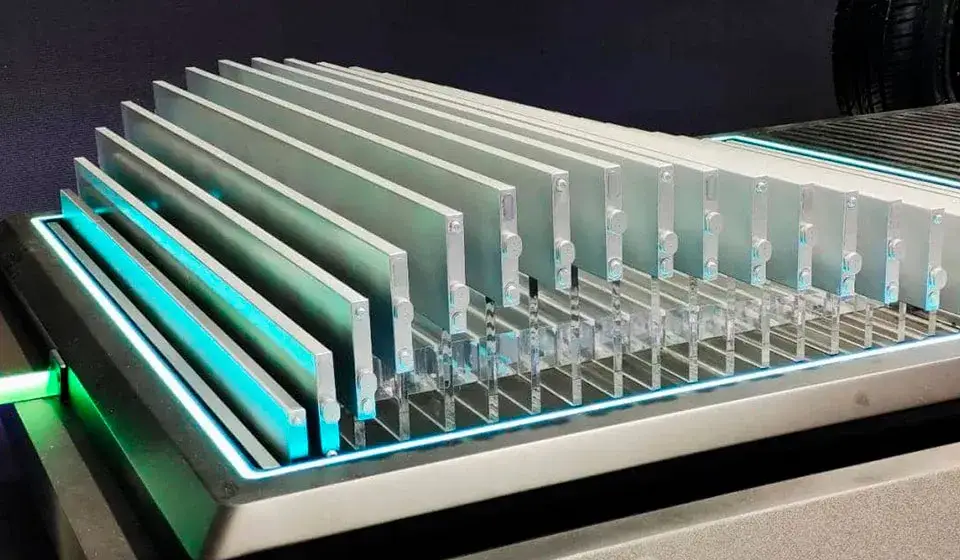
BYD reportedly offers two physical formats of the Blade Battery 2.0, trading cell length for discharge rate versus energy density:
| Format | Reported Length | Charge / Discharge Rate | Design Priority |
|---|---|---|---|
| Short Blade 2.0 | 500–580 mm | 8C charge / 16C discharge | Power delivery, ultra-fast charging |
| Long Blade 2.0 | 960 mm | 3C charge / 8C discharge | Maximum energy density (up to 210 Wh/kg), range |
12. The Broader Ecosystem: Flash Charging & the Super e-Platform
BYD’s fast-charging claims for the Blade Battery 2.0 depend on dedicated infrastructure. The company’s Megawatt Flash Charging network is reported to already include roughly 4,000 stations, with plans for more than 20,000 across China by the end of 2026 and international deployment to follow.
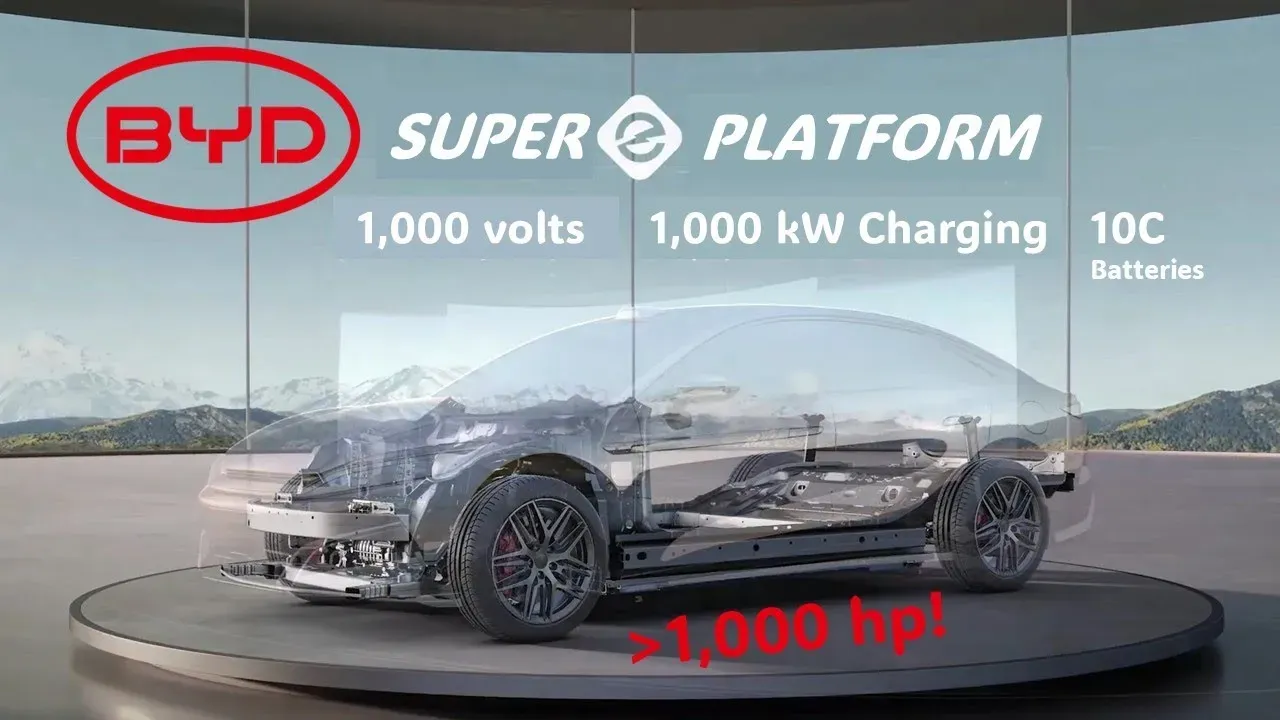
Alongside the cell chemistry, BYD has introduced the Super e-Platform — described as a full-domain 1,000V high-voltage architecture spanning the battery, motor, power electronics, and climate system. It reportedly includes a 30,000 rpm (580 kW) motor and new 1,500V-rated silicon carbide (SiC) power chips, with a top speed exceeding 300 km/h reported for a single-motor configuration. The platform is reportedly launching first in the Han L and Tang L models. This reflects a broader pattern: the Blade Battery 2.0’s real-world performance depends on cell chemistry, vehicle powertrain design, and charging infrastructure being developed together rather than as isolated components.
13. Economic & Sustainability Impact
- Reported avoidance of nickel and cobalt in the core cell chemistry
- Reported lower production carbon footprint versus the prior generation
- High recyclability consistent with LFP/LMFP-family chemistries
- Reduced weight and volume relative to the first-generation Blade Battery
14. Validating Next-Gen Batteries: Testing Solutions From IEST Instrument
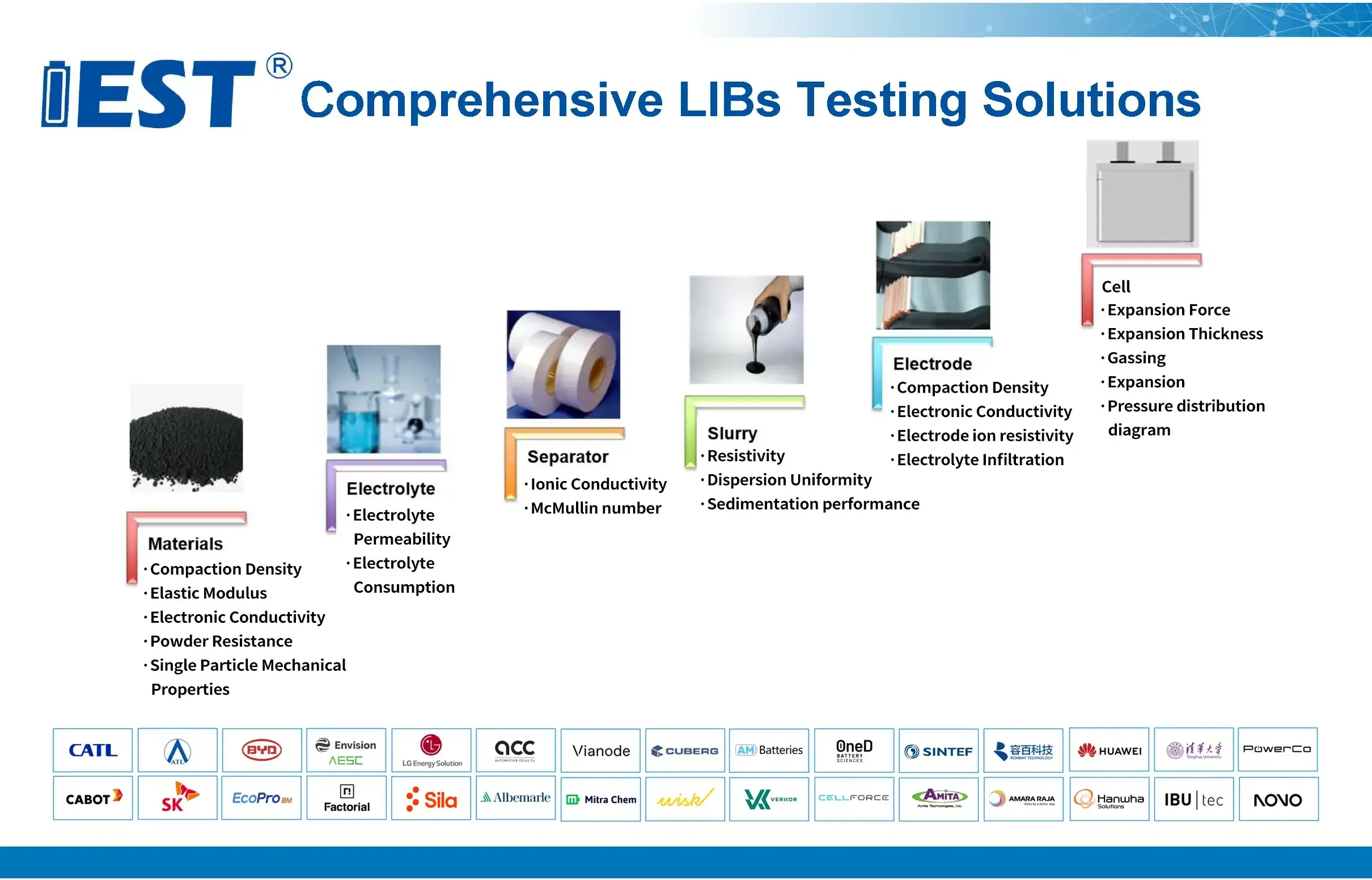
Validating claims of this scale — cathode chemistry shifts, silicon-carbon anode stability, engineered SEI behavior, and ultra-fast charging tolerance — requires high-precision laboratory testing at both the material and cell level. As a testing equipment supplier serving industry leaders including BYD, IEST Instrument provides precision measurement tools relevant to each stage of next-generation LFP/LMFP cell development:
-
Powder Resistivity & Compaction Density Measurement System (PRCD3100)
Advancing energy density in LFP cells requires precise characterization of cathode and anode powders at the material stage. The PRCD3100 measures powder resistivity and compaction density simultaneously under pressures up to 350 MPa, with a resistance range up to 200 MΩ. Freely switchable two-probe and four-probe modes support both R&D formulation screening and batch-to-batch production consistency monitoring for LCO, NCM, LFP, graphite, solid electrolyte powders, and conductive agents. -
Electrode Sheet Resistance Tester (BER2500)
Reducing internal resistance at the electrode level — a key factor in high-rate LFP performance — requires accurate through-thickness resistance data from practical electrode samples. The BER2500 uses a double-sided controllable pressure disc electrode method to directly measure coating resistance, coating–current collector contact resistance, and current collector resistance in a single test. Separate voltage and current terminals eliminate inductive interference, making it suitable for both electrode formulation development and process stability monitoring. -
In-Situ Cell Swelling Testing System (SWE Series)
Understanding mechanical deformation during cycling is critical for validating the structural integrity of blade-format and prismatic LFP cells. The SWE Series measures swelling thickness and expansion force in real time throughout charge–discharge cycles, supporting electrode-level through full-cell testing across coin cell, pouch, prismatic, and short-blade formats. Force ranges span 5 kg to 10,000 kg; temperature control covers −20°C to 80°C. The system also supports non-destructive in-situ lithium plating detection — directly relevant to fast-charging validation at 3C and above. -
In-Situ Battery Gassing Volume Analyzer (GVM2200)
Safety validation for high-energy-density LFP cells requires quantitative data on gas evolution across formation, cycling, overcharge, and storage conditions. The GVM2200 records cell volume changes in situ throughout the full charge–discharge process with 1 µL resolution, simultaneously capturing gassing volume, pressure, and rate at each stage. Multi-channel configurations (up to 8 channels) and temperature control from room temperature to 85°C support both R&D screening and accelerated aging studies.
To discuss testing requirements for LMFP material qualification, silicon-carbon anode characterization, or next-generation cell validation, contact IEST Instrument for a technical consultation.
Characterizing Next-Generation LMFP or Silicon-Carbon Cells?
IEST’s testing platforms cover material-level powder characterization, electrode resistance, in-situ swelling, and gas evolution — the measurement categories needed to validate energy density, cycling stability, and safety claims for advanced LMFP and silicon-carbon anode designs.
15. FAQ on BYD Blade Battery 2.0
When was the BYD Blade Battery 2.0 released?
BYD officially released the Blade Battery 2.0 on March 6, 2026, with integration into flagship vehicle models following shortly after.
What are the key specs of the BYD Blade Battery 2.0 in 2026?
The BYD Blade Battery 2.0 features a significantly improved energy density of 190-210 Wh/kg. It supports 8C ultra-fast charging, allowing EVs to recharge from 10% to 80% in just 10 minutes, and offers a driving range of up to 1,000 km (CLTC) in premium models like the 2025-2026 Han EV.
How fast can the BYD Blade Battery 2.0 charge?
Under BYD’s dedicated Megawatt Flash Charging infrastructure (reported at up to 1,000V/1,500A), the Blade Battery 2.0 has reportedly charged from 10% to 70% SOC in about 5 minutes, and from 10% to 97% SOC in roughly 9 minutes under normal conditions. Actual charging time depends on the charger’s power output, ambient and battery temperature, and the specific vehicle’s charging curve.
For the BYD battery charging method recommendations: Charging Method of BYD Blade Battery
Is the BYD Blade Battery 2.0 available in Europe?
Yes. Following its initial rollout, the BYD Blade Battery 2.0 became available in the European market in mid-2025. It is currently integrated into BYD’s flagship models and is expected to be adopted by other global EV manufacturers soon.
What is the cycle life of the BYD Blade Battery 2.0?
Reported cycle life figures vary by source, ranging from over 3,000 to over 4,000 charge cycles, with one source citing a usable vehicle lifespan of roughly 15 years. Actual cycle life depends on operating conditions such as charging habits, temperature exposure, and depth of discharge.
What safety tests has the Blade Battery 2.0 passed?
Beyond the nail-penetration test used to validate the first-generation Blade Battery, the second-generation platform has reportedly been tested with nail penetration performed after repeated Flash ultra-fast charging cycles (with no thermal runaway after 500 such cycles reported) and with simultaneous short circuits induced across four cells, reaching temperatures above 700°C without fire or explosion.
What is BYD’s Super e-Platform, and how does it relate to the Blade Battery 2.0?
The Super e-Platform is BYD’s full-domain 1,000V high-voltage vehicle architecture, encompassing the battery, motor, power electronics, and climate system, reportedly including a 30,000 rpm (580 kW) motor and 1,500V-rated silicon carbide power chips. It is the vehicle-level infrastructure that enables the Blade Battery 2.0’s fastest-charging performance, and is reportedly launching first in the Han L and Tang L models.
What is the real-world driving range of the BYD Blade Battery 2.0?
Reported real-world range results include 1,036 km for the Denza Z9GT and 1,006 km for the Yangwang U7 on a single charge, while other sources cite up to 1,008 km CLTC for the long-range Han EV configuration. Exact range depends on the specific vehicle, battery variant (short vs. long blade), and driving conditions.