-
iestinstrument

1. Introduction
As the new energy market expands and application scenarios diversify, sodium‑ion batteries have attracted considerable attention due to the abundant sodium resources and low material cost. They show strong potential in large‑scale energy storage, low‑speed electric vehicles, and two‑wheeled mobility. With the maturing industrial chain and gradual capacity release, sodium‑ion batteries are expected to play a key role in cost reduction and efficiency improvement within the energy sector. Driven by the pursuit of higher energy density, layered oxide cathode materials stand out for their high specific capacity, well‑established synthesis routes, and excellent processability. They are widely regarded as one of the most promising technology pathways for near‑term industrialization.
However, unlike their lithium‑ion counterparts, sodium layered oxide cathodes face a critical challenge: air instability. In 2024, a collaborative study by the Institute of Physics, Chinese Academy of Sciences, and Yanshan University, published in Science, revealed the failure mechanisms of sodium layered oxide cathodes in air, identifying acid degradation and oxidative degradation as two primary pathways, with water serving as the key mediator between them. Because of their high sensitivity to ambient atmosphere, these layered oxides can undergo structural degradation within hours of air exposure, leading to capacity loss, difficulties in electrode fabrication, and deteriorated electrochemical performance—issues that seriously hinder practical application and industrial adoption.
To accelerate the industrialization of layered oxide cathodes for sodium‑ion batteries, IEST Instrument has developed a suite of characterization solutions that enable rapid, quantitative assessment of air‑induced degradation across multiple scales, from powder to electrode sheet.
2. Experimental Section
2.1 Sample Preparation
Equal amounts of NaNi₁/₃Fe₁/₃Mn₁/₃O₂ (NFM111) were stored under two different conditions:
-
In an argon‑filled glovebox (H₂O < 0.01 ppm, O₂ < 0.01 ppm) for 48 h (sample designated NFM111).
-
In a temperature‑ and humidity‑controlled chamber at 30 °C and 80% relative humidity (RH) for 48 h, followed by drying at 100 °C for 6 h in a vacuum oven (sample designated NFM111‑air).
2.2 Instrumentation
2.2.1 Structural and Morphological Characterization
-
X‑ray diffraction (XRD)
-
Scanning electron microscopy (SEM)
2.2.2 Powder Resistivity Measurement
-
IEST PRCD Powder Resistivity & Compaction Density Tester (Figure 1a). Sample mass: 0.6 g. Test mode: variable‑pressure, ranging from 20 MPa to 220 MPa in 20 MPa steps, with a 10 s hold at each step.
2.2.3 Electrode Sheet Resistivity Measurement
-
IEST BER2500 Electrode Resistance Tester (Figure 1b). Test mode: constant pressure at 25 MPa with a 10 s hold.
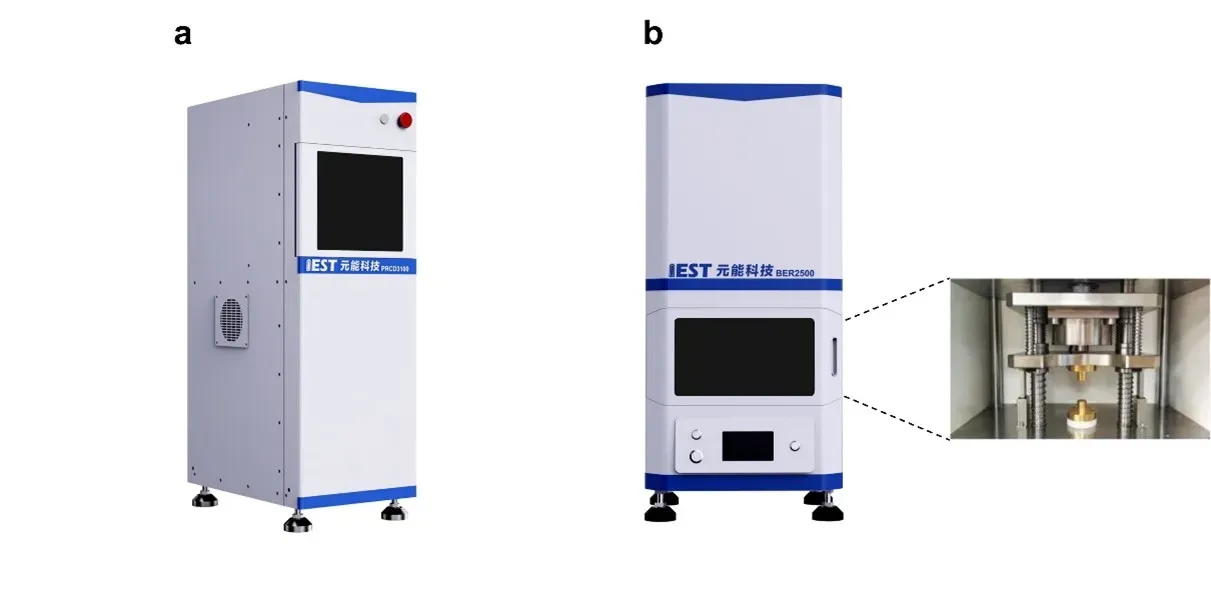
Figure 1. (a) PRCD3100 powder resistivity & compaction density tester; (b) BER2500 electrode resistance tester with internal structure diagram.
3. Results and Discussion
3.1 Structural and Morphological Evolution
XRD patterns (Figure 2a) show that the glovebox‑stored NFM111 exhibits a well‑defined O3‑type layered structure. After air exposure, however, the layered crystal structure of NFM111‑air completely collapsed. SEM images (Figure 2b) reveal that storage at 80% RH caused residual alkali formation on the particle surfaces, micro‑cracking of secondary particles, and in some cases complete disintegration of secondary particles. These observations align with the acid degradation mechanism: Na⁺/H⁺ exchange and local H⁺ accumulation generate internal stresses, which in turn induce interlayer cracking and dislocations. Such defects propagate through the secondary particle, ultimately leading to particle fragmentation.
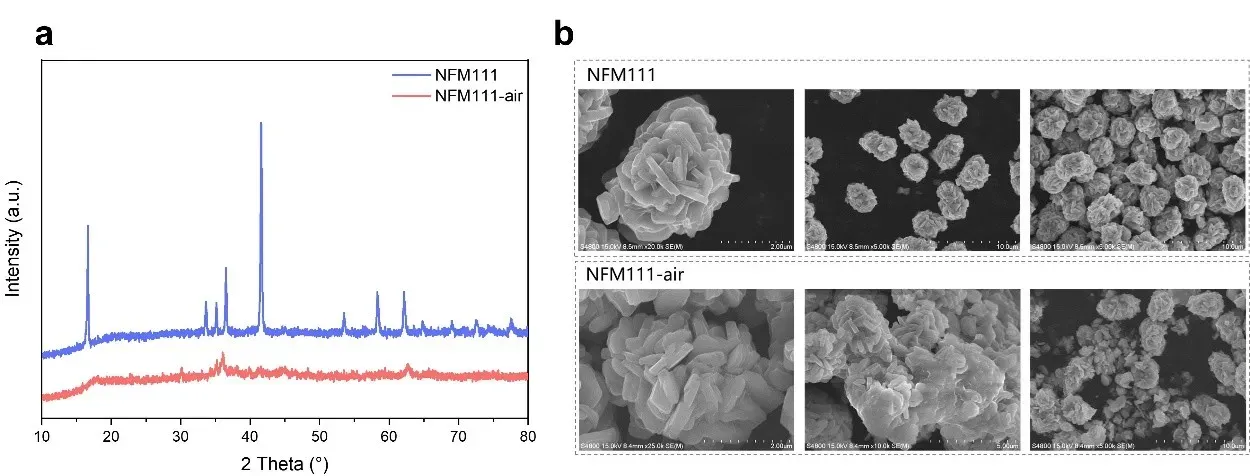
Figure 2. XRD patterns (a) and SEM images (b) of samples before and after air exposure.
3.2 Powder Resistivity Changes
Powder resistivity measurements on NFM111 and NFM111‑air reveal that for both materials, resistivity decreases with increasing applied pressure—a result of improved particle‑to‑particle contact and enhanced electronic conductivity.
Strikingly, after air exposure, the resistivity of NFM111‑air is two to three orders of magnitude higher than that of the glovebox‑stored NFM111 (Figure 3). This dramatic increase stems from the formation of electronically insulating surface residues—Na₂CO₃, NaHCO₃, and NaOH—upon reaction with H₂O, CO₂, and O₂ in the ambient atmosphere. These findings underscore how storage conditions critically affect the intrinsic properties of layered oxide raw materials. By employing the IEST PRCD powder resistivity & compaction density tester, manufacturers can rapidly screen incoming materials and determine their suitability for downstream processing.
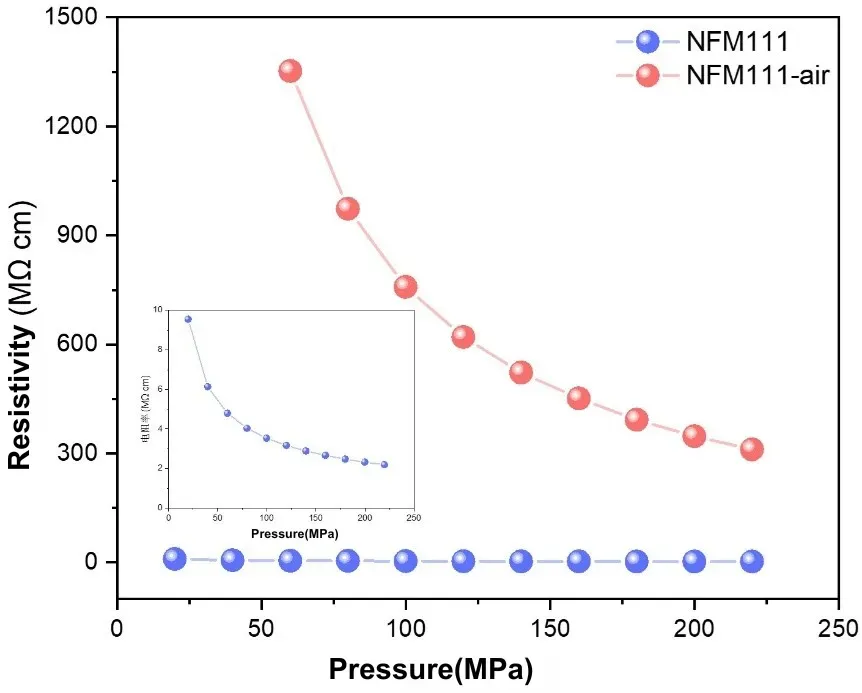
Figure 3. Powder resistivity of NFM111 before and after air exposure.
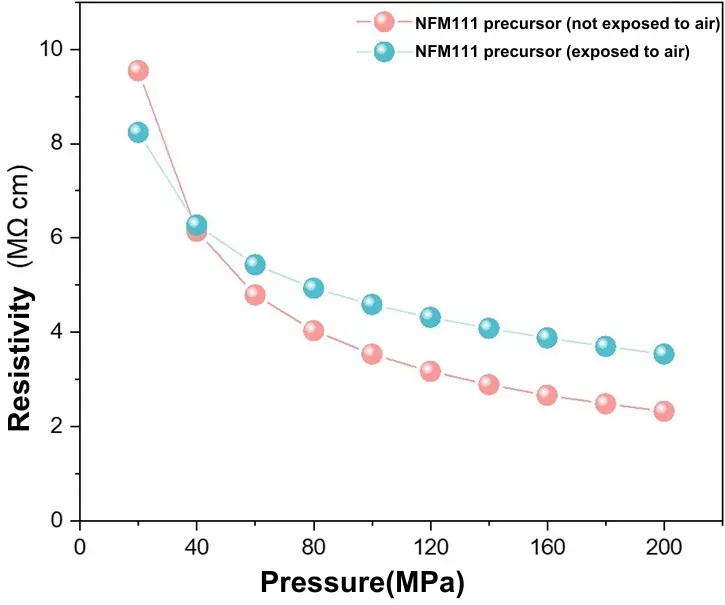
Figure 4. Powder resistivity of NFM111 derived from fresh vs. air‑exposed precursor.
3.3 Electrode Sheet Resistivity
At the electrode level, air exposure not only affects the intrinsic properties of the active material but also compromises electronic contacts among the various components. For air‑sensitive samples, prolonged exposure can increase electrode resistance and degrade electrochemical performance.
Using the IEST BER series electrode resistance tester, we directly measured the resistivity of electrodes fabricated from NFM111 and NFM111‑air. The active materials were mixed with binder, conductive carbon, and NMP, coated onto aluminum foil, dried, and calendered under identical conditions.
Although the incorporation of conductive carbon substantially reduced electrode resistivity compared to the raw powder values, the electrode made from air‑exposed NFM111‑air still showed higher resistivity than the electrode from pristine NFM111 (Figure 5). Importantly, the trend in electrode resistivity mirrors that of the powder resistivity, confirming the consistency of the degradation across scales.
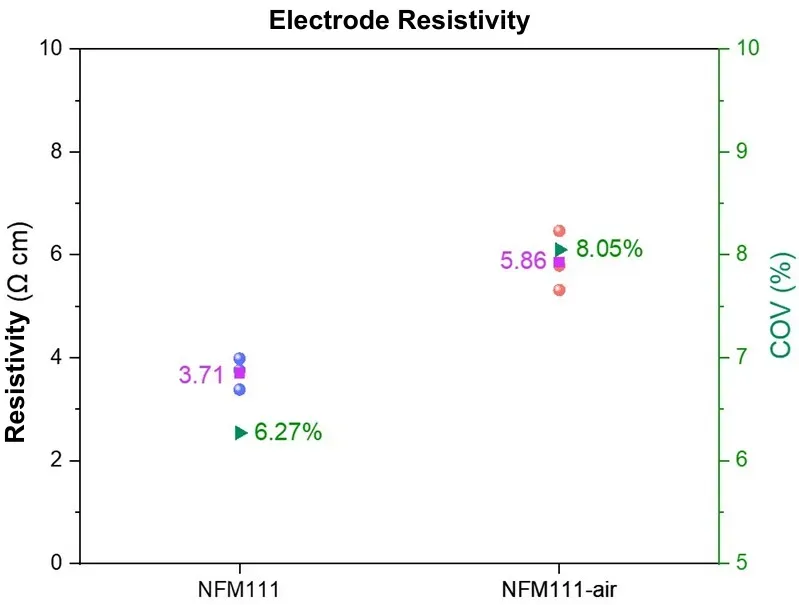
Figure 5. Resistivity of electrodes prepared from NFM111 and NFM111‑air.
3.4 Electrochemical Performance
To correlate the observed material degradation with practical performance, half‑cells were assembled using electrodes from both NFM111 and NFM111‑air. After 48 h of storage at 80% RH, the material suffered irreversible loss of initial specific capacity (Figure 6). The electrochemical decay directly corresponds to the structural and electronic degradation documented in the earlier powder and electrode resistivity measurements.
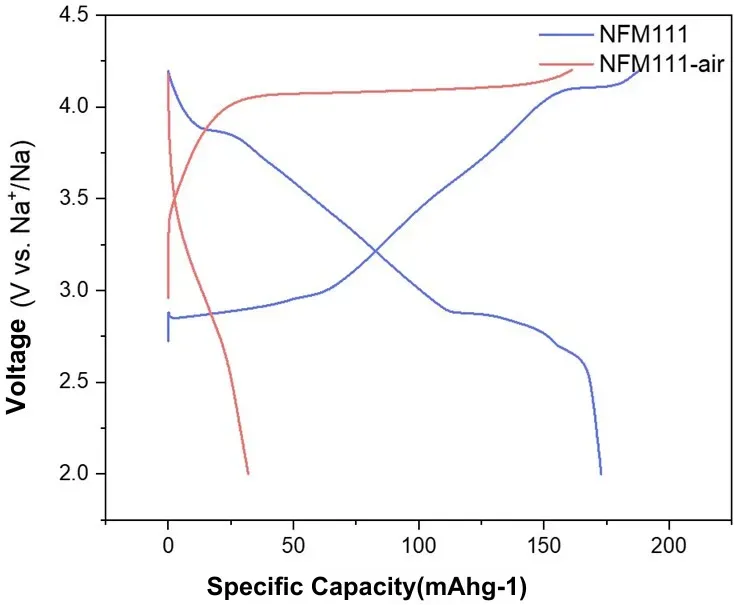
Figure 6. First‑cycle charge/discharge curves of half‑cells assembled from NFM111 and NFM111‑air.
4. Summary
This study systematically investigates the correlation between air‑induced degradation and resistivity evolution in sodium layered oxide cathodes using the IEST PRCD powder resistivity & compaction density tester and the BER2500 electrode resistance tester. The results demonstrate that powder resistivity measurement and electrode sheet resistance testing together provide a rapid, quantitative approach for assessing the air stability of layered oxide cathode materials.
Such characterization capabilities offer a valuable tool for upstream material quality control in the sodium‑ion battery supply chain. By enabling early detection of air‑sensitive batches, manufacturers can mitigate production risks and avoid performance losses that would otherwise propagate through downstream cell fabrication and final application.
5. References
[1] Yang, Y., Wang, Z., Du, C., et al. Decoupling the air sensitivity of Na‑layered oxides. Science, 2024, 385, 744–752. DOI: 10.1126/science.adm9223
[2] Yuan, X., Guo, Y., Gan, L., et al. A Universal Strategy toward Air‑Stable and High‑Rate O3 Layered Oxide Cathodes for Na‑Ion Batteries. Adv. Funct. Mater., 2022, 32, 2111466. DOI: 10.1002/adfm.202111466
[3] Zhang, R., Yang, S., Li, H., Zhai, T., Li, H. Air sensitivity of electrode materials in Li/Na ion batteries: Issues and strategies. InfoMat, 2022, 4, e12305. DOI: 10.1002/inf2.12305