Abstract Volume expansion during rest directly reflects internal polarization and lithium concentration gradients built up during charge or discharge — cells resting after a low-rate cycle show minimal volume change,...
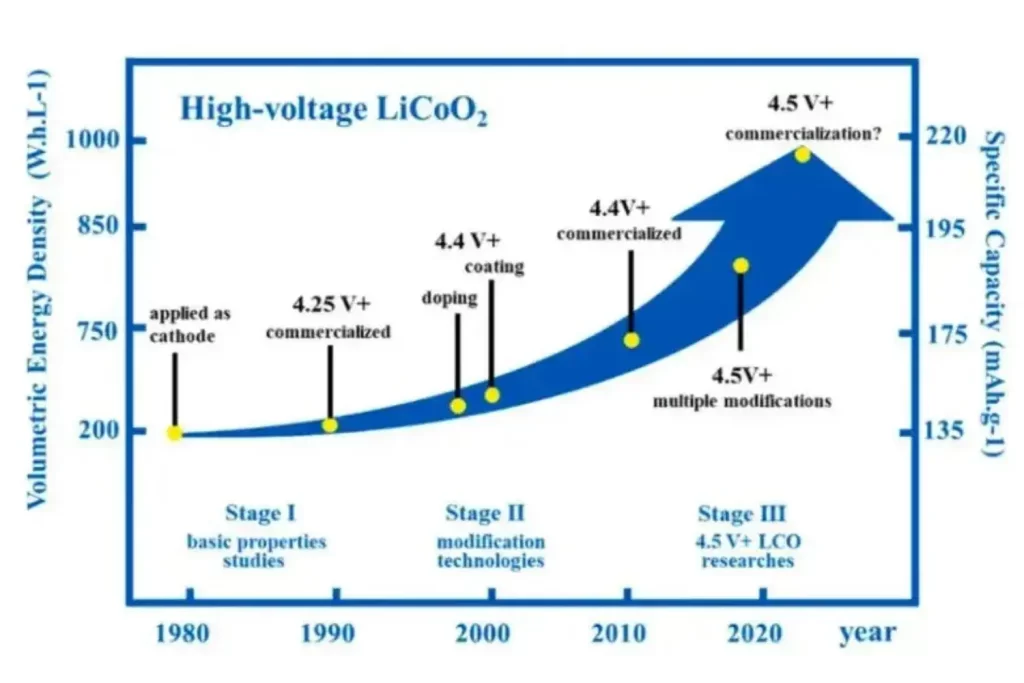
1. Preface When lithium-ion battery is overcharged, too many lithium ions take out out of the cathode material, and the voltage and temperature of the battery rise rapidly, releasing a...
Abstract Calendering pressure is the primary process lever for controlling graphite anode electrode compaction density and through-thickness electrical resistivity in lithium-ion battery manufacturing. In this study, four graphite electrode batches...
1. Abstract This article translates and adapts a practical decomposition method that quantifies those contributions by measuring total resistance across samples of varying coating thickness. The method uses linear fitting...
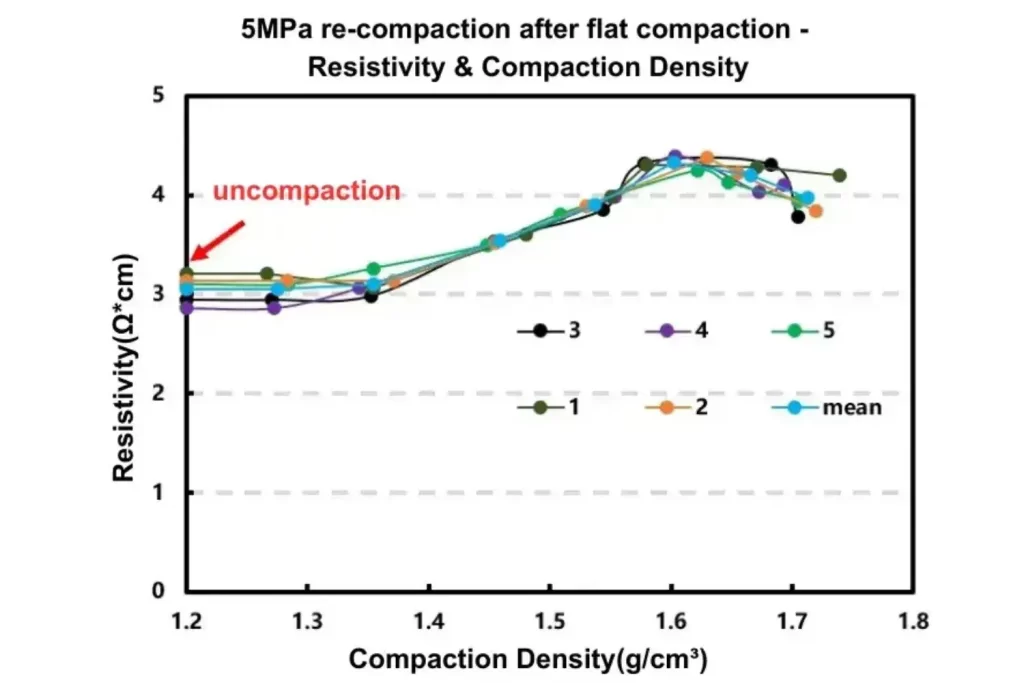
1. Preface This paper compares the effects of flat-compaction and roller pressing on the compaction density and resistivity of the graphite electrode to provide reference data for battery designers. Battery...
1. Background Lithium-ion battery raw materials mainly include cathode materials, cathode materials, fluid collection, electrolyte and diaphragm. Positive and negative electrode materials are usually micron-grade powder materials, among which the...
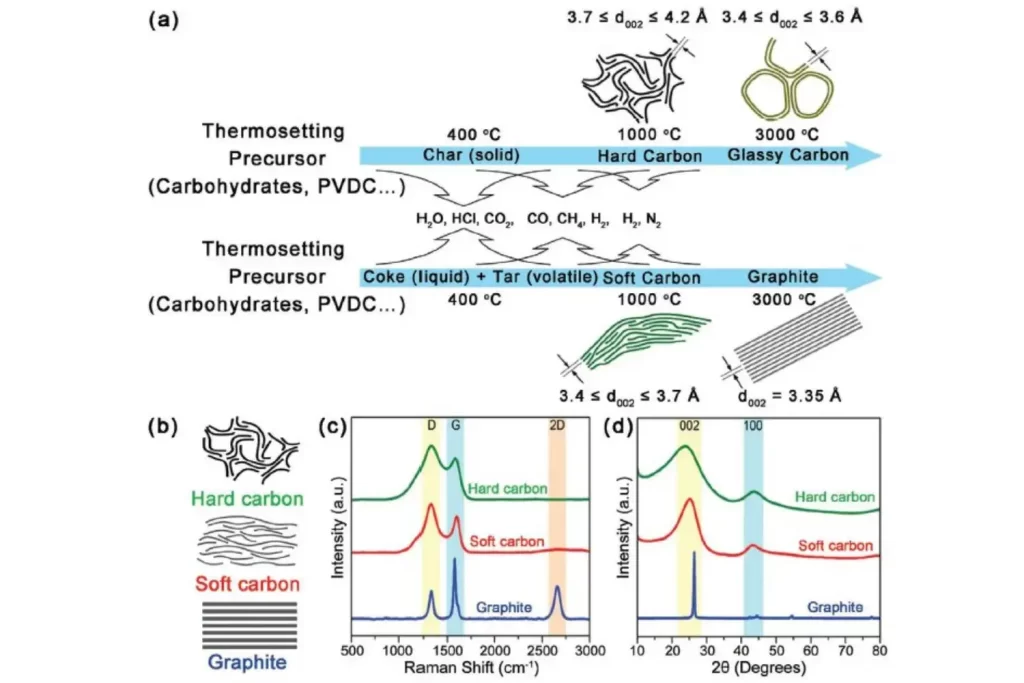
Abstract Hard carbon vs graphite comparison across electrical conductivity, compaction density, and thickness rebound reveals a clear material division: graphite compaction density approaches 2.3 g/cm³ at high pressures with substantially higher electrical conductivity,...
Abstract The dry electrode process — a solvent-free manufacturing route that compresses active material, conductive additive, and PTFE binder directly onto a current collector without NMP coating and drying —...
Abstract EV battery cell swelling compensation design depends on understanding how swelling behaves differently in thickness versus force as cells are stacked into modules. This study’s key findings, using the...
Abstract LMFP (lithium manganese iron phosphate) cathode charges to 4.1 V — 400 mV higher than LFP’s 3.7 V average discharge voltage — delivering 15–20% higher theoretical energy density than LFP...
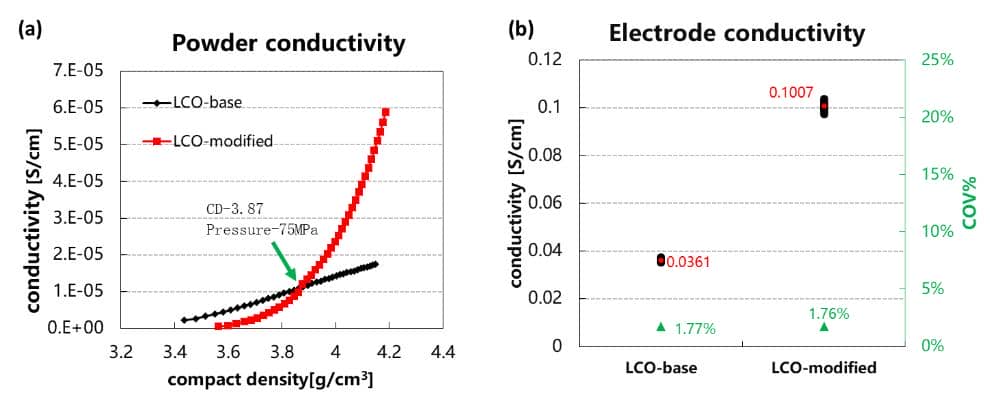
Abstract Cathode powder battery testing using a controlled-pressure powder resistance measurement can predict a cathode material’s finished electrode resistance before slurry mixing and coating, because when the powder is compacted to a pressure...