-
iestinstrument

Abstract
1. Introduction: The “Hidden Ceiling” of Fast Charging
In the rapidly evolving field of lithium-ion batteries, direct current resistance (DCR) serves as a fundamental metric that governs charge/discharge rate capability, cycle life, and safety. Pouch cells, prized for their high energy density and lightweight construction, dominate applications ranging from electric vehicles to energy storage systems. However, the overall DCR of a cell is not a single lumped value; it is the sum of contributions from various internal components. Understanding the distribution and origin of these resistances is key to unlocking superior fast-charging performance and thermal management.
According to Joule’s law, heat generated during charging is proportional to the square of the current multiplied by resistance (\(Q = I^2 R t\)). Achieving ultra-fast charging therefore demands high currents, which in turn necessitates minimal resistance to control heat and maintain efficiency. Optimizing DCR effectively expands the power envelope of a battery.
This article presents a teardown analysis of a 2 Ah pouch cell, quantifying the contribution of each internal component to the total DCR. By isolating and measuring the resistance of the cathode, anode, separator, current collectors, and welds, we identify the dominant factors limiting performance and suggest directions for improvement.
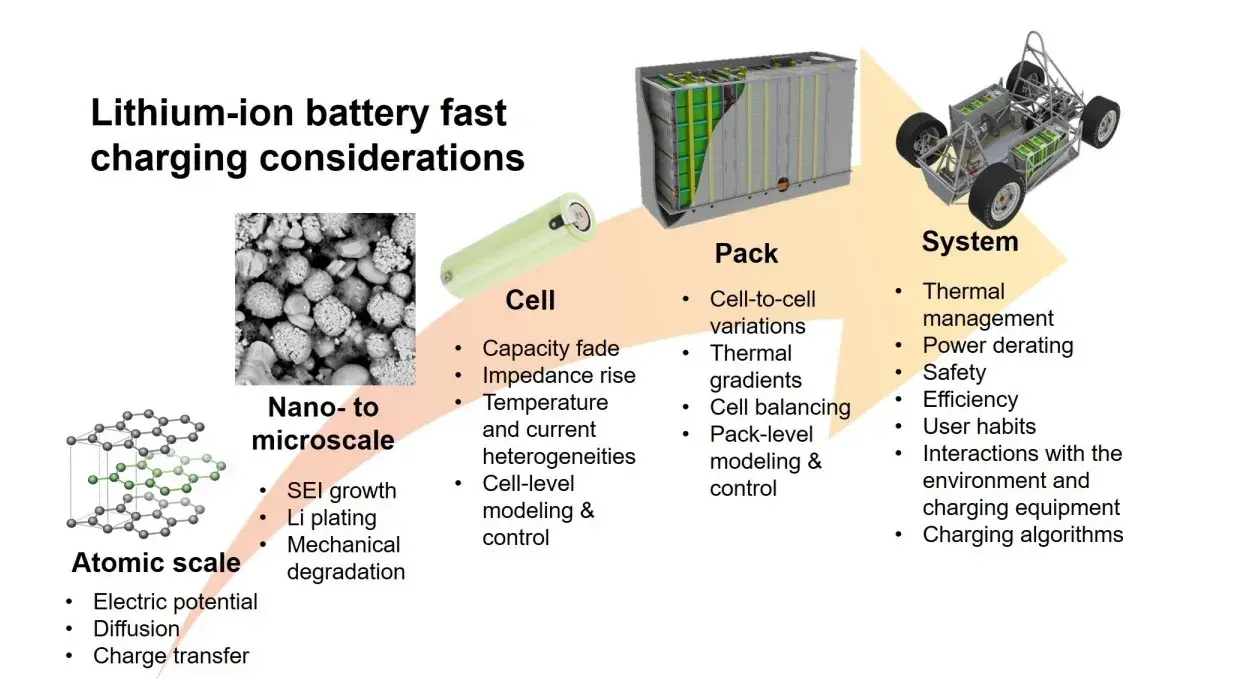
Figure 1. Factors affecting fast charging of lithium-ion batteries at different levels[1]
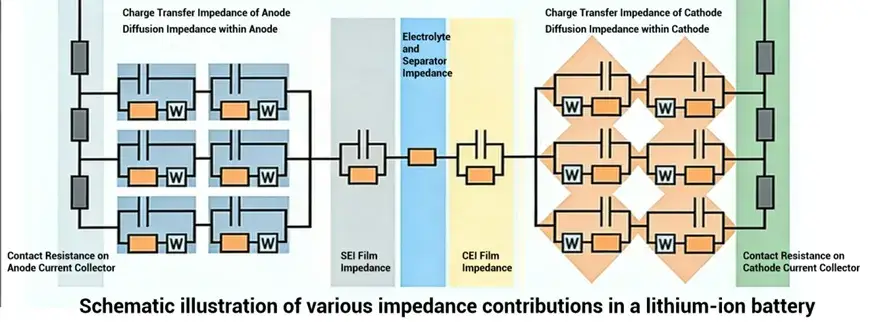
Figure 2. Schematic illustration of internal impedance and DCR components in a battery cell
2. Experimental Methodology
Our team conducted a comprehensive teardown of a 2 Ah pouch cell, alongside its corresponding separator and current collectors. The objective was to isolate and measure the contribution of each component to the total cell DCR. All samples were extracted from a pristine cell to ensure representative conditions.
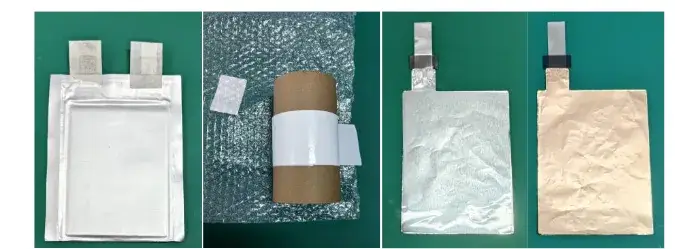
Figure 3. Pouch cell sample and components used for Direct Current Resistance (DCR) teardown analysis.
3. Testing Workflow
The workflow for dissecting the cell’s DCR followed a systematic sequence:
-
Cell disassembly – carefully opening the pouch under inert atmosphere to avoid contamination.
-
Electrode resistance measurement – using a four‑point probe or controlled‑pressure method on both cathode and anode sheets.
-
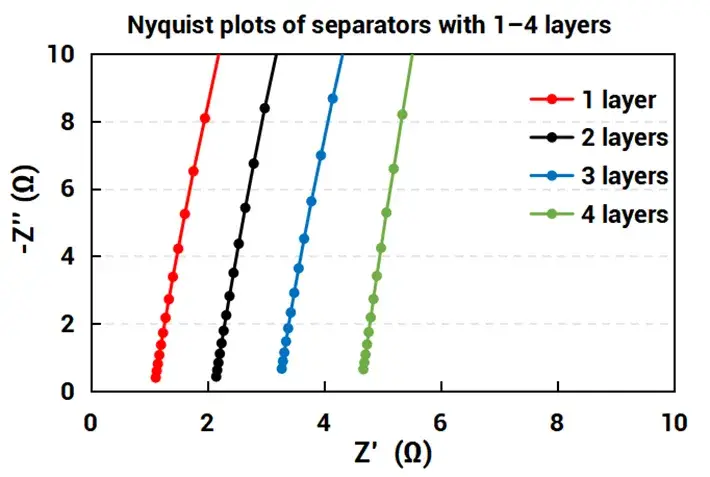
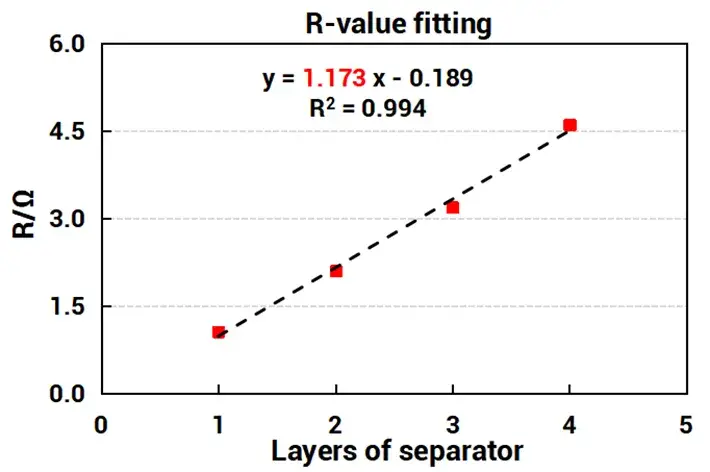
Separator ionic resistance measurement – employing electrochemical impedance spectroscopy (EIS) with blocking electrodes.
-
Current collector contact resistance – measuring the resistance of welded tabs and foil‑to‑tab joints.
-
Data analysis – combining individual measurements to reconstruct the full DCR budget.
In this workflow, separator ionic resistance measurement is performed on the EIC Series tester, while electrode and current collector resistance measurements — along with full-cell DCR verification — are carried out on the ERT Series battery cycler, giving each step in the DCR cell testing sequence a defined instrument and measurement method.

Figure 4. Experimental workflow for quantifying DCR in pouch cell components
4. Quantifying Direct Current Resistance (DCR) Distribution
We use high-precision instruments, such as the IEST Electrode Tortuosity Tester & Separator Ion Conductivity Tester (EIC Series) and IEST Battery Cycle Tester Electrochemical Property Analyzer (ERT Series), to ensure 0.01% measurement accuracy. The resulting data reveals a clear hierarchy of impedance contributors:
| Impedance Component | Percentage of Total DCR | Resistance Value (mΩ) |
|---|---|---|
| Cathode Impedance | 41.22% | 20.73 |
| Anode Impedance | 35.82% | 18.01 |
| Copper (Cu) Collector Resistance | 9.55% | 4.11 |
| Aluminum (Al) Collector Resistance | 8.16% | 4.80 |
| Separator Ionic Resistance | 5.23% | 2.63 |
| Welding Impedance | 0.02% | 0.012 |

Figure 5. Pie chart of DCR distribution in pouch cells — cathode, anode, and separator
5. Results and Discussion
5.1 Cathode and Anode Impedance: The Dominant Factor
Together, the cathode and anode account for 77% of the total DCR. This portion largely determines the cell’s rate capability. Within the electrode impedance, three underlying mechanisms can be distinguished:
-
Charge‑transfer resistance – the barrier to lithium‑ion transfer across the electrode/electrolyte interface. It is the primary component and directly reflects the kinetics of the electrochemical reaction.
-
Diffusion (Warburg) impedance – the resistance associated with lithium‑ion transport inside the active material particles. A high diffusion resistance slows down charge/discharge, especially at high rates.
-
SEI layer resistance – for the anode, the solid‑electrolyte interphase contributes an additional impedance. A stable, thin SEI keeps this resistance low and prolongs cycle life.
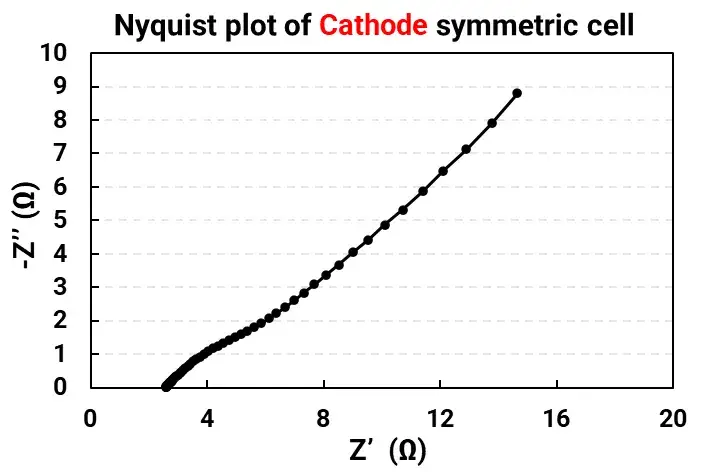
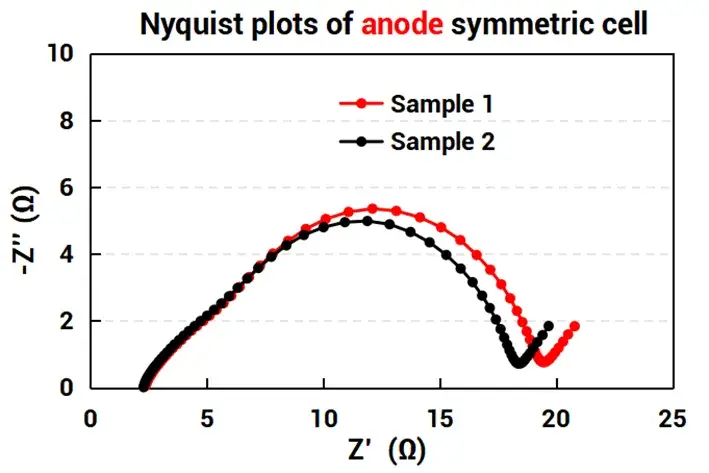
Figure 6. Nyquist plots for cathode and anode symmetric cells to analyze DCR kinetics
5.2 Current Collector Resistance & Tab Construction: The Electronic Highway
The current collectors (copper for anode, aluminum for cathode) together contribute nearly 18% of the total DCR. This resistance arises from the bulk foil resistivity and the contact resistance between the foil and the electrode coating, as well as the welded tab connections. Foil thickness, width, and tab design all influence this contribution.
In a typical pouch cell tab construction, the anode and cathode each connect to their respective external terminal through one or more welded tabs — some multi-tab or four-electrode-tab designs use dual tabs per electrode polarity to reduce current density and localized heating at the weld joint. Because the current collectors carry the entire electronic current, any excessive resistance in the foil or tab construction can lead to localized heating and act as a safety risk under high-rate operation, which is why tab design and weld quality are evaluated alongside bulk foil resistivity in a full DCR teardown.
5.3 Separator Ionic Resistance: The Liquid-Phase Pathway
The separator contributes about 5.2% of the DCR. This is the resistance experienced by lithium ions migrating through the electrolyte-filled pores of the lithium battery separator. It depends critically on the separator’s porosity, pore size distribution, thickness, and the degree of electrolyte wetting. A well-designed separator with high ionic conductivity is essential for achieving high power density.
6. Summary and Outlook
By physically deconstructing a pouch cell and measuring each component’s contribution to the overall DCR, we have quantified where the major resistances lie. The electrodes themselves are responsible for more than three-quarters of the total impedance, making them the primary target for improvement through material engineering (e.g., particle size optimisation, conductive additives, coating design). The current collectors and separator, while smaller contributors, are still significant — especially in high-power applications. Reducing their resistance through thicker foils, better tab welding, or advanced separator coatings can yield tangible gains in rate capability and thermal behaviour.
This teardown approach provides a clear, evidence-based roadmap for developers seeking to enhance pouch cell performance for next-generation electric vehicles and energy storage systems.
8.1 What is Direct Current Resistance (DCR), and how does it impact battery fast charging?
Direct Current Resistance is a core metric used to measure a battery’s internal losses and power performance. According to Joule’s Law, the heat generated during charging is proportional to the resistance; during fast charging, the massive current involved generates significant heat due to DCR. Consequently, maintaining a low DCR is a critical prerequisite for controlling thermal runaway risks and improving both charging speed and energy efficiency.
8.2 How to measure DCR in pouch cells?
DCR in pouch cells is measured by physically disassembling the cell and quantifying the resistance of each internal component separately. The procedure includes: (1) careful cell disassembly under inert atmosphere; (2) measuring cathode and anode sheet resistance using four-point probe or controlled-pressure methods; (3) evaluating separator ionic resistance via electrochemical impedance spectroscopy (EIS) with blocking electrodes on an EIC-series tester; (4) measuring current collector and tab welding resistance on an ERT-series battery cycler; and (5) combining these values to reconstruct the total DCR.
8.3 What are the limiting factors for fast charging in lithium‑ion batteries?
Fast charging is fundamentally limited by the battery’s internal resistance. According to Joule’s law (I²R), high resistance generates excessive heat during high-current charging, raising the risk of thermal runaway. The dominant limiting factor is electrode impedance (especially charge transfer and diffusion resistances), which accounts for about 77% of the total DCR. Current collector resistance (~18%) and separator ionic resistance (~5%) also play roles, particularly at very high rates.
8.4 What does a pouch cell teardown impedance study reveal?
A teardown impedance study involves physically opening a pouch cell and measuring the resistance of its individual components. This approach reveals the exact distribution of the total DCR: which parts contribute the most and which are negligible. A study on a 2 Ah cell showed that cathode and anode are responsible for over three-quarters of the resistance, while current collectors and separator account for most of the remainder — a data-driven roadmap for targeted improvements.
8.5 Separator resistance vs electrode resistance: how do they compare?
In a typical pouch cell, separator ionic resistance is much smaller than electrode resistance. Measurements show the separator contributes about 5.2% of the total DCR, whereas the combined cathode and anode impedance accounts for 77%. Separator resistance arises from the tortuous path lithium ions must take through electrolyte‑filled pores and depends on porosity, pore size, thickness, and wetting. Electrode resistance, on the other hand, is governed by charge transfer kinetics, solid‑state diffusion, and interfacial layers (SEI). While the separator is not the dominant factor, its contribution becomes more significant in high‑power designs, making separator optimisation still worthwhile.
8.6 What is the difference between DCR and DCIR?
DCR (Direct Current Resistance) and DCIR (Direct Current Internal Resistance) refer to the same measured quantity — the total internal resistance of a battery cell under a step or pulse DC current — and the two terms are used interchangeably across datasheets, test standards, and literature. Both are distinct from AC impedance (ACIR/EIS), which is measured using an alternating current signal and can separate resistance into frequency-dependent components rather than a single DC value.