Description
1. Introduction
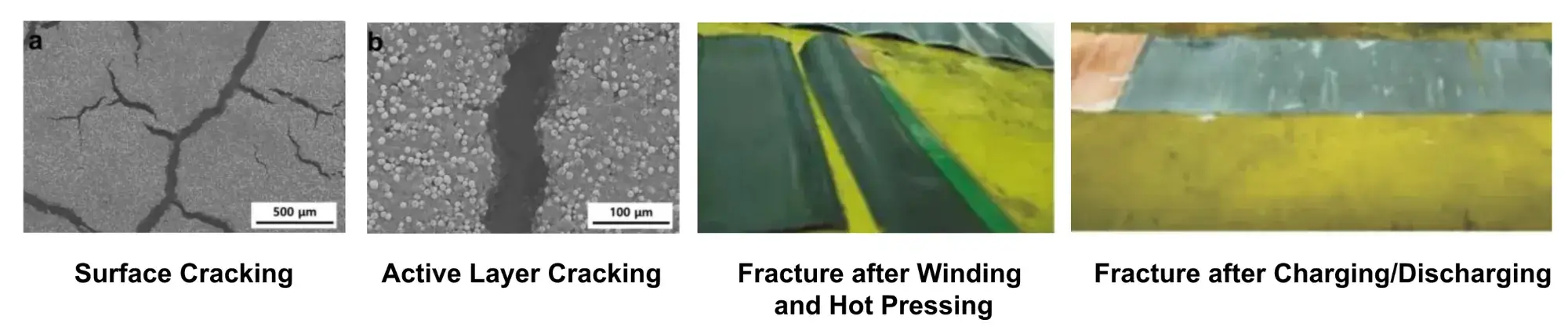
The of lithium-ion battery electrode flexibility is a crucial parameter in the battery manufacturing process. During the winding process, if the electrodes have poor flexibility, the innermost layers of the wound core are prone to fracture. This can generate particles, burrs, and sharp edges on the electrodes, leading to cell performance degradation and posing safety risks such as internal short circuits. Therefore, monitoring electrode flexibility is particularly important.
2. Battery Electrode Flexibility Testing System
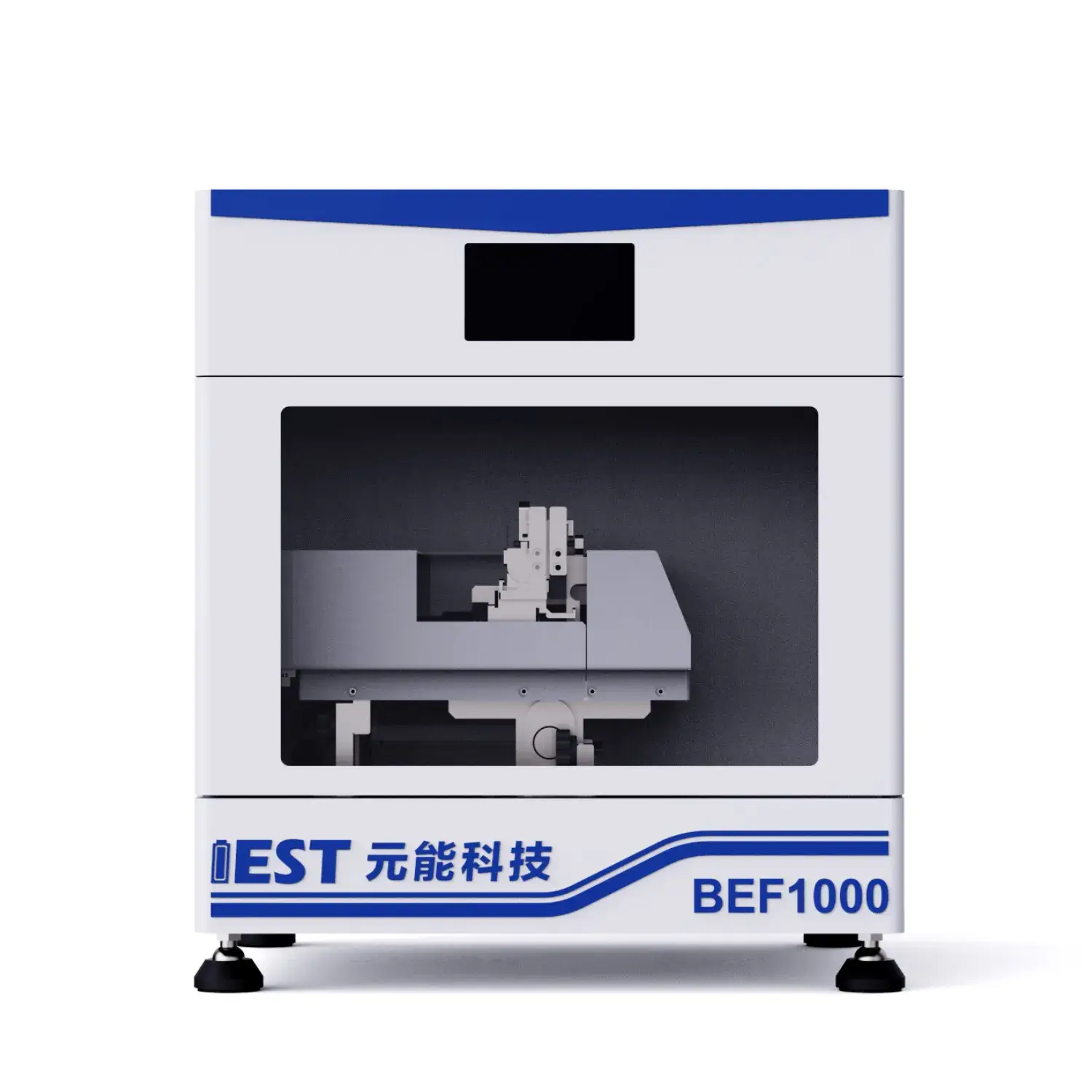
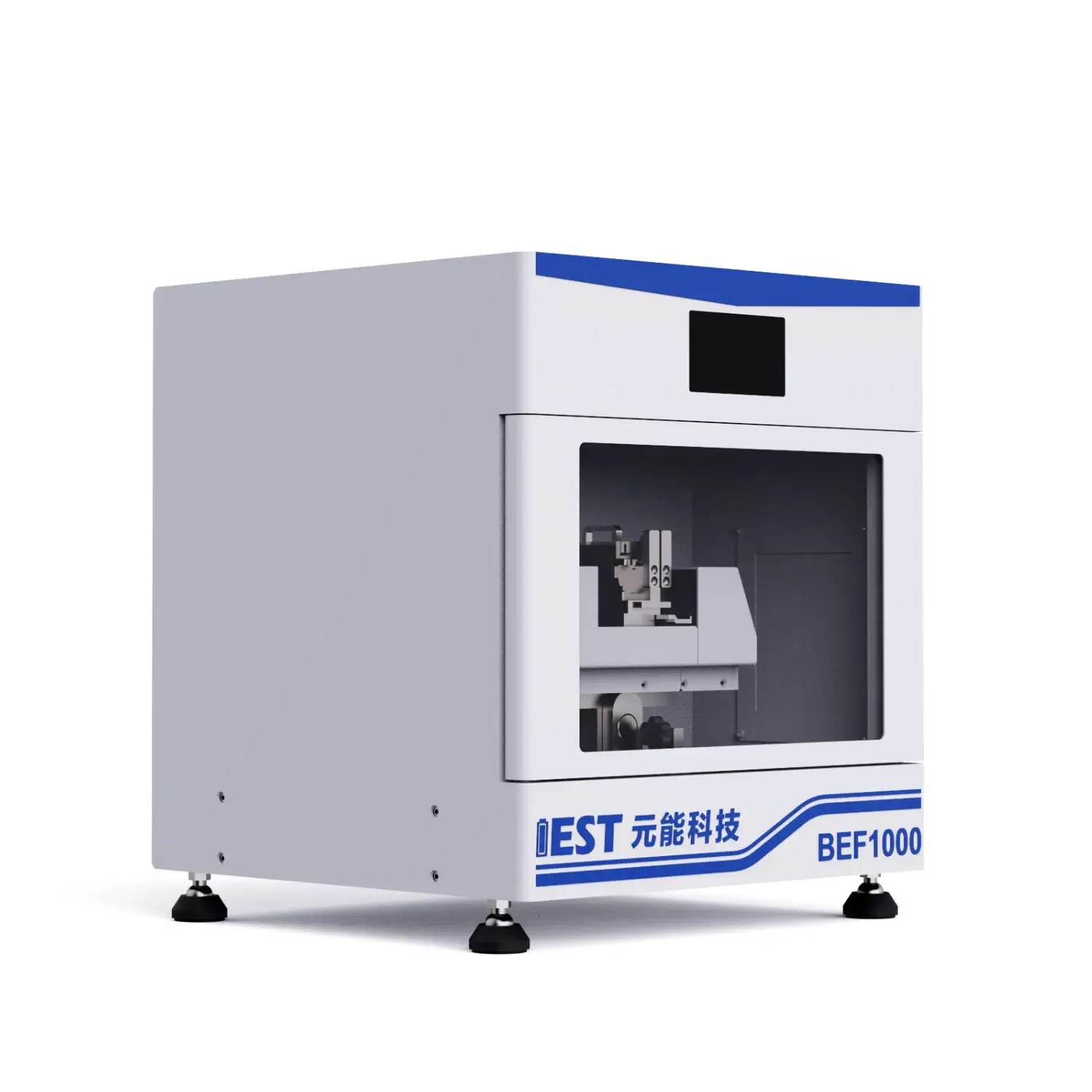
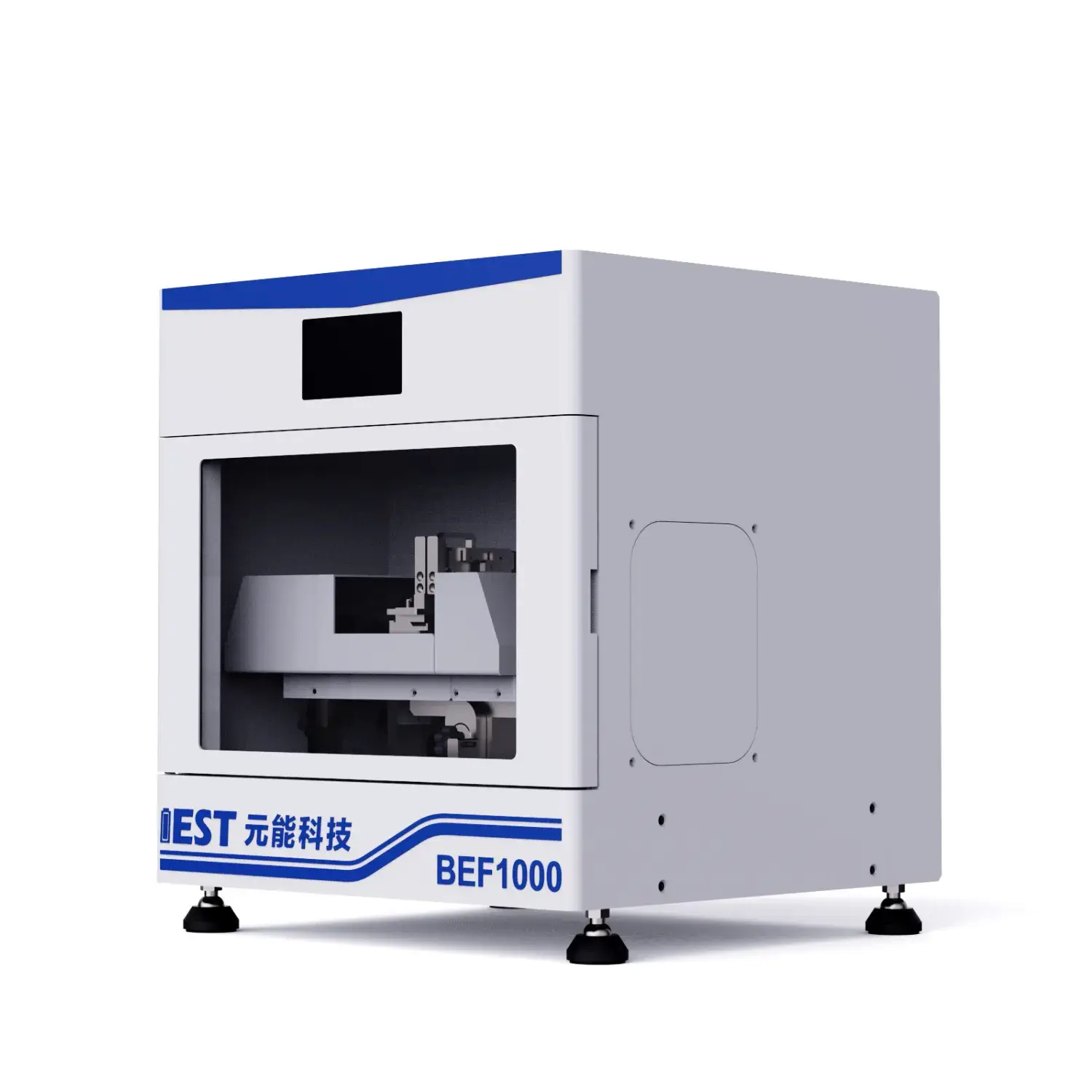
The Battery Electrode Flexibility Testing System(BEF1000) adopts the fundamental testingmethod for electrode stress-strain curves: after bending the electrode at a specificangle and mounting it on the testing device, displacement is applied to induce defor-mation, and the stress and strain (stress-displacement relationship) of the electrodeunder different deformation degrees are measured to evaluate its flexibility.
3. Innovation Solutions
- Enhance battery performance and consistency
- Optimize manufacturing processes, improving production efficiency and first-pass yield
- Ensure battery safety and reliability
- Support the R&D of new materials and processes
- Meet industry standards and market demands
Systematic flexibility testing enables comprehensive optimization of electrode sheet performance, driving advancements in battery technology and providing crucial support for the growth of the new energy industry.
4. Applications
5. Equipment Functions
- Cyclic Testing: Enables single-pressure application or multiple reciprocating tests.
- Inspection: Equipped with third-party calibrated standard thickness blocks and weights for regular equipment spot checks.
- Precise displacement control combined with high-precision pressure sensors.
- Real-time recording and visualization of displacement-pressure curves.
- Test mechanism rotates 90° to support flexible orientation setups.
- Supports both horizontal pressing and vertical pressing testing scenarios.
- Ensures consistent electrode clamping and prevents twisting damage.
- Facilitates convenient, fast, and safe operation for testing personnel.
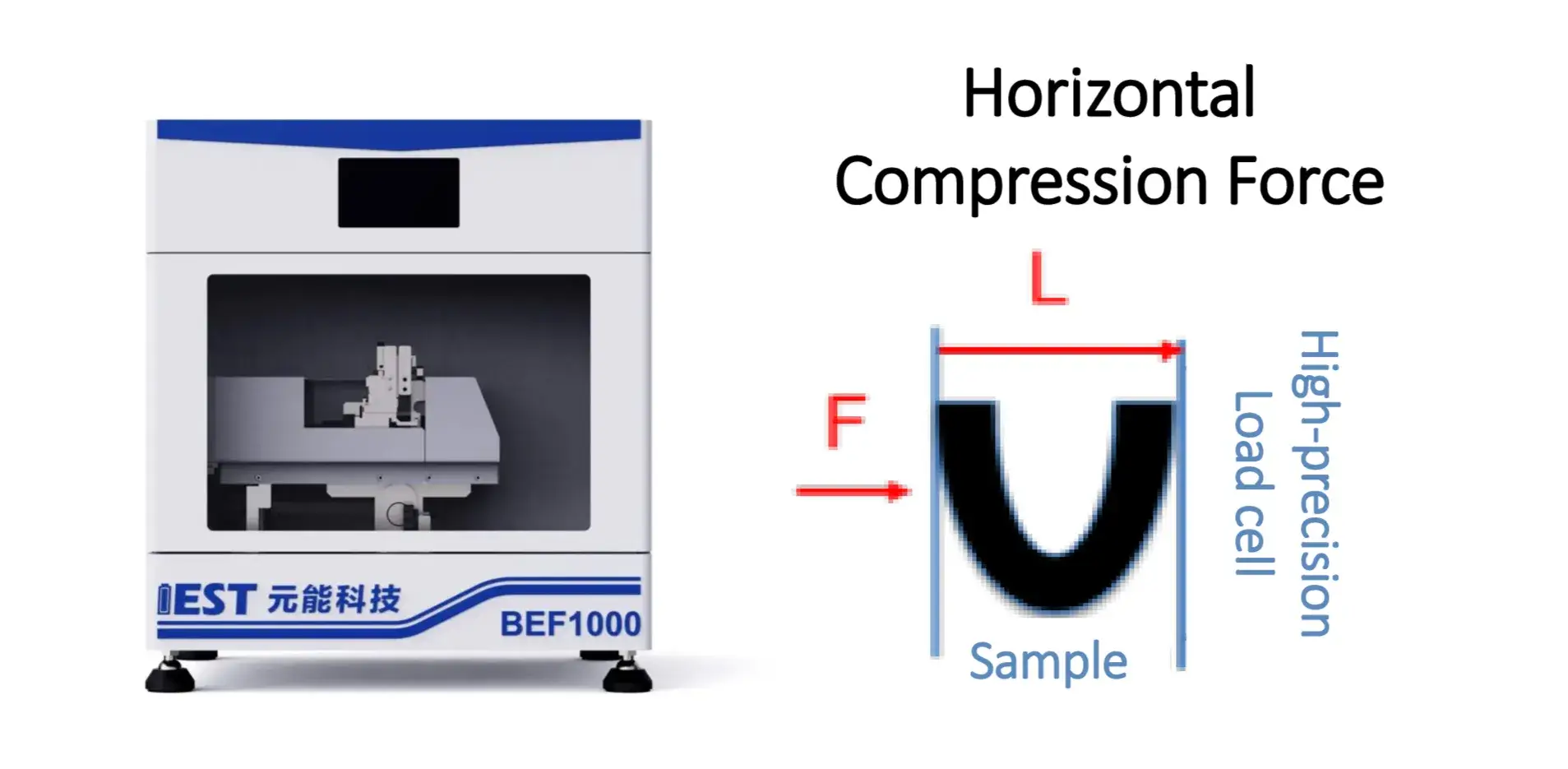
6. Methods of Analysis
6.1 Bendability
-
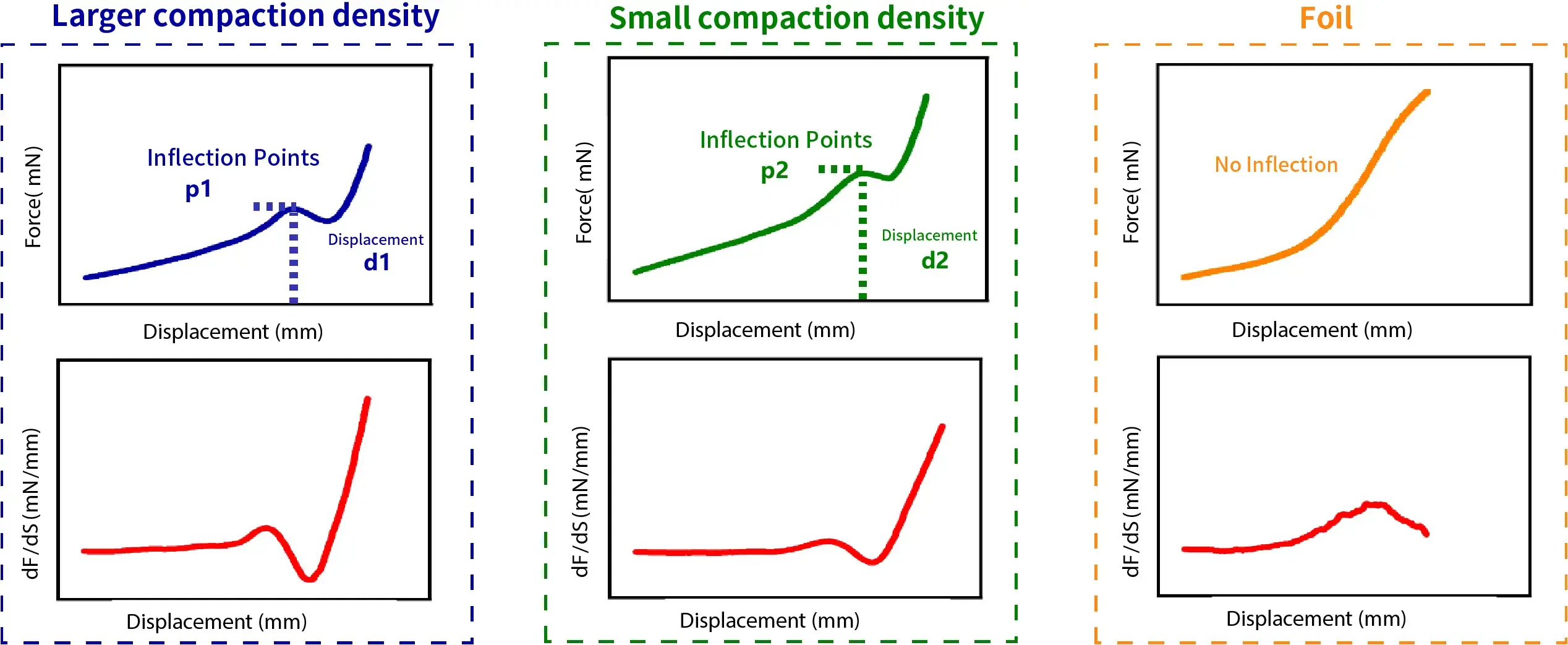
Analyzing the Fracture Point: Electrodes with a larger compression displacement at the fracture point generally exhibit better flexibility.
-
Observing the First Derivative: Poorer electrode flexibility may show higher peaks or abrupt changes in the derivative.
-
Curve Shape: Higher electrode flexibility tend to exhibit smoother curves without significant sudden changes or inflection points.
-
Curve Slope: Good electrode flexibility demonstrate a smaller slope in the force-displacement curve, indicating greater deformation under the same applied force.
6.2 Recoverability
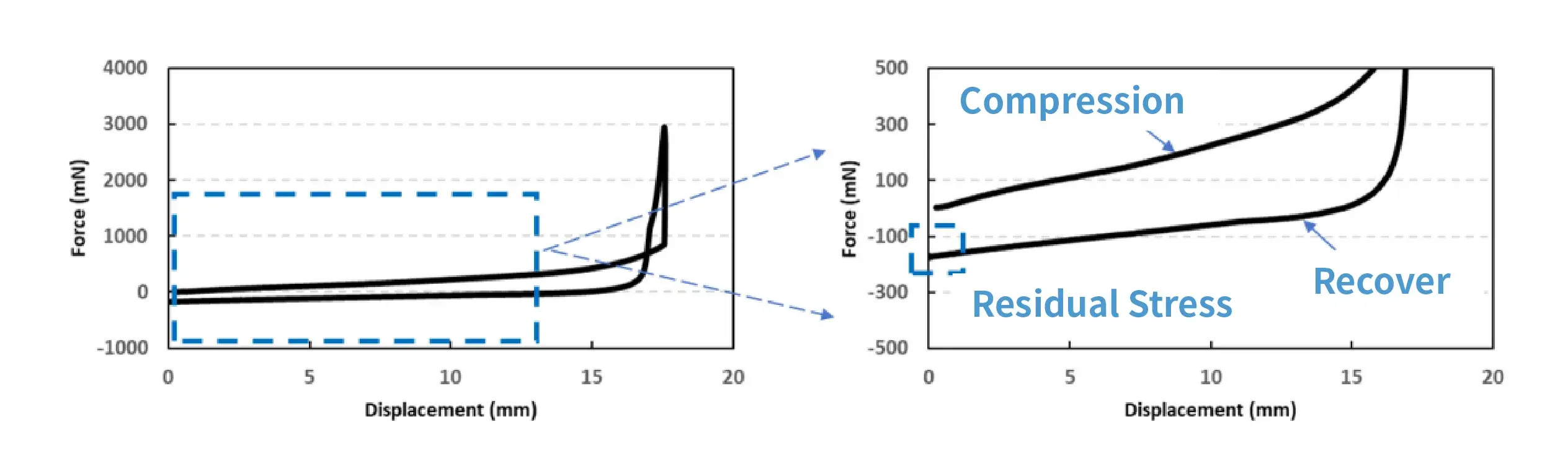
- Curve Shape: The stress- strain curve has no obvious inflection points, and for electrode sheets with higher flexibility, the absolute value of their residual stress is smaller.
- Fatigue Test: Evaluate the recovery ability and long-term stability after deformation during multiple bending processes by analyzing residual stress.
7. Multifunctional Analysis Software
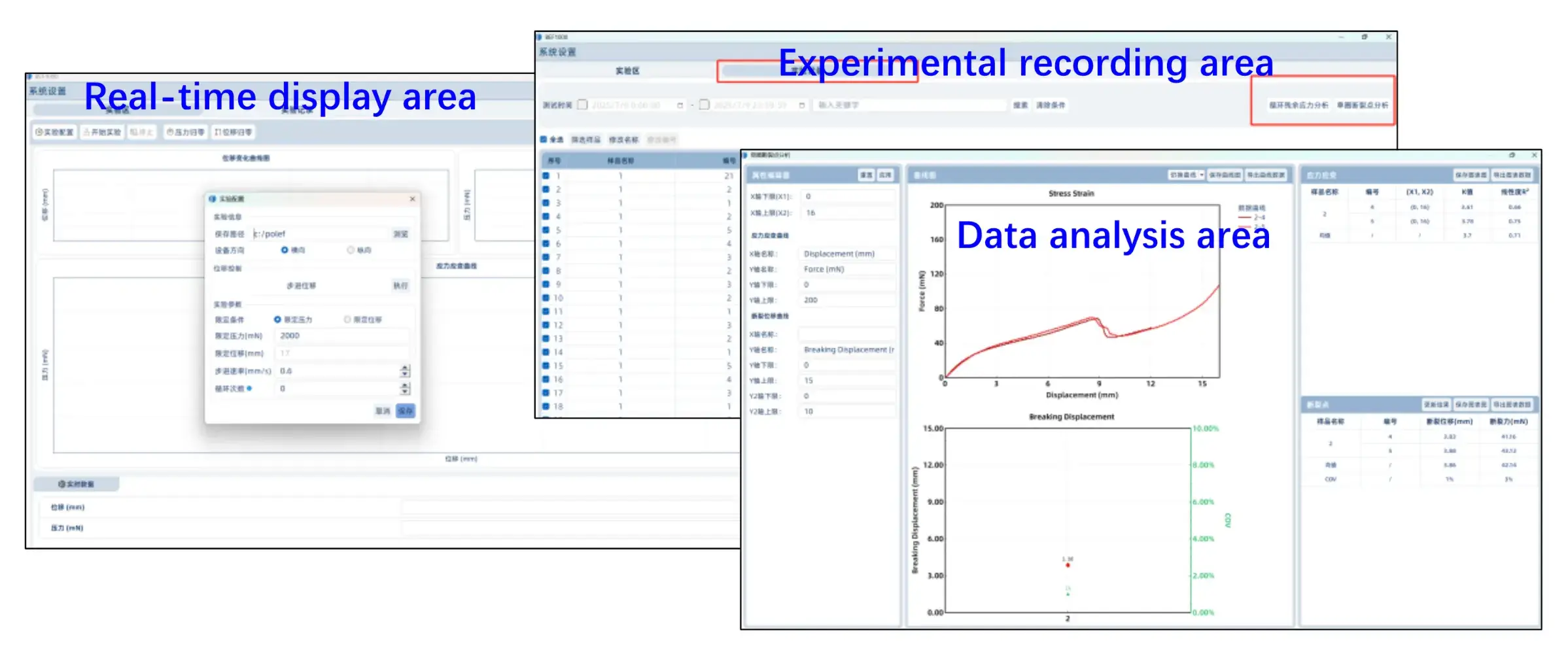
- Records stress-strain data during compression/return cycles in real-time and automatically plots the curves.
- Allows setting either compression distance to measure pressure or target pressure to measure displacement.
- Displays the slope of the F-S curve (dF/dS).
- Shows historical test data and enables export of F-S curves for multi-sample comparison.
- Automatically identifies the fracture point in single-cycle compression and residual stress in multi-cycle tests.
Applications
1. Anode & Cathode Electrode
1.1 LFP Electrode Sheets With Different Compaction Densities
-
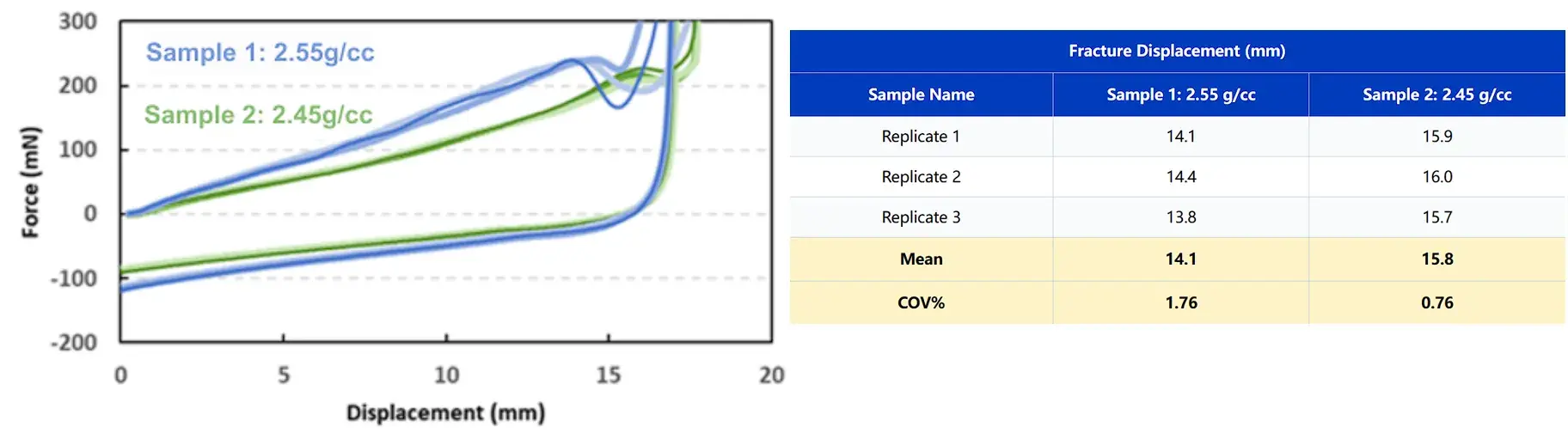
Pressurization tests were conducted on two groups of electrodes with different compaction densities to compare their flexibility.
-
As the electrode compaction density increases, the pressure at the fracture point decreases and the corresponding displacement also gradually diminishes, indicating that the flexibility gradually deteriorates.
1.2 Different Hard Carbon Anode Electrode Sheets A/B
-
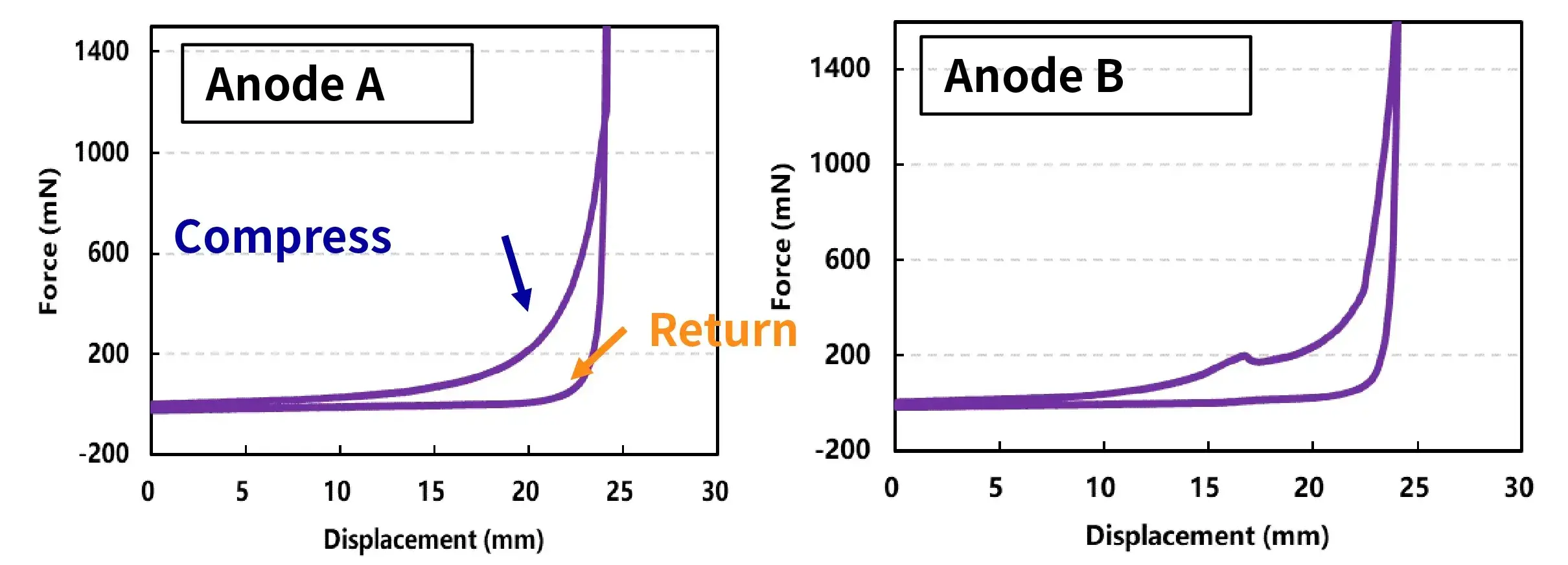
Curve Shape: The curve shows no distinct inflection point. Electrodes with higher flexibility exhibit a smaller absolute value of residual stress.
-
Fatigue Testing: Evaluating the recovery capability and long-term stability after deformation during repeated bending through residual stress analysis.
2. Different Binders & Formulations
-
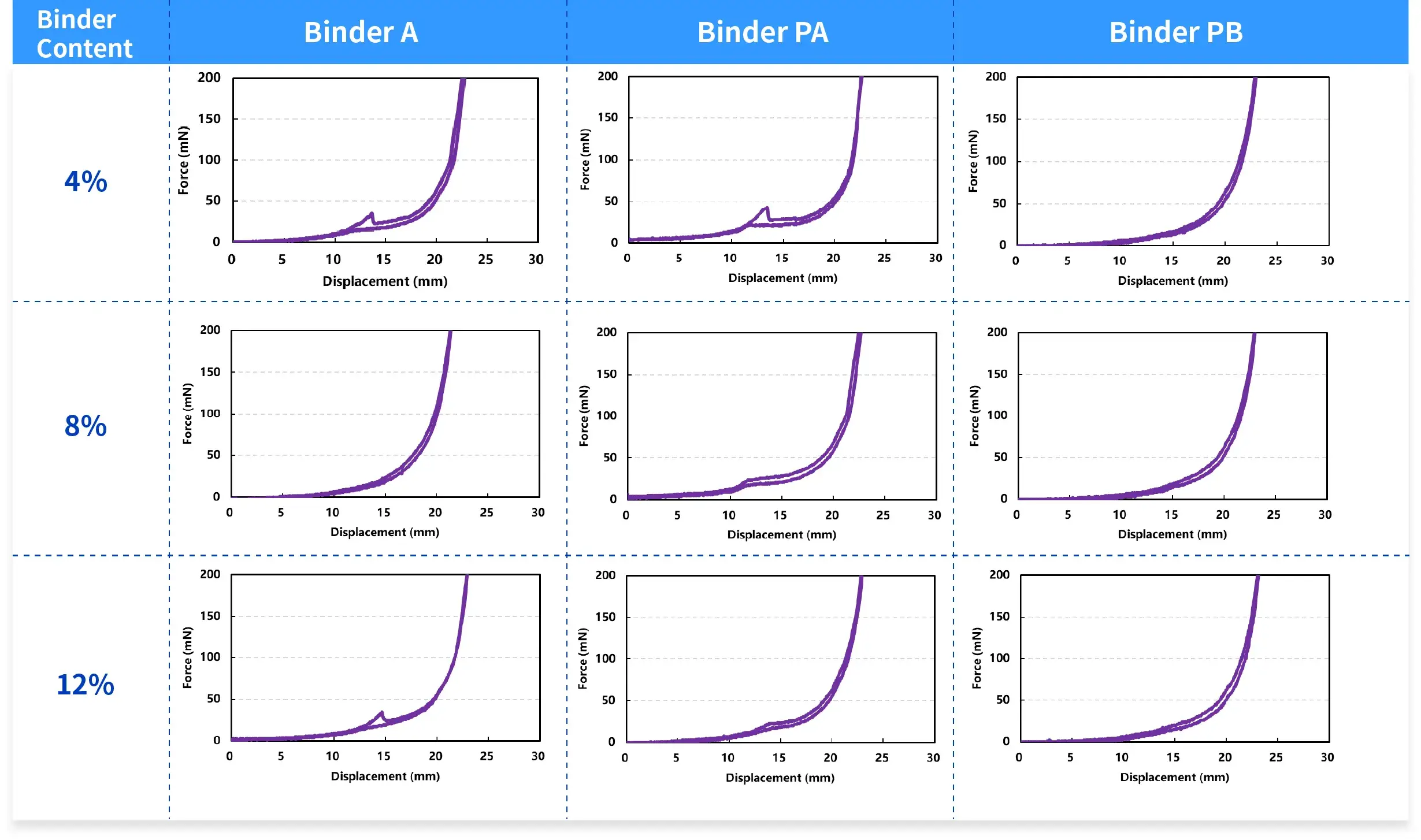
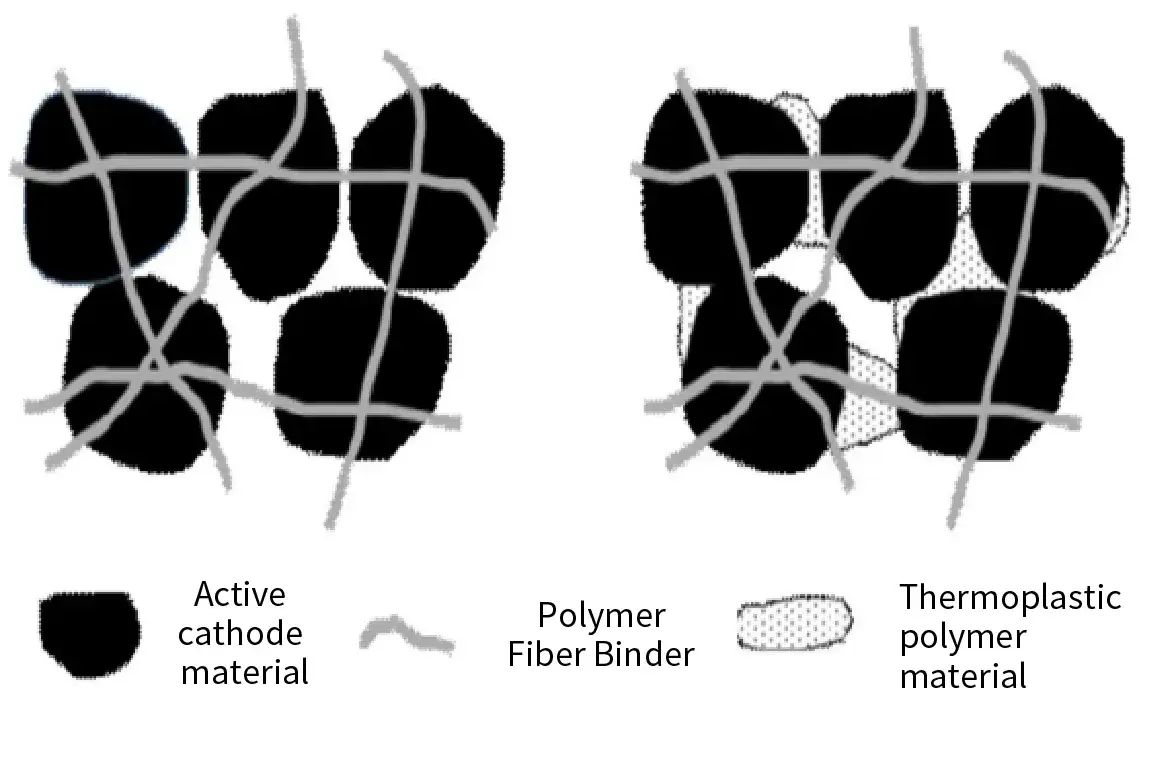
By varying the type and content of binders in the electrode, electrode flexibility under compression and tension was evaluated.
-
The test results indicate that at the same content level, the flexibility of Binders A and PA is inferior to that of PB. Furthermore, an 8% content level appears to be a relatively suitable proportion for all three binder types.
3. Different Binders
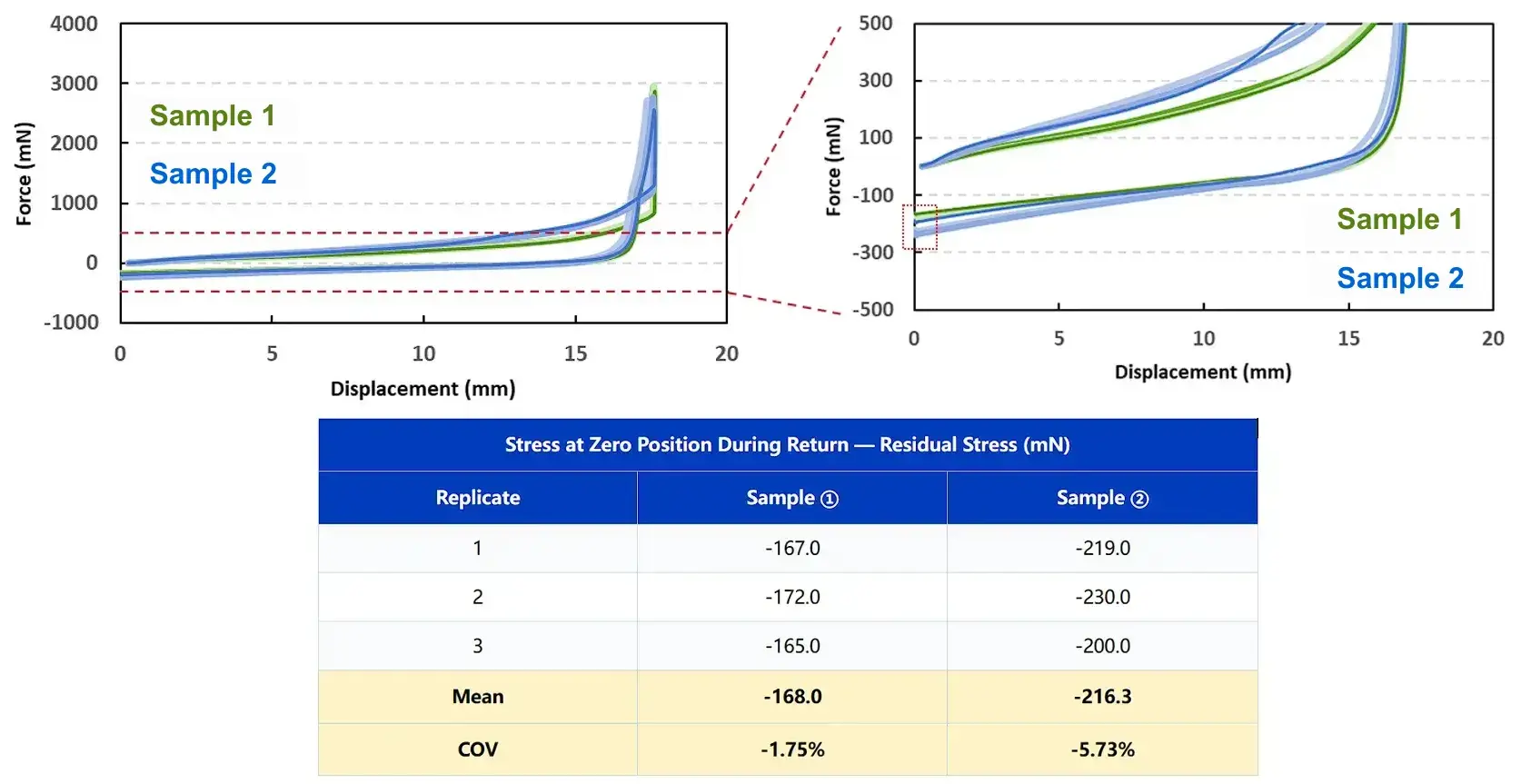
Comparing the effects of different binders on the flexibility of Si/C electrodes: Neither sample showed obvious fracture after testing, and the residual stress of Sample ① was closer to the initial value (0), indicating that Sample ① possesses superior flexibility.
4. Different Active Materials
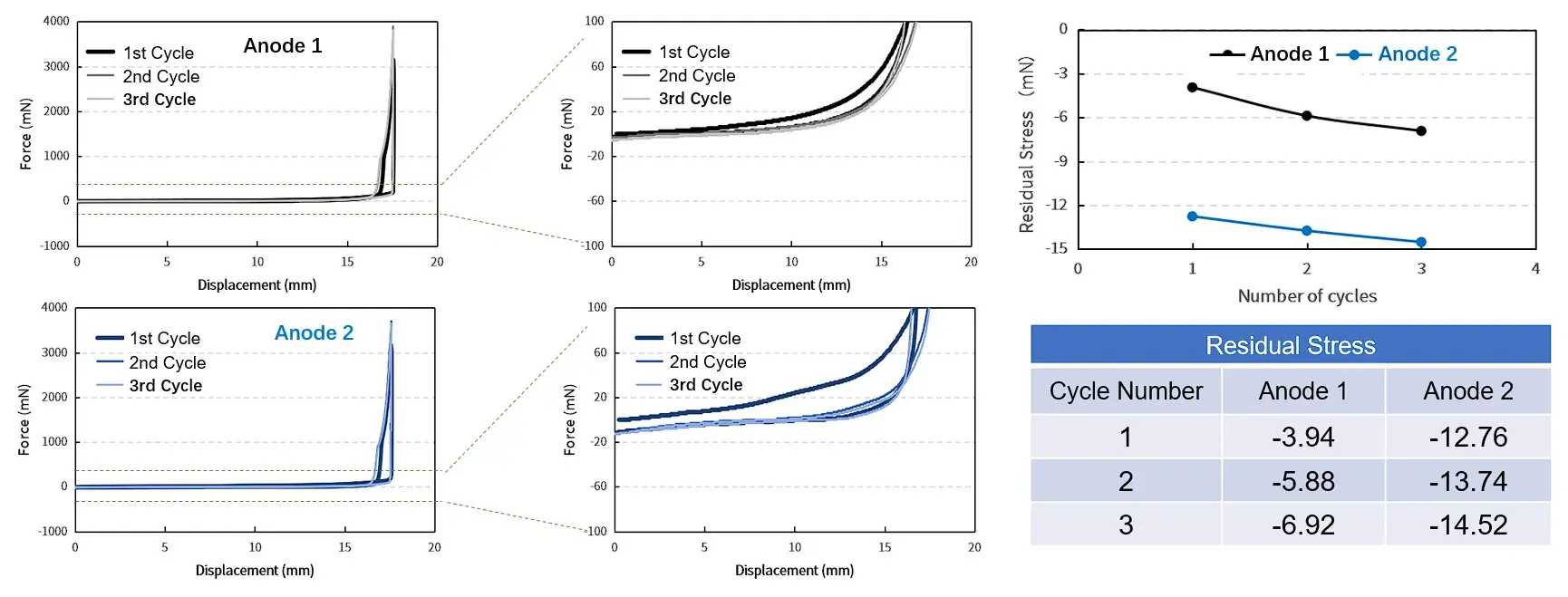
Multi-Cycle Analysis: Comparing the effects of different graphite active materials on electrode flexibility: The residual stress of Anode 1 across cycles 1–3 is closer to the initial stress value (0), indicating that Anode 1 possesses superior elastic recovery capability and better flexibility.
5. Product Application Analysis
5.1 Testing influencing factors
| Material Composition | Electrode Structure & Processing | Testing Conditions |
|---|---|---|
|
Material Composition: Ratio and types of active material, conductive agent, and binder. |
Electrode Structure: Includes thickness, density, porosity, and uniformity of layer distribution. Processing:
|
|
5.2 Front-end & Back-end Performance Correlation
- Material mechanical strength and toughness
- Slurry dispersion quality
- Slurry solid content, adhesion
- Electrode structural stability
- Uniformity, quality control
- Assembly compatibility and tightness
- Cell internal resistance
- Energy density
- Safety and lifespan
Specifications
| Model | BEF1000 | |
|---|---|---|
| Equipment Parameters | Force Test Range | 0 – 10000 mN |
| Force Resolution | ±0.01 mN | |
| Force Accuracy | ±10 mN | |
| Displacement Travel Range | 0 – 18 mm | |
| Displacement Accuracy | ±10 μm | |
| Displacement Resolution | 0.1 μm | |
| Sampling Frequency | 10 Hz | |
| Installation Requirements | Ambient Temperature | 10 – 35°C |
| Equipment Voltage | 200 – 240 V / 50 – 60 Hz | |
| Number of Power Interfaces | 1 | |
| Relative Humidity | ≤ 80% RH (no condensation) | |
| Specifications | Equipment Dimensions (W×D×H): 404 mm × 400 mm × 465 mm Equipment Weight: 30 kg Equipment Power: 200 W |
|