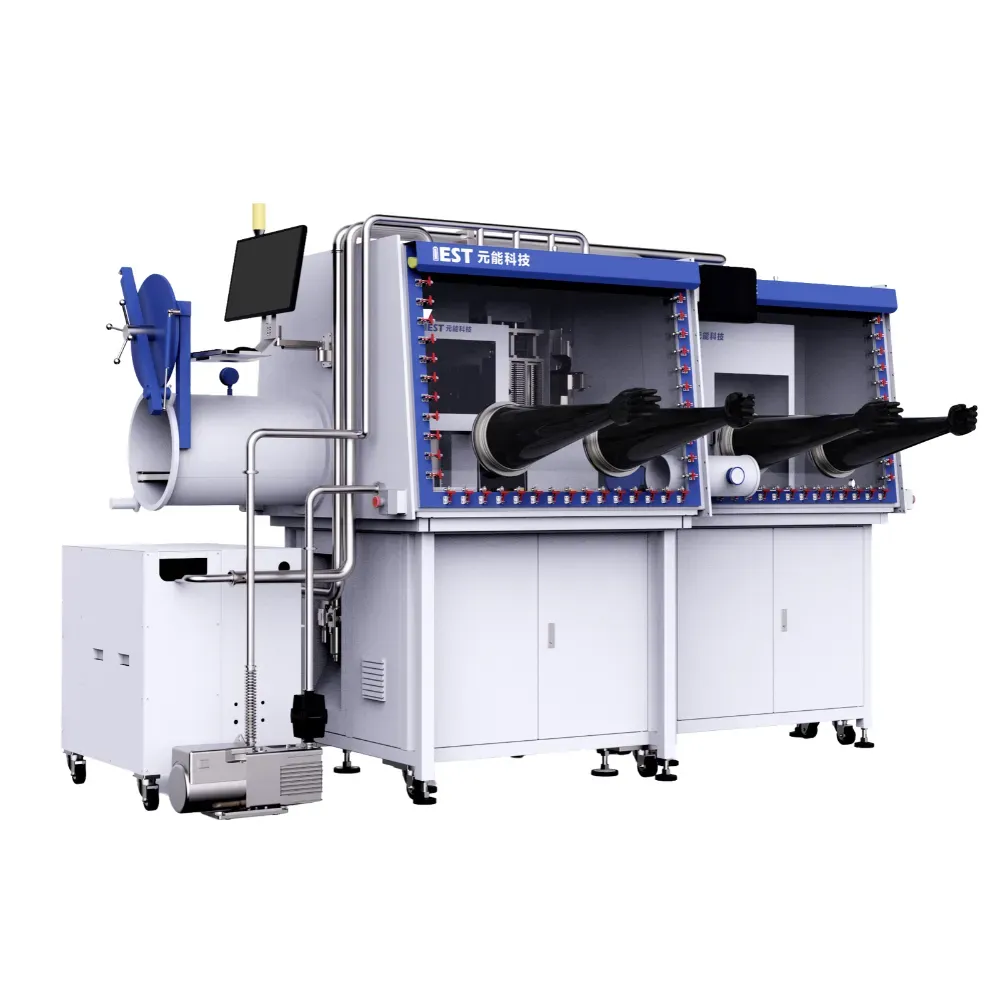
Description
1. The Role of Symmetric Cells in Electrochemical Characterization
A symmetric cell is an electrochemical configuration consisting of two identical working electrodes. By using the same electrode material on both sides of the cell, this configuration reduces interference associated with dissimilar electrode materials and provides a simplified electrochemical system for investigating the intrinsic properties of an electrode.
Symmetric cells are particularly useful for evaluating electrode characteristics such as ion and electron transport kinetics, electrochemical reversibility, interfacial stability, and degradation behavior.
Electrochemical measurements can provide insights into electrode polarization evolution, interfacial impedance changes, and the development of the solid electrolyte interphase (SEI) layer. These findings support electrode material screening, degradation mechanism analysis, and the optimization of electrode design, helping accelerate battery material development.
2. Equipment Features:
- Automated cutting of double-sided coated electrodes and automated coating scraping
- Assisted manual cell assembly
- Automated electrolyte filling and three-side sealing of aluminum-laminated film
- Full traceability across the cell assembly process
3. Applications
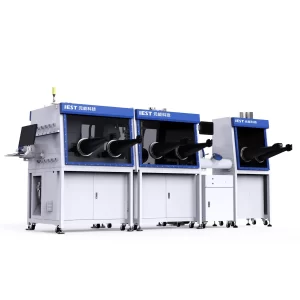
The IEST Automatic Symmetric Cell Assembly System is intended for R&D applications in battery material manufacturers, battery cell manufacturers, universities, and research institutes.
Typical applications include:
- Electrochemical characterization of cathode and anode materials
- Electrochemical evaluation of battery separators
- Characterization of solid and liquid electrolytes
- Investigation of electrode interfacial stability and degradation behavior
- Comparative evaluation of electrode materials using symmetric-cell configurations
4. Key Functional Modules
Electrode Loading Magazine
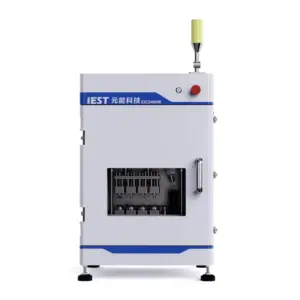
The electrode loading magazine provides centralized preparation and storage of electrode materials before processing. It accommodates up to 60 sets of electrodes in a single loading operation, helping reduce manual handling, preparation time, and equipment footprint.
CCD Vision Inspection and Process Traceability
An integrated high-resolution CCD camera captures images of electrode and material surfaces during the assembly process. The imaging system supports visual inspection, material identification, and process documentation through an integrated traceability system.
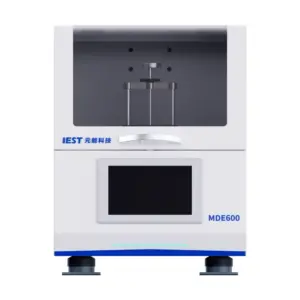
Automatic Electrolyte Filling & Heat-Sealing Module
The integrated filling and heat-sealing module performs automatic electrolyte filling and three-side heat sealing of aluminum-laminate pouch film.
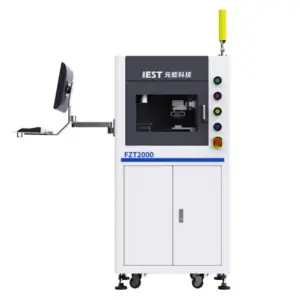
Electrode Laser Cutting & Decoating Module
Processes double-side coated electrodes via laser cutting and coating removal, ensuring high cutting and decoating quality while improving efficiency.
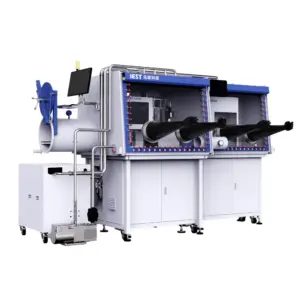
Integrated Glovebox
Equipped with a built-in glovebox providing an anhydrous, oxygen-free assembly atmosphere to safeguard symmetrical cell performance.
Batch Traceability & Barcode Linking
Electrode materials are imported via barcode scanning; assembled cells are scanned inline inside the glovebox to establish full batch-to-cell traceability.
Applications
1. Comparison of Manual and Automated Symmetric Cell Assembly
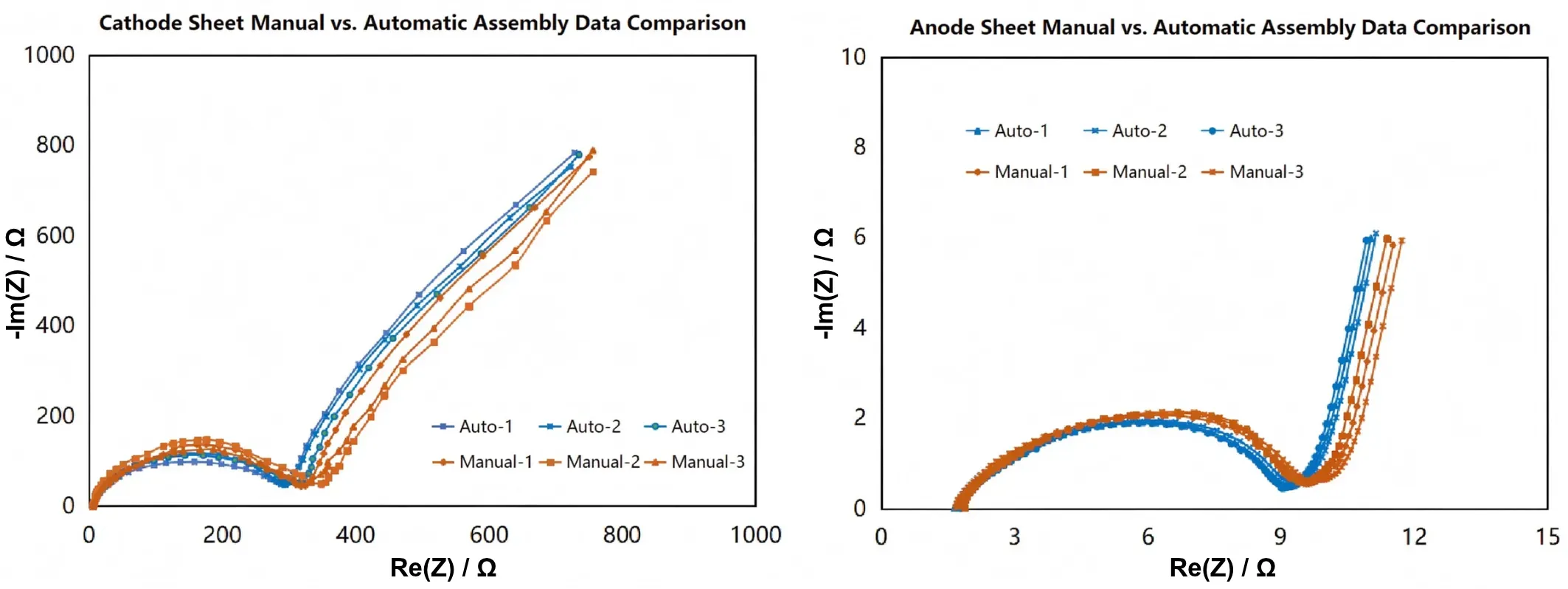
- The EIS curves of cells assembled by the automated system showed closer overlap than those of manually assembled cells. This indicates better consistency between the automatically assembled cells in terms of their measured electrochemical impedance under the tested conditions.
- The comparison demonstrates the potential of automated electrode preparation and cell assembly to reduce assembly-related variability and improve the reproducibility of symmetric cell electrochemical measurements.
Specifications
| Model | SAAS1000M |
|---|---|
| Single-Batch Loading Capacity | 60 ea/batch |
| Assembly Accuracy | ±0.2 mm |
| Assembly Efficiency | ≤ 120 s/ea (excluding loading and unloading time) |
| Laser Cutting Accuracy | ≤ ±1 mm |
| Laser Powder Removal Accuracy | Accuracy: ±0.1 mm; intact substrate without scratches or tears, no impact on reaction surface |
| Heat Sealing Accuracy | Sealing edge ≤ 2 mm; stroke accuracy ±0.02 mm; sealing temp 25°C ~ 250°C (control accuracy ±2°C); leak-free after sealing |
| Electrolyte Injection Accuracy | Injection volume: 300 μL ± 5 μL; injection accuracy ≤ 1.5%; sealing completed within 5 s after injection |
| Functions | • Equipped with a single-station glovebox; • Automatic cutting and cleaning of double-sided electrodes; • Assists manual cell assembly to improve sample preparation efficiency; • Assembly process traceability: photographic recording of each electrode’s surface state; • Automatic electrolyte injection; • Three-side cell sealing |