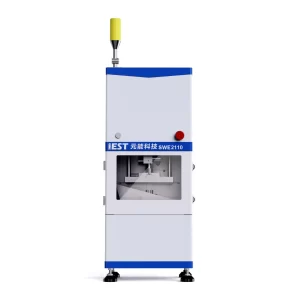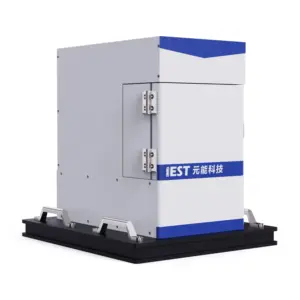
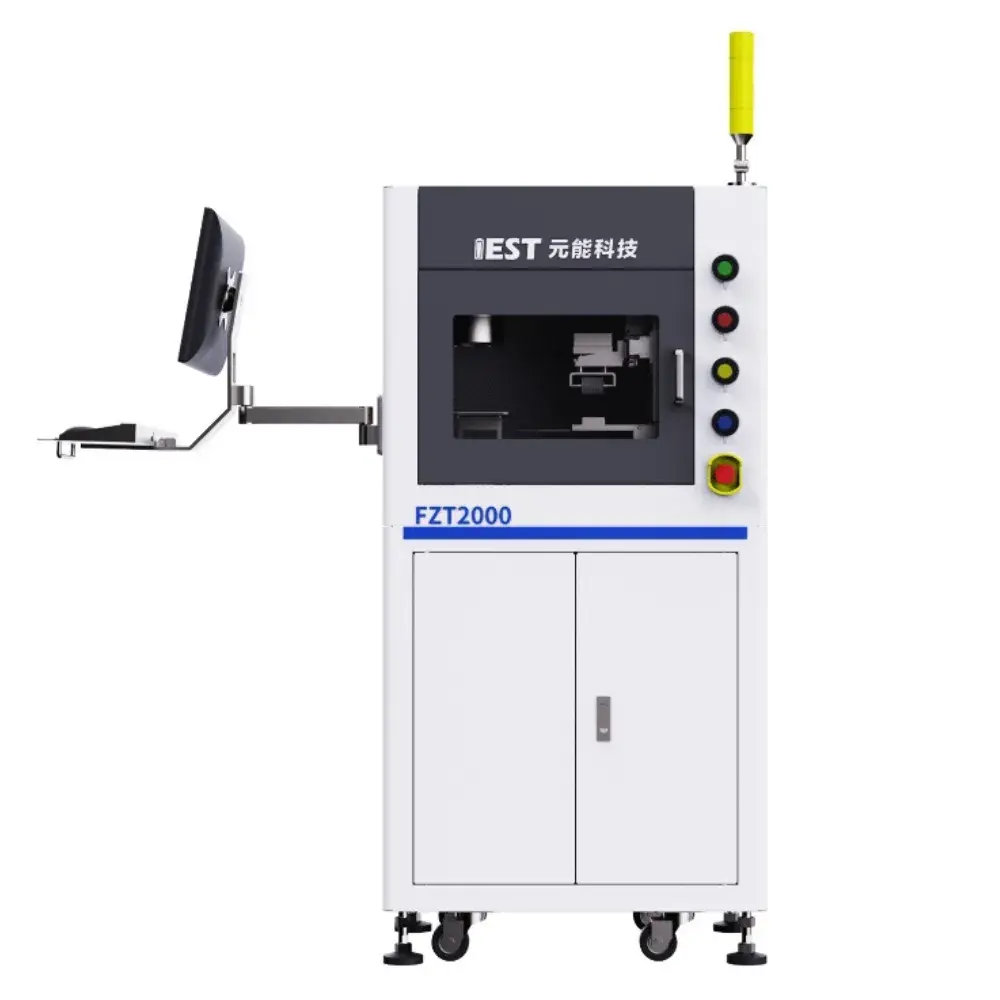
IEST Electrode Fold & Roll Light Transmission Tester(FZT2000)

Introduction: The FZT2000 is an integrated electrode fold-and-roll light transmission tester designed for the quantitative evaluate electrode brittleness, coating adhesion, and calendering suitability. By combining precision mechanical folding with constant-pressure rolling and automated optical imaging, it replaces subjective manual inspection with standardized, repeatable data. Ideal for electrode calendering process optimization and upstream quality control in lithium-ion battery manufacturing.

Features:

  • Dual-Camera Inspection: Simultaneously inspects both sides of the electrode, preventing measurement distortion caused by one-sided powder debris.
  • Dual Test Modes: Supports Cycle Mode (preset fold count) and Transmittance Mode (area threshold) to accurately determine electrode brittleness limits.
  • High Measurement Precision: Features 0.1° folding angle accuracy and 10 μm optical vision resolution with a sampling rate of 4 times/cycle.
  • Fast & Traceable Testing: Completes single-sample tests within 25–40 seconds with real-time tracking and historical data logging.
  • Wide Compatibility: Accommodates electrode sheet thicknesses from 60 μm to 200 μm with dedicated sample clamping fixtures.

Application:

  • Cathode & anode coated electrode flexibility and brittleness testing.
  • Incoming quality control and batch‑to‑batch consistency verification.
  • Electrode calendering parameter optimization and binder adhesion evaluation.
  • Crease cracking and internal short-circuit risk prevention for winding and stacking processes.

Description

1. Background and Significance

As the lithium-ion battery industry advances toward higher energy density, electrode fold-and-roll light transmission inspection has become a mandatory front-end checkpoint, critical for controlling brittleness and eliminating safety hazards. Conventional manual inspection suffers from inconsistent parameters, high error margins, low efficiency, and a lack of quantifiable data. By integrating standardized folding and rolling with quantitative visual inspection to replace manual labor, this equipment delivers accurate, uniform testing with end-to-end traceability. It accelerates the automation upgrade of front-end QC, cuts costs, boosts efficiency, and safeguards battery quality at the source.

2. Innovative Solution

Benchmarking standard front-end inspection processes in the lithium-ion battery industry, the FZT2000 simulates mass-production conditions using precision-controlled mechanical folding and constant-pressure rolling to process coated electrodes under specified angles and loads. After unfolding the electrode, a high-definition vision imaging system captures images of the crease zone. Leveraging proprietary image algorithms, the system intelligently identifies and quantitatively analyzes light-transmitting spots along the crease, precisely measuring defect counts, areas, and dimensions. This delivers quantitative data to evaluate coating brittleness, adhesion, and calendering process feasibility, replacing traditional qualitative visual inspection.
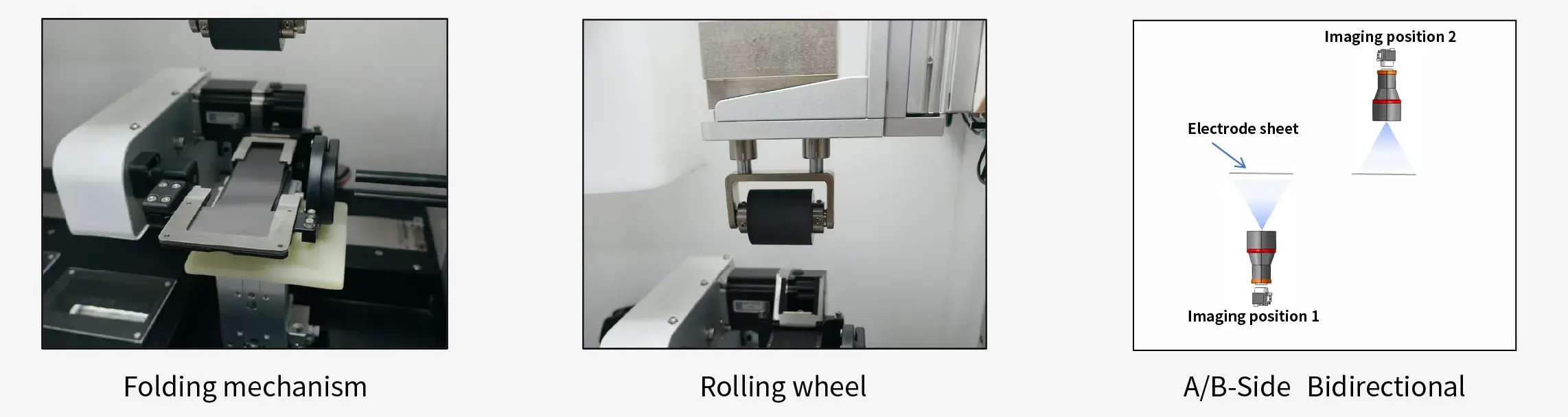
IEST Electrode Fold & Roll Light Transmission Tester by IEST Instrument: internal mechanical structure and inspection workflow featuring precision folding mechanism, constant-pressure rolling wheel, and A/B-side bidirectional optical imaging system for quantitative evaluation of battery electrode coating brittleness, adhesion, and compaction process feasibility.

3. Analysis Method

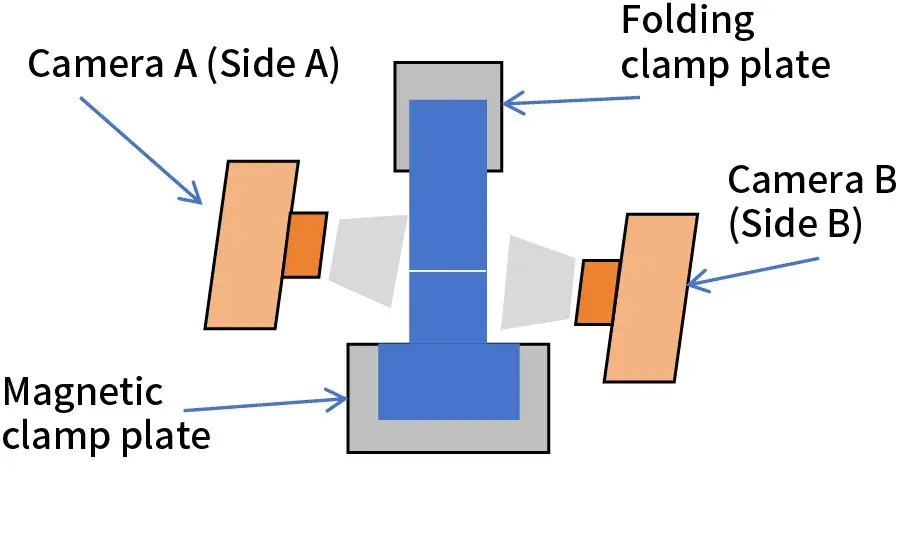
Dual-camera testing method schematic for IEST Electrode Fold & Roll Light Transmission Tester showing Camera A, Camera B, folding clamp plate, and magnetic clamp plate.

The electrode sample is placed into the folding mechanism to undergo folding. A high-precision vision imaging system captures images of the crease area on both the front and back sides, recording the dimensions, area, and count of light-transmitting spots.
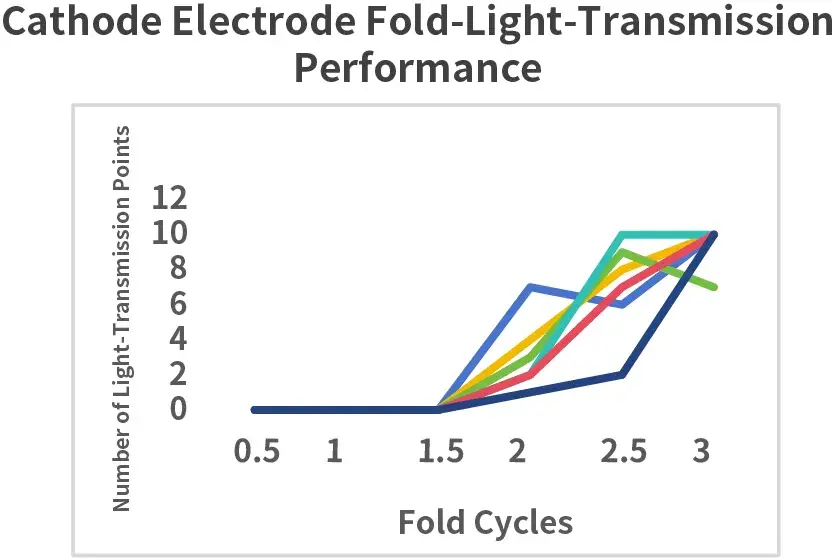
Cathode electrode fold-light-transmission performance curve showing the number of light-transmission defect points versus fold cycles from 0.5 to 3 cycles.

The electrode sample is placed into the folding mechanism to undergo folding. A high-precision vision imaging system captures images of the crease area on both the front and back sides, recording the dimensions, area, and count of light-transmitting spots.

4. Advanced Technical Features

Dual-Camera Inspection: Dual cameras inspect light transmission on both the front and reverse sides of the electrode, preventing measurement distortion caused by shed powder obscuring one side.

Dual Testing Modes:

  • Cycle Mode: Evaluates the electrode’s light transmission level at a preset number of cycles.

  • Light Transmittance Mode: Continuously folds until defect reaches the preset size to determine the electrode’s ultimate brittleness limit.

5. Software UI

Multifunctional Software:

  • Real-time display of light-transmission dimensions, area, and count for the electrode sheet.

  • Two configurable modes for evaluating electrode brittleness:

    • Cycle mode: Set the folding cycle (number of folds) for the test.

    • Light-transmission mode: Define a threshold where the measured light-transmission area falls below the actual light-transmission area; the system then determines the transmission cycle (i.e., the cycle count at which the sheet fails the light-transmission criterion).

  • Historical data query: When retrieving past records, the system displays all data from the corresponding historical test items.
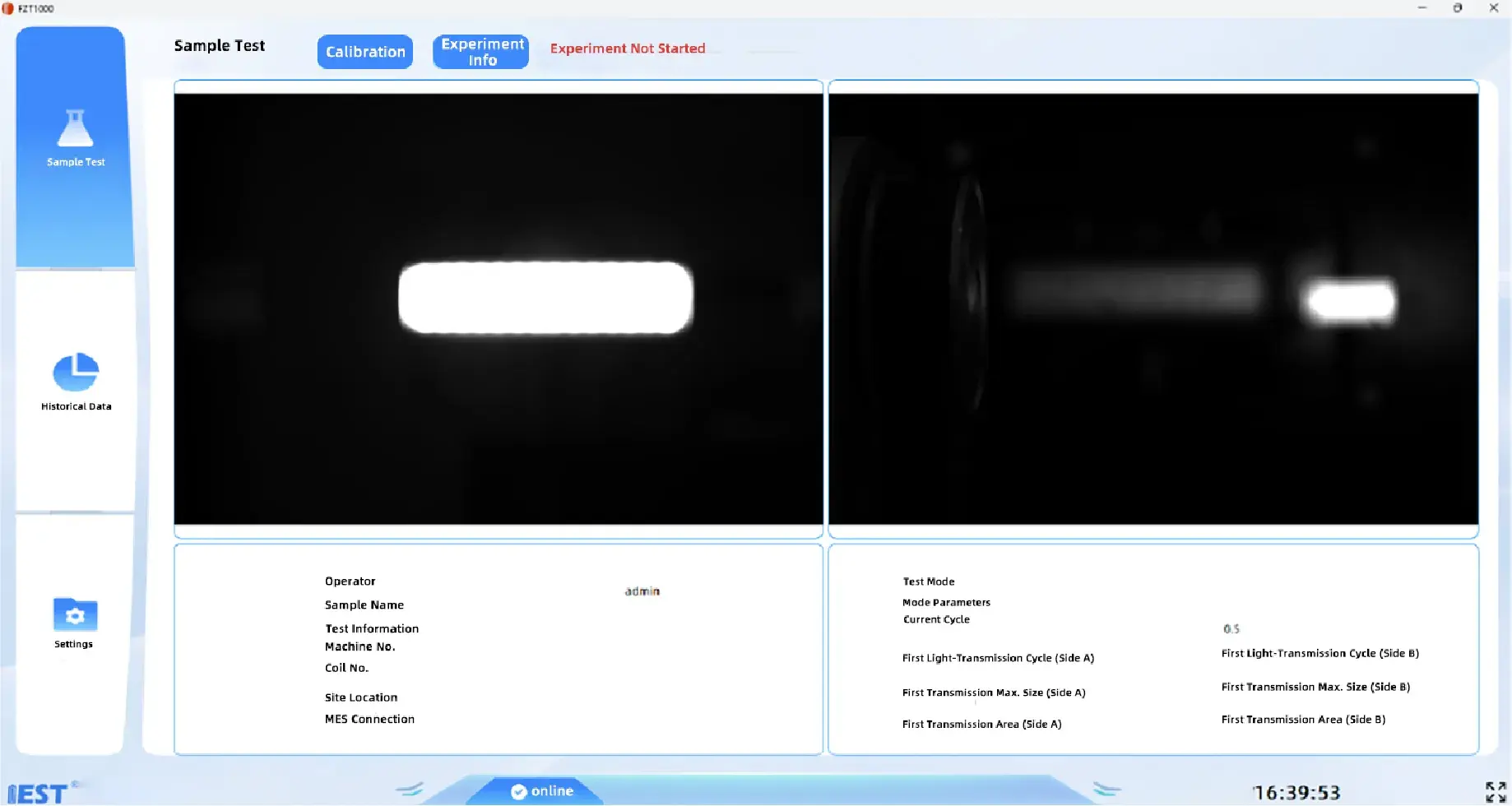
Software interface of the IEST Electrode Fold & Roll Light Transmission Tester showing real-time dual-camera defect imaging, cycle parameters, and quantitative transmission data.

Applications

1. Evaluation of Electrode Folding Brittleness

Sample Information: Cathode electrode sheets from the same product and the same jelly roll
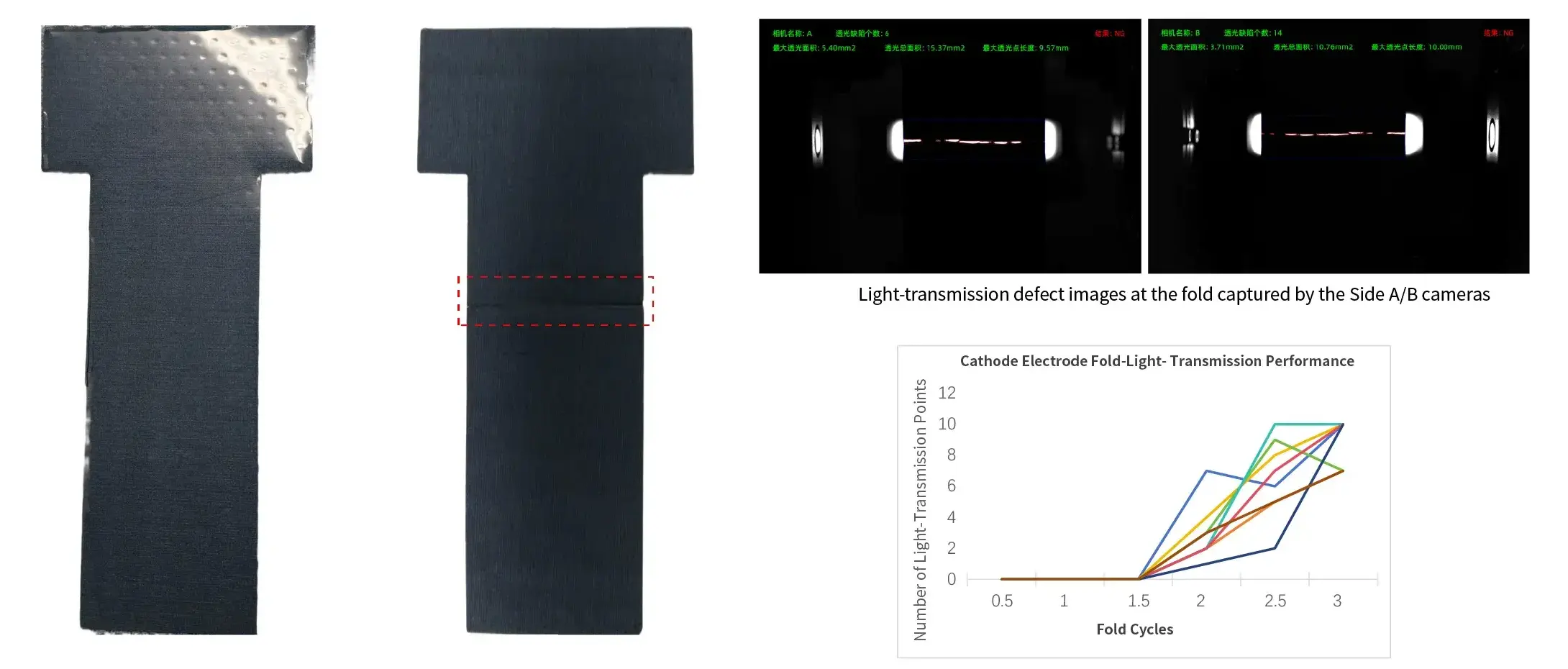
Application case of IEST Electrode Fold & Roll Light Transmission Tester evaluating cathode electrode brittleness, optical fold defect imaging, and cycle consistency.

Conclusion: The results show that the cathode electrode sheets from the same jelly roll exhibited an initial light-transmission cycle of 1.5, demonstrating the high consistency of the testing equipment.
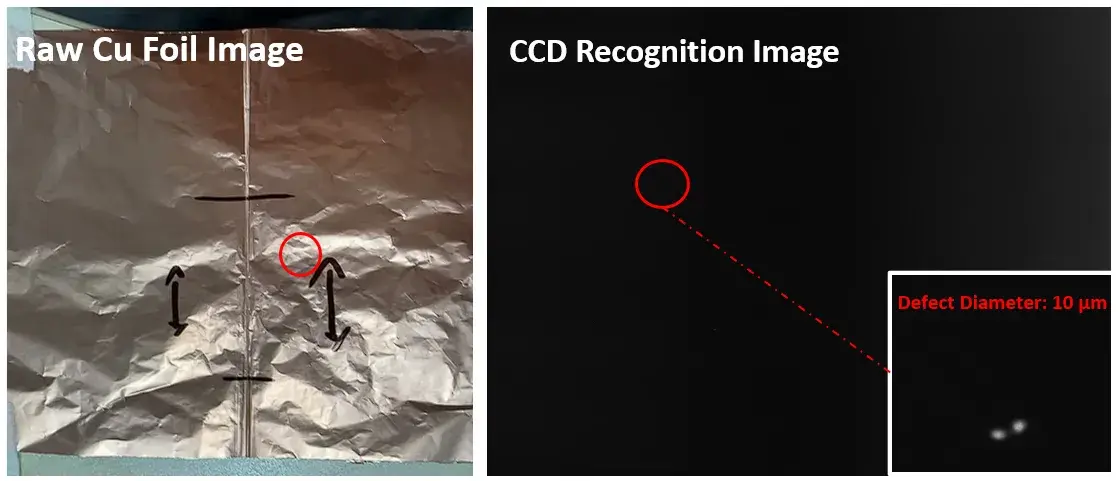
2. Current Collector Foil: Raw Substrate Verification(Incoming QC)

IEST Electrode Fold & Roll Light Transmission Tester by IEST Instrument applied in current collector incoming quality control (IQC): comparative analysis between raw copper foil (Cu foil) mechanical fold creases and automated CCD optical recognition imaging, identifying microscopic pinholes and tears down to a 10 µm defect diameter.

Sample Specification: 5/6 μm ultra-thin Cu foil, test crease length: 15 mm

Test Mode Configuration:

  • Fixed-Cycle: Preset folding count → Quantify total defect count and dimensions
  • Fixed-Defect: Preset defect threshold → Determine critical folding cycle lifespan
Characterization Capabilities:
Folding Angle & Speed
0–360° | Max 90°/s
Calendering Load
2 ± 0.1 kg(Customizable)
Single-Pixel Precision
7 μm Resolution
Detectable Pinhole
Min. 13 μm (10 μm detected)

Engineering Value: Eliminates sub-surface pinholes and micro-perforations before coating, preventing foil rupture under high roll tension and slurry leakage defects.
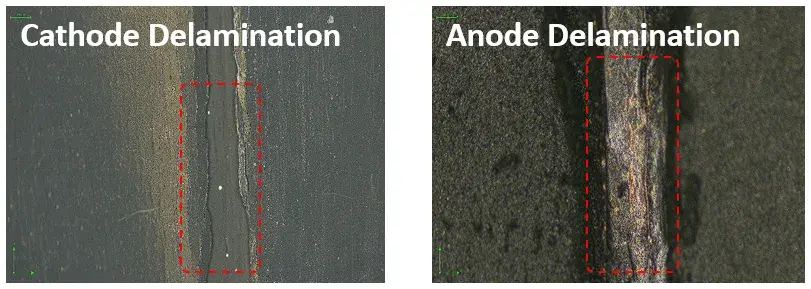
3. Coated Electrodes: Cathode & Anode Flexibility(In-Process / IPQC)

IEST Electrode Fold & Roll Light Transmission Tester by IEST Instrument applied in battery manufacturing in-process quality control: high-magnification optical inspection comparing Cathode Delamination and Anode Delamination along the fold crease, identifying active material shedding, coating fracture, and interfacial adhesion failure.

Sample Specification: 80–150 μm Graphite Anode / LFP / NCM Cathode, crease length: 40 mm (customizable)

Test Mode Configuration:

  • Fixed-Cycle: Preset folding count → Quantify total defect count and dimensions
  • Fixed-Defect: Preset defect threshold → Determine critical folding cycle lifespan
Characterization Capabilities:
Folding Angle & Speed
0–360° | Max 90°/s
Calendering Load
2 ± 0.1 kg(Customizable)
Exposed Metal Foil
≥ 100 μm Delamination
Coating Crack Width
≥ 50 μm Micro-Cracking

Engineering Value: Verifies binder elasticity and calendering density limits, preventing corner cracking and active material peeling during winding/stacking that cause internal micro-shorts.

Specifications

Model FZT2000
Sample Thickness Range 60 ~ 200 μm
Sample Size Head: 35 mm × 65 mm; Tail: 15 mm × 40 mm
Sample Test Width Range 10 ~ 80 mm
Samples per Test 1 piece (Max 70 samples continuous testing)
Fold Angle Forward Fold: 175°; Reverse Fold: 170° (Max 345°)
Fold Angular Speed 90°/s
Fold Angle Accuracy 0.1°
Max Calendering Speed 40 mm/s
Calendering Force Range 0 ~ 20 N
Calendering Force Accuracy 0.1 N
Vision Accuracy 10 μm (Min. Defect Detection Accuracy)
Defect Identification Count 0 ~ 99 per sample
Defect Image Storage Capacity 0 ~ 396 images/sample
Test Time 25 ~ 40 s
Sampling Rate 4 times/cycle
Specifications Equipment Dimensions (W×D×H): 760 mm × 630 mm × 1300 mm
Equipment Weight: 110 kg
Equipment Power: 500 W

Download

IEST Electrode Fold & Roll Light Inspection Tester(FZT1000)

Contact Us

Please fill out the form below and we will contact you asap!

IEST Wechat QR code