Warning: Undefined array key "url" in /www/wwwroot/iestbattery.com/wp-content/plugins/seo-by-rank-math/includes/modules/schema/snippets/class-author.php on line 41
IEST Application Engineering Team

IEST Application Engineering Team

IEST GVM2200 Facilitates CATL’s Breakthrough Study in Nature Nanotechnology: Unraveling Novel Interfacial Reactions In Lithium Metal Batteries

Application-driven design of non-aqueous electrolyte solutions through quantification of interfacial reactions in lithium metal batteries

1. Introduction A research team from CATL’s 21C Innovation Lab has achieved a significant breakthrough in lithium metal battery technology, with their independent study “Application-driven design of non-aqueous electrolyte solutions through quantification of interfacial reactions in lithium metal batteries. published…

Molten-Salt Crystal-Facet Engineering for High-Performance Single-crystal Nickel-Rich Cathodes

Molten-salt-mediated crystal facet engineering for high-performance single-crystal nickel-rich cathode materials in lithium-ion batteries

1. Article Information Article Name: Molten-salt-mediated crystal facet engineering for high-performance single crystal nickel-rich cathode materials in lithium-ion batteries Equipment used: IEST Single Particle Force Properties Test System(SPFT2000) First Author: Hongyun Zhang Corresponding Authors: Jinyang Dong*, Yuefeng Su*, Lai Chen*…

Mechanically and Chemically Co-Robust Ni-Rich Cathodes Enable Ultrahigh Capacity and Prolonged Cycle Life

Mechanically and Chemically Co Robust Ni Rich Cathodes with Ultrahigh Capacity and Prolonged Cycle Life — journal cover figure Angewandte Chemie 2025

Abstract Ni-rich layered oxides (NRLOs) are promising high-energy-density cathodes for lithium-ion batteries but suffer from capacity fade and interfacial instability due to chemical and mechanical degradation during cycling. While doping strategies mitigate these issues, their underlying mechanisms have remained unclear. This…

Gaseous Molecules-mediated Electrochemical Exfoliation of Halogenated MXenes and its Boosting in Wear-Resisting Tribovoltaic

Gaseous Molecules-mediated Electrochemical Exfoliation of Halogenated MXenes and its Boosting in Wear-Resisting Tribovoltaic

1. Article Information: Title: Efficient Electrochemical Exfoliation of Halogen-Terminated MXenes Mediated by Gaseous Molecules and Their Enhancement in Wear-Resistant Tribovoltaic Devices First Authors: Qi Fan, Minghua Chen, Longyi Li Corresponding Authors: Kun Liang, Laipan Zhu, Lijing Yu* Affiliations: Ningbo Institute of Materials Technology and…

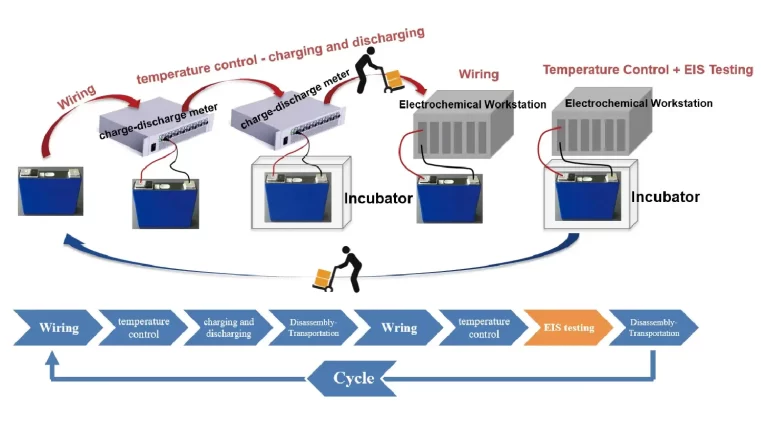
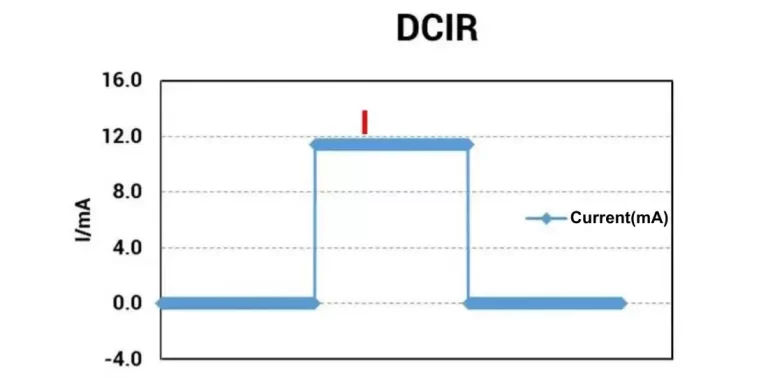
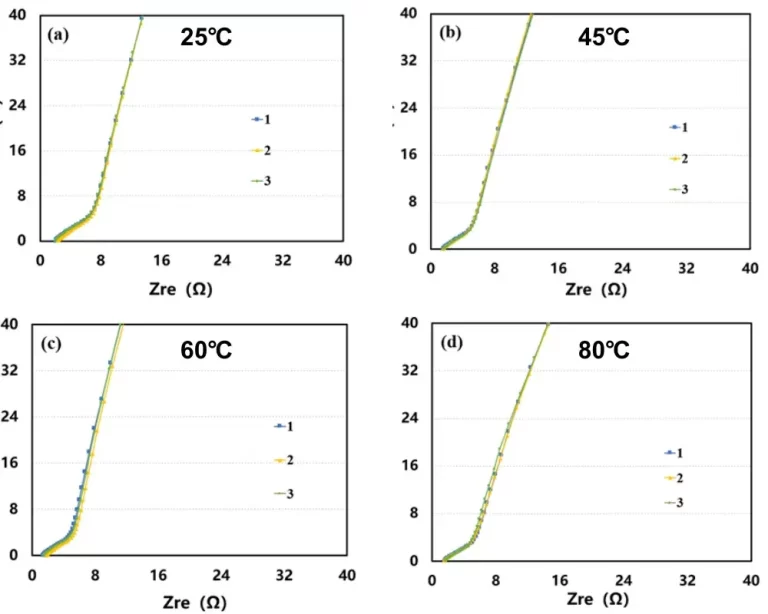
Entering Electrochemistry | Dynamic EIS Testing: Real-Time Impedance Diagnostics for Lithium Batteries

Testing Methods, Advantages, and Applications of Dynamic EIS

Abstract Dynamic EIS (DEIS)—also called dynamic electrochemical impedance spectroscopy—measures a lithium battery’s full impedance spectrum continuously during charging or discharging, without requiring any rest period. By capturing transient electrochemical processes invisible to conventional static EIS, dynamic EIS testing enables real-time…

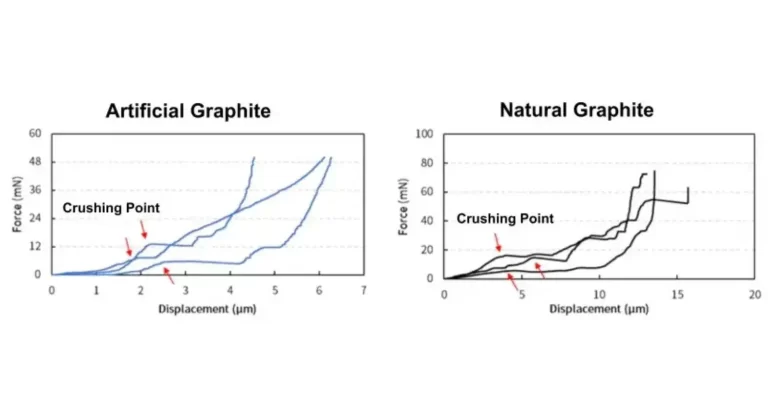
From Chemical Vapor Deposition Silicon Single Particles to Electrodes: The Mechanical Code of Crushing Strength and Calendering-Induced Fracture

From Chemical Vapor Deposition Silicon Single Particles to Electrodes The Mechanical Code of Crushing Strength and Calendering-Induced Fracture

1. Introduction Chemical Vapor Deposition silicon(CVD/PECVD) has emerged as a key breakthrough in lithium-ion battery anode materials. Its development trajectory is closely tied to the choice of substrate, which not only influences deposition morphology and interfacial stability, but also directly…

Redox-Active Stabilizer–Enhanced Structural and Thermal Stability of Ni-Rich Cathodes via an Economical Blending Strategy

Redox-Active Stabilizer–Enhanced Structural & Thermal Stability of Ni-Rich Cathodes via an Economical Blending Strategy

1. Article Information Title: Redox-active stabilizer-enhanced structural and thermal stability of Ni-rich cathodes via an economical blending strategy First Author: Jinzhong Liu Corresponding Authors: Jinyang Dong*, Meng Wang*, Lai Chen* Affiliations: Beijing Institute of Technology, Chongqing Innovation Center of Beijing…

New Ideas for Evaluating The Correlation Between Lithium-Ion Powder Resistivity and Electrode Resistivity

New Ideas for Evaluating The Correlation Between Lithium-Ion Powder Resistivity and Electrode Resistivity

Abstract Powder resistivity and electrode resistivity are correlated but not perfectly linear across every processing stage. Using IEST PRCD3100 powder resistivity and compaction density tester (10–350 MPa) and BER2500 electrode resistance tester (5–60 MPa, six-point measurement), a four-level study spanning…

LLZO Solid Electrolyte: Dry vs Wet Preparation Route, XRD Phase Analysis, Protonation & High-Frequency Impedance

From protonation Li rich contamination to grain boundary segregation Evaluations of solvent free vs. wet routes on preparing LLZO solid electrolyte

Abstract LLZO (Li₇La₃Zr₂O₁₂) solid electrolyte is a garnet-type oxide solid-state electrolyte that offers electrochemical stability against lithium metal and high lithium-ion conductivity — making it a leading candidate for high-safety solid-state lithium batteries. A key practical challenge in LLZO preparation…

IEST Wechat QR code

Contact Us

Please fill out the form below and we will contact you asap!