IEST Application Engineering Team

IEST Application Engineering Team

Distribution of Relaxation Times (DRT) Analysis for Resolving Overlapping Electrochemical Processes in EIS
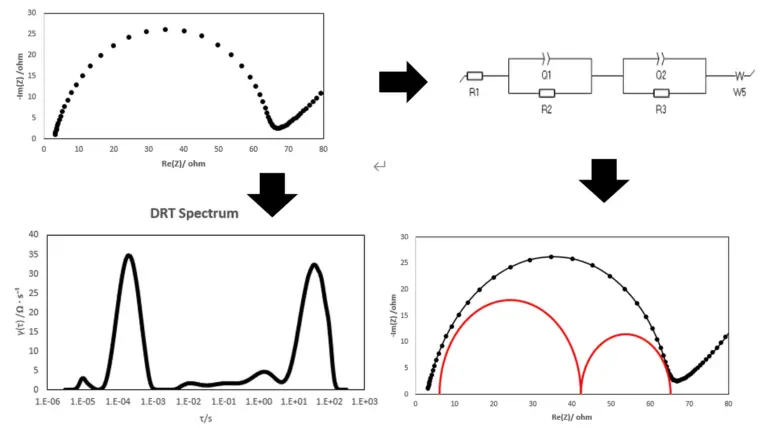
Nyquist plot showing apparent single semicircle that is actually composed of multiple overlapping semicircles, alongside the corresponding Equivalent Circuit Model (ECM) fit and the Distribution of Relaxation Times (DRT) spectrum that resolves each process into a distinct peak - illustrating the Nyquist-ECM-DRT relationship

Abstract Distribution of Relaxation Times (DRT) analysis is a mathematical deconvolution technique that converts electrochemical impedance spectroscopy (EIS) data from the frequency domain into a time-domain distribution function \(\gamma(\tau)\)— separating overlapping electrochemical processes into distinct peaks based on their characteristic…
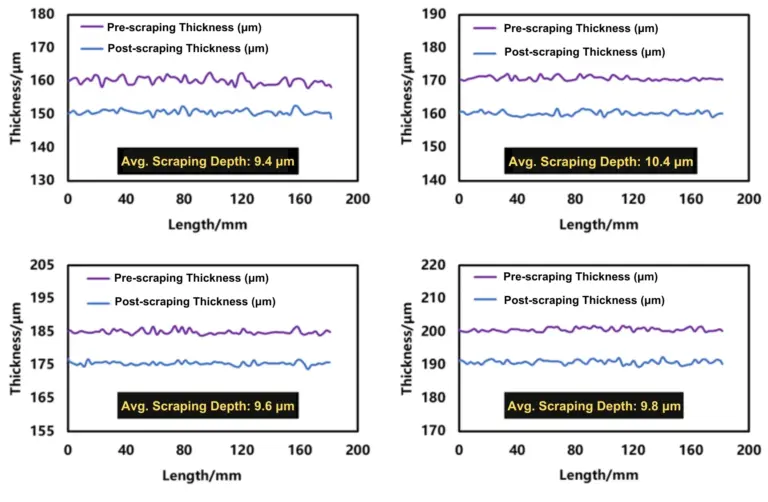
Quantifying Longitudinal Binder Distribution in Battery Electrodes: High-Precision Layer Profiling via Automated Electrode Powder Scraping System

In-situ laser metrology thickness curves mapping lithium battery electrode coating profile consistency before and after automated 10 micron scraping layers.

Abstract Longitudinal binder migration during the drying process creates compositional stratification that directly impacts the electrochemical performance, adhesion strength, and cycle life of lithium-ion batteries. Traditional manual scraping methods lack the spatial resolution and depth accuracy required to accurately map…

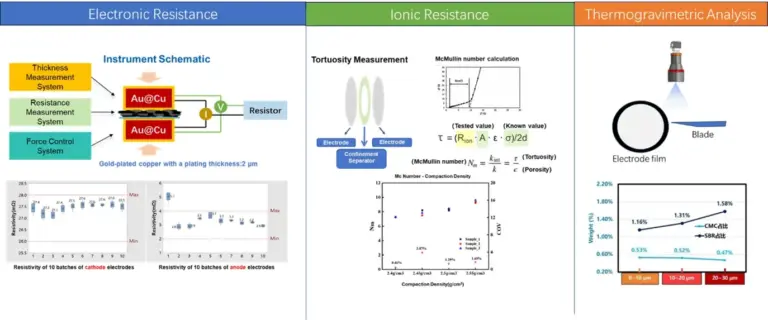
Electrode Characterization in Lithium Batteries: How to Quantify Electrode Performance Across Uniformity, Wettability, and Mechanical Properties

Schematic showing three electrode uniformity testing approaches — lateral electronic resistance mapping, lateral ionic resistance measurement, and through-thickness thermogravimetric binder distribution analysis.

1. What Is Electrode Characterization and Why Does It Matter? Electrode characterization in lithium-ion batteries refers to the systematic, quantitative evaluation of an electrode sheet’s electrical conductivity distribution, electrolyte wettability, and mechanical integrity to predict cell-level performance. Inadequate electrode uniformity,…

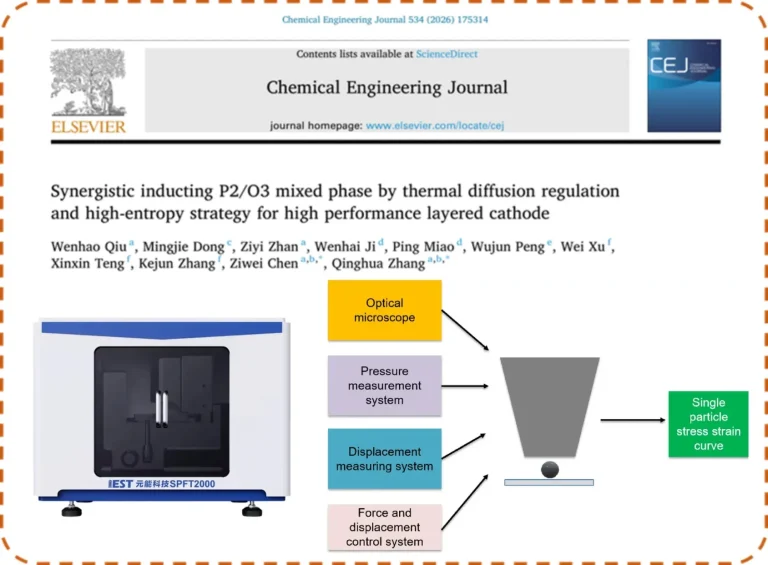
Is Cycle Diving Caused by Single Particle Mechanical Failure? A Single Particle Crushing Strength Study on Ni-Rich NCM and Graphite

Is Cycle Diving Caused by Single Particle Mechanical Failure? A Single Particle Crushing Strength Study on Ni-Rich NCM and Graphite

1. Introduction As lithium-ion batteries become ubiquitous in electric vehicles, energy density, cycle life, safety, and cost remain the primary concerns. During cycling, cathode active materials — particularly Ni-rich NCM — undergo repeated lithium intercalation and deintercalation, accompanied by anisotropic…

Deconstructing Double-Layer Coating Graphite Anode: Organic Compound Physical Characterization by Layer

Double-Layer Coating Graphite Anode: Depth-Dependent Physical Characterization and Graphitization Degree Analysis

Abstract Double-layer (dual-layer) coating is a graphite anode manufacturing technique in which a top layer of small-particle, rate-capable graphite (near the separator) and a bottom layer of large-particle, high-compaction graphite (near the current collector) are applied to balance power density…

Mechanical Property Evaluation of Porous Carbon and CVD Silicon‑Carbon at Single‑Particle and Powder Levels

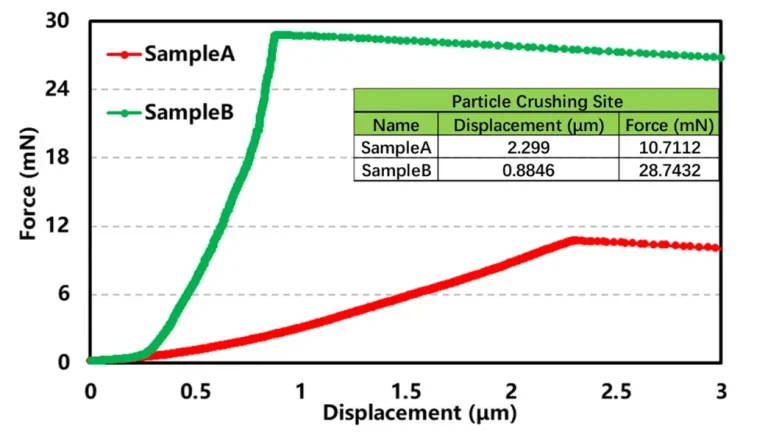
Figure 3. Single particle crushing strength test curves and crush load data.

1. Introduction Silicon stands out as a highly promising anode material for lithium‑ion batteries due to its theoretical specific capacity of 4200 mAh g⁻¹ and environmental friendliness. However, its practical application faces severe obstacles: high volume expansion (>300%), low electronic conductivity, and…

IEST Wechat QR code

Contact Us

Please fill out the form below and we will contact you asap!