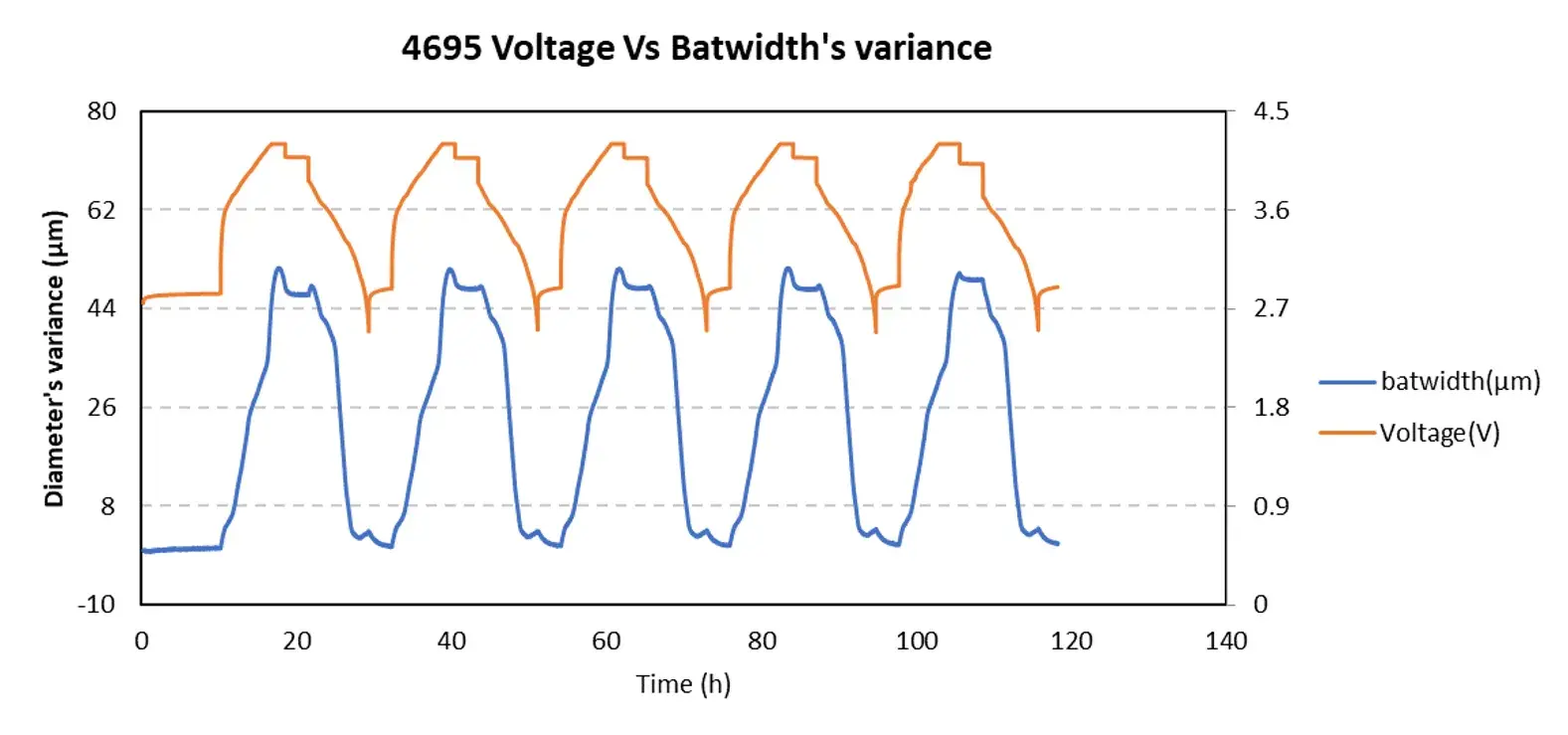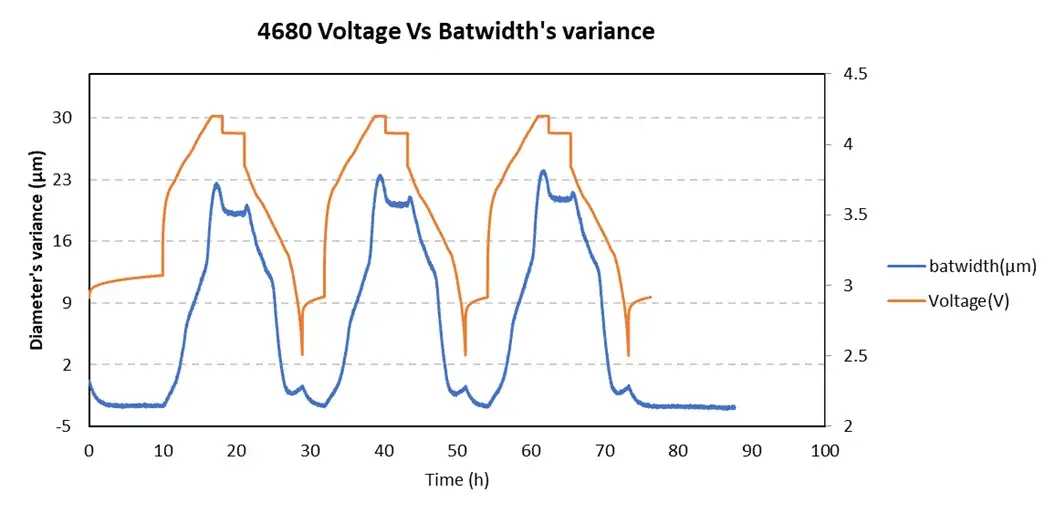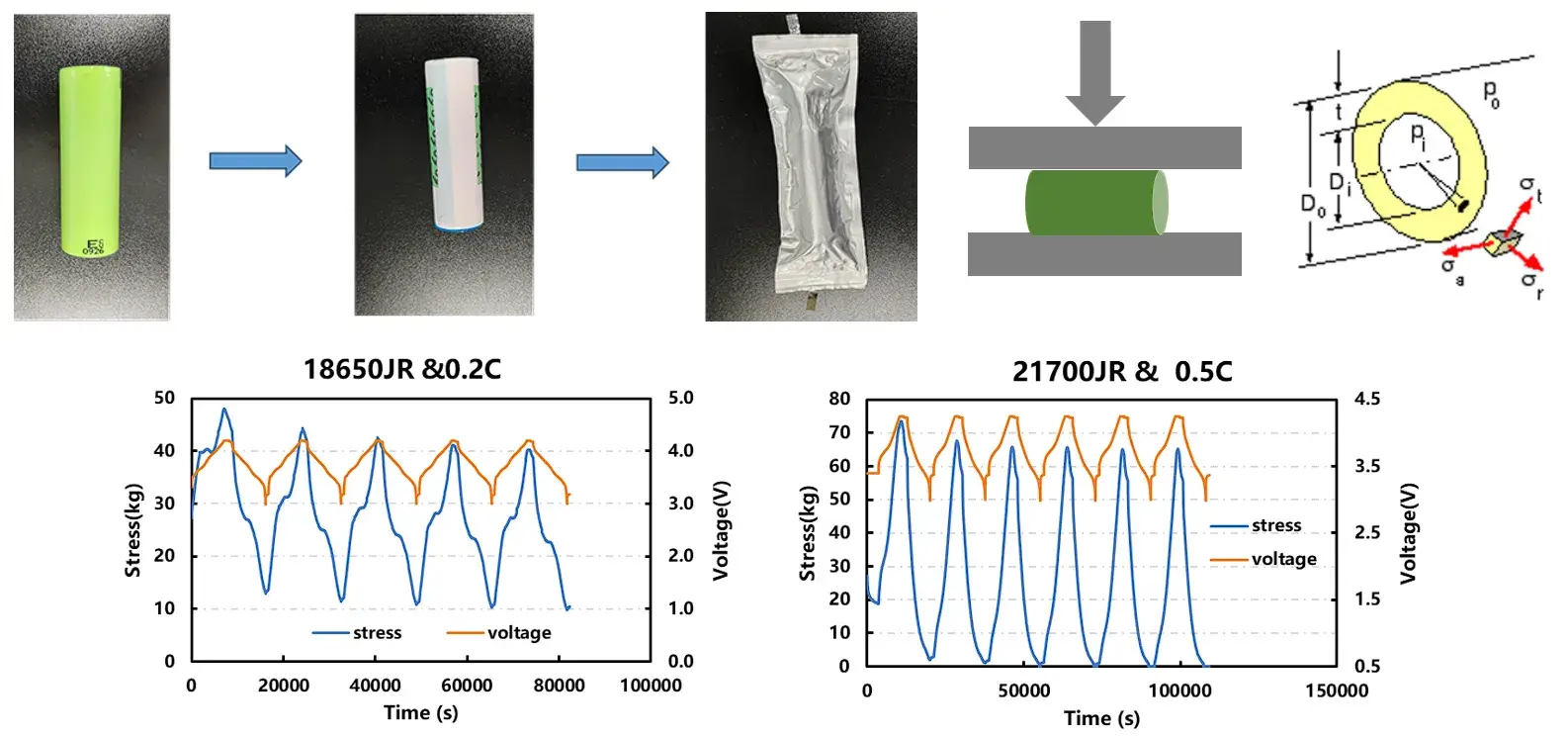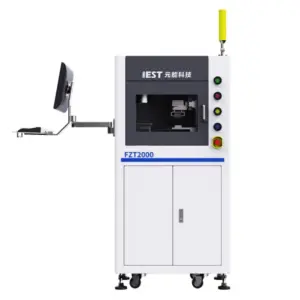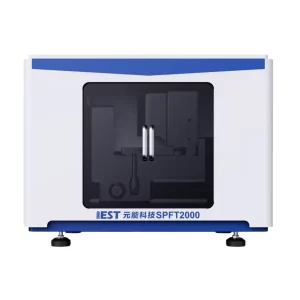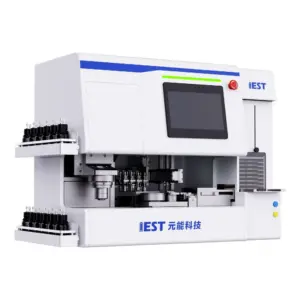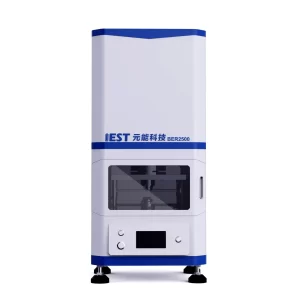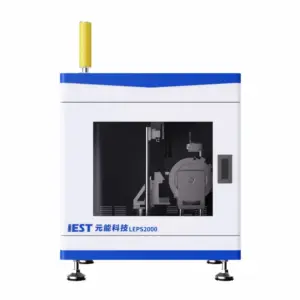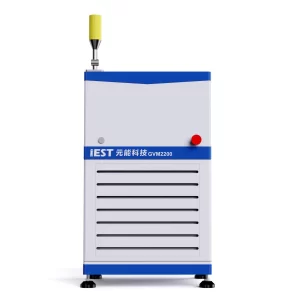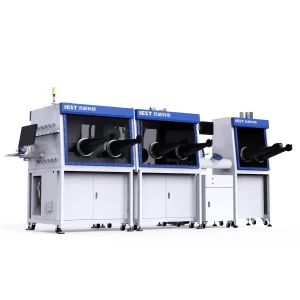
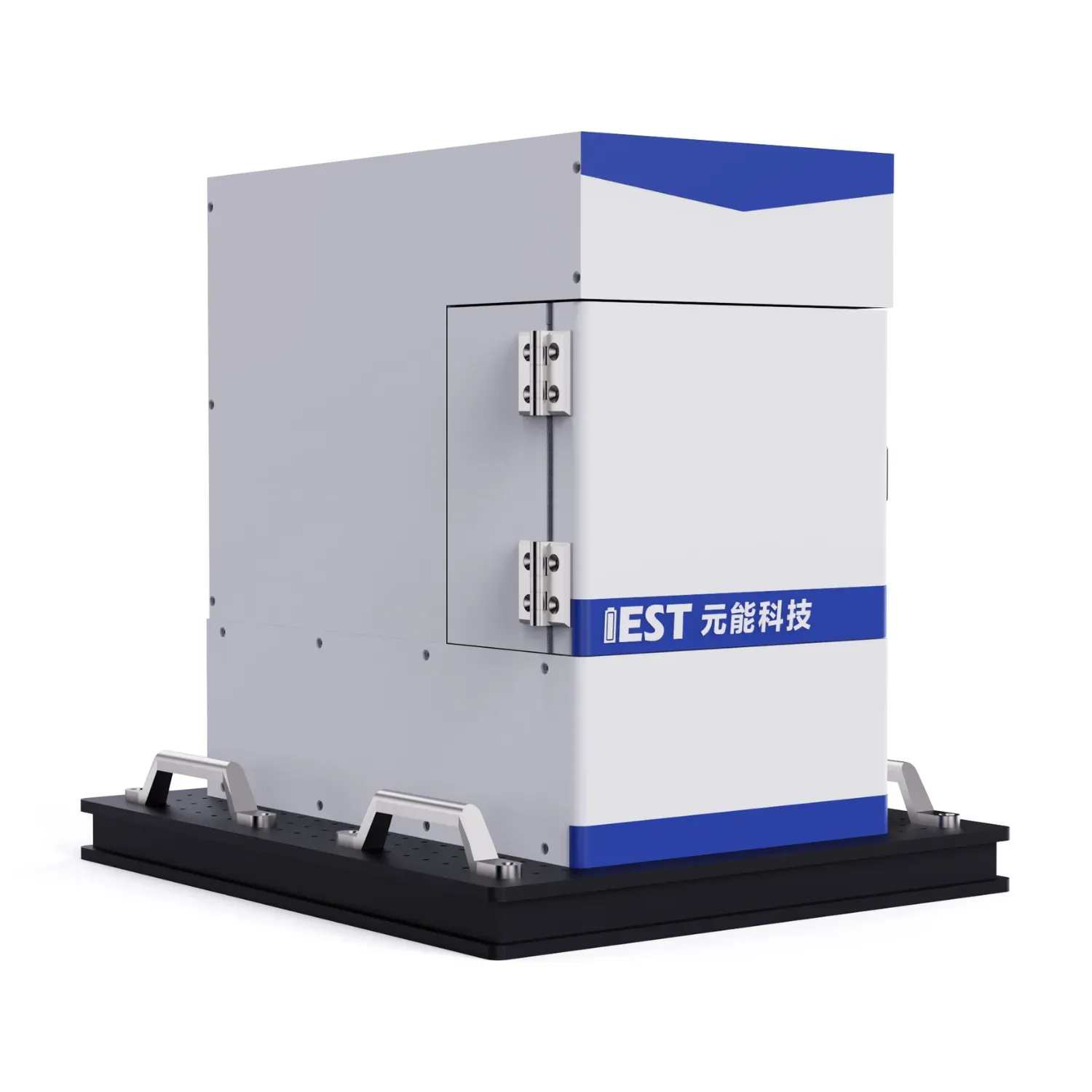
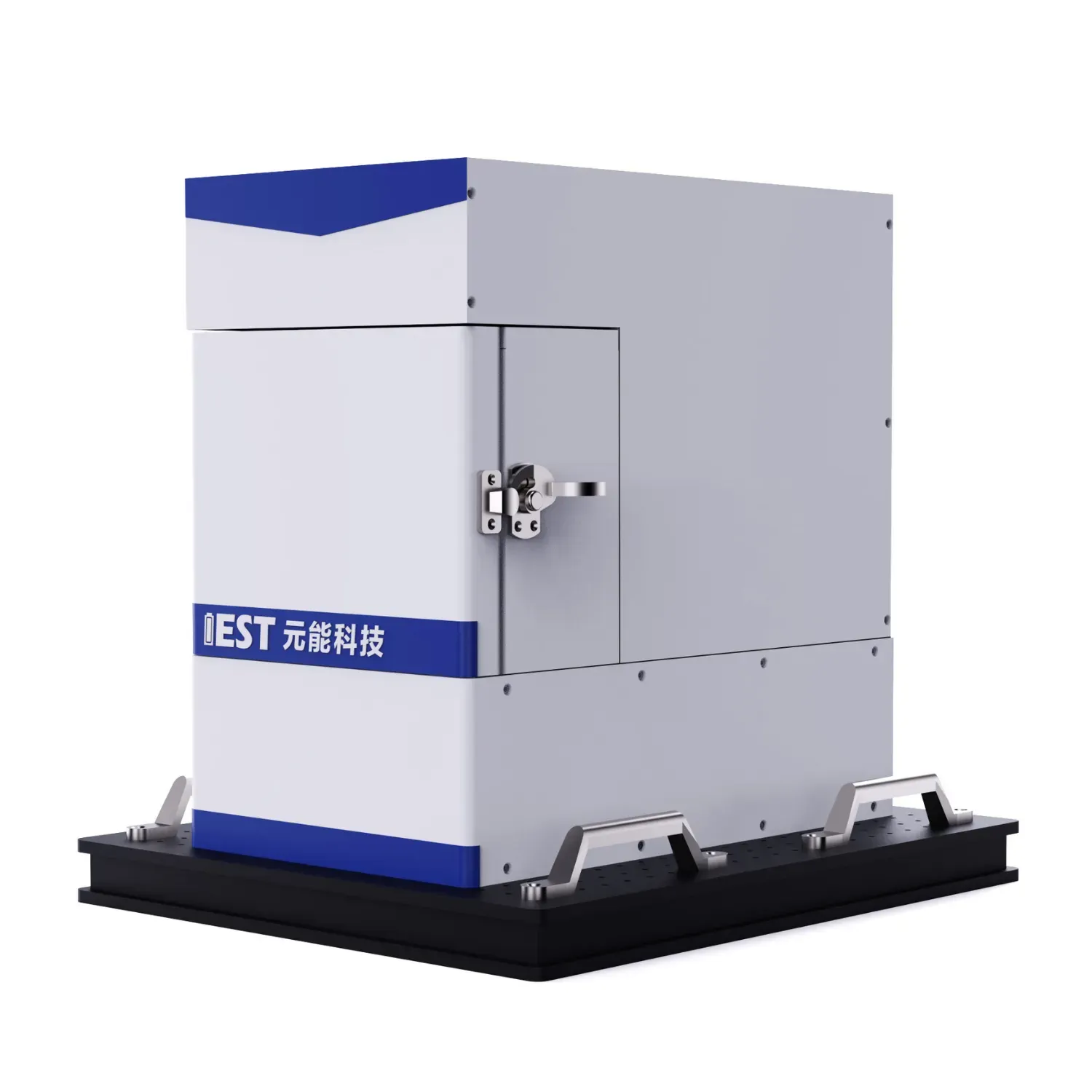
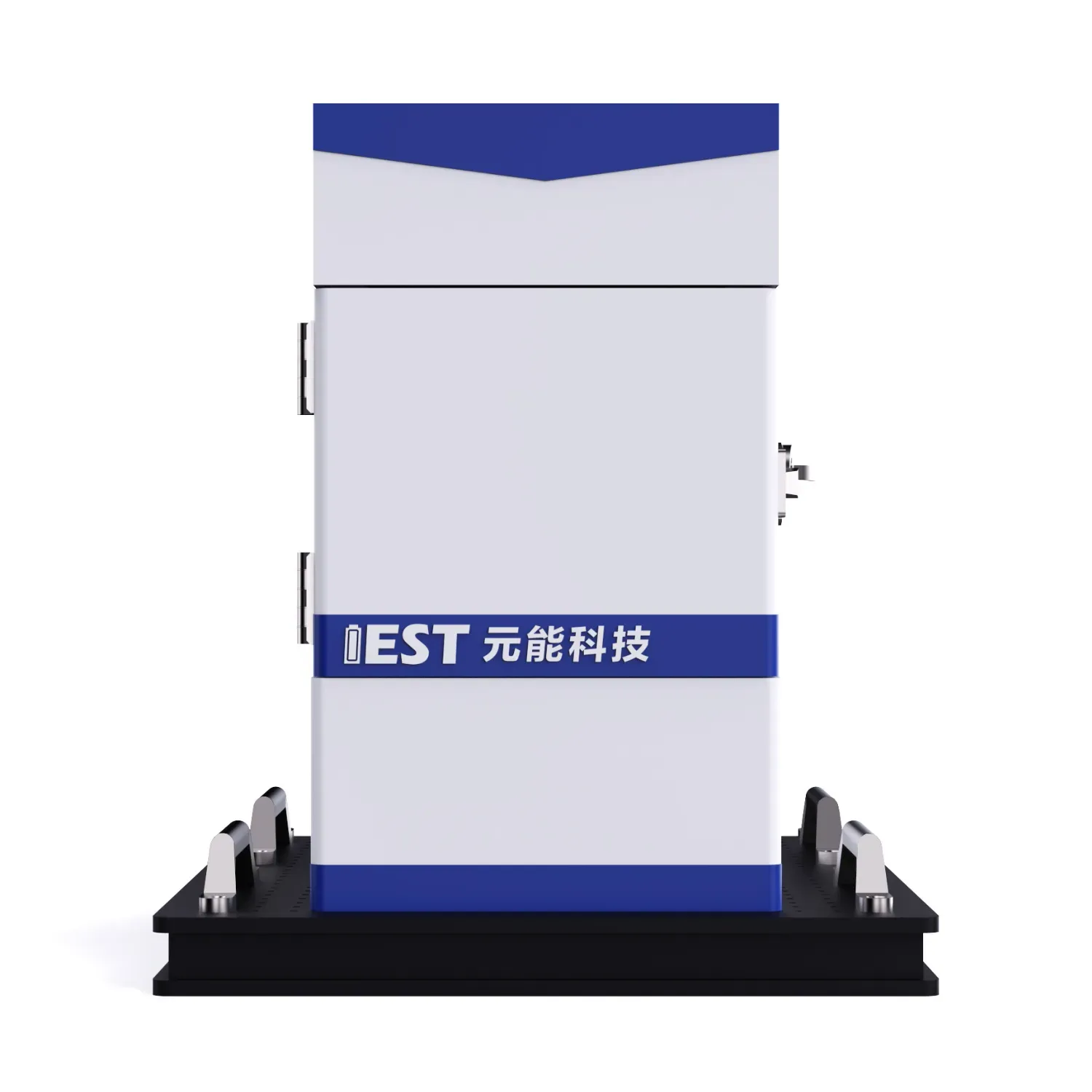
IEST Cylindrical Battery In-Situ Volume Swelling Testing System(CCS1100)

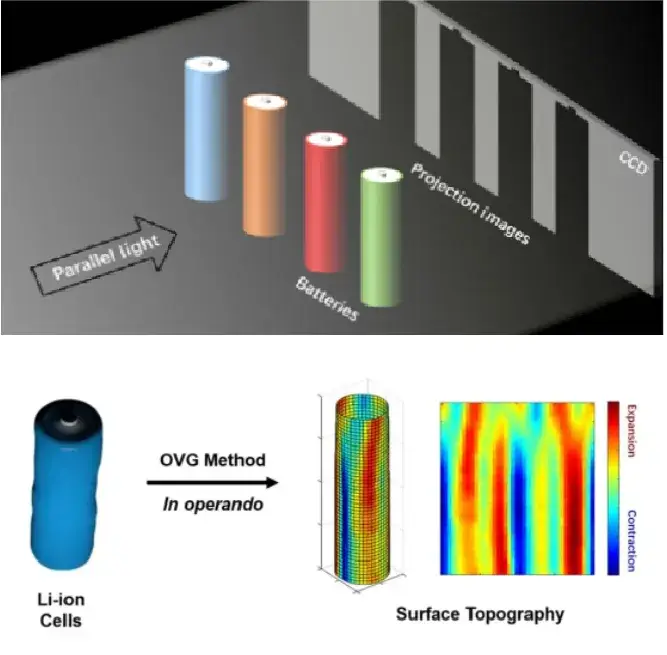
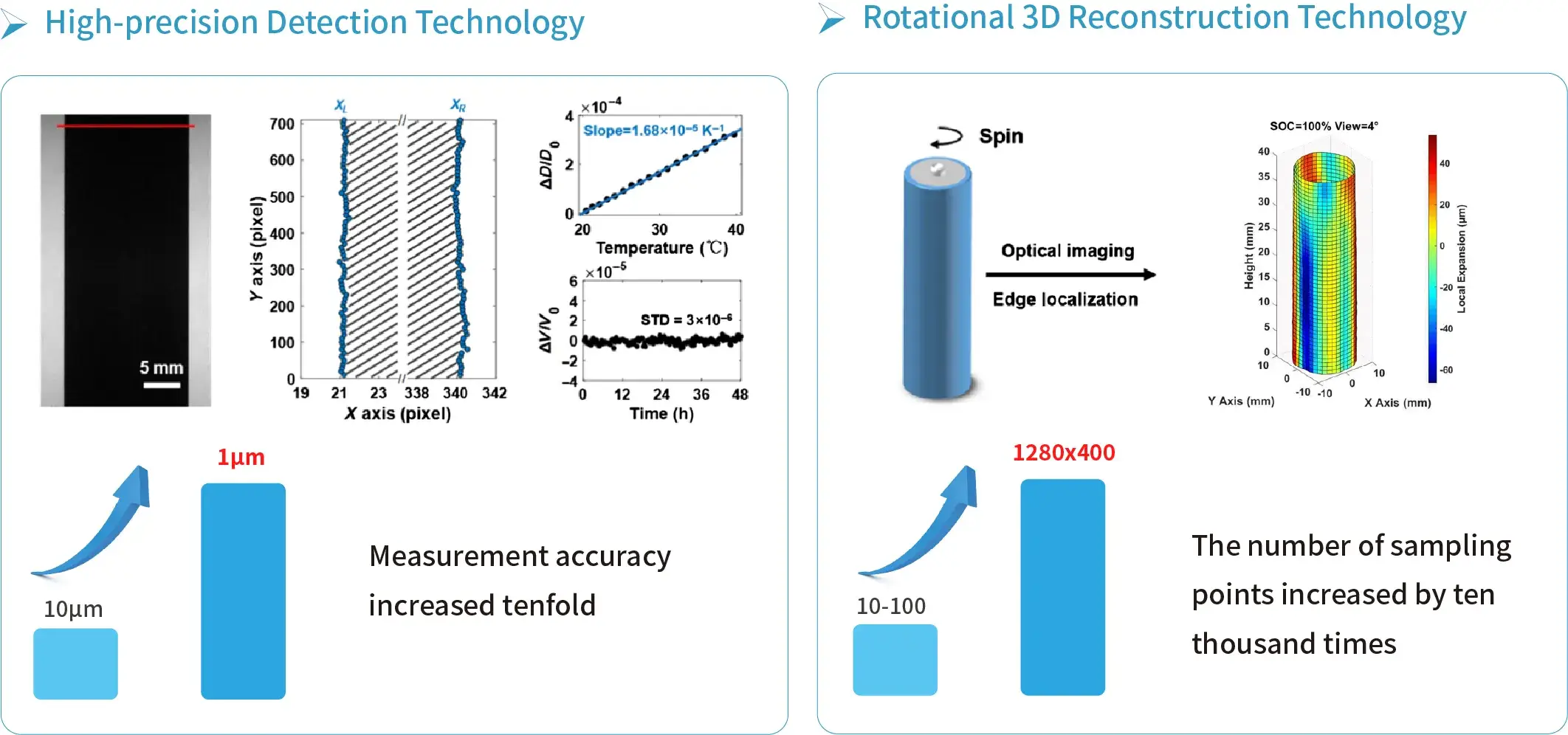
Introduction: The IEST Cylindrical Battery In-Situ Volume Swelling Testing System (CCS1100) is designed for non-contact, non-destructive, in-situ volume swelling analysis of cylindrical batteries. It integrates optical imaging, 3D reconstruction, and real-time online monitoring to evaluate battery surface morphology, volume deformation, and health condition during charge and discharge processes.

Features:

  1. Optical lmaging+ 3D Reconstruction + Real-time Online Monitoring
  2. Non-contact, Non-destructive, Single channel
  3. 25°C – 45°C temperature control
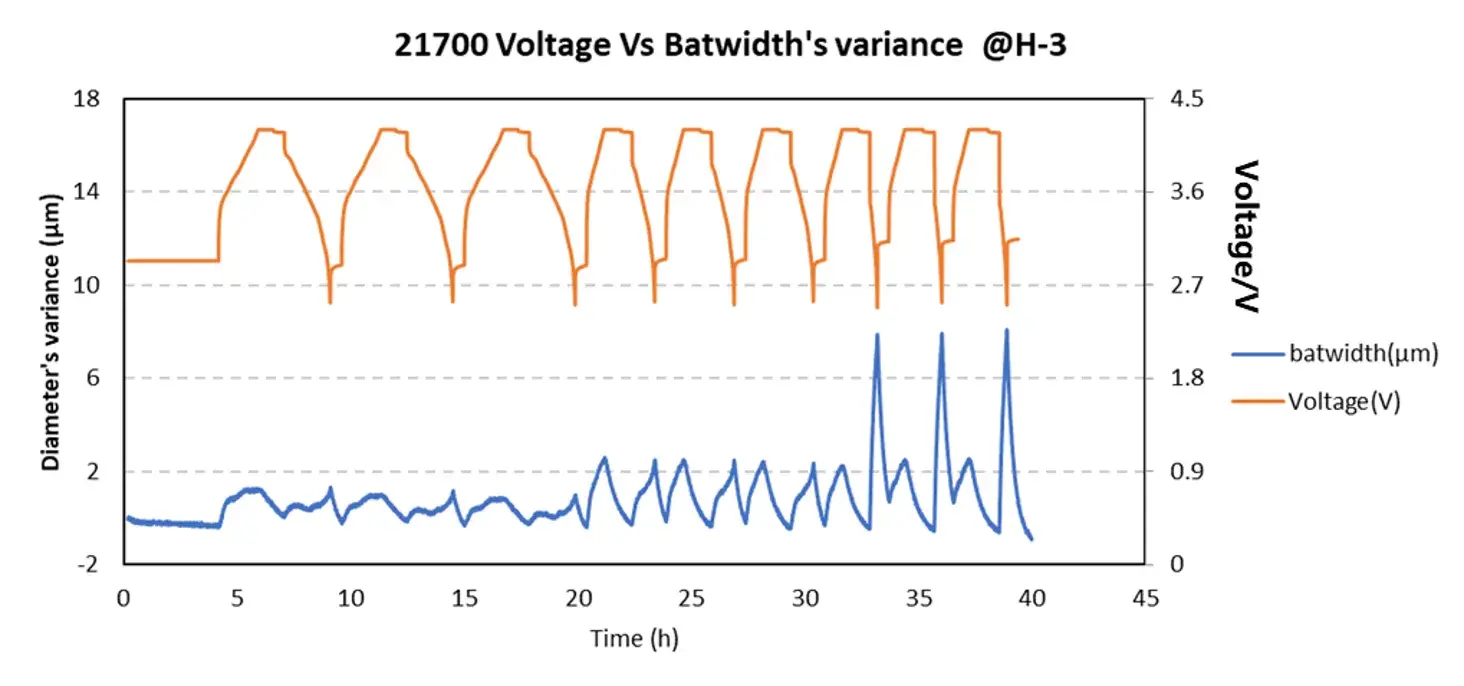
  4. Real time reconstruction of battery surface morphology and calculation of volumedeformation during charge and discharge processes.
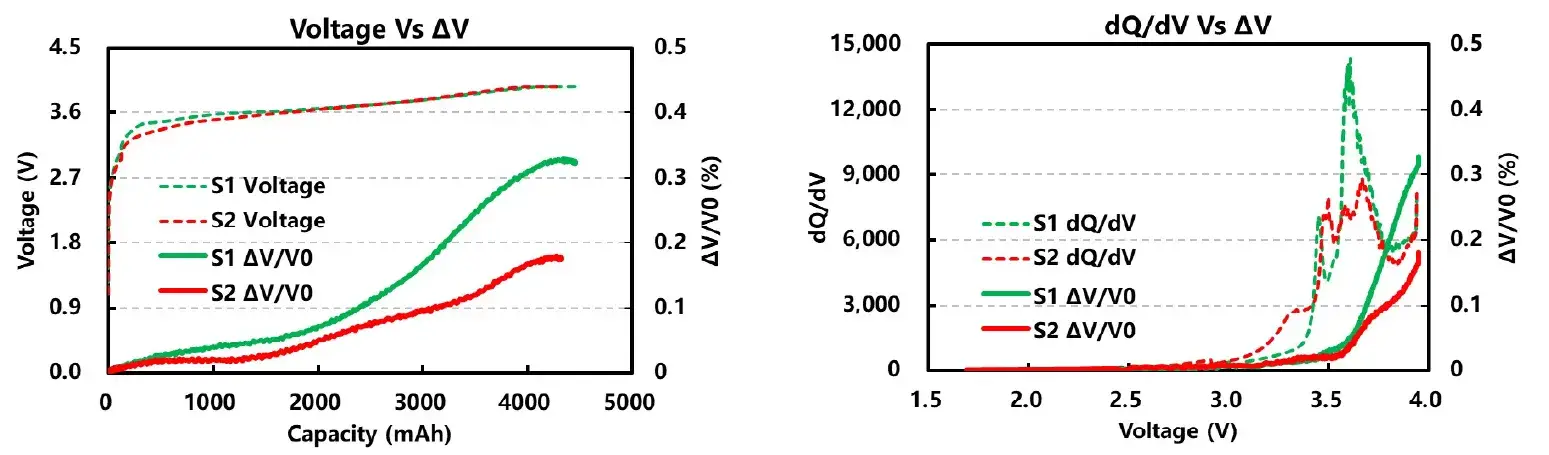
  5. Combining voltage and current data todetect and predict battery health condition from a higher dimension.

Application:

  • Material evaluation
  • Structural evaluation
  • Evaluation of different working conditions such as temperature, rate, storage, etc.

Description

Critical Challenges in Battery Manufacturing, Usage & Recycling

From production-line inconsistency to end-of-life assessment — six key pain points across the battery life cycle

Battery Manufacturers

Battery Manufacturers

Challenges in production and quality control

Q1Production Screening

Higher-capacity cells have lower internal resistance — conventional electrochemical workstations lack resolution for accurate measurement, while external current boosters are prohibitively expensive.

Q2Batch Sorting

OCV or 1 kHz ACIR alone cannot distinguish subtle variances between cell batches. How can we achieve refined, high-precision sorting?

Q3Failure Analysis

When abnormal cells emerge, how can production defects be rapidly pinpointed — welding defects, formation issues, or active material degradation?

Battery Recycling

Battery End-Users & Recyclers

Challenges in deployment, reuse, and second-life applications

Q4Module Consistency

Prior to assembling battery modules, how can cell consistency be reliably evaluated? Relying merely on OCV or 1 kHz ACIR is no longer sufficient.

Q5Supplier Variability

Do latent performance differences exist between nominally identical cells from different vendors, and can they be safely mixed in the same pack?

Q6Second-Life SOH

For retired or disassembled cells, what is the remaining State of Health (SOH)? How can they be accurately graded for second-life cascading utilization?

⚡ From production-line screening to end-of-life assessment — precision electrochemical testing is the essential link across the entire battery life cycle.

In new energy vehicles or energy storage power stations, lithium batteries are often used in the form of multiple paralel modules or packs. Therefore, high consistency requirements are placed on the battery cells in the same module or pack. Otherwise, thermal runaway may occur easily due to overcharging/overdischarging of a certain battery cell, leading to many after-sales problems.

Electrochemical impedance spectroscopy (EIS) has good sensitivity and correlation with the SOC, SOH, internal temperature, internal short circuit, etc, of the battery celll. By usine fast EIS testing and neural network algorithm modeling, you can effectively screen the consistency othe battery cells and help the cascade utilization of the battery cells.

IEST Battery Consistency Screening Instrument Details-2

2. Application

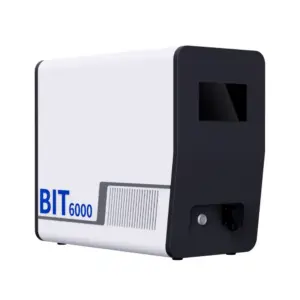
IEST Battery Impedance Tester (BIT6000) application scenarios across the battery lifecycle: fast impedance testing for defect/problem screening, production line and shipment inspection, battery pack module group detection, rapid State of Health (SOH) grading (100%, 90%, 80%), and second-life cascade utilization recycling.

3. IEST Creative Solutions

  • Electrochemical Impedance Spectroscopy (EIS) is a characterization technique that treats the battery cell as a “black box,” applying voltage and current perturbations across different frequencies while collecting the corresponding response signals to quantify the resistance and impedance of electrochemical processes with distinct time constants.

  • Introducing EIS testing prior to cell shipment or during incoming inspection—and comparing impedance variances among cells—enables: (1) screening cell-to-cell consistency; (2) identifying anomalous cells; and (3) unraveling cell failure mechanisms!

IEST Battery Impedance Tester (BIT6000) mechanism and innovative solution: correlating battery internal electrochemical processes (electron transport, Li+ solvation/desolvation, SEI migration, charge transfer, solid-state diffusion) with EIS Nyquist spectrum frequency ranges (high-frequency inductive/ohmic Rs, mid-frequency capacitive RSEI/Rct, low-frequency diffusion) and equivalent electrical circuit modeling.

IEST Battery Impedance Tester (BIT6000 / ERT Series) application case: rapid battery cell consistency screening, sub-milliohm EIS Nyquist impedance spectrum analysis (0.8–2.5 mΩ), and equivalent electrical circuit modeling for deconvolution of degradation mechanisms (CL, LLI, LAM) and outlier cell identification prior to pack assembly.

IEST Battery Impedance Tester (BIT6000) application scenarios and innovative solutions: high-speed EIS impedance testing for large power/energy storage cells (280Ah), neural network-driven cell consistency grouping and pre-assembly inspection, universal cycler integration for in-situ dynamic and cycling EIS, and rapid SOH evaluation for second-life cascade utilization.

3. BIT6000 Introduction

Functions & Features:

  • Fast EIS Frequency Sweep Testing: Executes rapid, multi-channel coupled electrochemical impedance spectroscopy(EIS) across a wide 1500 Hz to 0.1 Hz frequency range, executing high-speed cell grading without compromising spectral data integrity.
  • Ultra-Wide Capacity Envelope: Universally calibrated to evaluate massive cell spectrums scaling from 1 Ah to 1000 Ah, effortlessly optimizing sorting workflows for large-scale power batteries and high-capacity grid storage modules.
  • Dynamic Multi-Parameter Fitting: Employs advanced internal algorithms for real-time mathematical curve fitting during batch battery consistency screening , enabling high-precision rapid compartmentalization and abnormal cell detection.
  • Unified Multi-Modal Characterization: Combines high-accuracy Open Circuit Voltage (OCV) profiling, Direct Current Internal Resistance (DCR) evaluation, and continuous constant-current testing parameters into a centralized automated testing sequence.

IEST Battery Consistency Screening Instrument Details-5

Applications

1. Application Scenario

IEST Battery Consistency Screening Instrument Details-6

2. ElS Test of Battery With Large Capacity & Low Internal Resistance.

IEST Battery Impedance Tester (BIT6000) application case: ultra-fast EIS impedance testing (1500Hz–0.1Hz) and sub-milliohm measurement repeatability for 280Ah large-capacity LFP prismatic cells, featuring high-speed 1Hz impedance acquisition in 5 seconds and automated fixture compatibility.

IEST BIT6000 can easily test the EIS of batteries with large capacity (2Ah~1000Ah) and low internal resistance (0.05mΩ~100mΩ). We also support customization various testing fixtures and automation testing equipment.

IEST Battery Impedance Tester (BIT6000) customizable test accessories and tooling fixtures: specialized low-resistance test leads, cylindrical battery fixtures with four-wire Kelvin ejector pins, 280Ah prismatic cell testing fixtures, and automated channel switching systems for high-throughput EIS characterization.

Note: The EIS test frequency range can be adjusted according to the production line progress and process section

3. EIS Testing During Battery Cycling

IEST Battery Impedance Tester (BIT6000) application case: seamless integration with third-party cyclers for in-situ cycling EIS and dynamic EIS impedance testing, enabling deep battery aging mechanism research (lithium plating, overcharge, overdischarge, pressure effects) and ML-driven SOH battery life prediction.

  • IEST BIT6000 can be integrated with any cycler. Users can first use the cycler tester to perform the cyclic aging on the battery, and BIT6000 can automatically perform the EIS testing under different SOH states, which can save the switching time between ”temperature adiustment ⇔ charge and discharge instrument ⇔ electrochemical workstation”
  • IEST BIT6000 can also perform the EIS testing during the charging & discharging process, i.e., dynamic EIS or operando EIS.

4. Battery Cell Failure Analysis (Production Troubleshooting)

Distribution of Relaxation Times (DRT) analysis is a mathematical method for interpreting EIS spectra. Unlike conventional Equivalent Circuit Model (ECM) fitting, DRT analysis eliminates common issues such as: ① dependency on initial parameter values; ② fitting distortion; and ③ ambiguous mechanistic interpretations when multiple distinct models can fit the same data.

IEST Battery Impedance Tester (BIT6000) application case: battery cell failure analysis and production defect troubleshooting via Distribution of Relaxation Times (DRT) analysis, deconvolving EIS Nyquist spectra into discrete resistance regions (Rc tab welding, RSEI formation quality, Rct interfacial kinetics, Rdiff ion diffusion) to accurately diagnose SEI formation abnormalities.

Distribution of Relaxation Times (DRT) analysis is a mathematical method for interpreting EIS spectra. Unlike conventional Equivalent Circuit Model (ECM) fitting, DRT analysis eliminates common issues such as:

  • Dependency on initial parameter values.
  • Fitting distortion.
  • Ambiguous mechanistic interpretations when multiple distinct models can fit the same data.

5. Battery Consistency Sorting (Abnormal Cell Screening)

IEST Battery Impedance Tester (BIT6000) application case: AI neural network-driven battery cell consistency sorting, multi-frequency EIS impedance spectrum classification (high, mid, and low frequency), automated group matching (Group 1, 2, 3), and anomaly screening for battery shipment inspection and pre-module assembly incoming testing.

  • For battery manufacturers producing and assembling modules/packs, EIS testing can be used to check the quality and consistency of battery in the same module/pack.
  • For EV/energy-storage manufacturers sourcing batteries externally, EIS testing ensures incoming battery quality to maintain the consistency of battery in the same module/pack.

6. Rapid SOH Estimation (Cascade Utilization)

6.1 Traditional Battery Capacity Grading & Cascade Utilization

  • A batch of recycled / retired batteries
  • Perform charge-discharge cycling on batteries
  • Group and sort batteries based on measured capacity for cascade utilization

Traditional lithium-ion battery formation and capacity grading system cabinets (化成分选系统) used in battery recycling and cascade utilization, demonstrating the conventional time-consuming and energy-intensive full charge-discharge testing method prior to adopting fast EIS solutions like IEST BIT6000.

Three Major Limitations:

  • A batch of recycled batteries
  • Perform charge-discharge cycling on batteries
  • Group and sort batteries based on measured capacity for cascade utilization

6.2 IEST Rapid Capacity Grading Solution:

  • A batch of recycled batteries

  • Perform EIS testing on batteries

  • Execute rapid capacity grading based on EIS-capacity correlation models

IEST Battery Impedance Tester (BIT6000) application case: rapid State of Health (SOH) estimation and capacity grading for retired battery cascade utilization, correlating multi-cycle EIS Nyquist impedance spectrum evolution (1st to 200th cycles) with discrete SOH degradation levels (100%, 90%, 80%).

As the State of Health (SOH) decreases, the battery EIS impedance response changes accordingly.

6.3 EIS-Based Rapid SOH Estimation Model

IEST Battery Impedance Tester (BIT6000) application case: AI machine learning-driven rapid State of Health (SOH) prediction model integrating multi-frequency EIS impedance spectra, SOC, and temperature data for automated second-life battery cascade sorting and grading (100%, 90%, 80%).

SOH Estimation Accuracy<5% (Big Data Modeling Required)

7. Case

7.1 EIS screening is conducted on 30 prismatic cells with a capacity of 50Ah each (at 50% state of charge) over a frequency range from 1500Hz to 0.1Hz.

IEST Battery Consistency Screening Instrument Details-9

Especially for the battery represented by the green line, its impedancein the high-frequency region is consistent with other batteries, and only the impedance in the medium and low-frequency regions has a large difference. In this case, if only the electronic resistance or 1000Hz impedance is tested, it cannot be effectively distinguished, but swept frequency EIS can effectively screen and identify!

7.2 EIS screening is conducted on 40 cylindrical cells with a capacity of 30Ah each (at 6.5% state of charge) over a frequency range from 1500Hz to 0.1Hz.

IEST Battery Consistency Screening Instrument Details-10

In zone Ⅰ: For ohmic impedance and SEI impedance, the 30 batteries are distributed relatively concentratedly, with no obvious differences; In zone Ⅱ: Rct is divided into two concentrated areas, indicating that there are certain differences in the ionic impedance of the 40 batteries, which will affect the capacity after long cycles

Specifications

Category Battery Impedance Tester Adjustable Prismatic Cell Fixture Adjustable Cylindrical Cell Fixture
Product Image IEST BIT6000 Battery Impedance Tester IEST APTB1000 Prismatic Cell Test Fixture IEST ACTB1000 Cylindrical Cell Test Fixture
Model BIT6000 APTB1000 ACTB1000
Current Excitation Range 0.01 ~ 10A
Suitable for various prismatic cells
Max L × W × H:
284 × 94 × 255 mm
Tab Pitch:
40 ~ 240 mm
(Custom dimensions supported)
Suitable for 18650 / 21700 and other cylindrical cells
Max Length:
130 mm
Diameter Range:
18 ~ 50 mm
(Custom dimensions supported)
Current Control Accuracy ±0.05% F.S.
Voltage Test Range 0 ~ 5V
Voltage Control Accuracy ±0.006% F.S.
EIS Frequency Range 20 kHz ~ 0.01 Hz
Applicable Internal Resistance 0.05 mΩ ~ 5 mΩ
Compatible Battery Capacity 3 ~ 1000 Ah Li-ion Batteries
Specifications
Dimensions (W×D×H):
412 × 180 × 300 mm
Weight: 11 kg
Rated Power: 1200 W
Dimensions (W×D×H):
350 × 310 × 522 mm
Weight: 7.5 kg
Max Probe Current: 30A
Dimensions (W×D×H):
474 × 100 × 143 mm
Weight: 3 kg
Max Probe Current: 30A

Download

IEST Battery Consistency & Battery Impedance Tester

Contact Us

Please fill out the form below and we will contact you asap!

IEST Wechat QR code