Warning: Undefined array key "url" in /www/wwwroot/iestbattery.com/wp-content/plugins/seo-by-rank-math/includes/modules/schema/snippets/class-author.php on line 41
IEST Application Engineering Team

IEST Application Engineering Team

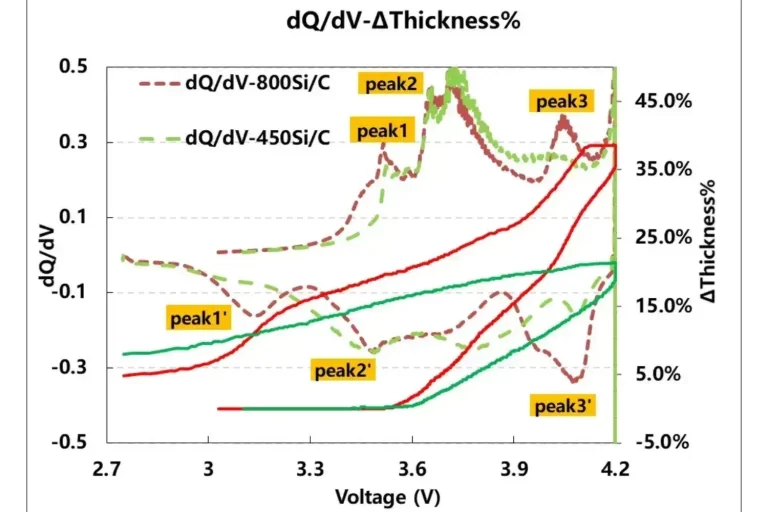
Analysis the Relationship Between Capacity Decay And Thickness Swelling During The Long-cycle Process Of NCM Cells

Analysis the Relationship Between Capacity Decay And Thickness Swelling During The Long-cycle Process Of NCM Cells

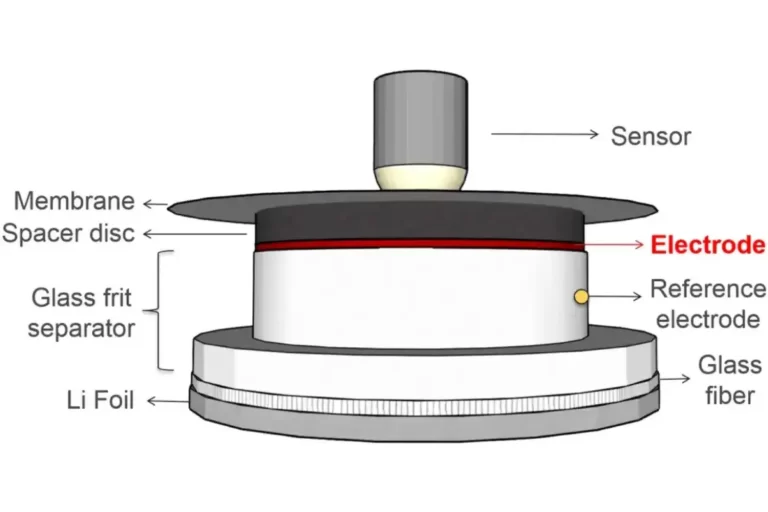
Abstract Capacity decay and loss occur during lithium-ion battery cycling, and researchers worldwide have extensively studied its underlying mechanisms. Known contributing factors include CEI/SEI passivation film formation on cathode and anode surfaces, metallic lithium deposition, dissolution of electrode active materials,…

Powder Compaction Density & Powder Conductivity: Loading vs. Unloading State Comparison for LFP and Graphite Anode Powder Testing

Analysis of Powder Compaction Density and Powder Conductivity — Comparison of Pressed and Unloaded Measurement Modes

Abstract Powder compaction density and powder conductivity of lithium-ion battery electrode powders differ significantly depending on whether they are measured under applied pressure (pressed-state, or loading, density) or after pressure release (unloaded, relaxed-state density). At approximately 200 MPa, LFP cathode powder shows a…

A Universal Strategy for Precise Control of Initial Coulombic Efficiency in Li-Rich Mn-Based Cathode Materials

A Universal Strategy for Precise Control of Initial Coulombic Efficiency in Li-Rich Mn-Based Cathode Materials

Authors: Dong-Liang Peng (Prof.), Qingshui Xie (Senior Researcher), Weibin Guo (first author), et al. Source: A Universal Strategy toward the Precise Regulation of Initial Coulombic Efficiency of Li-Rich Mn-Based Cathode Materials, Adv.Mater., 2021, DOI:10.1002 1. Abstract We report an oleic-acid…

Hard Carbon Density and Conductivity vs Prussian Blue: Sodium-Ion Battery Powder Test Data

Prussian Blue Materials Conductivity and Compaction Density Analysis

Abstract Hard carbon electrical conductivity measurement is performed using the four-probe method in a controlled powder resistivity tester to eliminate contact resistance artifacts — critical because hard carbon’s lower resistance makes the two-probe method unreliable. In this study, the IEST PRCD3100 applied 10–200…

IEST Wechat QR code

Contact Us

Please fill out the form below and we will contact you asap!