-
iestinstrument

Abstract
Sodium-ion battery testing requires a multi-level characterization approach covering four hierarchical scales — particle, powder, electrode, and cell — because sodium-ion battery performance limitations originate at each level and propagate upward to cell-level failure. At the particle level, single-particle crushing strength quantifies mechanical differences in layered oxide cathode and hard carbon anode raw materials that determine resistance to fracture during slurry mixing and electrode calendering. At the powder level, powder resistivity and compaction density measurement screens incoming materials for moisture and CO₂ degradation in layered oxide cathodes, and characterizes carbonization uniformity in hard carbon anodes. At the electrode level, electronic conductivity (BER), ionic conductivity and tortuosity (EIC), and electrode flexibility (BEF) testing identify process defects in slurry preparation, coating, and calendering. At the cell level, in-situ swelling, in-situ gassing(GVM & MSG), and electrochemical characterization (EIS/CV/GITT) capture the dynamic electrochemical and mechanical responses that determine cycle life, rate capability, and safety.
1. Industry Background: Sodium-Ion Batteries at Inflection Point
Recent industry developments signal that sodium-ion batteries are transitioning from laboratory demonstrations to GWh-scale commercial deployment: CATL and Hyperstrong signed a strategic energy storage cooperation agreement for 60 GWh of sodium-ion battery capacity over three years — establishing the largest single sodium-ion battery energy storage order ever recorded globally. Sodium-ion batteries have built a growing commercial presence across stationary energy storage (residential and commercial/industrial), two-wheelers, low-speed electric vehicles, and special-purpose engineering equipment — driven by four core advantages: abundant and widely distributed raw materials (sodium), excellent low-temperature performance, strong fast-charging capability, and high intrinsic safety. China’s New Energy Storage Technology Development Roadmap 2025–2035 explicitly identifies sodium-ion batteries as a priority development direction for new energy storage.
| Application Field | Specific Scenarios | Key Advantages |
|---|---|---|
| Energy Storage | Residential energy storage, commercial & industrial energy storage | Cost advantage, resource sustainability |
| Transportation | Two-wheelers, low-speed EVs, start-up power | Excellent low-temperature performance, fast charging |
| Specialty Applications | Construction machinery, site‑specific energy storage | Safety, environmental adaptability |
Key technical focus areas for sodium‑ion batteries:
- Material system optimization: For cathodes, polyanionic compounds, layered oxides, and Prussian blue analogs continue to evolve; hard carbon remains the dominant anode material.
- Cost competitiveness enhancement: With scaled‑up production, sodium‑ion battery costs are expected to decrease further, strengthening their competitiveness against LFP batteries.
- Complete industry chain development: Rapid progress is being made in building the full industrial chain — from raw materials to cells to complete battery systems.
Despite this commercial momentum, sodium-ion batteries face a series of persistent technical and manufacturing challenges compared to lithium-ion batteries — which have achieved >95% production yield after decades of development. Current sodium-ion battery production lines, particularly mid-to-small scale operations, often achieve only ~70% yield, driven by: poor material stability (especially moisture and CO₂ sensitivity of layered oxide cathodes); insufficient process consistency; limited cycle life; energy density disadvantage versus high-nickel lithium-ion; environmental intolerance during storage; and cell swelling and gas generation. The result is a compounding cycle: material breakthroughs are slow → production yield is low → costs remain high → market expansion is constrained.
Addressing this challenge requires not only material innovation but also systematic, quantitative testing at every level of the sodium-ion battery production chain — from raw material incoming inspection through electrode process control to cell-level qualification. This article presents a multi-level sodium-ion battery testing framework that adapts proven lithium-ion battery quality control methodology to the specific material and process characteristics of sodium-ion batteries.

Figure 1. Multi-level sodium-ion battery testing framework: four hierarchical characterization levels from particle mechanical properties through powder physical properties, electrode uniformity, and full-cell electrochemical/mechanical performance.
2. Level 1 — Particle Level: Quantifying Raw Material Mechanical Strength
2.1 Industry Pain Points: Raw Materials Strength Inconsistency & Quantification Challenges
Cathode and anode particle compressive strength is highly variable between sodium-ion battery raw material batches — particles that fracture during slurry mixing or electrode calendering create fine particle fragments that increase electrode resistance, clog separator pores, and reduce active material utilization. Layered oxide cathode particles are particularly vulnerable to mechanical fracture under calendering pressure due to the structural anisotropy of the layered crystal lattice. Hard carbon anode materials present a different challenge: diverse precursors (biomass, resin, petroleum pitch) and varying carbonization conditions produce amorphous carbon structures with wide mechanical property distributions — yet no standardized industry method existed to quantify these differences quantitatively before assembly.
2.2 Solution: Single Particle Mechanical Property Characterization (SPFT Series)
The IEST Single Particle Force Mechanical Property Tester(SPFT Series), developed in accordance with national standard GB/T 43091-2023, provides batch characterization of individual particle crushing strength — enabling incoming material screening before slurry preparation. In sodium-ion battery testing applications:
2.2.1 Layered oxide cathode characterization
Batch screening of raw material particles by compressive strength identifies high-strength candidates that resist fracture during slurry mixing and calendering, eliminating breakage-induced resistance increases before they enter the process. Figure 2 shows crushing strength results for four layered oxide cathode materials, illustrating the measurable strength differences that drive material selection.
| No. | 1# | 2# | 3# | 4# | ||||||||
|---|---|---|---|---|---|---|---|---|---|---|---|---|
| Force (mN) | Size (μm) | Strength (MPa) | Force (mN) | Size (μm) | Strength (MPa) | Force (mN) | Size (μm) | Strength (MPa) | Force (mN) | Size (μm) | Strength (MPa) | |
| 1 | 4.8379 | 5.5 | 126.3146 | 1.3099 | 5.4 | 35.4791 | 3.1621 | 5.7 | 76.8684 | 7.2291 | 5.6 | 182.0666 |
| 2 | 6.3785 | 5.8 | 149.7561 | 5.4651 | 5.9 | 123.9984 | 3.6423 | 5.2 | 106.3876 | 7.3467 | 5.7 | 178.5931 |
| 3 | 6.8783 | 5.9 | 156.0627 | 3.1621 | 5.9 | 71.7453 | 3.2993 | 5.4 | 89.3627 | 5.2397 | 5.3 | 147.3251 |
| 4 | 5.1535 | 5.8 | 120.9953 | 3.6423 | 5.4 | 98.6530 | 4.3773 | 5.5 | 114.2886 | 7.8171 | 5.8 | 183.5320 |
| 5 | 5.4965 | 5.7 | 133.6160 | 3.2993 | 5.6 | 83.0936 | 3.8677 | 5.0 | 122.1898 | 6.3961 | 5.3 | 179.8397 |
| 6 | 4.2715 | 5.4 | 115.6951 | 4.3773 | 5.7 | 106.4091 | 5.2887 | 5.6 | 133.1971 | 7.7681 | 5.7 | 188.8370 |
| 7 | 5.1633 | 5.9 | 117.1508 | 3.8677 | 5.2 | 112.9713 | 4.8379 | 5.2 | 141.3098 | 5.5141 | 5.3 | 155.0404 |
| 8 | 5.5357 | 5.8 | 129.9686 | 5.2887 | 5.8 | 124.1695 | 3.8765 | 5.5 | 101.2130 | 8.1993 | 5.5 | 214.0787 |
| 9 | 4.6243 | 5.6 | 116.4641 | 4.8379 | 5.4 | 131.0362 | – | – | – | 4.2499 | 5.6 | 107.0347 |
| 10 | 4.6929 | 5.9 | 106.4779 | 3.8765 | 5.7 | 94.2350 | – | – | – | 5.6317 | 5.6 | 141.8357 |
| Mean | 5.3132 | 5.73 | 127.8122 | 3.9128 | 5.60 | 98.5443 | 4.1690 | 5.39 | 113.3382 | 6.5392 | 5.54 | 168.2774 |
| COV | 15.15% | 3.02% | 12.87% | 34.25% | 4.12% | 29.25% | 18.57% | 4.37% | 18.06% | 19.46% | 3.08% | 18.99% |
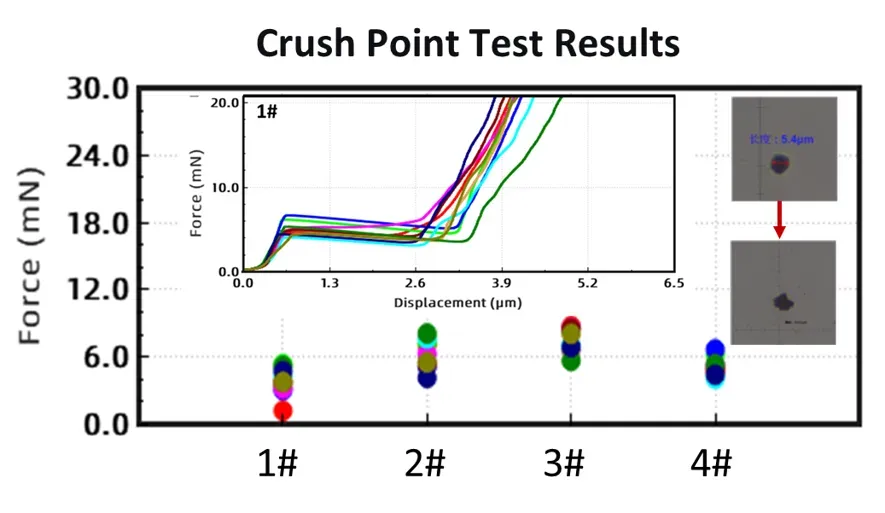 Figure 2. Single particle compressive strength test results for four layered oxide cathode materials (sodium-ion battery).
Test results:
- Comparison of particle crushing force distribution trends: 4# > 3# > 1# > 2#
- Pressure‑displacement curve analysis: The particle fracture phenomenon of the sample is relatively pronounced; the inflection point of the curve corresponds to the particle fracture point.
2.2.2 Hard Carbon Anode Mechanical Property Characterization
Quantifying crushing strength differences from different precursors, carbonization temperatures, and dwell times establishes the mechanical property baseline for each material variant — enabling objective process comparison and supplier qualification based on mechanical data rather than electrochemical testing alone. Table 3 and Figure 3 shows representative single-particle crushing strength measurements for hard carbon anode materials. The results indicate that the SPFT Series effectively evaluates the compressive strength of hard carbon at the single-particle level, enabling optimization of R&D processes.
| No. | Force (mN) | Particle Size (μm) | Compression Strength (MPa) |
|---|---|---|---|
| 1 | 5.600 | 5.28 | 158.651 |
| 2 | 10.569 | 5.58 | 268.089 |
| 3 | 7.560 | 5.48 | 198.836 |
| 4 | 7.227 | 5.18 | 212.726 |
| 5 | 7.629 | 5.58 | 193.518 |
| 6 | 6.649 | 5.78 | 157.184 |
| 7 | 7.639 | 5.48 | 200.898 |
| 8 | 8.932 | 5.28 | 253.048 |
| 9 | 5.208 | 5.08 | 159.398 |
| 10 | 8.677 | 5.38 | 236.770 |
| Mean | 7.569 | 5.41 | 204.251 |
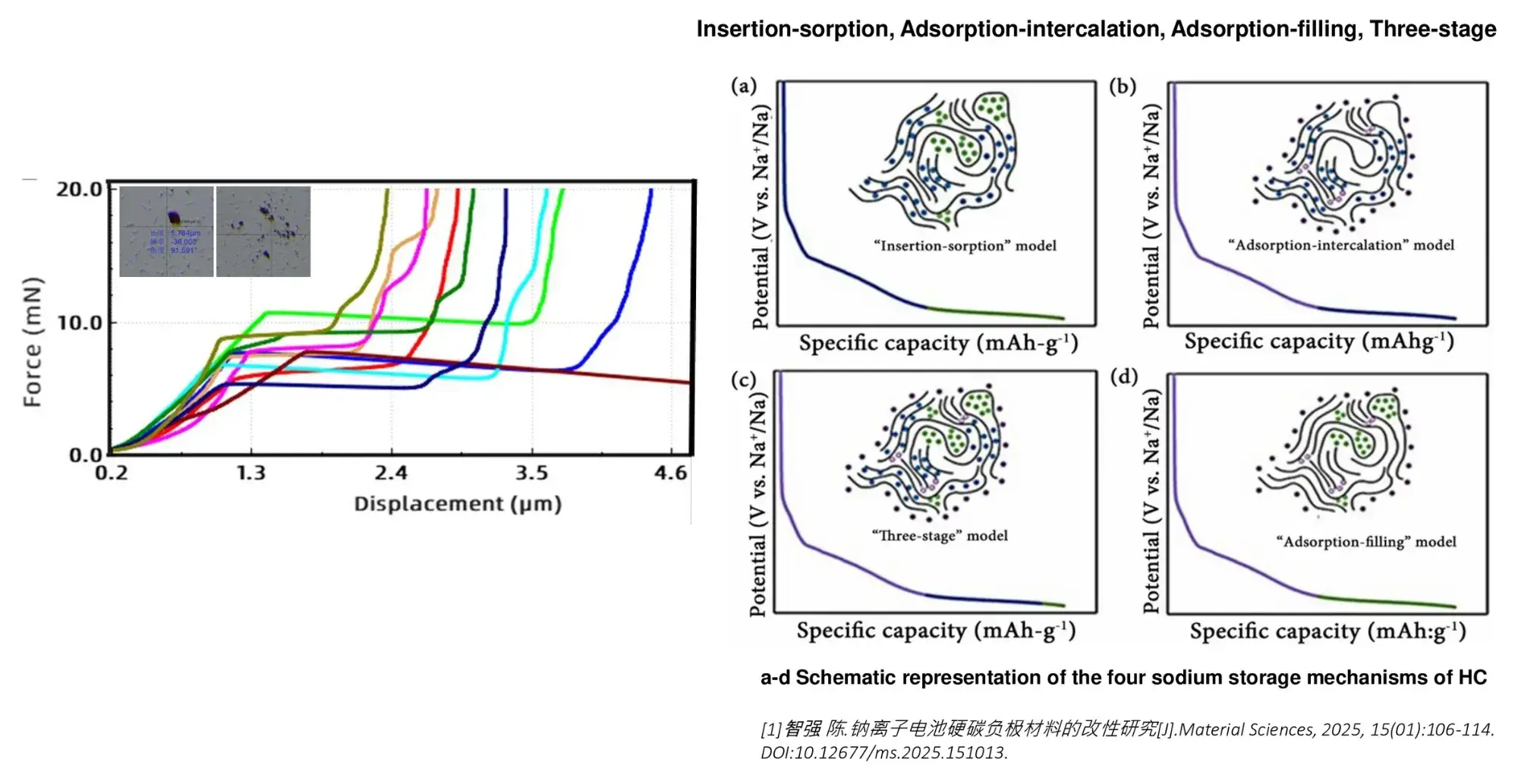
Figure 3. Single particle compressive strength characterization of hard carbon anode materials (sodium-ion battery). Variations in precursor source and carbonization conditions produce measurable crushing strength differences that correlate with electrode processing behavior.
3. Level 2 — Powder Level: Sodium Battery Powder Resistivity and Compaction Density
3.1 Industry Pain Points: Moisture Sensitivity & Powder Property Fluctuation Assessment
Layered oxide cathodes for sodium-ion batteries are among the most air-sensitive materials in secondary battery electrochemistry: exposure to moisture and CO₂ causes surface residual alkali formation, crystal structure collapse, and deterioration of electronic conductivity — within hours of air exposure in some compositions. [2] This moisture sensitivity makes rigorous incoming material quality control essential, yet consistent batch-level screening protocols were largely absent in early sodium-ion battery production. Hard carbon anode materials from diverse biomass precursors (wood, coconut shell, straw, glucose) exhibit significant inter-batch and inter-supplier variations in carbonization degree and microstructural disorder that directly affect electrode resistivity, compaction behavior, and ultimately cell rate performance — but quantitative screening criteria based on powder resistivity and compaction density have not been widely standardized.
3.2 Solution: PRCD Powder Characterization
The IEST Powder Resistivity and Compaction Density systems(PRCD Series) simultaneously measure powder electronic resistivity, compaction density, and compression/rebound behavior under controlled pressure — providing the quantitative incoming inspection data needed for sodium-ion battery material quality control:
3.2.1 Layered oxide cathode quality control
Figure 4 demonstrates that storage condition (fresh vs. air-exposed vs. humidity-exposed) produces measurable and quantifiable differences in both powder resistivity and compaction density for the same layered oxide material — providing a direct, rapid, non-destructive screening method for detecting moisture and CO₂ degradation before electrode coating.
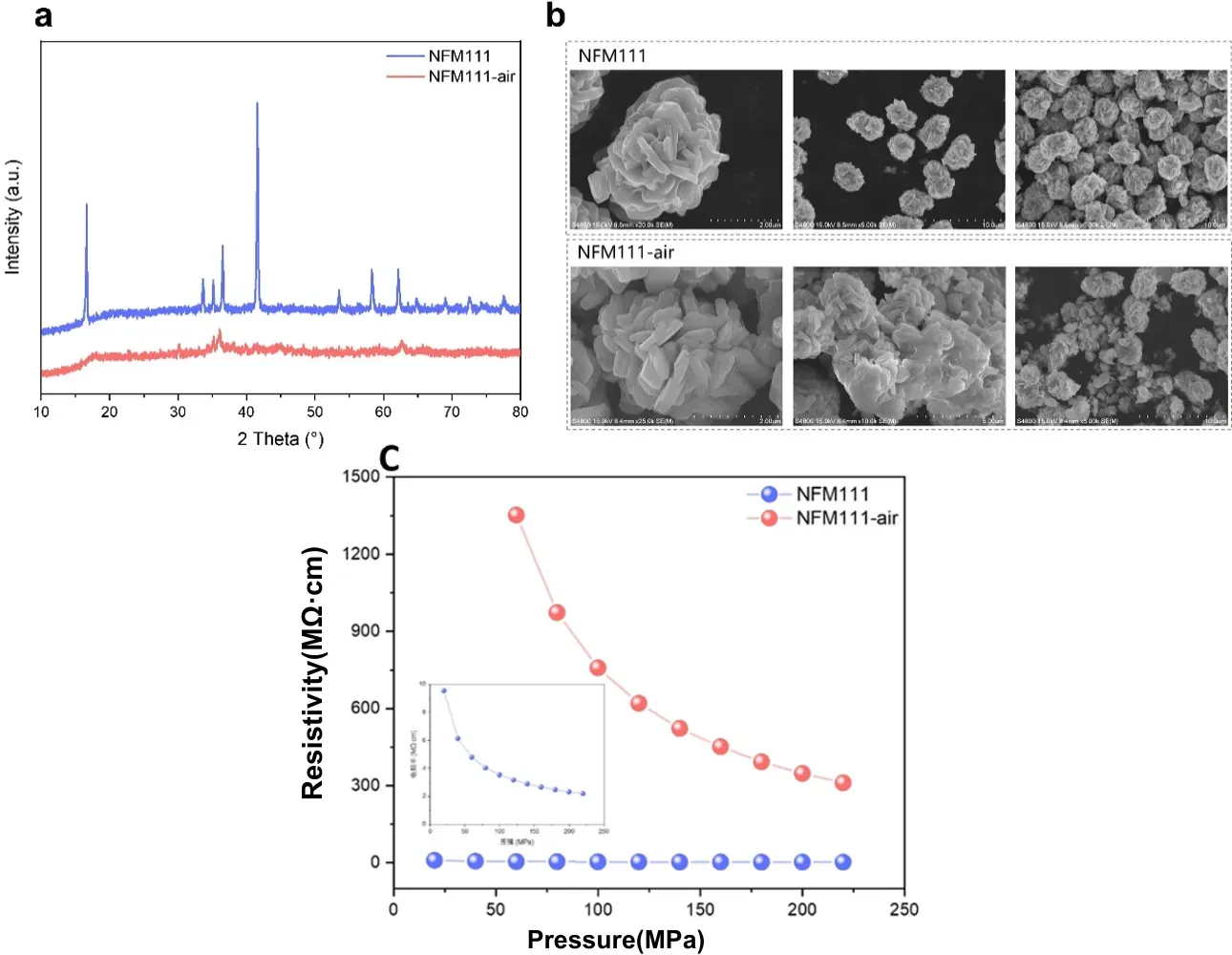
Figure 4. Resistivity and compaction density curves of layered oxide cathode powder under different storage conditions. Air and humidity exposure significantly increase powder resistivity and reduce compaction density — demonstrating the sensitivity of layered oxide cathodes to moisture and CO₂ and the critical importance of incoming material quality control.
Test results:
- The NFM111 sample stored in a glovebox exhibits an O3-type crystal structure; after storage in air, however, the layered crystal structure has completely collapsed (Figure. 4a).
- The corresponding SEM images (Figure. 4b) show that after storage at RH=80%, residual alkali species form on the surface, cracks appear in the secondary particles, and some secondary particles even disintegrate.
- After air exposure, the powder resistivity of NFM111-air is approximately 2–3 orders of magnitude higher than that of NFM111. This is because layered oxides react with components such as H2O, CO2, and O2 in air upon exposure, generating surface residual alkali species including Na2CO3, NaHCO3, and NaOH (Figure. 4c).
3.2.2 Hard carbon anode incoming inspection
Figure 5 shows powder resistivity and compaction density differentiation across multiple hard carbon anode materials from different sources and carbonization processes, enabling objective batch-to-batch consistency monitoring and supplier qualification screening — directly addressing the hard carbon anode variability that degrades sodium-ion battery yield.
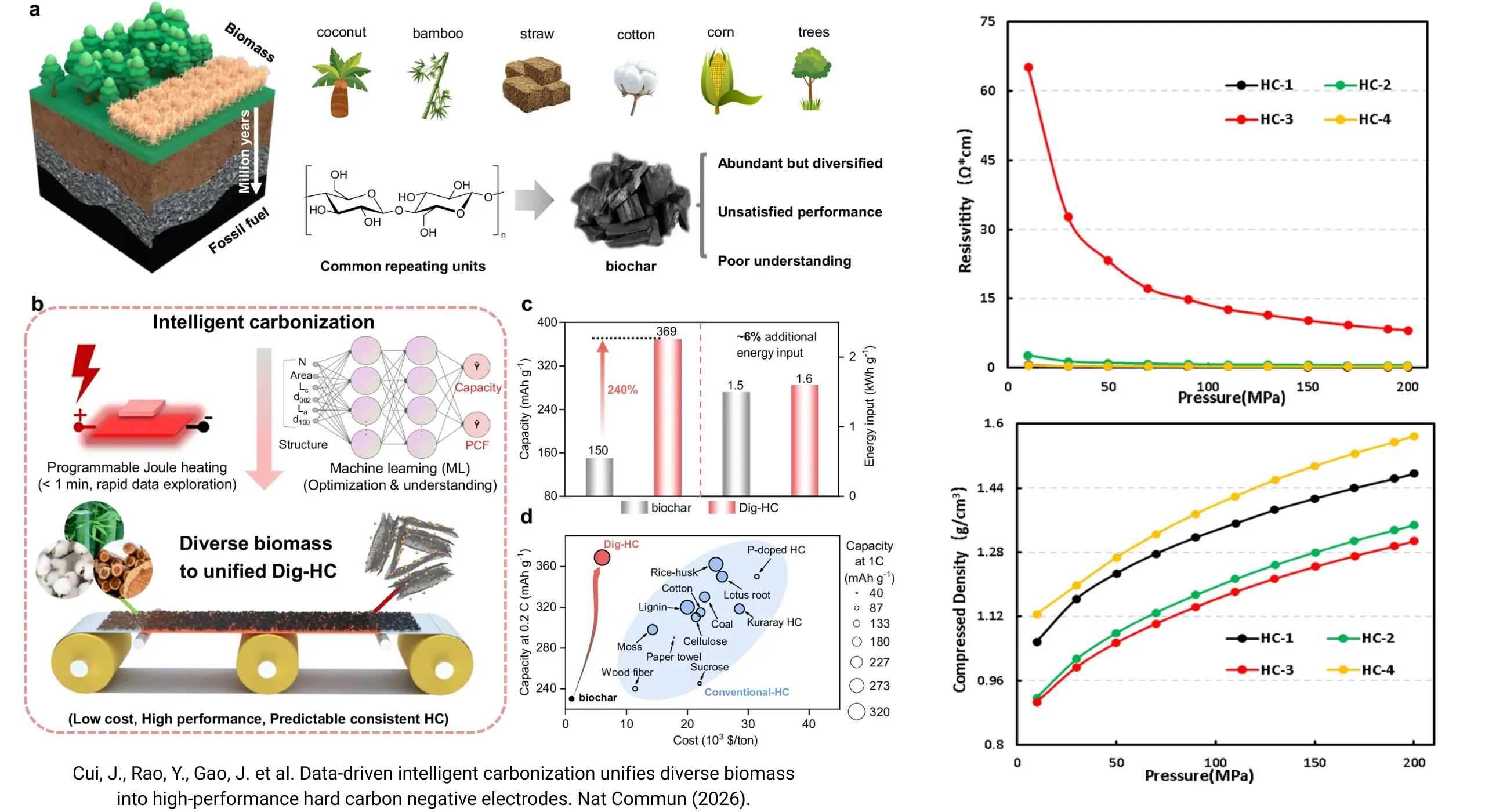
Figure 5. Powder resistivity and compaction density curves for multiple hard carbon anode samples. Differences in resistivity and compaction behavior reflect variations in carbonization degree, precursor source, and microstructural disorder — key incoming quality control metrics for sodium-ion battery hard carbon anodes.
4. Level 3 — Electrode Level: Uniformity Evaluation and Process Defect Detection
The electrode manufacturing stage is the highest-risk process segment for sodium-ion battery quality — defects introduced during slurry preparation, coating, drying, and calendering compound directly into cell performance variability and yield loss. Three complementary electrode-level measurements provide systematic quality control coverage:
4.1 Electronic Conductivity: BER Series Electrode Resistance Testing
Electrode uniformity evaluation for sodium-ion batteries begins with electronic conductivity mapping. The IEST BER series Electrode Resistance Tester measures electrode sheet electronic resistance at defined positions and pressure — enabling spatial identification of process-induced conductivity inhomogeneities arising from slurry mixing inconsistencies, coating weight variation, and calendering pressure non-uniformity. For layered oxide cathodes, BER Series also provides the cross-scale connection between powder-level and electrode-level resistivity: Figure 6 shows that powder resistivity changes from different storage conditions (fresh, air-exposed, humidity-exposed) translate directly and proportionally into electrode sheet resistance changes — enabling upstream defect tracing and confirming that incoming material quality screening at the powder level predicts electrode quality.
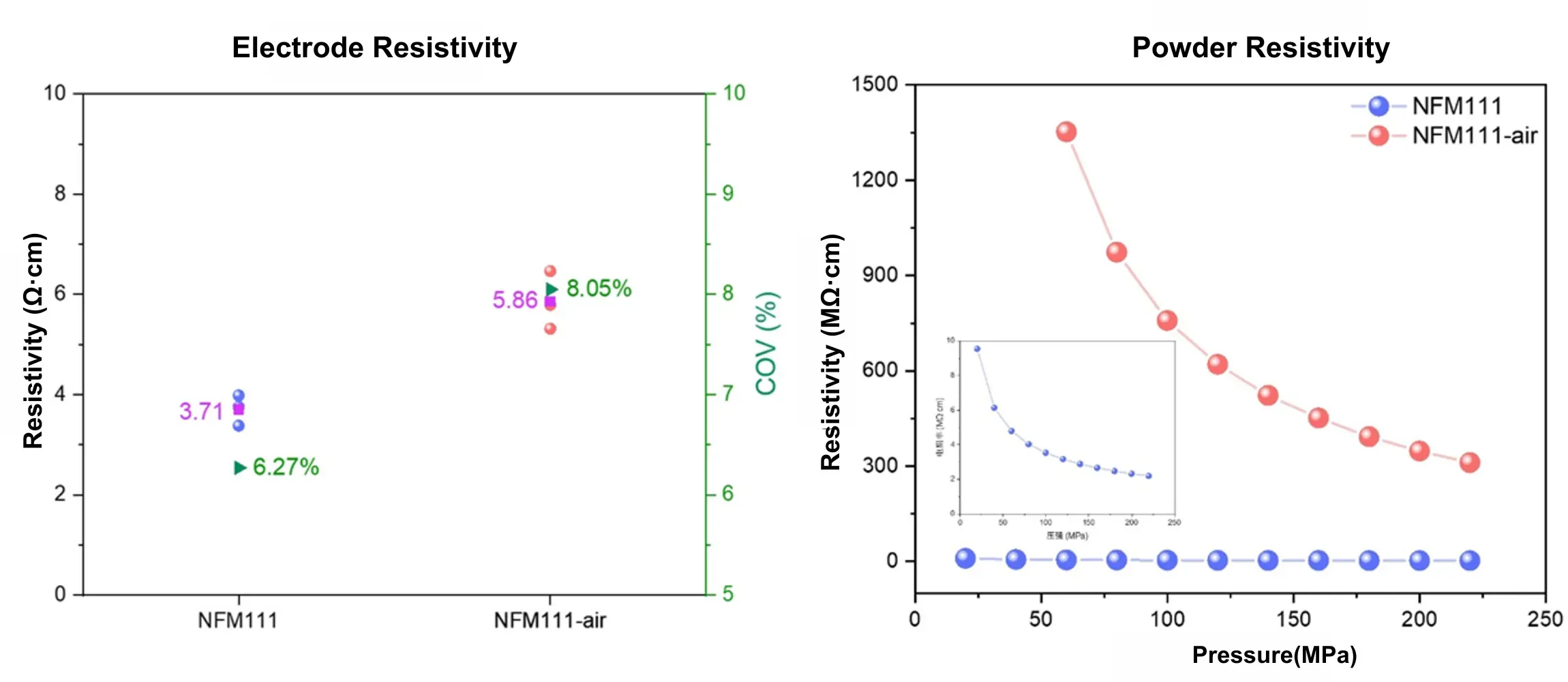
Figure 6. Electrode resistivity vs. powder resistivity comparison for layered oxide cathode under different storage conditions. The direct correspondence confirms that incoming powder quality control predicts electrode sheet performance — enabling upstream defect tracing in sodium-ion battery production.
Electrode resistance results show:
- With the addition of conductive additives, the resistivity of the electrode sheets decreases significantly compared with that of the corresponding powder samples.
- For the electrode sheet prepared from NFM111-air stored in air, its resistivity remains lower than that of the electrode sheet made from NFM111, and the change trend of electrode sheet resistivity is consistent with that of powder resistivity.
4.2 Ionic Conductivity and Electrode Tortuosity: EIC Series
Electronic conductivity is necessary but not sufficient for electrode quality characterization — ionic transport capability is equally critical and often more directly limiting for rate performance. For sodium-ion batteries, the intrinsic ionic transport advantage of Na⁺ (larger ionic radius promotes certain diffusion pathways) can only be fully realized when electrode tortuosity is minimized to support efficient electrolyte infiltration and ion transport throughout the electrode thickness.
The IEST EIC series Ion Conductivity and Electrode Tortuosity Testing System measures the MacMullin number (Nm = τ/ε) of electrode sheets via symmetric cell EIS, quantifying the degree to which pore structure complexity restricts ionic transport. This measurement directly captures the effects of disordered pore networks, insufficient electrolyte infiltration, and excessive tortuosity that limit rate capability and energy density. Figure 7 shows tortuosity test results for different hard carbon anode electrode sheets — measurable differences in MacMullin number between electrode variants reflect structural differences in pore connectivity that predict relative rate performance without requiring full cell assembly.
According to Table 4 and Figure 7:
- The two hard carbon electrode samples A and B show good measurement consistency, with COV values below 5%.
- Tortuosity: B > A.
| Parameter | Electrode A | Electrode B |
|---|---|---|
| Electrolyte conductivity (mS/cm) | 1.140 | |
| Current collector foil thickness (μm) | 7 | 7 |
| Total electrode thickness (μm) | 61 | 56 |
| Trial 1 — Re (Ω) | 2.45 | 1.30 |
| Trial 1 — Rh (Ω) | 3.74 | 3.32 |
| Trial 1 — Rion (Ω) | 3.83 | 6.02 |
| Trial 1 — Tortuosity Factor (Nm) | 6.34 | 11.00 |
| Trial 2 — Re (Ω) | 2.55 | 1.30 |
| Trial 2 — Rh (Ω) | 3.83 | 3.22 |
| Trial 2 — Rion (Ω) | 3.82 | 5.74 |
| Trial 2 — Tortuosity Factor (Nm) | 6.32 | 10.48 |
| Trial 3 — Re (Ω) | 2.13 | 1.24 |
| Trial 3 — Rh (Ω) | 3.37 | 3.13 |
| Trial 3 — Rion (Ω) | 3.69 | 5.64 |
| Trial 3 — Tortuosity Factor (Nm) | 6.11 | 10.30 |
| Mean Nm (Average Tortuosity) | 6.26 | 10.59 |
| Coefficient of Variation (COV) | 1.70% | 2.80% |
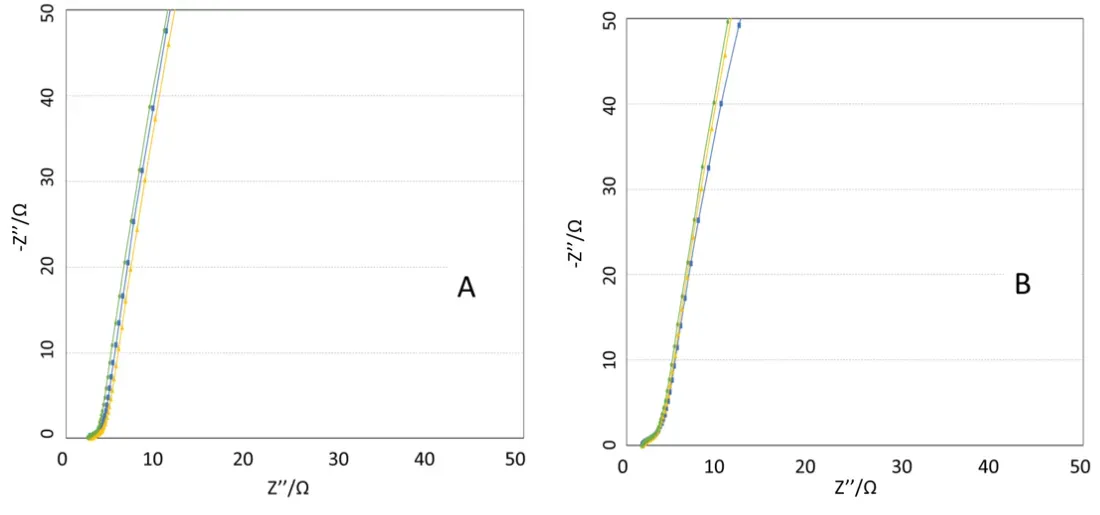
Figure 7. Tortuosity measurement results for different hard carbon anode electrode sheets (sodium-ion battery). Higher tortuosity (higher MacMullin number) indicates more tortuous ionic transport pathways and restricted electrolyte infiltration — directly limiting rate capability and energy density of sodium-ion battery cells.
4.3 Electrode Flexibility: BEF Series
Electrode flexibility is the third critical dimension of electrode quality — particularly relevant for wound cell formats where insufficient ductility causes electrode fracture, burr formation, and internal short circuit risk during winding and hot pressing. The IEST BEF series Electrode Flexibility Tester simulates actual production winding conditions with cyclic bending tests, quantifying ductility as a function of compaction density and providing a data-driven basis for identifying the calendering pressure window that maximizes packing density without compromising electrode integrity.
Figure 8 shows flexibility test results for different hard carbon electrode variants, demonstrating measurable ductility differences between formulations that are invisible in electronic resistance or tortuosity measurements — but are decisive for production yield in wound sodium-ion battery cells.
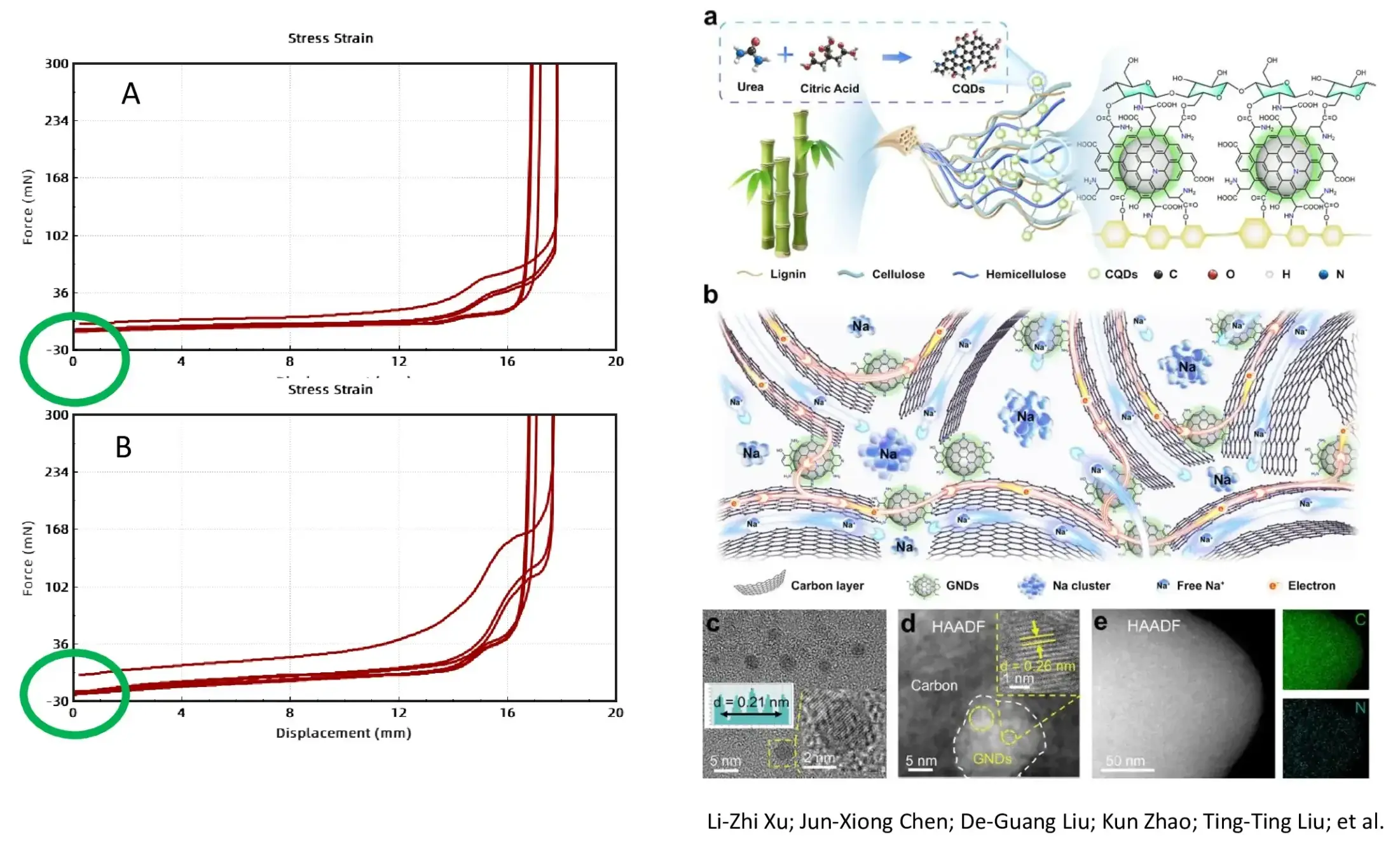
Figure 8. Flexibility test results for hard carbon anode electrode sheets (sodium-ion battery). The BEF system simulates production winding and hot-pressing conditions, quantifying electrode ductility and identifying the compaction density window that maintains adequate flexibility to avoid cracking, burr formation, and internal short circuit risk.
As shown in Figure 8:
- Two different hard carbon electrode samples A and B were subjected to flexibility cyclic compression‑lock tests. The residual stress of A is significantly lower than that of B, indicating that the flexibility of A is superior to that of B.
- The flexibility bending test can sensitively reflect surface defects of finished electrode materials. It is commonly employed to study surface strengthening processes and surface properties, and is directly correlated with cell‑level electrochemical performance.
5. Level 4 — Cell Level: Electrochemical Performance and Safety Validation
Sodium-ion battery cells at the cell level present four inter-related failure modes that require dedicated testing approaches: swelling and bulging during charge/discharge; gas generation and voltage decay under high-temperature storage; complex electrochemical side reactions that limit cycle life; and the difficulty of predicting safety and life risks before field deployment. IEST addresses these with three complementary cell-level testing systems:
5.1 In-Situ Swelling Testing (RSS/CBS/SWE Series)
The RSS, CBS, and SWE series In-Situ Cell Swelling Systems provide real-time thickness and swelling force monitoring during charge/discharge cycling for coin cells, stacked cells, and pouch cells respectively — covering all standard sodium-ion battery cell formats. In-situ swelling data captures the dynamic mechanical response of sodium-ion cells during cycling, directly characterizing the electrode volume change and gas-induced swelling behavior that causes pack-level structural problems and safety risk.
5.2 High-Temperature Storage and Gas Generation Testing (GVM/MSG Series)
The GVM and MSG series In-Situ Gas Generation and Volume Monitoring Systems simulate multi-channel high-temperature storage environments, continuously monitoring cell volume, voltage, and gas generation over extended periods. External charge compensation capability allows the system to maintain defined SOC conditions throughout storage — matching real-world calendar aging conditions. Figure 9 shows a representative cyclic gas generation test for sodium-ion battery cells, demonstrating real-time gas volume evolution monitoring that detects electrolyte decomposition and sodium plating events before they escalate to safety-critical failure.
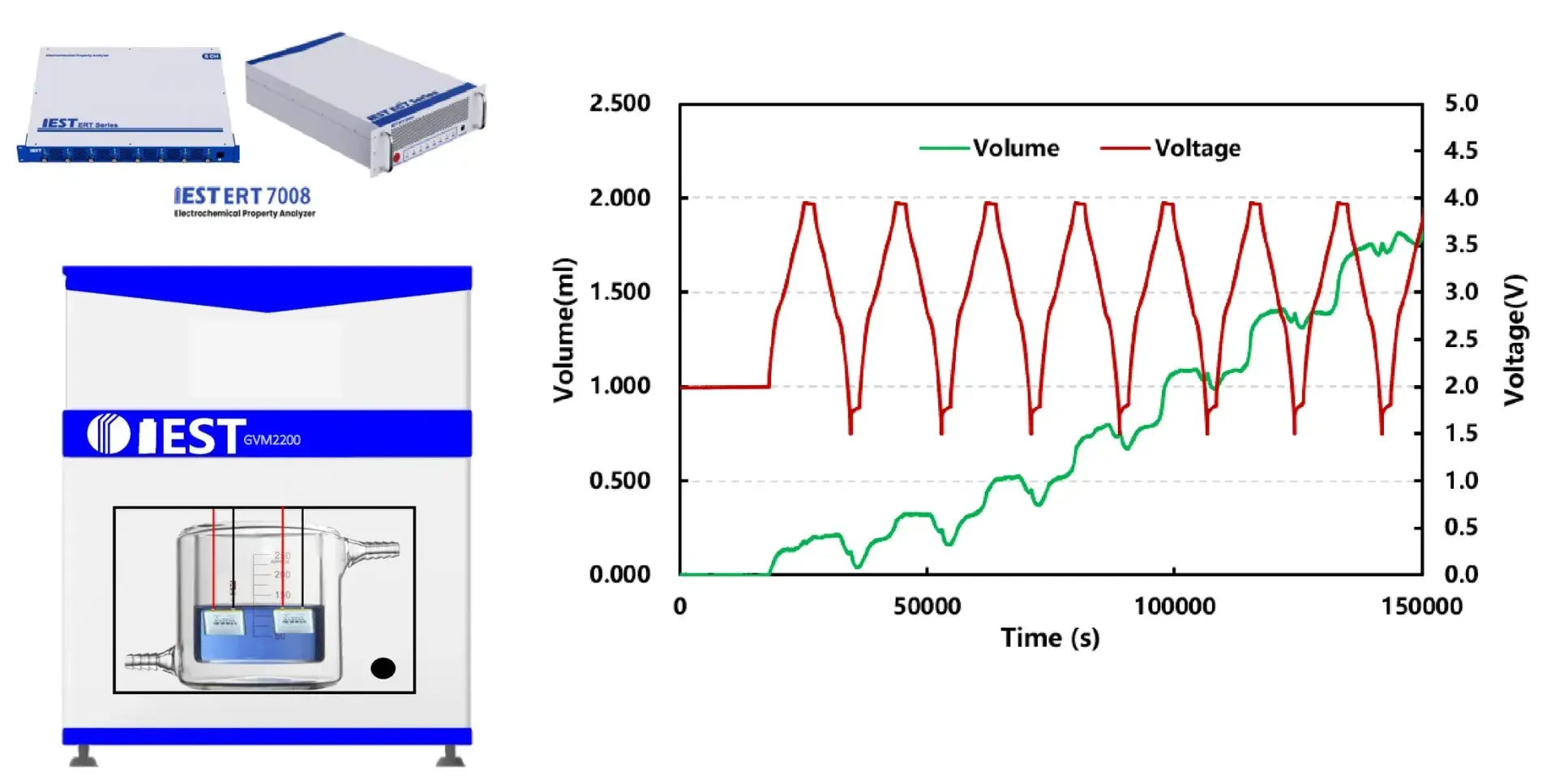
Figure 9. In-situ cyclic gas generation monitoring of sodium-ion battery cells. The GVM system continuously measures gas volume evolution throughout cycling, enabling early detection of electrolyte decomposition, sodium plating, and other parasitic reactions that cause cell swelling, capacity fade, and safety risk.
5.3 Electrochemical Characterization (Resistivity Characterization (ERT Series)
The IEST ERT series Electrochemical Testing System integrates CV (cyclic voltammetry), EIS (electrochemical impedance spectroscopy), GITT (galvanostatic intermittent titration technique), and charge/discharge cycling in a single platform — with voltage and current measurement accuracy of 0.01%. This precision enables detection of the minor electrochemical side reactions and sodium plating events that are characteristic of sodium-ion battery degradation, and supports calculation of Coulombic efficiency, self-discharge rate, and diffusion coefficients — providing the quantitative mechanistic data needed for cycle life optimization and life prediction.
6. Summary: Building Core Technical Strength in Sodium-Ion Battery Manufacturing
Sodium-ion batteries represent a strategically important technology direction for new energy storage, and the manufacturing and material challenges currently limiting commercial scale-up are tractable engineering problems — not fundamental technology barriers. Progress requires a systematic, quantitative approach to quality control at every level of the production chain.
- At the R&D stage: transform empirical process knowledge into quantitative material property data using particle crushing strength, powder resistivity and compaction density, electrode tortuosity, and flexibility measurements — accelerating material iteration and compressing the trial-and-error cycle for sodium-ion battery electrode development.
- At the manufacturing stage: establish multi-level quality checkpoints across the full production flow — incoming material inspection, electrode process control, and cell-level qualification — to intercept defects before they compound into finished cell failures, systematically improving production yield toward the >95% standard achieved by mature lithium-ion battery production lines.
- At the quality management stage: align quality control criteria with national standards (including GB/Z 155–2025 for sodium-ion cathode material compaction density), establish traceable measurement data chains, and build market credibility for sodium-ion battery products through documented, standardized quality evidence.
Key sodium-ion battery testing requirements at each level: (1) particle level — single-particle crushing strength screening by SPFT for layered oxide cathodes and hard carbon anodes; (2) powder level — sodium battery powder resistivity and compaction density measurement by PRCD for incoming material inspection and batch consistency monitoring; (3) electrode level — electronic conductivity (BER) for uniformity evaluation, ionic conductivity and tortuosity (EIC) for rate performance prediction, and flexibility (BEF) for yield risk assessment; (4) cell level — in-situ swelling (RSS/SWE), in-situ gassing (GVM), and electrochemical characterization (ERT with CV/EIS/GITT) for comprehensive cell performance and safety qualification. Multi-level testing at all four scales, applied systematically across R&D, manufacturing, and quality management, provides the measurement foundation to break the “low yield → high cost → slow market” cycle that currently constrains sodium-ion battery commercialization.
7. References
[1] Chen Zhiqiang. Modification research on hard carbon anode materials for sodium-ion batteries. Material Sciences, 2025, 15(01): 106–114. DOI: 10.12677/ms.2025.151013.
[2] Yang Y., Wang Z., Du C., et al. Decoupling the air sensitivity of Na-layered oxides. Science, 385, 744–752 (2024).
[3] Cui J., Rao Y., Gao J. et al. Data-driven intelligent carbonization unifies diverse biomass into high-performance hard carbon negative electrodes. Nature Communications (2026).
8. FAQs: Sodium-Ion Battery Testing and Characterization
8.1 How is hard carbon anode mechanical property characterized for sodium-ion batteries?
Hard carbon anode mechanical property characterization for sodium-ion batteries is performed using single-particle force testing (SPFT series) in accordance with GB/T 43091-2023. Individual hard carbon particles are subjected to controlled compressive load, and the crushing force at fracture is recorded. Because hard carbon is an amorphous material with disordered turbostratic structure, different precursors (biomass, resin, petroleum pitch) and different carbonization conditions produce particles with measurably different crushing strength — even when visual morphology or BET surface area appear similar. Single-particle crushing strength data enables objective incoming material quality screening: materials with lower crushing strength are more likely to fracture during electrode slurry mixing and calendering, generating fine particles that increase electrode resistance and reduce active material utilization. Batch-level statistical characterization (typically 50–100 particles per sample) provides the mean and distribution data needed for supplier comparison and production process control.
8.2 Why is powder resistivity and compaction density testing critical for sodium-ion battery materials?
Sodium battery powder resistivity and compaction density testing is critical for two distinct reasons at the cathode and anode levels. For layered oxide cathodes: these materials are highly sensitive to moisture and CO₂, which cause surface residual alkali formation, crystal structure collapse, and significant increases in powder resistivity — degrading electrode conductivity before the cell is even assembled. PRCD testing detects this degradation rapidly and non-destructively, enabling incoming material rejection or process adjustment before defective powder is coated into electrodes. For hard carbon anodes: carbonization degree and precursor source directly affect both powder resistivity (electronic conduction through the disordered carbon network) and compaction density (how efficiently particles pack under calendering pressure). PRCD measurement of these two parameters simultaneously enables batch-to-batch consistency monitoring and supplier qualification without electrochemical cycling tests. GB/Z 155–2025 (Sodium-Ion Battery Cathode Material General Specification, issued 2025) has standardized compaction density as a required quality control parameter for sodium-ion cathode materials.
8.3 How is electrode uniformity evaluated in sodium-ion battery production?
Electrode uniformity evaluation for sodium-ion batteries covers three complementary aspects: (1) electronic conductivity uniformity — BER series electrode resistance testing maps the spatial distribution of electronic resistance across the electrode sheet, identifying local high-resistance regions from slurry mixing inconsistencies, coating weight variation, or calendering pressure non-uniformity; (2) ionic conductivity and tortuosity — EIC series symmetric cell EIS measurement determines the MacMullin number (Nm = τ/ε) for each electrode, quantifying the uniformity of pore connectivity and electrolyte access across the electrode thickness; (3) mechanical uniformity — BEF series flexibility testing identifies spatial variations in electrode ductility that predict fracture risk during winding. Multi-parameter electrode uniformity evaluation enables targeted process diagnosis: elevated BER resistance at specific positions points to coating or drying non-uniformity; elevated EIC tortuosity points to calendering-induced pore closure; reduced BEF flexibility at high compaction density defines the maximum safe calendering pressure for each formulation.
8.4 How does electrode tortuosity affect sodium-ion battery performance?
Electrode tortuosity (quantified as the MacMullin number Nm = τ/ε from symmetric cell EIS) directly limits sodium-ion battery rate capability and energy density by determining how efficiently electrolyte can penetrate the electrode pores and how quickly Na⁺ ions can transport through the electrode thickness during charge and discharge. Higher tortuosity means more tortuous ionic transport pathways, increased effective ionic resistance, higher polarization at elevated rates, and reduced practical energy density. Sodium-ion batteries have an intrinsic ionic transport advantage from the weaker Na⁺ solvation compared to Li⁺, but this advantage is only realized when electrode tortuosity is low enough to allow electrolyte to fully infiltrate the electrode pore network. EIC series tortuosity measurement on hard carbon anode electrodes in this study shows measurable MacMullin number differences between electrode variants — confirming that electrode formulation and processing conditions significantly affect tortuosity and therefore rate performance, independently of the intrinsic sodium-ion transport properties of the hard carbon active material.
8.5 How does air exposure affect layered oxide cathode performance in sodium-ion batteries?
Layered oxide cathodes for sodium-ion batteries are significantly more air-sensitive than common lithium-ion cathode materials. Exposure to moisture and CO₂ in ambient air causes multiple degradation mechanisms: surface residual alkali formation (NaOH, Na₂CO₃) that reduces surface conductivity and increases interfacial impedance; interlayer structural collapse from Na⁺/H⁺ exchange with moisture at grain boundaries; and suppression of electronic conduction pathways through the layered transition-metal oxide lattice. PRCD powder testing demonstrates that even short-duration air exposure measurably increases powder resistivity and reduces compaction density for the same layered oxide material. This air sensitivity has important manufacturing implications: layered oxide cathode powders must be stored and processed in dry room environments (<1% RH), and incoming material quality control must include resistivity and compaction density testing to confirm that received materials have not been degraded during shipping and storage before electrode coating. Battery characterization data from BER electrode resistance testing shows that powder-level resistivity changes from air exposure translate directly and proportionally into electrode sheet resistance increases — making powder-level PRCD testing a reliable upstream predictor of electrode-level quality.